

A robin watches over a name that has become familiar to Irish whiskey enthusiasts. Yet Redbreast tells a story that begins far from the shelves of wine merchants: the story of Dublin wine merchants, their cellars and the wine casks in which they matured spirits. In this bottle, maritime trade, coopering and the expertise of distillers come together.
Now produced in Midleton, County Cork, this Irish single pot still whiskey is worth a closer look at its label. What does the term mean? Why do sherry casks matter so much? And which bottle should you start with? Redbreast 12 Year Old offers a useful first reference point for discovering a family of whiskeys with a distinctive character.
In the 19th century, roles were divided differently: distilleries supplied the spirit, while merchants arranged its maturation and sale. The Dublin-based firm Gilbey’s had casks through its wine-importing business. It worked with John Jameson & Son and matured whiskey in its own warehouses.
The first official reference to the Redbreast name dates from August 1912. According to the history published by the brand, the name pays tribute to the robin and is said to be linked to the Gilbey’s chairman’s interest in birds. A surprisingly delicate emblem for such an expressive spirit.
Gilbey’s made its final bottling of Redbreast in 1985. The brand was sold to Irish Distillers the following year, then relaunched in 1991. This timeline shows how a historic name can survive an interruption and change hands while retaining a stylistic lineage.
Redbreast combines malted and unmalted barley, before being triple-distilled in copper pot stills. The producer notably links the unmalted barley to the spirit’s texture and spicy character. Here, the word single denotes a single-distillery origin: it does not mean that the bottle’s contents come from a single cask.
This distinction helps when reading labels. A single malt is made with malted barley; Redbreast’s single pot still uses both forms of barley. It may then bring together several casks in a blend. Blending is therefore not exclusive to whiskeys labelled blended: it is also used to create balance within a single style.
To discover where it is made, our guide to the Midleton Distillery covers a visit to the site. This guide focuses on the whiskey itself, its history and useful pointers for choosing a bottle.
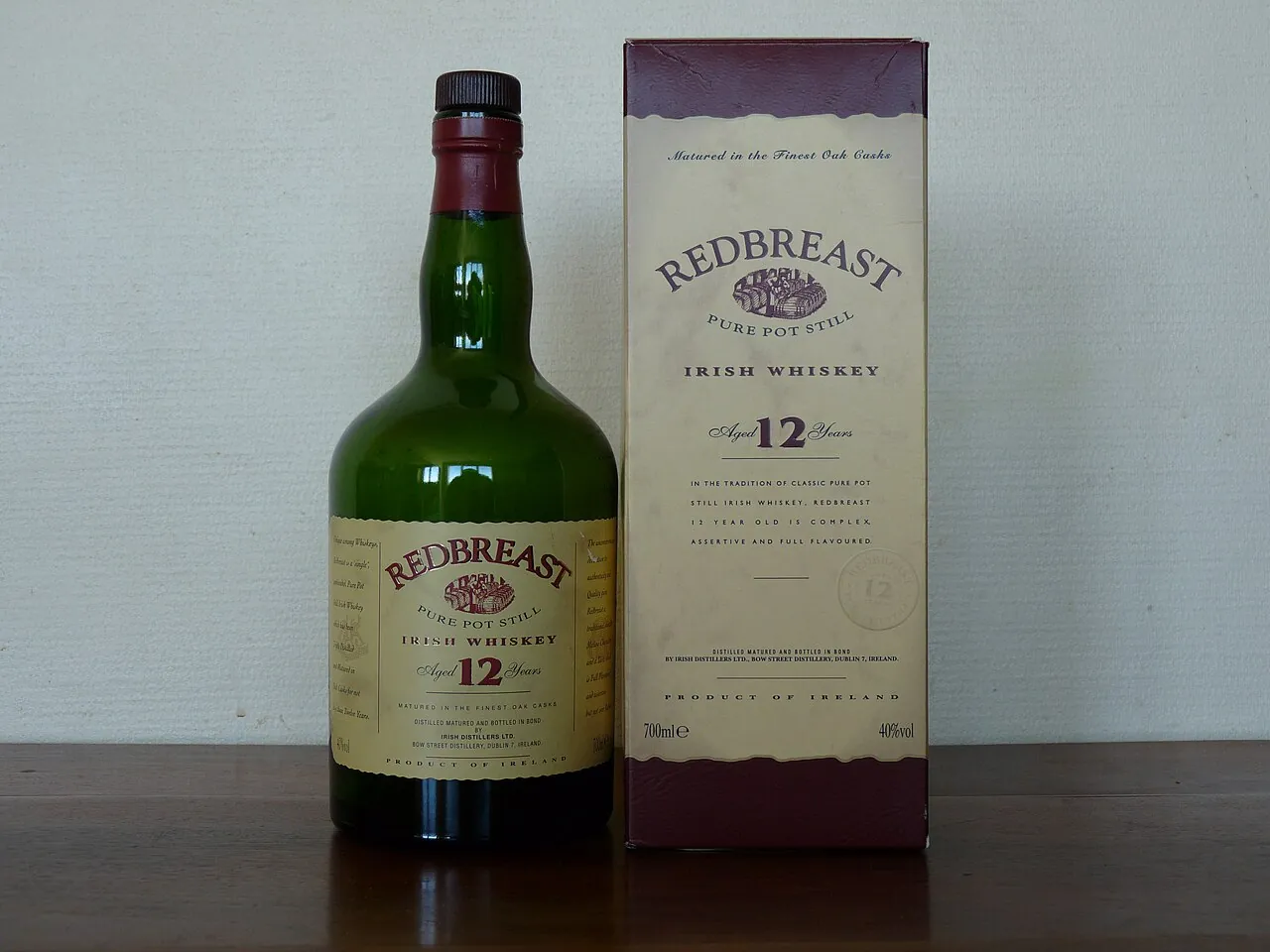
The standard Redbreast 12 Year Old is bottled at 40% ABV. Its maturation combines whiskeys aged in bourbon and sherry casks. The official notes describe a fruity, spicy profile, with toasted wood, a silky texture and a long finish. These are the producer’s reference points, intended to guide exploration without imposing the same sensations on everyone.
Sherry is a Spanish wine. On a whiskey description, the term refers here to the use of casks for maturation. It should not be taken to mean a recipe in which wine is simply poured into the spirit. The cask becomes a creative tool: its wood and previous use contribute to the final result.
The number “12” indicates the minimum age of the whiskey in this blend. It refers neither to time spent in the bottle nor to a promise of superiority over every younger expression. When choosing, it is better to consider the style, maturation and alcohol strength together.
For a first introduction, the standard 12 Year Old provides an easy reference point. The range also includes older expressions and variations in maturation. Launched in 2011, 12 Cask Strength has an alcohol strength that varies by batch: it is not the same bottle as the 40% 12 Year Old.
The Lustau Edition explores a sherry-cask finish: after initial maturation, the whiskey spends an additional period in casks prepared with the Lustau house in Jerez. This stage illustrates the difference between maturation and finishing. Before ordering, always check the expression’s full name and the alcohol statement on the label.
In a whiskey bar, ask which expression is being served and the price per glass before ordering. “A Redbreast” can refer to different bottles. A small tasting of the 12 Year Old lets you find out whether you like the style before considering a purchase.
A glass that narrows slightly at the top can make it easier to appreciate the aromas. Bring it gradually to your nose, then take a small sip. A few drops of water offer another perspective; ice also changes the temperature and dilution. There is no obligation to identify every fruit mentioned on a tasting note: comparing your impressions is more interesting than passing a vocabulary test.
For a closer look at the bottles’ characteristics, see the official Redbreast 12 Year Old page. Historical reference points come from the brand timeline, and production methods from its making guide. The tasting notes are those of the producer; the editorial team makes no tasting claim.
Alcohol abuse is dangerous for your health. Drink in moderation.