

With its ruby-red colour and malt-forward flavour, Smithwick’s offers a different side of Irish beer from the famous black stouts. This Irish red ale, born in Kilkenny at the beginning of the 18th century, appeals through its balance: lightly toasted, not overly assertive and bitter enough to remain refreshing.
John Smithwick founded his brewery in Kilkenny in 1710. The site, on what is now Parliament Street, already had an older history: it stood on the grounds of a former Franciscan abbey, in a city where brewing was firmly established.
Over successive generations, the Smithwick family developed the business and made its name a lasting part of Kilkenny’s history. The brewery became one of Ireland’s leading names in red ale. This longevity explains why the brand remains so closely associated with the city, even though it is no longer produced there today.
The Smithwick’s brewery came under Guinness’s control in 1965. Production continued in Kilkenny for several decades before leaving the historic site in 2013. The beer is now brewed in Dublin at the St James’s Gate brewery, within the Diageo group.
This detail matters: Smithwick’s is indeed a beer that originated in Kilkenny, but it would be inaccurate to say that it is still produced there. The former site nevertheless preserves the memory of this industrial and family enterprise, which has become part of the local heritage.
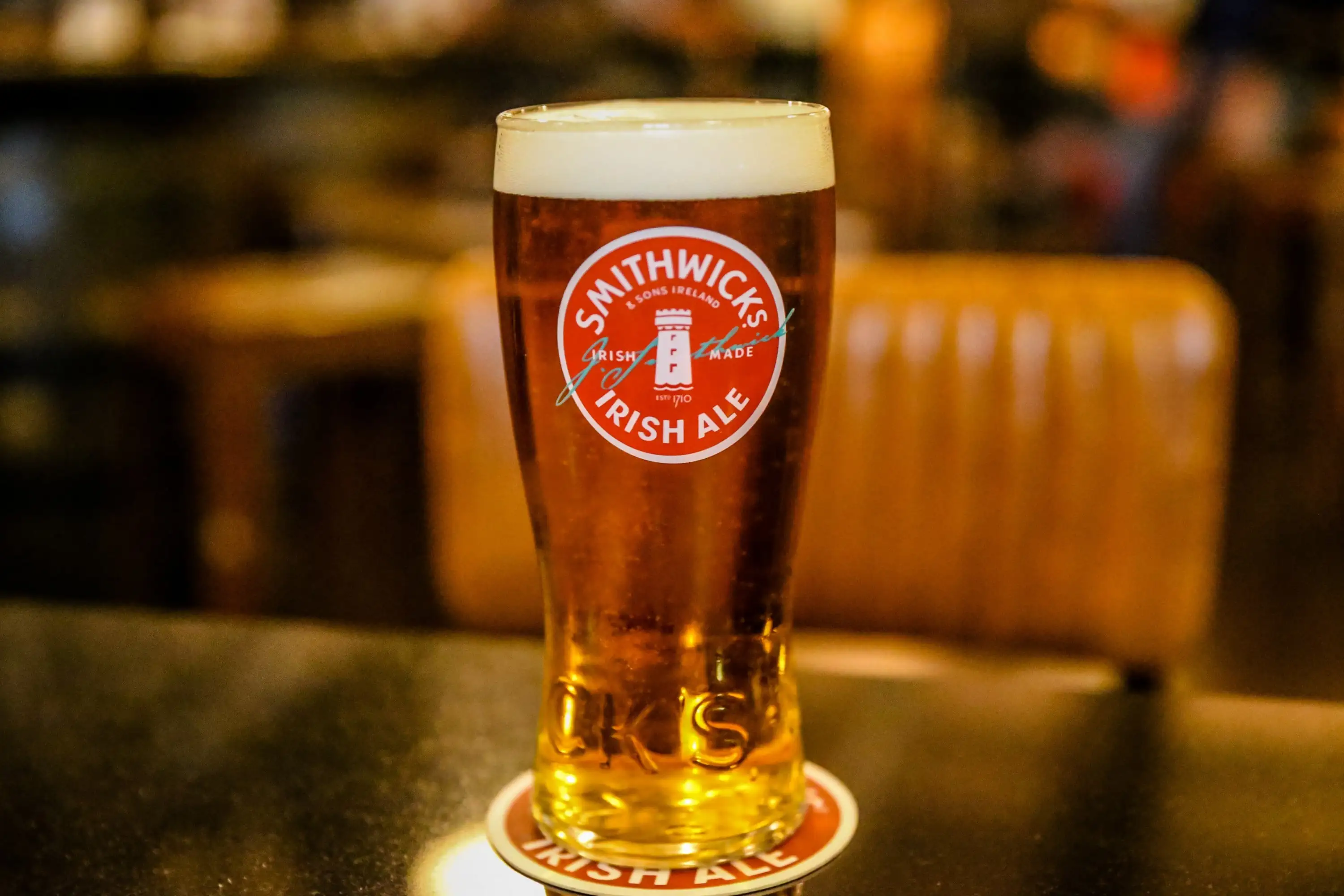
Smithwick’s belongs to the Irish red ale family. Its copper-to-ruby colour comes from the malts used and their roasting. On the nose and palate, it develops notes of cereal, light caramel, toasted bread and sometimes biscuit. A subtle bitterness balances the whole without taking over.
Its texture remains relatively light, while its dry finish makes it easy to drink. Its profile is less roasted than a stout and less hop-forward than many India Pale Ales. It is therefore an approachable option for discovering Irish beers when looking for a malty drink that is neither heavy nor excessively bitter.
Smithwick’s is sometimes confused with Kilkenny Irish Cream Ale. The two beers share a closely related history and world, but their presentation and mouthfeel differ. Kilkenny is particularly known for its creamy head, created by nitrogen dispense, while Smithwick’s retains the more straightforward profile of a red ale.
Depending on the country, the available range and formats may vary. The best way to tell them apart is to check the full name on the glass, tap or label, rather than relying on their red colour alone.
The name Smithwick’s may come as a surprise when ordering for the first time: in English, it is commonly pronounced something like “Smit-icks”, without sounding every letter. The beer is widely available in Irish pubs, on draught or by the bottle depending on the establishment.
It naturally accompanies pub classics such as a stew, sausages, a meat pie or a burger. Its malty notes also pair well with beef, roast pork and hard cheeses, while its light bitterness prevents it from overwhelming the meal.
Smithwick’s offers a way beyond the sometimes reductive image of an Ireland devoted solely to stout. Red ales, too, are part of the country’s brewing identity. Their warm colour, malty roundness and drinkability explain their enduring presence in pubs.
In Kilkenny, the brand retains a particular resonance, linked to more than three centuries of local history. In Dublin, its current production places it within the landscape of major national beers. Between these two cities, Smithwick’s thus tells an important part of the evolution of Irish brewing. Enjoy responsibly.
In a red ale, malt forms the core of the profile. Different degrees of kilning bring the copper colour, biscuit notes and a slight impression of caramel. A small proportion of more heavily roasted grains can deepen the hue without producing the coffee or cocoa intensity characteristic of a stout.
Hops are used mainly to balance the sweetness of the grains. Their bitterness generally remains restrained, and their aromas are not intended to dominate. After brewing, fermentation and maturation, the aim is clarity, smoothness and ease of drinking rather than dramatic intensity.
Its appearance varies according to the light and the glass: copper-brown in a dimly lit pub, it reveals ruby highlights when viewed against the light. This shade comes from the roasting reactions of the malts, not from the addition of red colouring. An off-white head generally completes its appearance.
Serving temperature also affects perception. Very cold, the beer seems livelier but its malty aromas become subdued. As it warms slightly, it reveals more of its cereal and toasted-bread notes. There is therefore no need to drink it too quickly to appreciate its balance.
Even after local brewing ceased in 2013, the Smithwick name remains deeply linked to Kilkenny. Three centuries of activity shaped the memory of the neighbourhood, created jobs and contributed to the brewing reputation of the medieval city. For many residents, the brand is about far more than what is in the glass.
The former Parliament Street site places this history within the urban fabric, close to the historic centre. It also serves as a reminder that major Irish brands were often born as family businesses before becoming part of international groups. This evolution explains the coexistence of a strong local legacy with production that is now centralised in Dublin.
To compare the country’s major styles, Smithwick’s can be tasted alongside a stout and an Irish lager. The stout will place greater emphasis on roasted flavours and creaminess; the lager on freshness and neutrality; and the red ale on cereal roundness and measured bitterness. This simple comparison makes the differences immediately clear.
Craft beer enthusiasts can then explore red ales from microbreweries, sometimes hoppier, drier or richer in malt. Smithwick’s nevertheless remains a useful benchmark for understanding the style in its most approachable and widely available form. As the alcohol content may vary by market or packaging, the label is definitive. Consumption should remain moderate.
Alcohol abuse is dangerous for your health. Drink in moderation.