

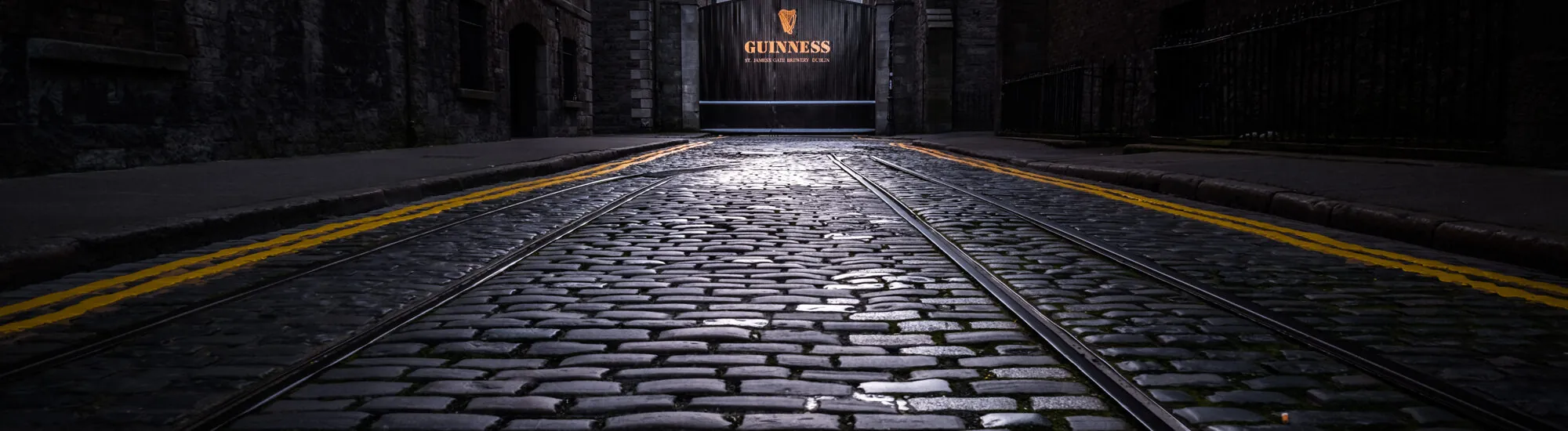
With its tall black pillars, gold lettering and instantly recognisable Guinness name, St James’s Gate is one of Dublin’s most photographed sights. This iconic entrance marks the grounds of the famous Irish brewery, founded here by Arthur Guinness in 1759. More than simply a gateway, it recalls the industrial history of a district that helped shape the identity and economy of the capital.
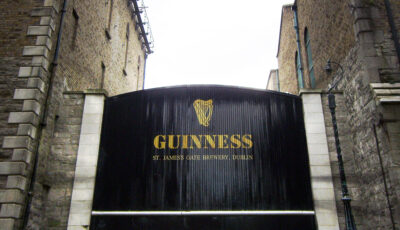
St James’s Gate in Dublin – Mikel Ortega – cc
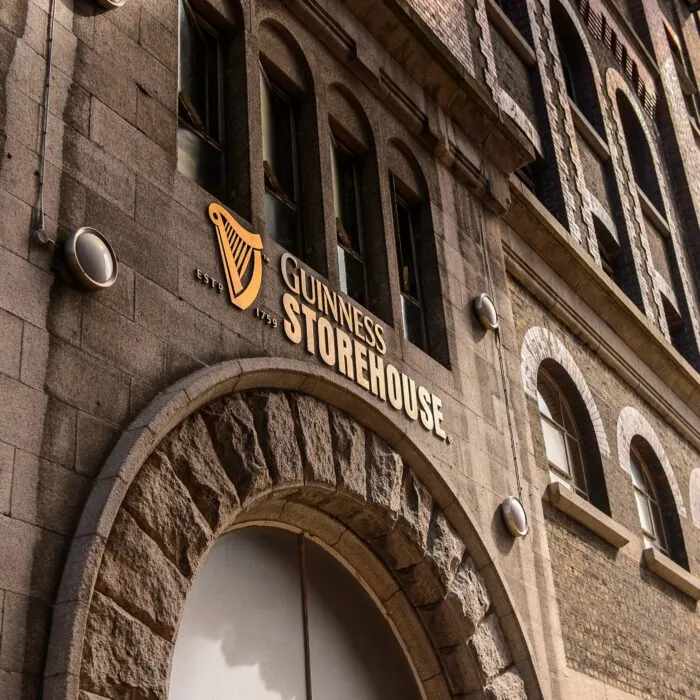
St James’s Gate stands in the historic Liberties district, west of Dublin city centre. The gateway is immediately beside the vast Guinness brewery complex and the Guinness Storehouse, one of the Irish capital’s most visited attractions.
Its industrial architecture, dominated by black and gold, makes it a particularly distinctive landmark. Many visitors stop here for a photograph before or after visiting the Guinness Storehouse. The gate can be viewed free of charge from the public street, but it is not a developed tourist attraction in its own right.
In fact, St James’s Gate refers to more than a gateway: it is also the name of the brewing district and industrial complex where Guinness has been produced since the 18th century.
The name St James’s Gate predates the founding of Guinness. It comes from an old gate located on one of the routes leading into the city of Dublin. The area was also associated with St James’s Church and the route taken by pilgrims travelling to Santiago de Compostela.
Thanks to the presence of waterways and its location on the edge of the historic city, the Liberties district became home to many craft and industrial activities. Breweries, malt houses, distilleries, tanneries and textile workshops coexisted here for many years. Arthur Guinness therefore did not arrive in an area unfamiliar with brewing: he set up in the heart of a district already shaped by beer production.
On 31 December 1759, Arthur Guinness signed the lease for a disused brewery at St James’s Gate. The contract, agreed for the now-legendary term of 9,000 years, set an annual rent of £45 for a site of around four acres.
Arthur Guinness initially brewed ale. During the 1770s, he gradually turned to porter, a dark beer then highly popular in London. Its success was such that in 1799 the brewery stopped producing ale to focus entirely on this type of beer, from which developed the stout now associated with the Guinness name.
The first known export of Guinness left Dublin port for England in 1796. The brand grew rapidly during the 19th century and, by around 1880, St James’s Gate had become the largest brewery in the world.
The growth of Guinness transformed much of the Liberties. The brewery occupied a vast area, employed thousands of people and contributed to Dublin’s economic growth. It once had its own railways, medical services and numerous facilities for producing and transporting beer.
This history explains the special place held by St James’s Gate in Dublin’s collective imagination. The gateway symbolises less the entrance to a ‘temple of beer’ than a major part of the city’s industrial heritage. Behind it lies the story of a small 18th-century brewery that became a brand exported around the world.
You can photograph St James’s Gate free of charge from the street. However, the gateway remains part of a working industrial site: it cannot be visited freely, and entry to the brewery areas is not permitted without authorisation.
To discover the history of Guinness, you need to book admission to the Guinness Storehouse. Housed in a former fermentation building constructed in the early 20th century, this interactive museum explores the beer’s ingredients, brewing techniques, the history of Guinness advertising and the brand’s international development.
The tour ends at the Gravity Bar, whose large windows offer panoramic views across Dublin. Admission to the Guinness Storehouse is charged, and prices vary according to the date and time selected. Booking online is recommended, particularly at weekends and during the high season.
St James’s Gate is around two kilometres from Temple Bar, in the western part of Dublin city centre. It can be reached on foot from the historic centre, by bus or by Luas tram. The walk takes you through the Liberties, one of the capital’s oldest and most interesting districts.
A few minutes are enough to view and photograph the gateway. If you combine this stop with a visit to the Guinness Storehouse, allow around two hours for the whole experience. The area attracts many visitors: for a quieter photograph, go early in the morning.
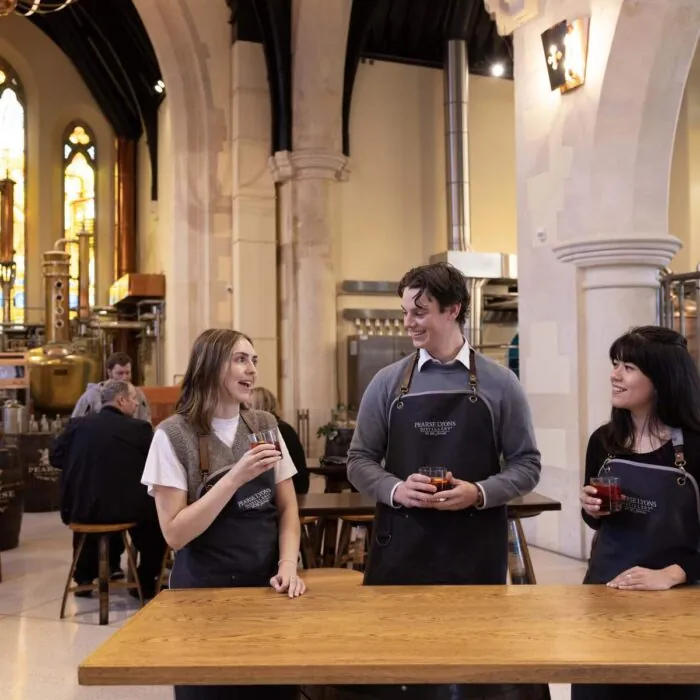
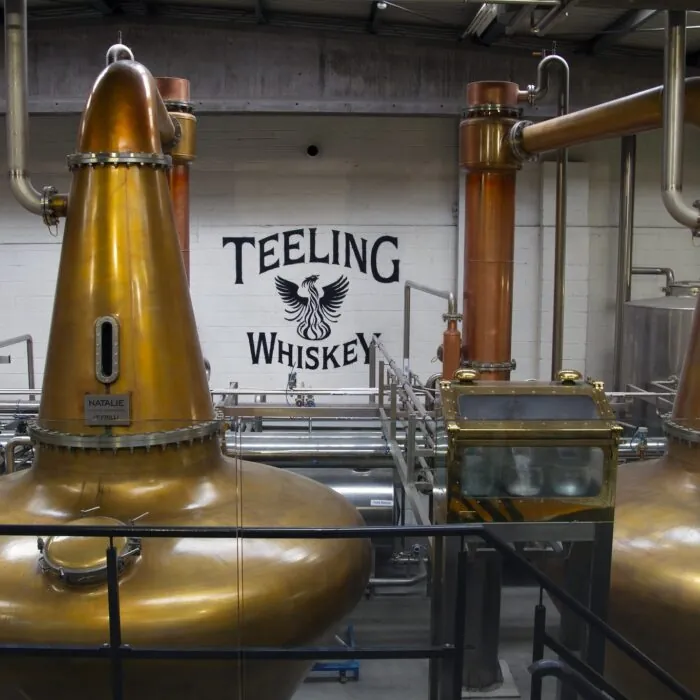
Continue on to St Patrick’s Cathedral, Marsh’s Library, Christ Church Cathedral or Dublinia. The district is also home to the Roe & Co whiskey distillery, housed in the former Guinness power station, as well as several buildings that recall Dublin’s industrial past.
St James’s Gate can therefore serve as the starting point for a wider walk through the Liberties. Behind its brick façades, old chimneys and working-class streets, another side of Dublin emerges, long shaped by brewers, distillers, weavers and workers.
Is St James’s Gate the entrance to the Guinness Storehouse?
No. The iconic gateway is part of the brewery’s historic setting, but the entrance for Guinness Storehouse visitors is at a different address, usually indicated on tickets and tourist signs.
Can you see St James’s Gate for free?
Yes. The gateway is visible from the street and can be photographed free of charge. Only a visit to the Guinness Storehouse or an organised experience within the brewery requires a ticket.
Does the gateway really date from 1759?
The year 1759 refers above all to Arthur Guinness’s arrival and the signing of his famous lease. The name St James’s Gate is older and comes from a historic gateway that stood in this part of Dublin before the brewery was founded.
Want to extend your visit without having to rush around? Here are a few well-located places to stay near the must-see attractions.
Essential information to help you plan your visit, including key landmarks, access information, and booking options.
St James Street, The Liberties, The Liberties
53.343405, -6.287069
10 minutes