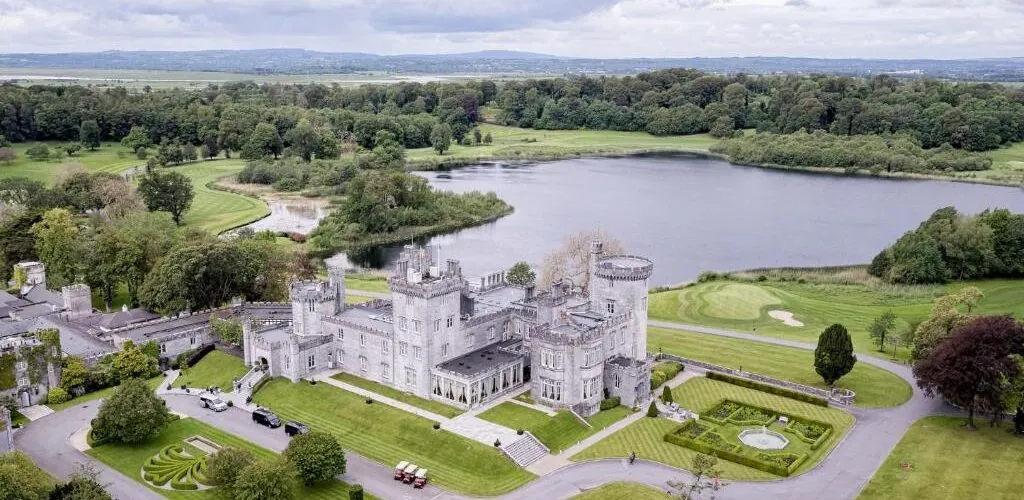
Dromoland Castle closes its doors on Monday 9 November 2026. At this County Clare estate, the hotel is embarking on €55 million of works, its largest renovation since opening in 1963. Tourism Ireland has announced that it will reopen in June 2027. Visitors will have to wait until July, however, to see the centrepiece of the project: the former courtyard, topped with a glass roof.
At Dromoland, the major transformation centres on the courtyard
A glass roof spanning almost 300 m² at the heart of the castle
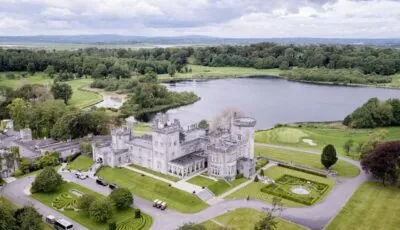
From the lawn, Dromoland’s silhouette is defined by its towers, battlements and Gothic windows. The most visible change for guests will take place within this ensemble. In its press release on the works, the hotel describes a glass atrium of almost 300 m² to be created in the historic courtyard. Coffee will be served there during the day, while concerts will take place in the evening. The same courtyard will therefore take on different roles throughout the day, while remaining a meeting place when it rains.
The works extend far beyond the courtyard. Once the project is complete, the castle will have 121 bedrooms and suites, up from 96. Thirteen bedrooms are to be created in the former stables, a few minutes’ walk from the main building. The choice of location says something about the estate’s evolution: buildings once used to serve the house will become places to stay, with their own entrances and terraces near the walled gardens.
A kitchen garden for the restaurants and saunas by the lake
Chef Kevin Fleming is to oversee the new dining offering, including a grill restaurant with an open kitchen and fire cooking. A third walled garden is to be brought back into cultivation to supply the estate’s kitchens. It is a subtler change than the glass roof, but one that restores a practical purpose to the garden: growing what will end up on the plate.
Two glass-fronted saunas beside Lough Dromoland also feature in the plans, alongside the spa extension. They are due to be completed in phases. If your stay depends on one of these new features, check its opening date with the hotel: June marks the return of guests to the castle, while the atrium is scheduled for July. The press release does not set a precise date for each facility.
The castle seen today dates from the 19th century
From the O’Brien residence to the hotel that opened in 1963
The O’Briens, who trace their lineage back to Brian Boru, occupied Dromoland for many years. But the battlements visible from the lawn belong to a neo-Gothic residence built around 1835. The Irish architectural inventory attributes the building to brothers James and George Richard Pain, on the site of an earlier house demolished around 1826. The castle’s familiar appearance, then, is already the result of a major reconstruction.
The estate was sold in 1962, and the hotel opened the following year. This timeline offers another way of reading the current works: in 1835, neo-Gothic design gave a country house the appearance of a castle; in 2027, the glass roof is intended to give its courtyard a new purpose. The two transformations can be read from different places: one from the lawn, the other from inside the castle.
What can you do at Dromoland during the closure?
The golf course and lodges remain open
The closure affects the castle hotel. The estate says that the 18-hole golf course, its clubhouse and the leisure centre will remain open, along with the two independent lodges, Dromoland Lodge and Putters Lodge. Before booking, check the name of your accommodation: a night in a lodge during the works does not give access to the services of the closed castle.
For an itinerary in Clare, the works can also be an opportunity to stop at Quin Friary. The remains of this Franciscan friary, built on the ruins of an Anglo-Norman fortress, tell another story of how the county’s buildings have changed function over the centuries.