Reservations are recommended
Powered by GetYourGuide

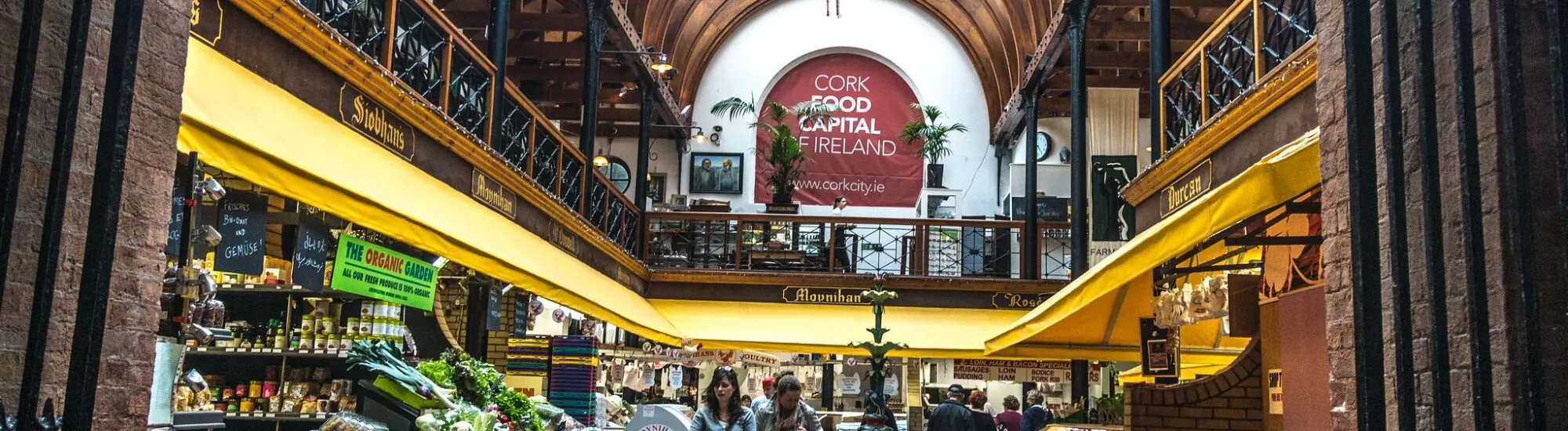
In Cork, food has a monument of its own. Behind an elegant façade on Grand Parade, the English Market unfolds with stalls laden with silvery fish, farmhouse cheeses, still-warm bread and sometimes surprising local specialities. Since 1788, this covered food market has told the story of the city through its produce, its families of traders and the distinctive conviviality for which Cork people are known.
More than simply a place to shop, the English Market offers an immersion in Irish food culture. Come here to put together a picnic, have lunch above the stalls, discover the flavours of County Cork or simply watch the daily bustle of fishmongers, butchers, bakers and local producers.
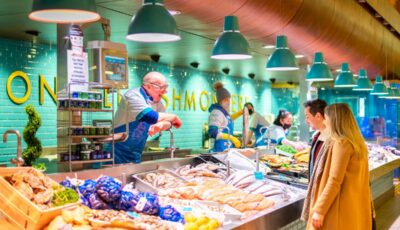
The English Market in Cork – © Fáilte Ireland
The official history of the English Market began on 1 August 1788, when Cork Corporation opened a covered food market in the heart of the city. Its name does not refer to the nature of the goods sold: it was once used to distinguish it from another municipal market, known as the Irish Market, which opened a few decades later.
Over the centuries, the market has seen Cork through its darkest hours as well as its periods of prosperity. It continued to supply the population during the Great Famine, wars, recessions and the many floods that have shaped the history of this city built around the branches of the River Lee.
A devastating fire swept through the building in 1980. Only the outer walls and the decorative fountain at the centre of the market survived. Yet the English Market was rebuilt in keeping with its historic architecture, before resuming its role as a local market and meeting place. A second fire, in 1986, required further work, but did not manage to halt its activity for long.
Beneath its Victorian-inspired roof structure and galleries, the market retains a remarkably lively atmosphere today. Light falls from the ceiling onto the stalls, glints off the fishmongers’ displays and reveals a profusion of colour: the deep red of spiced beef, the ivory of farmhouse cheeses, the green of fresh herbs and the golden brown of artisan breads.
The market gained international renown, notably following the visit of Queen Elizabeth II in May 2011. Her meeting with traders, held during the first visit by a British monarch to the Republic of Ireland since independence, remains a significant moment in Cork’s recent history.
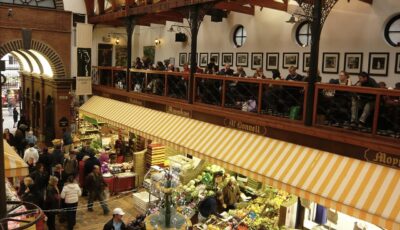
Stalls at the English Market, Cork’s iconic market – © WordRidden
The English Market is one of Cork’s best places to discover produce from both land and Atlantic waters. Depending on the catch, fishmongers display salmon, hake, mackerel, oysters, mussels and a variety of shellfish caught around the Irish coast. Butchers, meanwhile, offer local beef, poultry, pork, artisan sausages and sometimes Kerry lamb.
The market is also a place to try several specialities closely associated with Cork. Drisheen is a traditional blood sausage with a texture and flavour distinct from classic black pudding. Spiced beef, salted beef flavoured with a blend of spices, holds a special place on Cork tables, particularly during the Christmas season.
More unusual still, buttered eggs are eggs whose shells were once coated with a thin layer of butter to extend their keeping time. This traditional method, which predates modern refrigeration by a long way, is a reminder that the English Market is also a repository of the region’s food traditions.
Less adventurous travellers will easily find everything they need for an enticing lunch: farmhouse cheeses, cured meats, sourdough breads, pastries, fruit, vegetables, jams, honey, chocolates and artisan fudge. However, the selection is no longer limited to Irish specialities. The stalls now reflect Cork’s cosmopolitan character, with spices, Mediterranean produce, Asian dishes and cuisines from around the world.
On the upper floor of the English Market, the Farmgate Café is an iconic spot overlooking the stalls. From its dining room, you can watch the market at work while enjoying cuisine inspired by the produce sold just a few metres below. Menus change, but typically showcase soups, fish, local meats, savoury tarts and homemade desserts.
You can also buy a sandwich, pastry or takeaway dish from some traders. It is an ideal option for a picnic in central Cork, particularly in Bishop Lucey Park, directly opposite the Grand Parade entrance.
To make the most of the experience, it is best to visit the English Market in the morning. The stalls are then well stocked, and you will encounter more locals doing their shopping. By lunchtime, the aisles become livelier and queues can form at the food counters.
The appeal of the English Market lies not only in what you can buy there. It also lies in conversations with its traders, some of whom belong to families that have worked here for several generations. Conversations naturally move from the origins of a cheese to the best way to cook a fish, with the free-spirited manner that characterises Cork.
The market remains a genuine civic space: a shortcut between several streets in the city centre, a meeting place and a privileged vantage point from which to observe local life. Despite its popularity with travellers, it has not been turned into a tourist backdrop. Locals still come here to buy their meat, vegetables or lunch, preserving the authenticity of the place.
A visit may take around half an hour, though food lovers can easily spend an hour here, or longer if they are planning a meal. The main entrance is on Grand Parade, while another access point leads into the market from Princes Street. To plan your visit and check for any exceptional closures, consult the official English Market website.
Essential information to help you plan your visit, including key landmarks, access information, and booking options.
Princes Street, Grand Parade, Cork, County Cork, Republic of Ireland, Tourist sites in Ireland
51.897638607369515, -8.47482763038825
45 minutes
Official opening hours: Monday to Saturday, 8.30am to 6pm.
Closed: Sundays and Irish public holidays.
Some traders may keep slightly different hours or close their stalls before the market’s official closing time. For the widest choice of produce, visit between 9am and noon. The atmosphere is particularly lively around lunchtime, though the aisles are busier then.
Check the opening hours and admission requirements before you leave, especially during peak season or on Irish public holidays.
Entry to the English Market is free, and no booking is required to browse the aisles. Purchases from traders and meals eaten on site are, naturally, charged for.
Your budget depends entirely on the experience you are looking for: a few euros are enough for a pastry or light snack, while a full lunch, artisan produce or a selection for a picnic will require a larger budget.
Good to know: the Farmgate Café operates independently from the market. Its opening hours and prices may change; checking them before your visit is recommended.
Compare tickets, guided tours, and excursions available through our partner platforms.