
The Irish Civil War, fought between June 1922 and May 1923, pitted men who had fought side by side during the Irish War of Independence against one another. At the heart of the conflict was the Anglo-Irish Treaty, signed in London in December 1921.
For its supporters, the agreement was a decisive step towards independence. For its opponents, by contrast, it was a betrayal of the Republic proclaimed in 1916. Within a few months, this political divide had become a brutal, deeply traumatic fratricidal war, whose consequences would leave a lasting mark on Irish political life.
The Irish Civil War officially began on 28 June 1922, when the forces of the Provisional Government bombarded Dublin’s Four Courts, which were occupied by members of the anti-Treaty IRA.
It ended on 24 May 1923, when Frank Aiken ordered Republican fighters to lay down their arms. Prisoners nevertheless remained interned long after this date, which explains why some archives extend the period of the Civil War until 1924.
This conflict was not simply between Ireland and the United Kingdom. It divided the Irish nationalist movement itself. On one side were supporters of the Treaty, gathered around the Provisional Government and the National Army. On the other were IRA republicans who rejected any compromise with the British Crown.
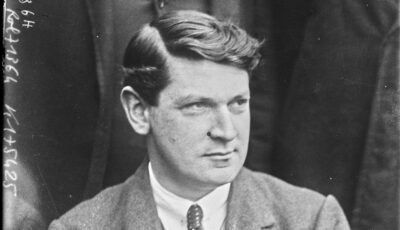
Michael Collins – Public domain
The Anglo-Irish Treaty was signed in London on 6 December 1921, following several weeks of negotiations between British representatives and an Irish delegation that included Michael Collins and Arthur Griffith.
The agreement ended the War of Independence and provided for the creation of the Irish Free State. However, this new state was to remain a dominion of the British Empire, with a status comparable to that then enjoyed by Canada.
The Treaty provided, in particular, for:
Contrary to a frequently repeated belief, the Treaty did not itself create the partition of Ireland. Partition had already been established by the Government of Ireland Act of 1920, which created two separate political entities.
After the official creation of the Free State in December 1922, the Northern Ireland Parliament exercised the option provided by the Treaty to remain within the United Kingdom. The border between the two territories then became one of the main sources of discord.
The debates held in the Dáil Éireann were particularly tense. Supporters of the Treaty believed it would finally give Ireland genuine autonomy, a national army and institutions capable of gradually leading the country towards fuller sovereignty.
Michael Collins himself presented the agreement as a step rather than the final fulfilment of the republican struggle. He believed the Treaty gave Ireland “the freedom to achieve freedom”.
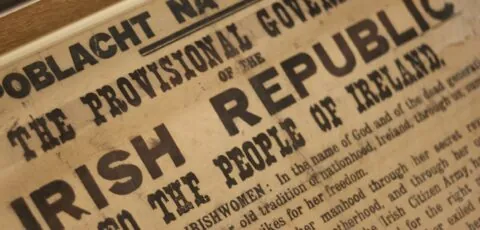
Its opponents, however, regarded the compromise as unacceptable. They rejected dominion status, the oath to the Crown and the continuation of partition. In their view, accepting the text meant abandoning the Irish Republic proclaimed during the Easter Rising of 1916.
On 7 January 1922, the Dáil finally ratified the Treaty by 64 votes to 57. Éamon de Valera, who opposed it, resigned as President of the Dáil. Arthur Griffith succeeded him, while Michael Collins became head of the Provisional Government tasked with organising the transition.
The results and debates surrounding this ratification can now be consulted in the Irish Parliament archives.
The political split quickly spread through the ranks of the IRA. Some of its members accepted the authority of the Provisional Government and gradually joined the new National Army. These fighters became known as the “pro-Treaty” side.
The republicans who rejected the agreement retained the name IRA. They claimed to be defending the Republic of 1916 and maintained that the Provisional Government had no legitimacy.
The division ran through former brigades, villages and sometimes families. Men who had taken part together in ambushes against British forces now found themselves on opposing sides.
Éamon de Valera became the leading political figure of the anti-Treaty movement, but did not directly command its military operations. The anti-Treaty IRA retained its own leadership, centred on figures such as Rory O’Connor and Liam Lynch.
On 14 April 1922, around 200 members of the anti-Treaty IRA, led by Rory O’Connor, occupied the Four Courts, Dublin’s main courthouse. Their aim was to defy the Provisional Government and bring about the collapse of the Treaty.
For several weeks, Michael Collins sought to avoid an open confrontation. The situation nevertheless became increasingly unstable. The British government threatened to intervene if the Irish authorities did not regain control of the capital.
The assassination of British Field Marshal Henry Wilson in London on 22 June 1922 increased the pressure still further. A few days later, the Four Courts occupiers kidnapped General J. J. “Ginger” O’Connell, a member of the National Army.
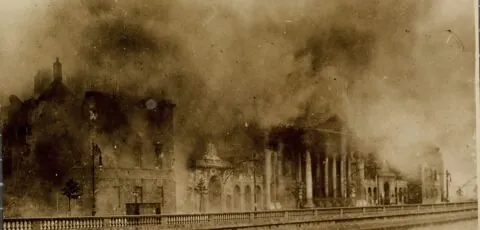
On 28 June, government forces finally opened fire on the building with artillery supplied by the British. The bombardment marked the official beginning of the Irish Civil War.
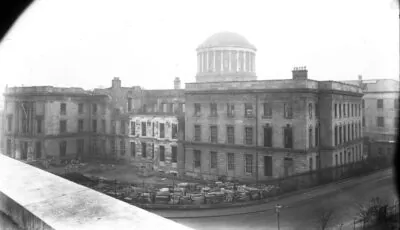
The Four Courts during the Irish Civil War – Public domain
After several days of bombardment, the Four Courts garrison surrendered. A violent explosion destroyed part of the complex and resulted in the loss of numerous Irish historical records held in the Public Record Office.
Fighting nevertheless continued in Dublin’s streets. Anti-Treaty groups occupied several buildings, particularly around O’Connell Street. The National Army eventually regained control of the capital in early July.
Cathal Brugha, former Minister for Defence and a leading figure in the republican movement, was mortally wounded during the final clashes. His death illustrates the violence of a war in which the heroes of independence had now become enemies.
After their defeat in Dublin, anti-Treaty forces retained extensive territories in southern and western Ireland. An area controlled by republicans, sometimes called the “Munster Republic”, then stretched from Limerick to Waterford and into County Cork.
The National Army, however, benefited from growing numbers, better weaponry and armoured vehicles. It also received arms and ammunition from the British government.
During the summer of 1922, government forces launched several offensives. Sea landings were organised in County Kerry and near Cork, taking the republicans from the rear. Limerick, Waterford and Cork were gradually recaptured.
By the end of August, the government controlled the main towns and most of the territory. Treaty opponents had not been defeated, however: they abandoned conventional fighting and returned to the guerrilla methods used during the War of Independence.
On 12 August 1922, Arthur Griffith died in Dublin from a cerebral haemorrhage. Ten days later, on 22 August, Michael Collins was killed in an ambush at Béal na Bláth, County Cork.
The death of Collins, who was only 31, came as an immense shock. A formidable military leader during the struggle against the British, Treaty negotiator and then leader of the National Army, he had become one of the central figures of the Irish revolution.
William T. Cosgrave then took charge of the government, while Richard Mulcahy played a major role as head of the National Army. Despite the loss of its principal leaders, the pro-Treaty side retained the military advantage.
From the autumn of 1922, the war took on a different form. Anti-Treaty fighters set up ambushes, sabotaged railway lines, destroyed infrastructure and attacked representatives of the new state.
The government responded with an increasingly severe policy. Emergency legislation notably authorised the execution of fighters found in possession of weapons. In total, 77 anti-Treaty prisoners were officially executed by the Free State during the conflict.
They included Rory O’Connor, Liam Mellows, Richard Barrett and Joe McKelvey, who were shot in December 1922 after the assassination of pro-Treaty TD Seán Hales. These executions, carried out in reprisal, deepened the divide between the two sides still further.
Extrajudicial violence was also committed. In March 1923, several republican prisoners died at Ballyseedy in Kerry after being tied around a mine by National Army soldiers. The massacre remains one of the darkest episodes of the Civil War.
By the spring of 1923, the anti-Treaty IRA was exhausted. Its fighters lacked arms, ammunition and popular support. Much of the population, worn down by several years of conflict, now wanted peace to return.
On 10 April 1923, Liam Lynch, Chief of Staff of the anti-Treaty IRA, was mortally wounded in the Knockmealdown Mountains. Frank Aiken succeeded him.
On 30 April, Aiken ordered the suspension of offensive operations. On 24 May 1923, he finally asked republican fighters to lay down their arms and return home. The decision ended the war without a formal capitulation or peace treaty.
Éamon de Valera supported the cessation of fighting, but the military order did indeed come from Frank Aiken, not from the former President of the Dáil.
The exact toll of the conflict remains uncertain. Contrary to the figure of 4,000 deaths sometimes put forward, contemporary historical research generally cites between 1,500 and 2,000 victims, including both combatants and civilians. The absence of a comprehensive register makes it impossible to establish a definitive total.
The Irish Military Archives now offer a map documenting some of the deaths linked to the conflict, while noting that this database does not list all victims.
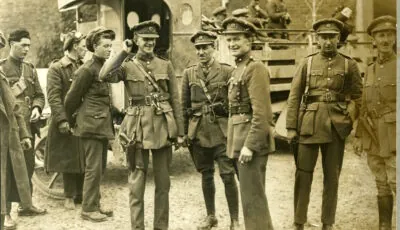
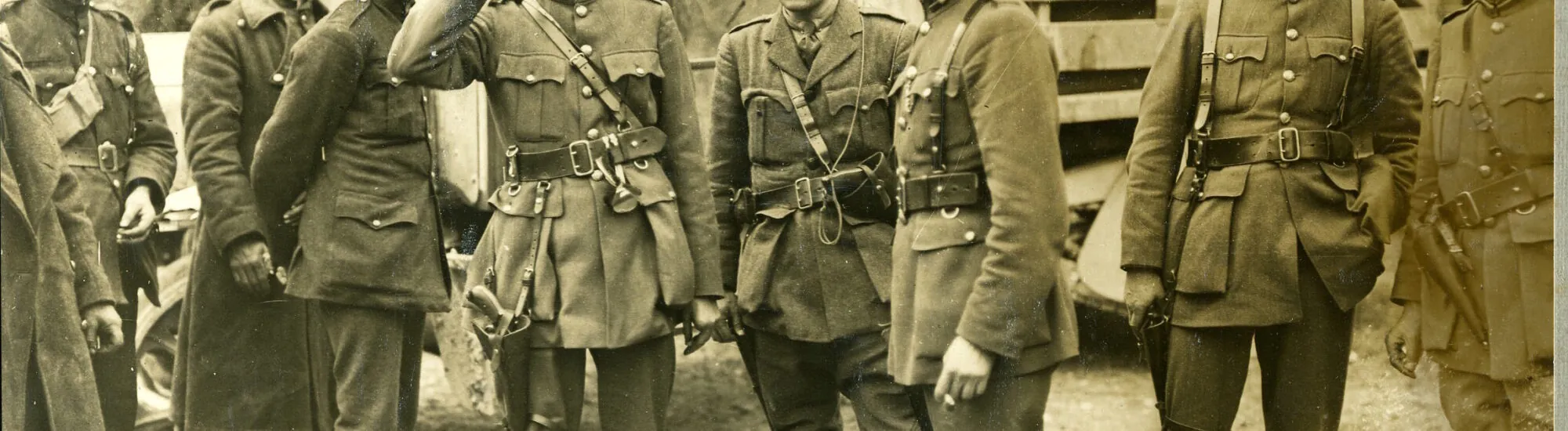
Irish soldiers during the Civil War
Around 12,000 anti-Treaty republicans were imprisoned or interned at the height of the repression. Some went on hunger strike, and several detainees remained in prison until 1924.
The conflict also left behind destroyed infrastructure, a weakened economy and communities divided for generations.
The Anglo-Irish Treaty provided for the creation of a commission to re-examine the border between the Free State and Northern Ireland. Many nationalists hoped that predominantly Catholic territories would join the new state, leaving Northern Ireland economically too fragile to survive.
The commission’s conclusions, revealed in 1925, were far more modest, however. They even envisaged transferring certain territories from the Free State to Northern Ireland.
An agreement reached between Dublin, Belfast and London in December 1925 ultimately retained the existing border. In return, the Free State was released from the obligation, set out in Article 5 of the Treaty, to contribute to part of the British public debt.
This was therefore not a British demand for additional territory in exchange for debt relief, but a political compromise that ended the border dispute.
The Civil War left a deep imprint on Irish politics. Treaty supporters formed the foundation of Cumann na nGaedheal, and later Fine Gael. Éamon de Valera and some of the republicans founded Fianna Fáil in 1926, having chosen to enter the institutions of the Free State.
For several decades, Irish political life remained organised around the stance taken by each side on the 1921 Treaty, at times more so than around a traditional divide between right and left.
The Free State gradually evolved towards full independence. The 1937 Constitution created the state named Éire, or Ireland, while the Republic was proclaimed in 1949.
The Civil War nevertheless remains a painful memory. Because it set comrades-in-arms, neighbours and sometimes members of the same family against one another, it was long discussed with restraint. A century later, its wounds still help explain the fault lines that have shaped contemporary Ireland.