
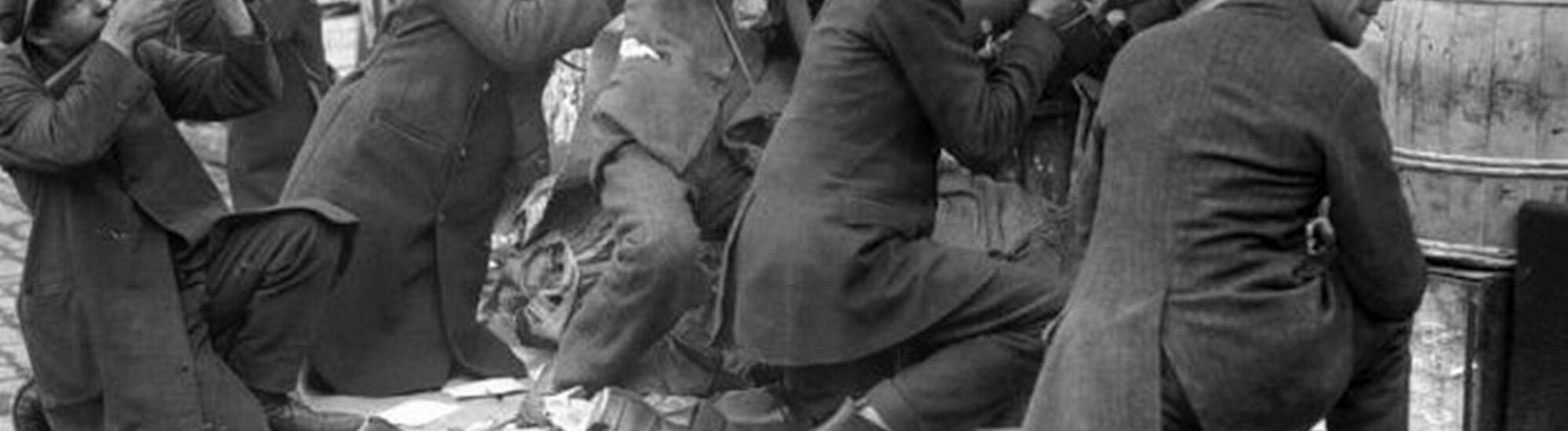
On the morning of Monday 24 April 1916, Dublin wakes to the relative calm of the Easter weekend. Trams are still running and passers-by are unaware that armed men and women are converging on several strategic buildings. Shortly after noon, volunteers enter the General Post Office on O’Connell Street. Outside the building, Patrick Pearse reads a text proclaiming an independent Irish Republic.
The 1916 Easter Rising, or Easter Rising, has begun. For six days, around 1,600 insurgents confront British forces in Dublin, soon reinforced by several thousand soldiers. Fighting, bombardment and fires turn part of the city centre into a landscape of ruins. Most of those killed are civilians caught between the two sides.
Militarily, the uprising ends in defeat. Politically, its consequences are immense. The executions ordered after the surrender transform public opinion, which had initially been largely unsympathetic to the insurgents. Within a few years, the event helps shift Ireland from parliamentary nationalism towards the demand for full independence.
The Easter Rising was an armed revolt organised during the First World War by a minority of Irish republicans. Its aim was to end British rule and establish a sovereign republic across the whole island.
The French expression “Pâques sanglantes” is sometimes used, but it is not the most common historical designation. In Ireland and in academic research alike, the event is chiefly known as the Easter Rising, the 1916 Rising or the Easter Rising.
The uprising was not organised by the Irish Republican Army as it emerged during the War of Independence. The main forces involved in 1916 were the Irish Volunteers, the Irish Citizen Army, the women’s organisation Cumann na mBan and, to a lesser extent, the youth movement Fianna Éireann.
Within the Irish Volunteers, the real clandestine driving force behind the rising was the Irish Republican Brotherhood, or IRB, a secret revolutionary organisation founded in the 19th century.
In 1916, the whole island of Ireland was part of the United Kingdom of Great Britain and Ireland. Since the Act of Union came into force in 1801, the Irish Parliament had ceased to exist and the island’s affairs had been administered from London.
During the 19th century, Irish nationalism took several paths. Some movements called for the repeal of the Union or for self-government achieved through parliamentary means. Others, heirs to the rebellions of 1798 and 1803, believed that only armed revolution could establish a republic.
At the beginning of the 20th century, most of the nationalist movement still supported Home Rule, a proposal for internal self-government that would keep Ireland within the United Kingdom. A law was eventually passed in 1914, but its implementation was suspended with the outbreak of the First World War.
This delay fuelled the frustration of a republican minority. For its members, the European war represented an exceptional opportunity: the United Kingdom had deployed its forces on the continent and was engaged in a major conflict with Germany.
The prospect of Irish self-government provoked fierce opposition among unionists, who were particularly numerous in Ulster. In 1912, the Ulster Volunteer Force was established to resist the implementation of Home Rule, including by force of arms.
In response, nationalists founded the Irish Volunteers in Dublin in November 1913. Their original aim was to defend Ireland’s right to self-government.
Another armed force already existed in the capital: the Irish Citizen Army. It was formed during Dublin’s great industrial dispute of 1913 to protect striking workers from police violence. Under the influence of the socialist James Connolly, it combined the struggle for national independence with a project of social transformation.
When the First World War broke out in August 1914, the Volunteers movement split. The majority followed parliamentary leader John Redmond and supported the enlistment of Irish soldiers in the British Army. A minority retained the name Irish Volunteers and refused to fight for the United Kingdom.
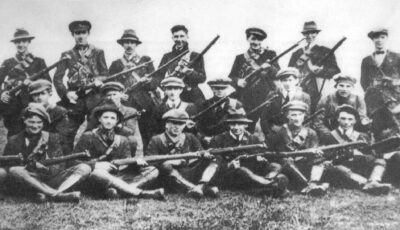
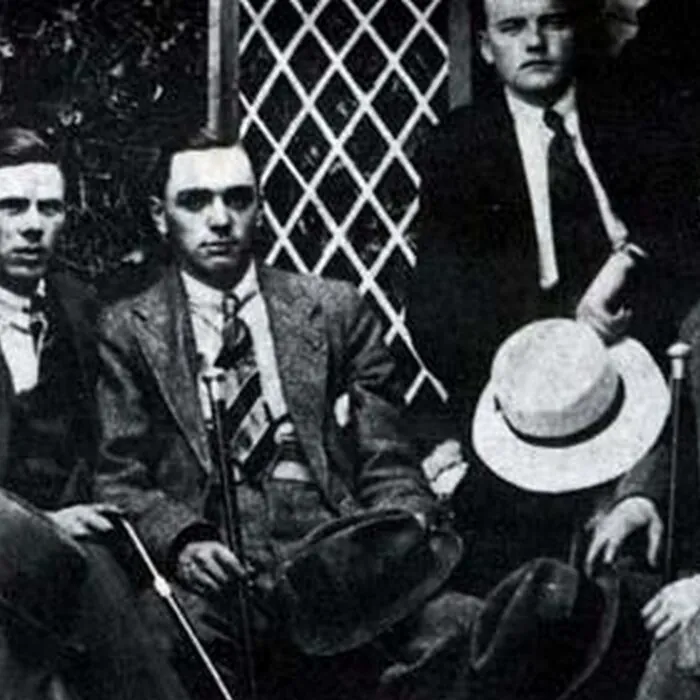
Irish republican volunteers – Public domain
The decision to prepare an uprising was taken secretly by a military council of the Irish Republican Brotherhood. Its core consisted of seven men who would become the signatories of the Proclamation of the Republic:
The official commander of the Irish Volunteers, Eoin MacNeill, was not informed of every detail of the plot. The organisers feared that he would reject an offensive operation without popular support or any realistic prospect of success.
The council planned to conceal the mobilisation as military manoeuvres scheduled for Easter Sunday. Volunteers were to receive their real orders at the last minute.
The insurgents sought support from Germany, the United Kingdom’s enemy during the First World War. The diplomat and Irish nationalist Roger Casement travelled to Germany to obtain weapons and form a brigade from Irish prisoners of war who had served in the British Army.
The hoped-for brigade barely materialised, but Berlin agreed to send a shipment of weapons. The German ship Libau, disguised as the Norwegian cargo vessel Aud, carried around 20,000 rifles, ammunition and several machine guns towards the coast of Kerry.
Coordination failed. The ship did not meet the volunteers assigned to receive the cargo and was intercepted by the Royal Navy. On 22 April 1916, its captain, Karl Spindler, scuttled the vessel at the entrance to Cork Harbour to prevent the British from seizing the weapons.
Roger Casement, who had landed on Banna Strand from a German submarine, was arrested on 21 April. Weak and concerned about the chances of success, he had wanted to try to prevent an uprising that he believed was doomed without the promised weapons.
Having learned of the plan and the failure of the German delivery, Eoin MacNeill issued an order cancelling the manoeuvres planned for Easter Sunday. This countermand caused enormous confusion among units across the country.
The military council nevertheless decided to act. The rising was postponed until Monday 24 April, but many volunteers were unaware of the change, obeyed MacNeill or never received further instructions.
This disorganisation largely explains the limited number of participants. The Military Archives have identified 2,611 people later recognised for their involvement across the island, but the numbers mobilised in Dublin at any one time were considerably lower.
On Easter Monday, around 1,200 insurgents take up positions in Dublin. Their numbers then increase during the week to approximately 1,600 fighters.
Shortly after noon, Patrick Pearse, James Connolly, Thomas Clarke, Joseph Plunkett, Seán Mac Diarmada and their men occupy the General Post Office, on Sackville Street, now O’Connell Street. The GPO becomes the headquarters of the rising.
Patrick Pearse reads the Proclamation of the Irish Republic outside the building. The text is signed by the seven members of the military council and declares the Irish people’s right to sovereignty.
The proclamation guarantees civil and religious liberty, as well as equal rights for women and men, a particularly remarkable wording in 1916. It addresses the “men and women of Ireland” and promises a government elected by the suffrage of the whole population.
The reading took place on Monday 24 April, not Tuesday 25 April. It was not broadcast live by radio. The following day, however, insurgents used a wireless telegraphy station to transmit a message announcing the establishment of the Republic.
The insurgents did not seek to control Dublin uniformly. They occupied several complexes forming a defensive arc around the city centre and the main routes by which British reinforcements could arrive.
Headquarters was established at the GPO under the command of James Connolly and Patrick Pearse. Edward Daly commanded the Four Courts sector. Thomas MacDonagh took up position at Jacob’s biscuit factory, while Éamon de Valera occupied Boland’s Bakery and several buildings near the Grand Canal.
Éamonn Ceannt led the volunteers entrenched in the South Dublin Union, now incorporated into St James’s Hospital. Seán Heuston occupied the Mendicity Institution to delay soldiers coming from the Royal Barracks, now Collins Barracks.
The Irish Citizen Army took up position at St Stephen’s Green under the command of Michael Mallin and Constance Markievicz. When British soldiers occupied buildings overlooking the park, the insurgents withdrew to the Royal College of Surgeons.
The rebels also seized City Hall and attempted to attack Dublin Castle, the administrative centre of British power. The assault failed and the castle remained in the hands of the authorities.
Michael Collins did take part in the Easter Rising, but his importance in the preparation and military leadership of the uprising is sometimes exaggerated in hindsight.
At the age of 25, he served at the GPO alongside Joseph Plunkett. He observed the command’s decisions and later criticised the strategy of occupying large buildings that were difficult to evacuate.
Collins would become a central figure in the War of Independence through his organisation of intelligence and guerrilla warfare. In 1916, however, he was not a member of the military council and was not among the signatories of the Proclamation.
Women’s role was not limited to finding food or tending the wounded. Around 200 members of Cumann na mBan and the Irish Citizen Army took part in the Dublin rising.
The women of Cumann na mBan carried messages, weapons, intelligence and provisions between the garrisons. They organised first-aid posts, took part in evacuations, and concealed or destroyed sensitive documents at the time of the surrender.
The Irish Citizen Army recognised women as full members. Some had received military training and took a direct part in the fighting. Constance Markievicz served as an officer alongside Michael Mallin at St Stephen’s Green and the Royal College of Surgeons.
Winifred Carney entered the GPO with a typewriter and a revolver. James Connolly’s secretary, she remained with him for much of the fighting. Kathleen Lynn, a doctor and member of the Irish Citizen Army, took part in the occupation of City Hall before treating the wounded.
Elizabeth O’Farrell played a decisive role in the final hours. A nurse and member of Cumann na mBan, she carried Patrick Pearse’s message to the British authorities, then conveyed the surrender orders to the various garrisons.
More than 70 women were arrested after the rising. Most were quickly released, as the British authorities often underestimated their political and military commitment.
Constance Markievicz was sentenced to death, but her sentence was commuted to life imprisonment. The decision was officially based on her sex. She is said to have remarked that her judges had not even had “the decency” to shoot her.
Traditional accounts of 1916 long reduced women to auxiliary roles. Military archives and pension applications now reveal a much broader reality: they were present at most of the principal strongholds and took a full part in the revolutionary movement.
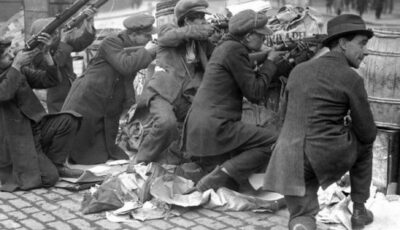
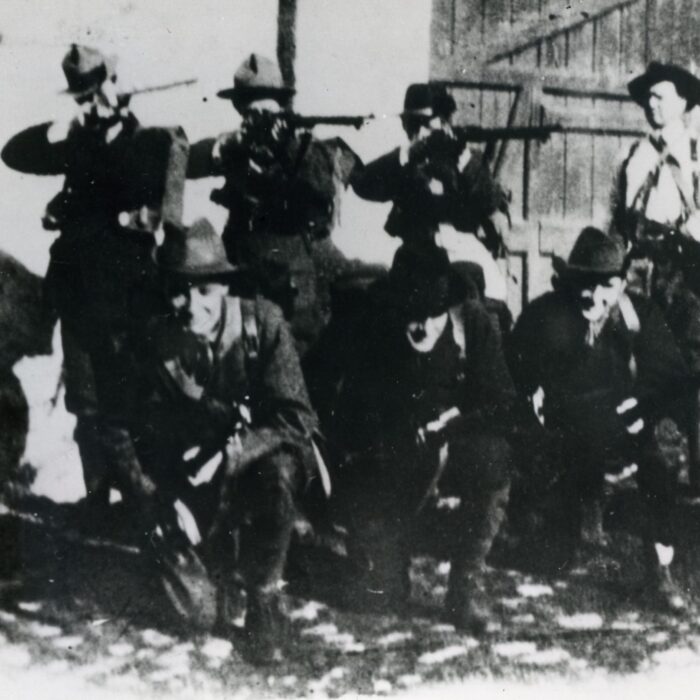
Irish insurgents during the Easter Rising – Public domain
The British authorities were surprised by the outbreak of the rising, but retained Dublin Castle, the main ports and several essential facilities. They could therefore quickly bring in soldiers from the Curragh, Belfast, Athlone and Great Britain.
As the week went on, the balance of forces became overwhelming. By the end of the fighting, around 16,000 British soldiers and a thousand armed police had been deployed in the Dublin area.
The army used machine guns, artillery and the building of Trinity College as a defensive position. The gunboat Helga, which sailed up the Liffey, took part in the bombardment of several positions.
Artillery fire and fires devastated Sackville Street and neighbouring streets. The GPO caught fire, along with many city-centre businesses. The destruction was not solely the result of fighting: looting also occurred in some areas thrown into disorder.
On Wednesday 26 April, British reinforcements newly landed at Dún Laoghaire advanced towards the centre along the Ballsbridge road. They encountered a handful of volunteers entrenched around Mount Street Bridge.
British soldiers launched several frontal attacks against positions that were difficult to spot. A small number of insurgents inflicted considerable losses before being killed, captured or forced to withdraw.
Estimates vary according to the source, but around 30 British soldiers died in the area. This battle illustrates both the effectiveness of certain rebel positions and the human cost of assaults launched without sufficient reconnaissance.
The South Dublin Union became the scene of particularly violent close-quarters fighting. Around 150 volunteers commanded by Éamonn Ceannt, Cathal Brugha and W. T. Cosgrave occupied part of this vast complex of buildings.
The clashes took place in courtyards, corridors and rooms still occupied by patients and residents. Despite British attacks, part of the garrison held out until the general surrender.
Around North King Street, near the Four Courts, soldiers advanced from house to house. Fifteen civilians were killed by members of the South Staffordshire Regiment in circumstances regarded as summary executions. The bodies of several victims were concealed in cellars or beneath rubble.
Other civilians were victims of arbitrary acts, including the pacifist and journalist Francis Sheehy-Skeffington, shot without trial alongside two other men on the orders of Captain John Bowen-Colthurst.
Eoin MacNeill’s countermanding order severely limited mobilisation in the provinces, but the rising did not take place solely in Dublin.
In County Meath, volunteers from the Fingal Battalion, commanded by Thomas Ashe and Richard Mulcahy, won a success at Ashbourne against the Royal Irish Constabulary. It was the main military engagement outside the capital.
Volunteers also mobilised in Counties Galway, Wexford, Louth, Cork and elsewhere, with actions varying in scale. In County Galway, several hundred men assembled under Liam Mellows, but a lack of weapons and the arrival of British reinforcements prevented any sustained offensive.
After several days of bombardment, the GPO was devastated by fire. James Connolly had been seriously wounded in the ankle. Communications between the various garrisons became increasingly difficult.
On Friday 28 April, those inside evacuated the building by breaking through the walls of neighbouring houses to avoid gunfire. They attempted to reach other positions in the streets north of the GPO. The O’Rahilly, one of the founders of the Irish Volunteers, was fatally wounded during a sortie.
Headquarters was eventually established at 16 Moore Street. Surrounded by wounded people and aware of civilian losses, Patrick Pearse decided to negotiate a surrender.
On Saturday 29 April, Patrick Pearse accepted an unconditional surrender. He explained that he wished to prevent further destruction in Dublin and the deaths of more civilians.
Elizabeth O’Farrell carried messages between the insurgent command and the British authorities. She then accompanied Pearse at the formal surrender, before conveying the order to cease fighting to the other garrisons.
Some units, which had resisted successfully during the week, learned with astonishment that they had to lay down their arms. The final surrenders took place on Sunday 30 April.
The rising had lasted six days in its main phase, from Monday 24 to Saturday 29 April 1916.
The most comprehensive historical research records at least 485 people who died during the rising or as a direct result of the fighting.
More than 2,600 people were injured. Precise figures vary according to the counting method, but civilians again made up the great majority of victims.
Women, elderly people and around 40 minors were among the dead. Some were caught in crossfire; others were victims of artillery, unjustified shootings or summary executions.
These figures are a reminder that the rising was not merely the heroic confrontation often portrayed in commemorations. It was also an urban battle fought amid a population that had not been evacuated.
Bombardment and fire destroyed much of Sackville Street. The GPO was gutted, and many businesses were reduced to charred façades.
Reconstruction permanently changed the city-centre landscape. Some buildings now considered historic in fact date from the years following the rising.
The GPO was restored and reopened in 1929. Its façade still bears marks attributed to the fighting of 1916, visible traces of the revolution at the heart of the capital.
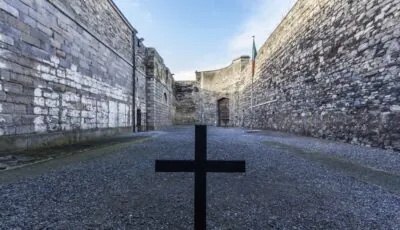
Yard where the leaders of 1916 were executed at Kilmainham Gaol – © Paulo Nabas
In the days following the surrender, the British authorities made mass arrests. Around 3,430 men and 79 women were detained, including participants, sympathisers and people with no direct connection to the rising.
Nearly 1,800 detainees were sent to prisons or internment camps in Great Britain. Frongoch camp in Wales became a genuine political and military school for a new generation of republicans.
Michael Collins notably developed his network there. Several future leaders of the War of Independence exchanged experiences, analysed the failure of 1916 and prepared new forms of action.
Trials were held by courts martial sitting in private. Around 90 death sentences were handed down, but most were subsequently commuted.
Between 3 and 12 May 1916, 14 men were executed by firing squad in the yard of Kilmainham Gaol. The seven signatories of the Proclamation were among them:
William Pearse, Edward Daly, Michael O’Hanrahan, John MacBride, Michael Mallin, Seán Heuston and Con Colbert were also shot at Kilmainham.
James Connolly was so badly wounded that he could not stand. He was brought by ambulance from Dublin Castle and tied to a chair for his execution. His death on 12 May caused considerable emotion.
The 14 men shot at Kilmainham Gaol were not the only people executed in the wake of the rising. Thomas Kent was shot in Cork on 9 May after a police officer was killed during an attempted arrest at the family home.
Roger Casement was tried for high treason in London. He was hanged at Pentonville Prison on 3 August 1916. In total, 16 men were executed for their role in the Easter Rising and the events surrounding it.
Éamon de Valera, commander of the Boland’s Mill garrison, was sentenced to death, but his sentence was commuted to life imprisonment.
His birth in New York and the possibility that he was an American citizen probably played a part, but do not fully explain the decision. The United States had not yet entered the war and the British authorities wished to avoid a diplomatic incident.
Other factors were involved: de Valera was not a signatory of the Proclamation, his trial took place after the first hostile reaction to the executions, and the British government was beginning to understand their disastrous effect on public opinion.
It is therefore inaccurate to claim that his American nationality would automatically have protected him from execution.
The image of Dublin’s population unanimously supporting the insurgents from the first day does not reflect reality. Many residents were surprised, anxious or hostile.
Some families had relatives fighting in the British Army on the European front. Others feared losing their jobs, homes or the allowances paid to soldiers’ families. Shortages, looting and destruction also fuelled anger.
Some prisoners were insulted as they were transferred. Public opinion did not immediately turn in favour of the rebellion.
The succession of executions, secret trials and the arrest of thousands of people nevertheless produced the opposite effect from that sought by the authorities.
As the firing squads continued, the insurgents appeared less as those responsible for a disaster than as men sacrificed for independence. The final letters of those condemned, circulated in the press and among families, reinforced this shift in collective memory.
Sinn Féin was then wrongly presented as the organiser of the rising. It had not prepared the uprising and its leader Arthur Griffith had not taken part. Yet this mistaken association drew republican activists released from British prisons towards the party.
In the general election of December 1918, Sinn Féin won 73 of the 105 Irish seats in the House of Commons. Its elected representatives refused to take their seats in London and established the first Dáil Éireann in Dublin in January 1919.
The Dáil again proclaimed independence. On the same day, an attack on police officers at Soloheadbeg in County Tipperary symbolically marked the beginning of the Irish War of Independence.
The conflict continued until the truce of July 1921. The Anglo-Irish Treaty created the Irish Free State in 1922, but left six counties of Ulster within the United Kingdom. Partition and the oath to the Crown divided the independence movement and led to the Civil War of 1922–1923.
The Republic of Ireland as it exists today was therefore not created directly in 1916. The rising opened a revolutionary period that led to partial independence, the partition of the island and then, in 1949, the official declaration of the Republic of Ireland.
The General Post Office remains the principal symbol of the rising. It was here that the Proclamation was read and the provisional government established its headquarters.
Its neoclassical façade still dominates O’Connell Street. The building remains a working post office and also houses the GPO Museum, dedicated to the history of the rising and the making of modern Ireland.
A few minutes’ walk away, Moore Street preserves the memory of the GPO evacuation and the insurgent command’s final hours. Number 16 Moore Street, where the surrender was decided, is not freely accessible to the public.
Kilmainham Gaol is the most moving memorial site associated with 1916. Fourteen leaders were shot there in May.
The guided tour passes through the cells, the Victorian wing and the execution yards. An exhibition displays letters, personal belongings and final testimonies from those condemned.
Online booking is essential. Tickets are officially sold only by Heritage Ireland, and resale platforms are not authorised.
At St Stephen’s Green, plaques mark the position occupied by the Irish Citizen Army. The insurgents dug trenches in the park before withdrawing to the Royal College of Surgeons.
The college still stands on the west side of the green. Its façade still bears marks attributed to gunfire from 1916. The interior is a university institution and is not freely open to visitors.
Dublin Castle was the centre of British administration in Ireland. Insurgents attacked its surroundings at the beginning of the rising, but failed to capture it.
City Hall, immediately beside it, was occupied by a unit of the Irish Citizen Army commanded by Seán Connolly. He was killed shortly after the fighting began.
Dublin Castle was later used to hold prisoners and treat the wounded. James Connolly spent his final hours there before being transferred to Kilmainham Gaol.
The Four Courts, still visible on the Liffey quays, were occupied by Edward Daly’s volunteers. The nearby North King Street area saw some of the fiercest fighting.
The historic buildings of Boland’s Mill have been partly incorporated into a major redevelopment scheme. Nevertheless, the area helps visitors understand the position held by Éamon de Valera and his men near the Grand Canal.
The South Dublin Union is now part of the St James’s Hospital complex. Only a few buildings connected with the fighting remain, and the hospital site is not a freely accessible visitor attraction.
Prices vary according to age, ticket type and booking method. Check the terms directly on the official GPO Museum website.
The guided tour is included and lasts around one hour. Advance booking on the Heritage Ireland website is compulsory. Time slots are generally released 28 days in advance and sell out very quickly.
The reading room is mainly intended for researchers and people conducting family research. Making contact in advance is recommended.
An official ceremony is generally held outside the GPO on Easter Sunday. It includes the reading of the 1916 Proclamation, a military ceremony and the laying of a wreath by the President of Ireland.
The date varies each year according to the Easter calendar. Traffic and transport restrictions may be introduced around O’Connell Street. The public can generally attend the ceremony from designated areas.
A walking route can begin at the GPO, continue to Moore Street, cross the Liffey to the Four Courts, then head to Dublin Castle and City Hall. St Stephen’s Green and the Royal College of Surgeons complete the route through the city centre.
Kilmainham Gaol lies further west and requires travel by bus, tram or taxi. It is best to allow a separate time slot for it, arranged around the time on the ticket.