Aucun contenu trouvé.

Aucun contenu trouvé.
Ireland is often celebrated for its rich cultural heritage, prolific literature, and vibrant musical tradition. However, beyond these cultural contributions, Ireland is also a fertile ground for science, having produced many brilliant minds who have profoundly influenced the scientific world. Despite its modest size, Ireland has produced a multitude of scientific geniuses whose discoveries and innovations have had a global impact.
Ireland’s history is marked by a tradition of learning and intellectual curiosity. From the early medieval monasteries, which were centers of education and knowledge preservation, to modern academic institutions, Ireland has always valued education. Irish universities, such as Trinity College Dublin and University College Cork, have been hubs of innovation and research, attracting curious minds and encouraging the pursuit of new knowledge.
Irish culture emphasizes storytelling and communication, essential skills for disseminating scientific ideas. This tradition has helped Irish scientists share their discoveries with the world, thus facilitating global scientific progress.
Ireland has been the birthplace of pioneers who shaped modern physics and chemistry. The development of the Boyle’s law, which describes the behavior of gases, laid the foundations of physical chemistry. Advances in mechanics and thermodynamics were also influenced by Irish minds, contributing to the fundamental understanding of the natural laws governing our universe.
In mathematics, Ireland has produced thinkers who revolutionized our understanding of mathematical structures and logic. Work on algebra and mathematical logic was crucial for the development of computing and digital technology, which are at the heart of modern society.
Irish scientists have played a key role in studying the Earth’s atmosphere, improving our understanding of weather and climate phenomena. Their research has been essential for the development of environmental sciences, a field of growing importance in the face of climate change challenges.
In medicine, Irish contributions have been significant, ranging from advances in surgery to discoveries in cell biology and genetics. These progressions have improved healthcare and saved countless lives worldwide.
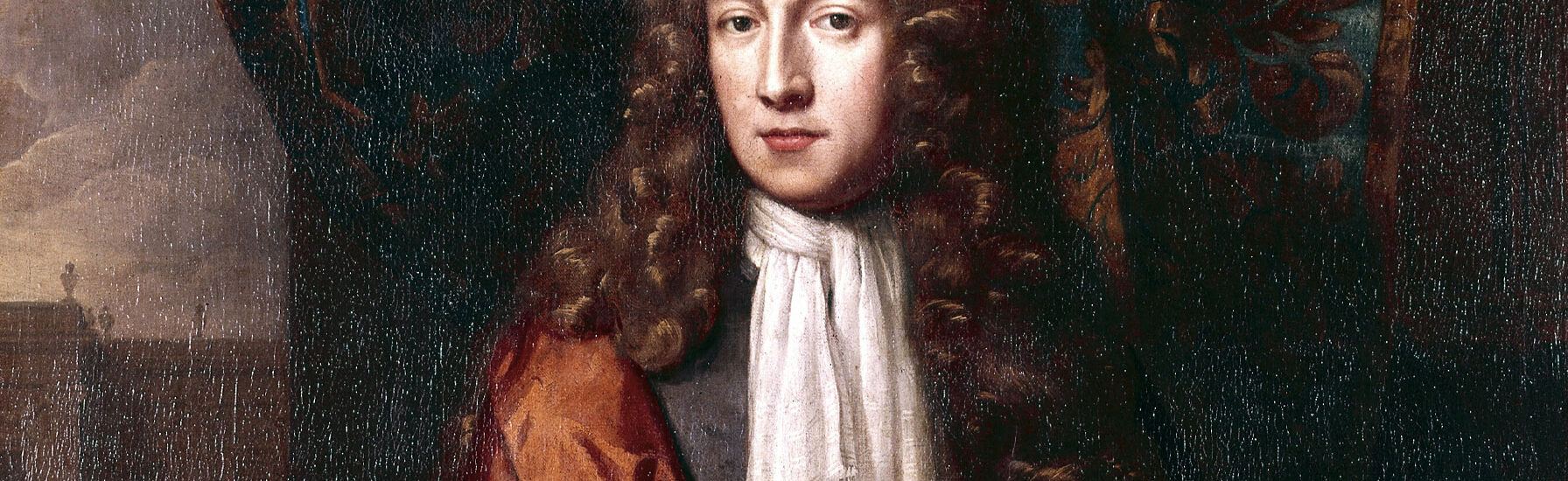
Born at Lismore Castle in County Waterford, Robert Boyle is often regarded as one of the founders of modern chemistry. He rejected the alchemical notions of his time to adopt a rigorous experimental approach. His most famous contribution is Boyle’s law, which describes the inverse relationship between the pressure and volume of a gas at constant temperature. His major work, “The Sceptical Chymist” (1661), revolutionized chemistry by proposing that matter is composed of fundamental particles, foreshadowing modern atomic theory.
William Rowan Hamilton, born in Dublin, was a prodigious mathematician and physicist. At age 22, he was appointed Royal Astronomer of Ireland and professor of astronomy at Trinity College Dublin. He is best known for developing the Hamiltonian mechanics, a reformulation of classical mechanics that laid the groundwork for quantum mechanics. In 1843, he discovered quaternions, an extension of complex numbers, opening new perspectives in algebra and physics.
Although born in England, George Boole spent a significant part of his career in Ireland as the first professor of mathematics at Queen’s College Cork (now University College Cork). He is famous for inventing Boolean algebra, which introduced the basic principles of logic into mathematics. His work laid the foundations of modern computing and digital circuits, making him a pioneer in the field.
From County Carlow, John Tyndall was a renowned physicist and naturalist. He conducted pioneering research on the scattering of light by atmospheric particles, explaining why the sky is blue, a phenomenon known as the Tyndall effect. He was also the first to measure the infrared absorption capacity of atmospheric gases, contributing to the understanding of the greenhouse effect. Tyndall was also an accomplished science communicator, dedicated to popularizing science.
Born in Dungarvan, County Waterford, Ernest Walton is the only Irish scientist to have received a Nobel Prize in Physics. In collaboration with John Cockcroft, he achieved the first artificial disintegration of an atomic nucleus by bombarding lithium with accelerated protons, a major achievement in nuclear physics. Their work paved the way for research in nuclear energy and particle physics.
Born in Newbridge, County Kildare, Kathleen Lonsdale was a prominent crystallographer. She was one of the first women elected to the Royal Society. Her research confirmed the hexagonal structure of benzene using X-ray diffraction, a fundamental discovery in organic chemistry. She was also a pacifist activist and worked for prison reform.
From Lurgan, Northern Ireland, Jocelyn Bell Burnell discovered the first pulsars in 1967 while a doctoral student at the University of Cambridge. This discovery was one of the most important in 20th-century astrophysics, confirming the existence of neutron stars. Although her thesis supervisor received the Nobel Prize for this discovery, Bell Burnell has been widely recognized for her crucial role.
Born in Belfast, John Stewart Bell was a physicist whose Bell’s theorem made a major contribution to quantum mechanics. His work showed that the predictions of quantum mechanics could not be reproduced by a local hidden variable theory, with profound implications for our understanding of physical reality and quantum non-locality.
Although born in Belfast, William Thomson, known as Lord Kelvin, spent most of his career in Scotland. He established the absolute temperature scale, known as the Kelvin scale, and made fundamental contributions to thermodynamics. He was also an innovator in electrical engineering and played a key role in laying the first transatlantic telegraph cable.
From Dublin, George Francis FitzGerald was a notable physicist for proposing the FitzGerald-Lorentz contraction to explain the negative results of the Michelson-Morley experiment, an idea that preceded Einstein’s special relativity theory. His work was essential in the development of modern physics.
Born in Navan, County Meath, Francis Beaufort was a naval officer and hydrographer. He is best known for developing the Beaufort scale, an empirical scale to estimate wind force at sea, still used today in marine meteorology.
Ireland continues to be a center of scientific innovation, investing in research and development, and encouraging new generations to pursue careers in science, technology, engineering, and mathematics (STEM). Irish academic institutions collaborate closely with industry and international organizations to foster an environment conducive to discovery and innovation.
Government initiatives actively support scientific research, recognizing its importance for the country’s economic and social development. Ireland’s commitment to scientific education ensures that the country will remain a key player in future scientific advances.