The Titanic
Did you know? The Titanic and Ireland are closely linked… Firstly because the famous liner was built in Northern Ireland… but also because it carried many Irish passengers…
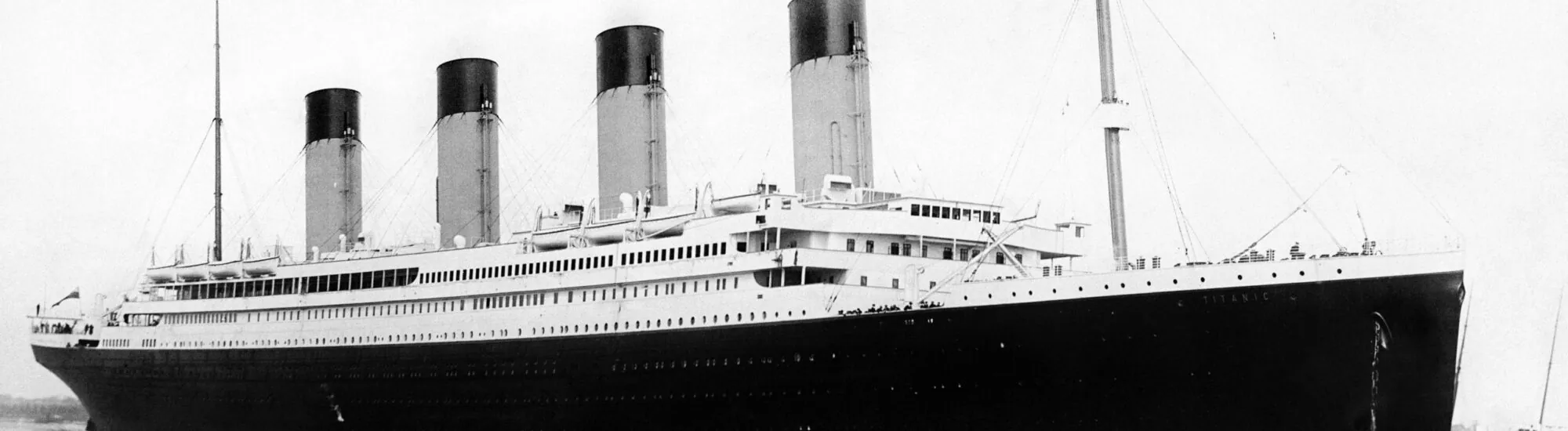
The sinking of the Titanic in April 1912 remains one of the most famous maritime tragedies in history. But what is less known is how deeply this legendary ship is connected to Ireland. Built in Belfast by the Harland & Wolff shipyards, it called at Cobh, then Queenstown, the last port where it took on passengers before sinking. Through its history, Ireland maintains a special relationship with the Titanic, marked by industrial pride, memory, and tears.
The Construction of the Titanic in Belfast
The Golden Age of Harland & Wolff Shipyards
The RMS Titanic was built between 1909 and 1912 at the Harland & Wolff shipyards in Belfast, then a major center of the global shipbuilding industry. Over 15,000 workers labored on this vessel, considered a technological marvel: 269 meters long, 28 meters wide, and equipped with unprecedented luxury for its time.
For Belfast, building the Titanic represented the pinnacle of its industrial expertise. The vast Harland & Wolff slips, giant cranes, and docks still bear witness today to this flourishing era, when the city was nicknamed “the forge of giants.”
Cobh, the Last Port of Call
Queenstown and Irish Emigration
On April 11, 1912, the Titanic stopped at Queenstown (renamed Cobh in 1920), in County Cork. This was its final stop before crossing the Atlantic. On this occasion, 123 passengers boarded, mainly Irish emigrants seeking a new life in the United States.
This stop is highly symbolic: it reflects the fate of thousands of Irish people who left for America in the 19th and early 20th centuries. Many of these passengers traveled in third class, hoping to escape poverty and find a better life. Only a handful survived the sinking.
The Irish Victims of the Titanic
A Heavy Human Toll
Of the more than 1,500 victims of the sinking, about 110 were from Ireland. Most came from rural areas and were part of the emerging diaspora. Their names, engraved on memorial monuments, remind us of the harsh reality of emigration: a hope shattered by tragedy.
In Cobh, a memorial honors these passengers. Every year, ceremonies commemorate their memory, embedding the Titanic in local and national heritage.
Belfast and the Memory of the Titanic
From Silence to the Titanic Belfast Museum
For a long time, Belfast was marked by silence about the Titanic. For the city, the tragic failure of this ship once hailed as “unsinkable” represented an industrial and moral wound.
It was only from the late 20th century that this past began to be embraced. In 2012, for the centenary of the sinking, the city inaugurated the Titanic Belfast Museum, a futuristic building located on the former shipyard. This museum is now one of Northern Ireland’s main tourist attractions, recounting the story of the ship’s construction, voyage, and disaster.
The Titanic and Irish Emigration
A Ship Symbolizing Departures
The Titanic also symbolizes the story of Irish emigration. For hundreds of passengers, it represented a ticket to hope and prosperity. Third class, though modest, offered better conditions than those on older emigrant ships.
The disaster highlighted the vulnerability of these families who left seeking a future elsewhere. For Ireland, the Titanic is thus both a maritime story and a chapter in the history of its people.
The Titanic in Irish Culture
Films, Music, and Living Memory
The Titanic has inspired many cultural works, and Ireland always holds an important place in them. Traditional songs recall the pain of lost families, while films and documentaries emphasize the roles of Belfast and Cobh.
The connection is also touristic: Belfast and Cobh are now essential stops for maritime history enthusiasts. Guided tours allow visitors to walk in the footsteps of workers, passengers, and witnesses of the tragedy.
Titanic Tourism in Ireland
Between Memory and Discovery
Two main sites preserve the memory of the Titanic in Ireland:
- Titanic Belfast: an interactive museum that tells the story of the construction and sinking, as well as life in Belfast in the early 20th century.
- Cobh Heritage Centre: a museum dedicated to Irish emigration and the Titanic’s role as the last port of call.
These sites attract hundreds of thousands of visitors each year and help keep the memory of this history alive.
The Legacy of the Titanic in Ireland
Between Pride and Sadness
The Titanic remains an ambivalence for Ireland: pride in having built one of the greatest ships of its time, but also sadness over its tragic fate.
Today, Belfast and Cobh claim this history, not as a failure, but as an integral part of Irish heritage. The Titanic has become a universal symbol of human fragility against the elements, but also a reminder of the unbreakable ties between Ireland and the Atlantic.