A young woman who says she is possessed. Eight neighbours whom she accuses of tormenting her. And, before the judges, women protesting their innocence. More than three centuries after the Islandmagee trial, in present-day Northern Ireland, Marie Cassidy returns to the case with the questions of a forensic pathologist. Her documentary, Dr Marie Cassidy Investigates Ireland’s Last Witch Trial, is scheduled to air on RTÉ One on Thursday 29 October 2026.
With Halloween approaching, the subject could easily become lost amid apparitions and legends. But the interest of this investigation lies elsewhere: questioning the accounts, understanding who was trusted, and restoring a place to the people whom the accusation turned into ‘witches’.
Marie Cassidy examines a case three centuries old
A historical investigation viewed through the tools of today
In their presentation of the film published by RTÉ on 24 October, director Edel O’Mahony and writer Andrea McCartney explain that they wanted to test the testimony against a contemporary scientific perspective. They enlisted Ireland’s former State Pathologist to examine the interpretations given to the events reported in 1711.
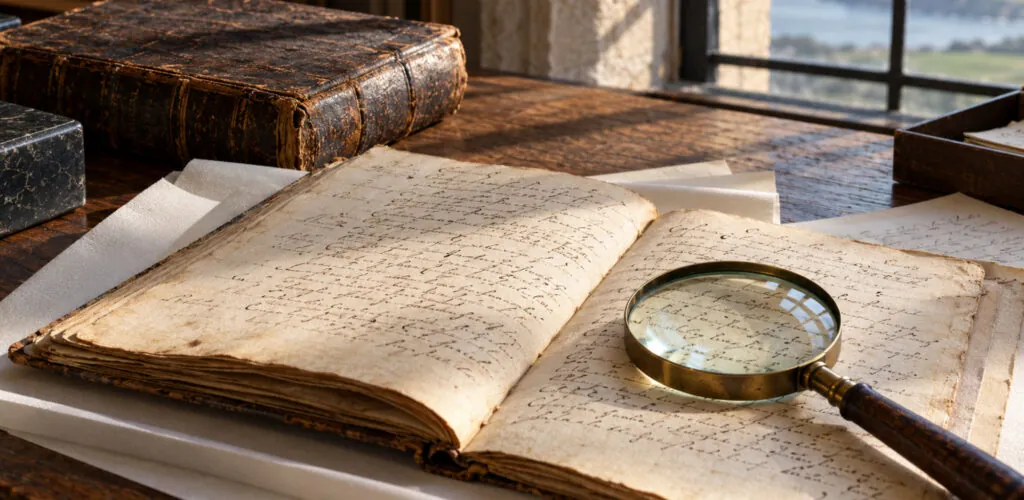
The programme also draws on the expertise of historian Andrew Sneddon, a specialist in the case. This is neither a new legal proceeding nor the sudden discovery of previously unknown archives, but a documentary reappraisal. The possibilities explored should not be regarded as definitive diagnoses made at a distance.
Encounters across Antrim, Belfast, Dublin and Edinburgh
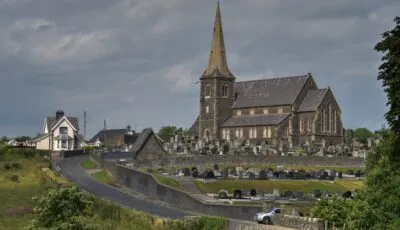
Marie Cassidy meets specialists in the history of the trial and the beliefs surrounding it. The journey links Islandmagee with Belfast, Dublin and Edinburgh, placing the case within the exchanges between Ireland and Scotland.
This geography prevents the story from being reduced to a supposedly haunted house. It invites us to consider how ideas circulate, how a community receives them, and how they ultimately come to weigh on people’s lives.
What happened in Islandmagee in 1711
Eight convictions in March, followed by a second case
The Witches of Islandmagee research project recalls that eighteen-year-old Mary Dunbar accused eight women of attacking her by supernatural means. Tried at the Carrickfergus assizes on 31 March 1711, they denied the charges but were sentenced to one year in prison and four appearances in the pillory.
The story did not end with that verdict. William Sellor, the husband and father of two of those convicted, was in turn accused and tried in September, following Mary’s death. Recent research considers his execution likely: that uncertainty must be retained. Behind the phrase ‘Ireland’s last witch trial’, then, lie two proceedings and nine people convicted.
Our Culture feature recounts the story of the Islandmagee witch trial: the accused, the disagreements among the judges, the available sources and the legends added over time.
A documentary that encourages a fresh look at Antrim
From the coastal landscape to sites of remembrance
For travellers, this story lends particular depth to a stop in Antrim. The landscape is no longer simply a setting to photograph: it becomes the terrain of a memory, with its inherited stories and silences.
The cultural feature explains where to continue this discovery, notably at Carrickfergus Museum and the Islandmagee memorial stone. It distinguishes today’s sites of remembrance from fictional settings and details the relocation of the memorial in 2026.
Broadcast and access to the programme
The one-hour documentary is scheduled for 29 October at 10.15pm on RTÉ One, Irish time, or 11.15pm in metropolitan France. It is also expected to be available via RTÉ Player; from outside Ireland, availability depends on the programme’s broadcast rights. Visit the official platform to check access from your country.