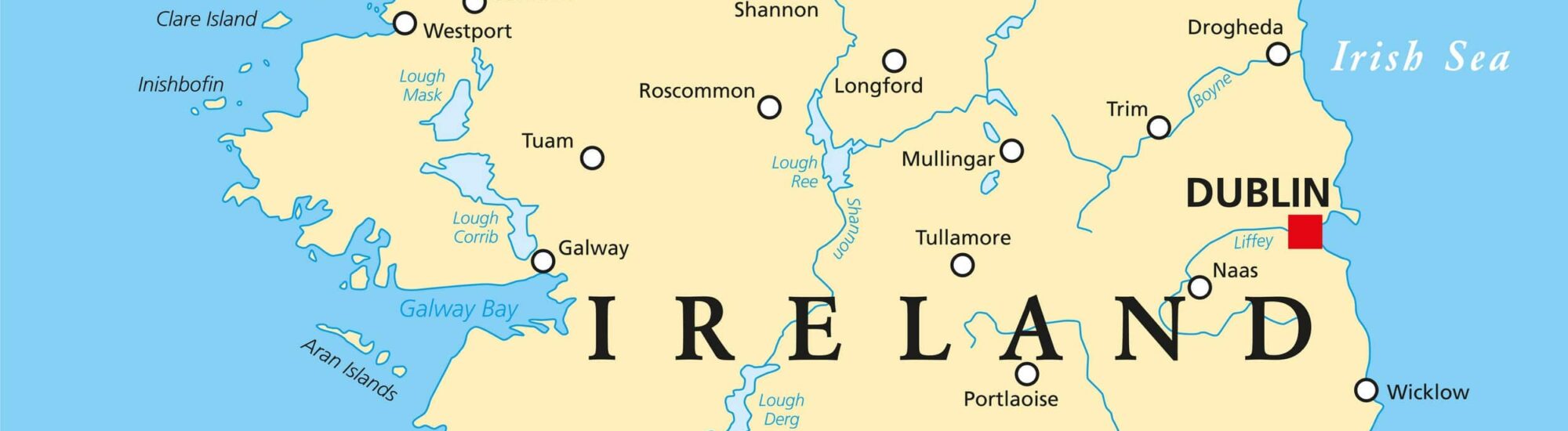
Ireland is made up of thirty-two counties divided between the Republic of Ireland and Northern Ireland. For a foreign visitor, these administrative divisions might seem rather incidental. Yet for the Irish, belonging to their county often forms a core part of their identity.
In Cork, it’s often joked that the county should be an independent republic. In Dublin, some locals are accused of thinking they’re the center of the world. In Kerry, sports rivalries sometimes take on a near-religious fervor.
These rivalries are generally friendly but hold a significant place in Irish culture, especially through Gaelic sports.
Unlike in many other European countries, the Irish often identify with their county even before their region.
Sport, local history, accents, traditions, and sometimes even cuisine reinforce this sense of belonging.
Gaelic football and hurling competitions organized by the GAA play a major role in these rivalries.
When one county faces its neighbor, entire communities rally behind their teams.
No rivalry is as widespread as the one between Dublin and the rest of the country.
The capital concentrates:
Many people from other counties sometimes see Dublin as a world apart.
Dubliners are occasionally accused of being privileged or out of touch with rural realities.
Dublin locals, on their side, often joke about those from “the other side of the Pale,” referring to the old historical boundary of the Dublin area.
In Cork, a recurring joke goes:
“Cork is the real capital of Ireland.”
The county of Cork has a very strong identity. Its inhabitants sometimes nickname their territory “The People’s Republic of Cork.”
This rivalry with Dublin touches on:
People from Cork often pride themselves on their independent spirit and unique character.
In the southwest of the country, the rivalry between Kerry and Cork is one of the most famous.
Both counties boast an impressive record in Gaelic football.
Matches attract huge crowds, and debates can last for weeks.
While primarily a sporting rivalry, it also fuels a strong sense of local identity.
Neighbors in Connacht have long maintained a friendly rivalry.
It’s expressed notably through:
Supporters from both sides experience each encounter with great passion.
For hurling enthusiasts, few rivalries match that of Kilkenny and Tipperary.
These two counties are among the sport’s greatest powers.
Finals between their teams are major national sporting events.
Neighboring counties often have natural rivalries.
Limerick and Clare share a border, common traditions, and a long sporting history.
Hurling plays a central role here.
Every match sparks lively discussions in pubs on both sides of the Shannon.
Each county has its clichés:
These jokes are part of the national folklore and are generally good-natured.
The Gaelic Athletic Association, better known as the GAA, plays a crucial role.
Each county has its colors, teams, and supporters.
Gaelic football and hurling matches strengthen the sense of belonging.
A supporter usually backs their county for life.
On final days, towns are draped in flags, and conversations revolve solely around the game.
Unlike some regional rivalries seen elsewhere in Europe, Irish county rivalries remain mostly friendly.
They fuel humor, pub conversations, and attachment to local traditions.
For travelers, they offer a fantastic opportunity to discover Ireland’s cultural diversity.
Behind the landscapes and monuments, each county has its own personality, pride, accents, and stories.
And asking a local which is the best county in Ireland is often the best way to start a conversation.