The Waterford Greenway
The Waterford Greenway is a 46km cycle route from Waterford to Dungarvan in Ireland. On the programme: a tour packed with activities,…


 Tourist attractions
 Irish Restaurants and Pubs
 Partner Accommodations
 Campgrounds and Lodging
The Waterford Greenway is a 46km cycle route from Waterford to Dungarvan in Ireland. On the programme: a tour packed with activities,…
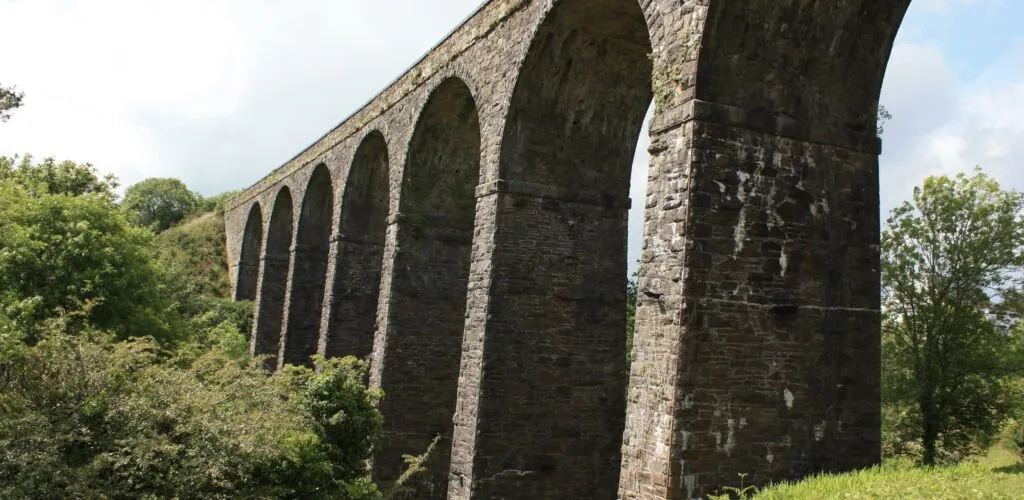
The Kilmacthomas Viaduct is a former Irish railway viaduct in County Waterford. It is one of the attractions of the Waterford Greenway,…
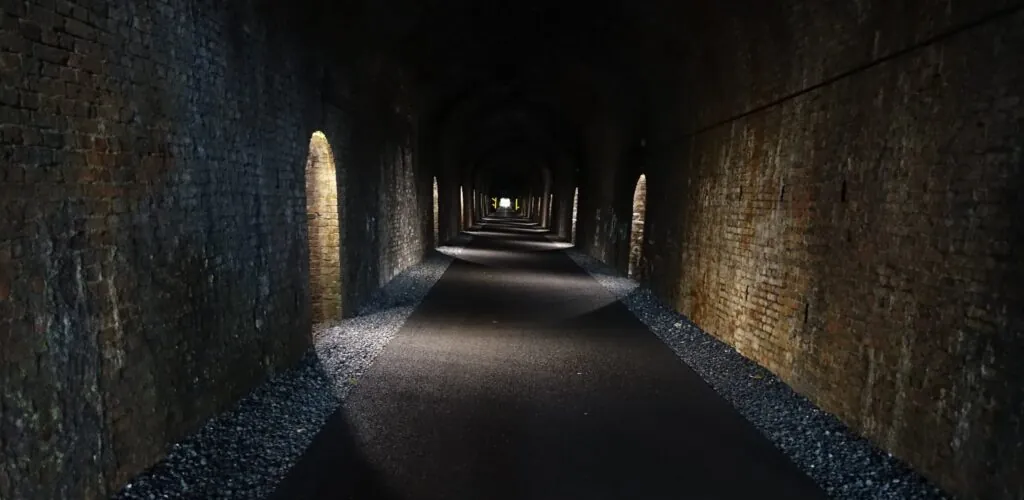
The Ballyvoyle is a great attraction if you like to immerse yourself in the buildings of yesteryear, with all their historical anecdotes.…
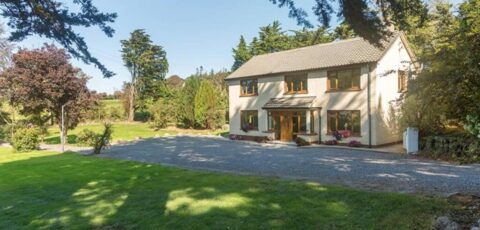
Find a comfortable place to stay and make the most of your trip to Ireland.
Kilmacthomas, or Coill Mhic Thomáisín in Irish, is a village in the south-central part of County Waterford, in south-east Ireland. Situated on the River Mahon, around 24 kilometres from both Waterford City and Dungarvan, it occupies a pivotal position between the Comeragh Mountains and the county’s southern coastline. It is served by the N25, while the Waterford Greenway makes it a central stop for exploring the valley at a slower pace.
Its identity is defined by a clearly legible combination of features: a 19th-century main street, mills powered by water, a former workhouse and a large stone viaduct dating from the railway era. Kilmacthomas is more than just a stopping point: it is a village where industrial and social heritage is directly embedded in a landscape of river, pastureland and mountains.
Kilmacthomas is a compact rural village whose character is apparent in the dialogue between the Mahon, its stone buildings and the distant slopes of the Comeragh Mountains. The river runs through the village and long provided the energy essential to local activities. Even today, its banks, the weir crossing it and the former industrial buildings give the centre a denser character than that of a simple village on a through route.
The main street retains a coherent built landscape, made up of rendered terraced houses, former two-storey shops, rubble stone walls and railway structures. This overall quality explains the architectural conservation area status granted to the village. Exploration should therefore not be limited to a single monument: taking time to observe the façades, the course of the Mahon and the changes in level helps explain how water, agriculture and rail shaped Kilmacthomas.
Kilmacthomas’s large railway viaduct is the village’s most spectacular landmark. Built between 1875 and 1880 and opened in 1878, it combines imposing stone masonry with a central metal span. Its arches overlook the Mahon valley and form an immediately recognisable silhouette. The structure belonged to the former line developed by the Waterford, Dungarvan and Lismore Railway Company; it bears witness to late 19th-century railway ambition in south-east Ireland.
The viaduct is now part of the Waterford Greenway, a 46-kilometre greenway linking Waterford City to Dungarvan along the route of the former line. Kilmacthomas lies approximately halfway along it. This traffic-free route can be explored on foot or by bicycle and offers views of pastureland, the river and the Comeraghs around the village. The Workhouse, Station and Mill sections provide several local access points to the greenway; the former station has a water point and bicycle facilities.
The Mahon is not merely a scenic feature: it explains Kilmacthomas’s early industrial development. Its waters powered the mills, while the railway facilitated the transport of goods. Three rubble stone mill buildings survive in the area, including a former flour and corn mill and the former woollen mill. Built around 1790–1810, the former corn mill is a large four-storey stone building, now disused and partly in ruins. It remains a major landmark of this early industrial landscape.
The former Kilmacthomas Union Workhouse adds an essential social dimension to local history. The workhouse system was established by the Poor Law Act of 1838, and Kilmacthomas was one of County Waterford’s four Poor Law Unions. Designed in the mid-19th century as part of this system, the institution opened in 1853 according to the national archives. Its symmetrical plan of rubble stone blocks remains visible. It recalls poverty, relief and the consequences of the Great Famine in the region, beyond the valley’s more peaceful image.
An attentive walk through Kilmacthomas can follow the connections between its main landmarks rather than a monumental sequence. From the centre, the Mahon reveals the logic of the site: the river weir recalls the mills’ hydraulic needs, while the viaduct shows how the railway crossed the valley. Traditional façades and stone walls complete this reading, preserving the scale of a rural village rather than that of a railway town.
To the north and west, the Comeragh Mountains form the village’s natural horizon. Mahon Falls lies in this mountainous hinterland, rather than in Kilmacthomas itself: the glacial valley of Coum Mahon and its waterfall extend the exploration into a markedly more rugged landscape. In the village, by contrast, the Greenway offers a gentle route along the former railway line. This complementarity between an accessible valley, built heritage and nearby uplands gives Kilmacthomas a distinctive place in County Waterford.