Waterford County, Contae Phort Láirge in Irish, occupies part of south-eastern Ireland, between the Suir estuary, the Comeragh Mountains and the Atlantic coast. Although Waterford City is its main urban centre, the area is much more than Ireland’s oldest city: it brings together a UNESCO Global Geopark coastline, a 46 km greenway, mountains carved by glacial valleys, seaside resorts, fishing villages and a Gaeltacht region where Irish remains widely spoken.
With 127,363 inhabitants at the 2022 census, Waterford is a relatively compact county. This scale makes it easy to explore: in a few days, it is possible to link Waterford City, Tramore, the Copper Coast, the Comeragh Mountains, Dungarvan, Ardmore and Lismore without spending most of the trip on the road.
Discovering Waterford County
From the Suir estuary to the mountains and Atlantic
Waterford’s geography is based on three main areas. To the east, Waterford City and the Suir estuary concentrate part of the county’s urban and maritime history. In the centre, the Comeragh Mountains dominate a more rural landscape dotted with valleys, lakes and waterfalls. To the south, a coastline of beaches, cliffs, small coves and coastal villages stretches towards Dungarvan Bay and Ardmore.
This diversity distinguishes Waterford from many Irish counties organised around a single iconic landscape. Here, the city, mountains and sea are all relatively close to one another. For travellers, this makes it possible to plan a highly varied stay without constantly changing accommodation.
The Copper Coast
A UNESCO Global Geopark between Tramore and Dungarvan
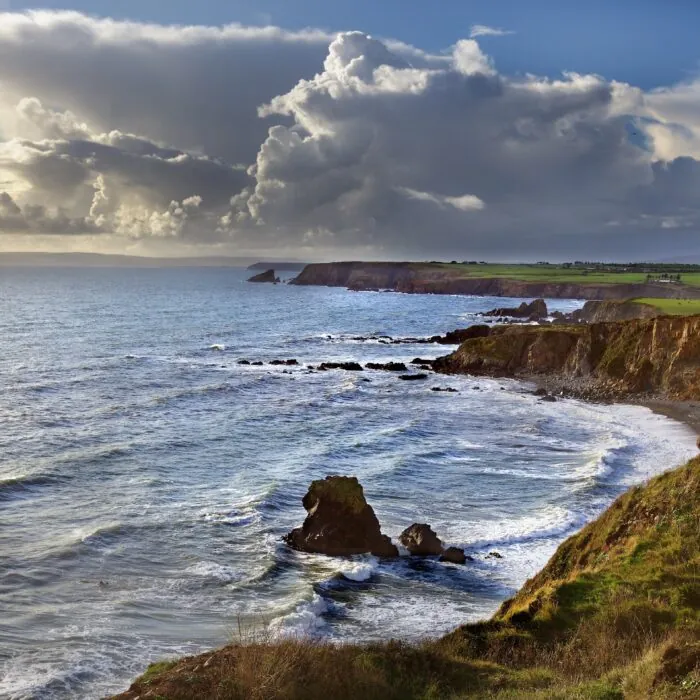
The Copper Coast is one of the county’s great natural landscapes. The UNESCO Global Geopark extends for around 25 km along the south-eastern coast, between the Tramore area and Dungarvan. Cliffs, coves, beaches, rock arches and traces of former mining make up a landscape whose interest goes far beyond its scenic appeal.
The name “Copper Coast” comes from the copper mines worked in the region during the nineteenth century. But the area’s geological history is far older: the visible formations tell the story of around 460 million years of geological evolution. The Bunmahon area is one of the best starting points for understanding this heritage before exploring the coastal roads and trails.
The Copper Coast deserves to be explored slowly. Rather than looking for one spectacular viewpoint, its appeal lies in the succession of small beaches, cliffs and headlands between Tramore, Fenor, Annestown, Bunmahon, Stradbally and Dungarvan.
The Comeragh Mountains
The wild landscape at the heart of Waterford
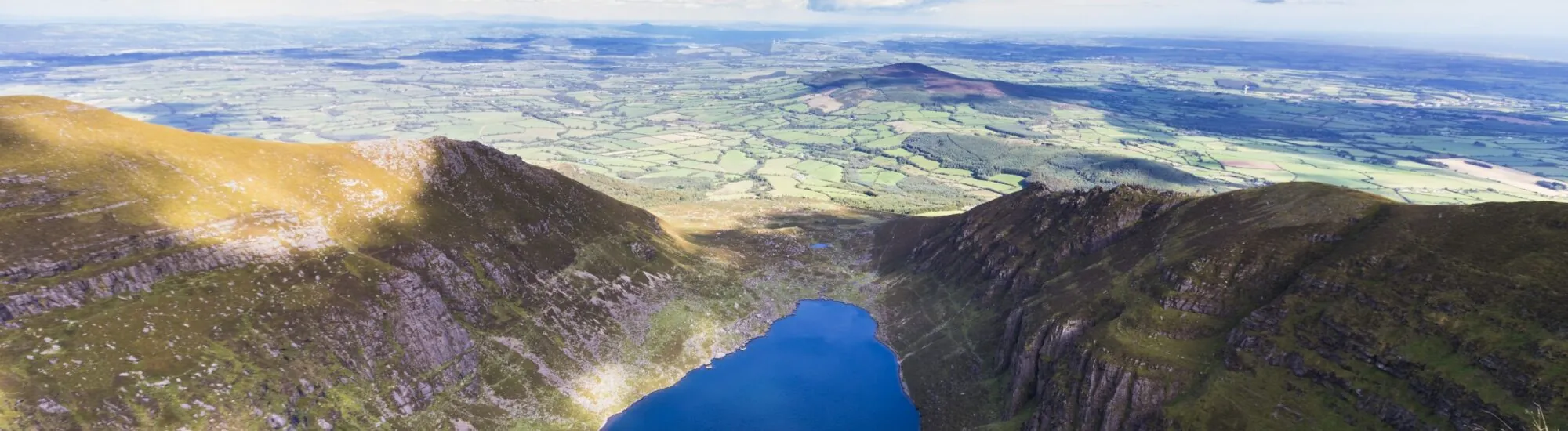
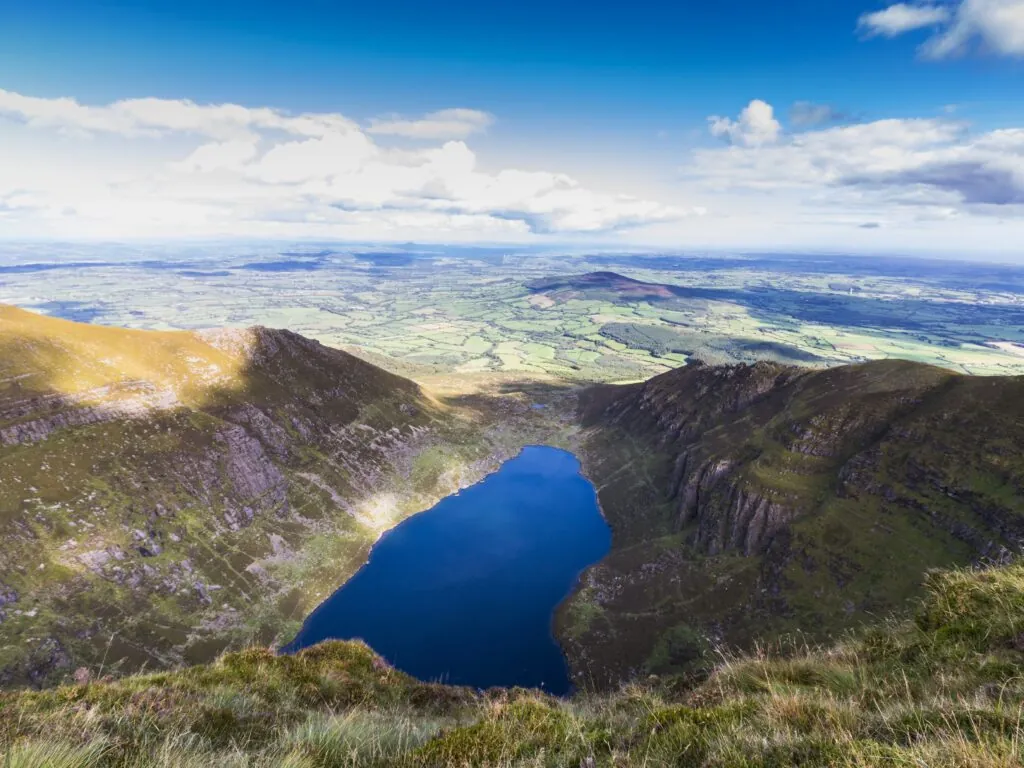
North of the Copper Coast rise the Comeragh Mountains. These relatively compact mountains offer a marked contrast with the plains and coastline in the south of the county. Their landscape was deeply shaped by glaciation, leaving valleys, corries and high-altitude lakes.
Coumshingaun is the range’s most famous landscape. This glacial lake occupies a vast corrie with steep sides and is one of Waterford’s major hiking sites. Routes reaching the heights can nevertheless be demanding: uneven ground, wind, rain and fog require outings to be planned according to conditions rather than distance alone.
Mahon Falls offers a more accessible introduction to the Comeraghs. The waterfall descends into the bottom of a spectacular glacial valley and allows visitors to observe the mountain landscape without undertaking a long high-altitude hike.
These mountains remain less visited than some of the major ranges in Kerry or Wicklow. They give central Waterford a far wilder character than the proximity of the coast and Waterford City might suggest.
The Waterford Greenway
46 kilometres between Waterford City and Dungarvan
The Waterford Greenway has become one of the county’s main connecting threads. This route for walkers and cyclists follows a former railway line for 46 km between Waterford City and Dungarvan.
The route crosses or follows several landscapes characteristic of Waterford: the Suir valley, countryside, former railway structures, the Comeragh Mountains and Dungarvan Bay. It crosses old viaducts and a railway tunnel, giving it a real identity beyond its sporting appeal.
There is no need to cover all 46 km to enjoy it. Several access points make it possible to choose a section suited to the time available. This flexibility makes it appealing for both a half-day and a full-day activity, with bicycle-hire options in several towns and villages.
The Greenway also helps visitors understand the county’s geography: it directly connects Waterford City with Dungarvan and crosses the area between the urban east and the western coast.
Waterford City and the county
A historic capital that should not overshadow its surrounding territory
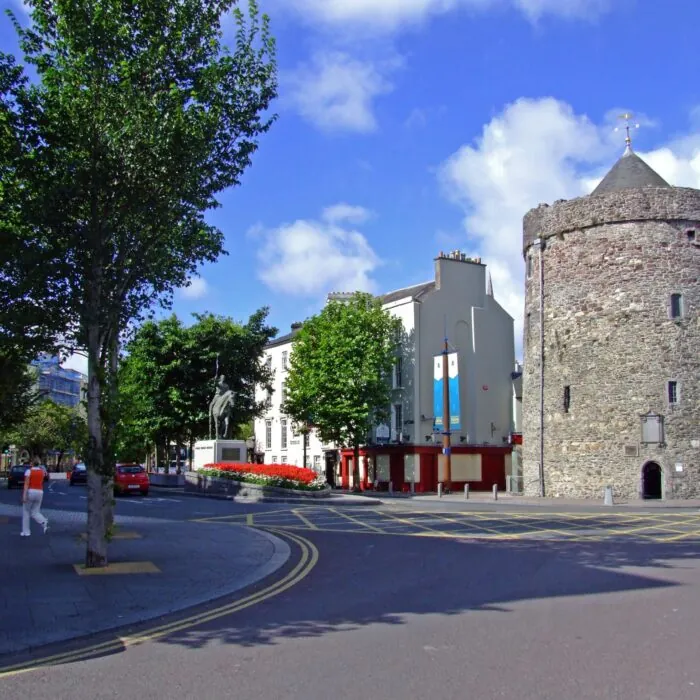
Waterford City naturally occupies an important place in any stay. Founded by the Vikings at the beginning of the tenth century, it is generally presented as Ireland’s oldest city and preserves remarkable heritage around its Viking Triangle.
But a page devoted to the county must clearly distinguish the city from the area around it. Waterford City concentrates museums, urban heritage, shops and services; the rest of the county provides coastal landscapes, mountains, villages, beaches and many outdoor activities.
The city is therefore an excellent gateway to the county rather than its only destination. From Waterford, it is easy to reach Dunmore East, Tramore, Mount Congreve Gardens, the start of the Greenway and the first sections of the Copper Coast.
Dungarvan and the west of the county
Another major base beside the bay
At the western end of the Greenway, Dungarvan is Waterford’s second major tourist base. The town is centred on its harbour, at the mouth of the Colligan, and occupies a strategic position between the coast, the Comeragh Mountains and the west of the county.
Dungarvan is particularly well suited to stays combining cycling, food, coastline and hiking. It provides quick access to Clonea, the Copper Coast, the Comeraghs, Helvick Head and the Irish-speaking area of An Rinn.
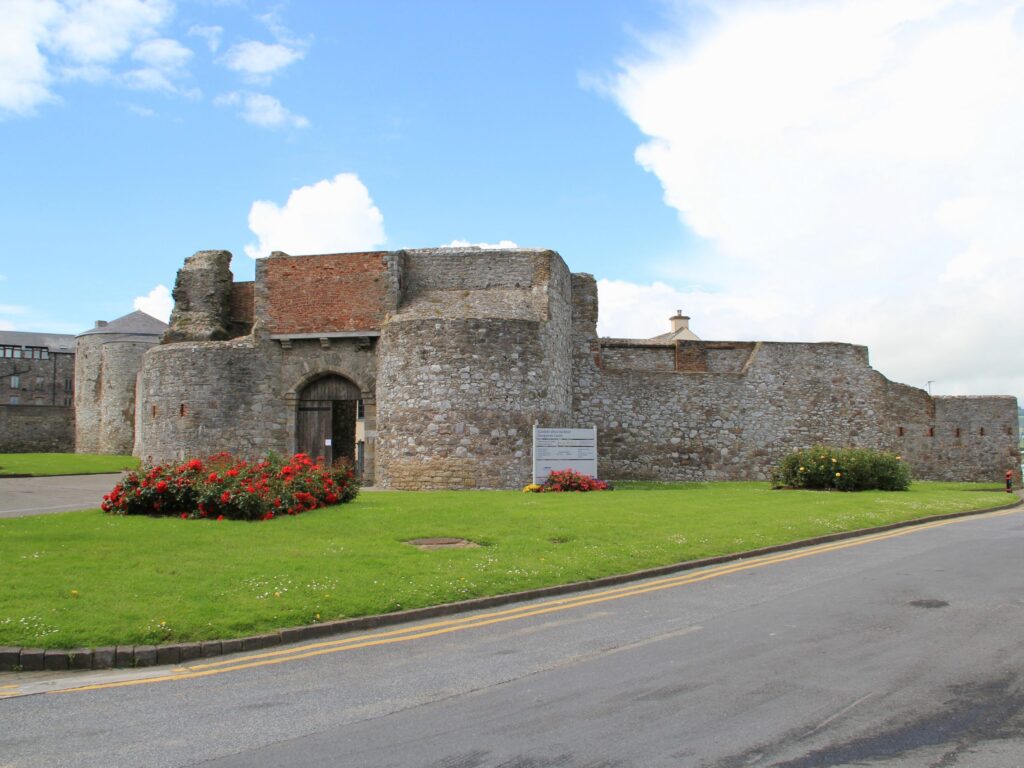
Its castle, quays and maritime setting also give the town a historical dimension, without the strongly urban character of Waterford City. For a trip lasting several days, splitting nights between Waterford and Dungarvan may be worthwhile, although the county’s relatively compact size also makes it possible to explore from a single base.
An Rinn and Waterford’s Gaeltacht
A distinctive linguistic identity in the south-east
West of Dungarvan lies Gaeltacht na nDéise, Waterford County’s Irish-speaking region. It notably includes An Rinn and An Sean Phobal. The presence of Irish Gaelic gives this part of the county a distinct cultural identity and is a reminder that Gaeltachtaí are not limited to the major Irish-speaking areas of Donegal, Connemara or Kerry.
The region combines small coastal roads, farmland, views across the bay and linguistic heritage. Place names are commonly presented in Irish, and the language remains central to local cultural and educational life.
For visitors, An Rinn offers another way to discover Waterford: more rural, more maritime and less busy than the county’s main tourist centres.
Tramore, Dunmore East and the coastal resorts
Beaches and maritime villages near Waterford City
In the east of the county, Tramore is one of Ireland’s best-known seaside resorts. Its long beach and proximity to Waterford City make it a very popular destination during fine weather. The area is also one of the eastern gateways to the Copper Coast.
Further east, Dunmore East has a different atmosphere. This harbour village is known for its thatched cottages, coves, harbour and coastal walks. Its position at the entrance to Waterford Harbour reflects the historic importance of navigation and fishing in this part of the county.
These places make it possible to discover the coast without necessarily travelling the entire Copper Coast. They are particularly easy to include in a stay based in Waterford City.
Ardmore and Lismore
Two heritage stops in the west of Waterford
Ardmore holds a special place in the county’s Christian history. The village is associated with Saint Declan and preserves a remarkable monastic complex, notably a round tower and the remains of a cathedral. Its coastal setting also makes it an appealing stop for walks and seascapes.
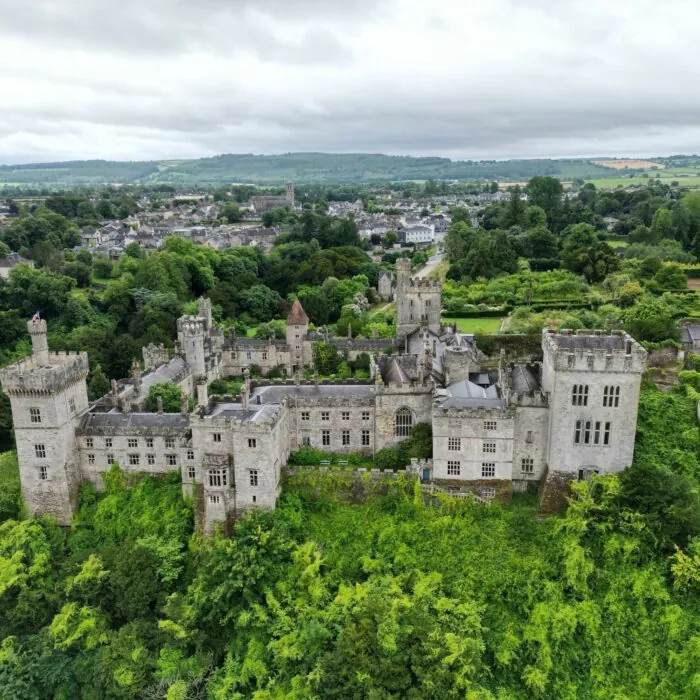
Further north-west, Lismore developed on the banks of the Blackwater. The town is dominated by Lismore Castle and lies in a greener setting near the Knockmealdown Mountains. It gives Waterford a different character from that of the Copper Coast or the coast around Tramore.
Ardmore and Lismore thus show that the west of the county is not limited to Dungarvan. On a longer stay, these two areas broaden the itinerary towards religious heritage, gardens and the Blackwater valley.
A territory shaped by the sea and exchange
From the Vikings to the great ports of the south-east
Waterford’s position at the mouth of major rivers and facing European sea routes explains much of its history. The Vikings recognised the strategic importance of the Suir estuary at an early stage, before Waterford gradually became a major port for trade with Great Britain, Europe and the Atlantic.
This relationship with the sea remains visible in the ports, fishing villages and coastal heritage. It also shaped the county’s economy and cultural exchanges, while the inland areas retained a stronger agricultural and mountainous identity.
Waterford therefore has a strong geographical coherence: the Suir opens the territory towards the east, the Comeraghs structure its centre, and the coast links the communities of the south as far as Dungarvan and Ardmore.
How should you organise a stay in Waterford County?
Two to four days to combine city, coast and mountains
Waterford is particularly well suited to a stay of a few days. Two days are already enough to combine Waterford City with an excursion along the Copper Coast or a section of the Greenway. With three or four days, it becomes possible to add the Comeragh Mountains, Dungarvan, An Rinn, Ardmore or Lismore without creating an overly busy programme.
A car offers the greatest freedom for reaching beaches, mountains and isolated villages. The Greenway nevertheless provides an excellent alternative way to discover a substantial part of the area, and the main towns have public transport links.
For a first trip, a simple plan is to devote one section of the stay to Waterford City and the east of the county, one day to the Copper Coast or the Greenway, and another to Dungarvan and the Comeraghs. Travellers with more time can continue towards An Rinn, Ardmore and Lismore.
This diversity is precisely the county’s strength. Waterford allows visitors to move from Viking heritage to a UNESCO-listed coast, from a greenway to a glacial lake, or from a Gaeltacht village to a seaside resort while covering relatively modest distances.


 +
+
 Tourist attractions
 Irish Restaurants and Pubs
 Partner Accommodations
 Campgrounds and Lodging