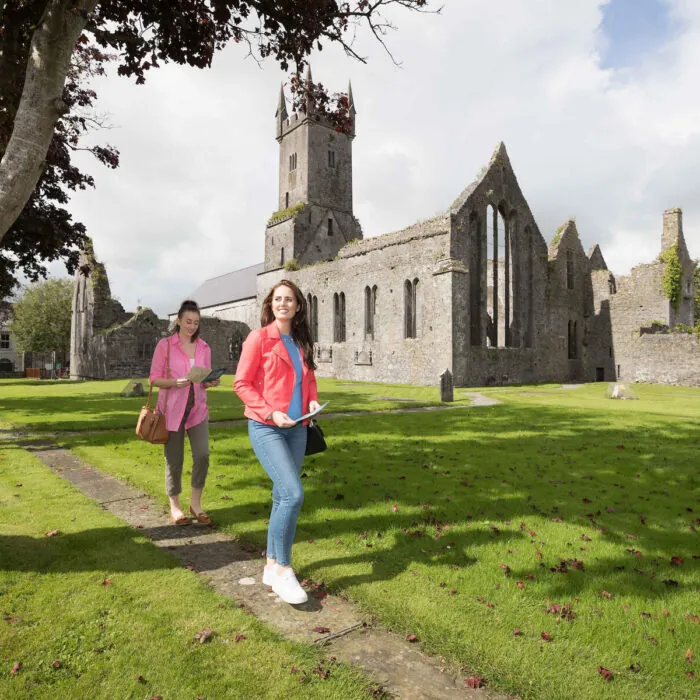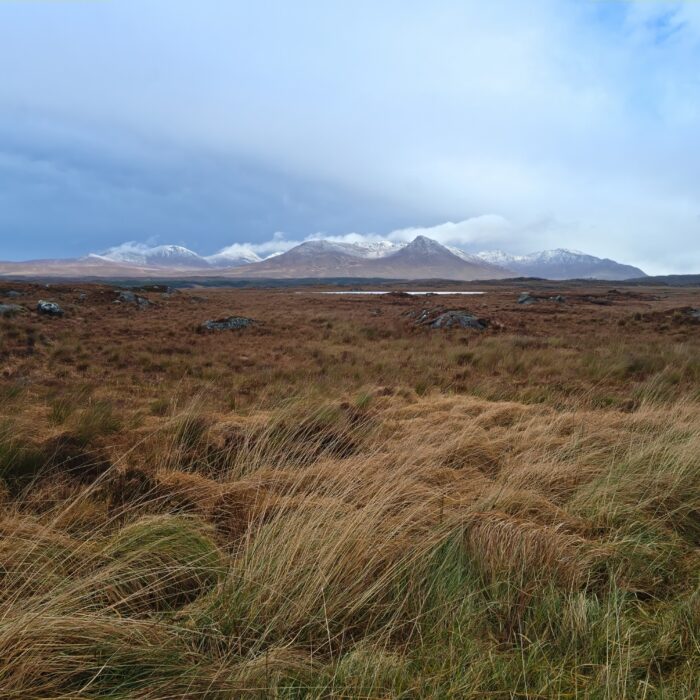


In Dingle, An Díseart is home to one of the town’s most distinctive artistic visits: a chapel illuminated by Harry Clarke’s stained glass, at the heart of a former convent. On Green Street, this cultural and spiritual centre brings together Neo-Gothic architecture, murals and enclosed gardens. Visitors come for the colour of the glass, then discover a place deeply connected to the local community, the Irish language and the history of the Presentation Sisters. It offers another way to discover Dingle: by taking the time to look.
An Díseart occupies the former convent of the Presentation Sisters, designed by the architect J. J. McCarthy. Its Neo-Gothic architecture frames a history in which education, religious life and local culture come together. Today, the centre is devoted to Irish spirituality and Celtic culture, with space given to the arts, language and community gatherings.
The visit is therefore more than a collection of old objects. The building also hosts cultural and community activities. For visitors, this continuity gives meaning to the various rooms: the works belong to a former place of daily life whose identity continues in another form.
The enclosed gardens, originally laid out in the 19th century and later reworked to designs by landscape designer Mary Reynolds, form the other essential part of the visit. It is worth allowing time for both spaces, rather than coming simply to photograph the stained glass.
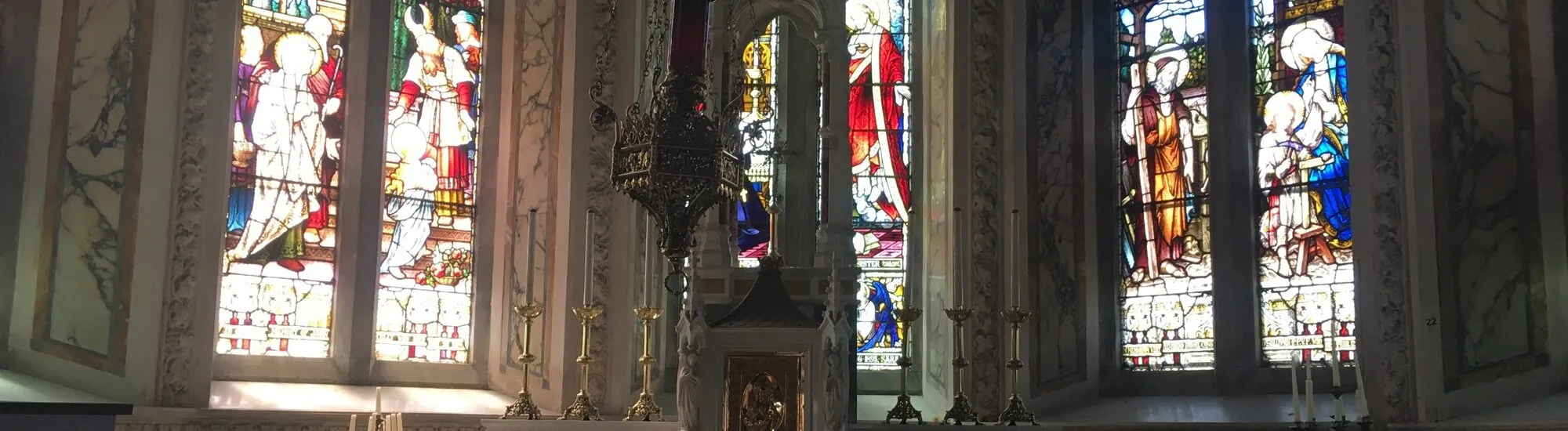
The Sacred Heart chapel contains six two-light windows, comprising twelve stained-glass panels, created by Harry Clarke. This detail helps explain descriptions that refer sometimes to six windows and sometimes to twelve stained-glass panels: they describe the same ensemble. Commissioned in 1922 by the superior, Sister Ita Macken, the works were completed in 1924.
Their subject is the life of Christ. The Adoration of the Magi, the Baptism of Jesus, the Sermon on the Mount and the Agony in the Garden are among the scenes depicted. Expressive faces, deep blues, reds and golds, together with an abundance of ornament, offer several layers of interpretation.
Begin by viewing each composition from a distance, then move closer to follow the gestures, clothing and motifs. Light passing through the glass is part of the work, and its appearance changes with the conditions of the day. There is no need to rush from one window to the next: a few carefully observed details make for a richer discovery than a series of hurried photographs.
The chapel also retains marble altars and carved wooden panelling. It remains a space for prayer and contemplation, so keep a discreet manner, even if your visit is primarily artistic.
In the sisters’ former refectory, the Last Supper fresco introduces a change of scale and technique. Eleanor Yates based the apostles on local men and visitors she met in Dingle. The biblical narrative thus takes on the features of real people connected to the place where it was created.
The centre also highlights the local references in the objects depicted and the landscape. Look at the table, the vessels and the background, then find the overturned chair: it suggests Judas’s absence. The painted chalice was inspired by the famous Ardagh Chalice.
The fresco was executed on fresh plaster, in successive sections. This process embeds the pigments in the wall surface. It invites visitors to see the work as part of the building, rather than as a painting simply hung in the room.
Another mural by Eleanor Yates is devoted to Nano Nagle, founder of the Presentation Sisters. Installed in the former community room, it unfolds episodes from her life and her commitment to children and people living in poverty.
This stop sheds light on the convent’s history. After the Gospel scenes in the stained glass and the Last Supper, the visit turns to a figure who gave concrete form to the congregation’s educational mission. Take time to follow the painting’s narrative, rather than treating the room as a simple transition to the gardens.
Outside, the gardens extend the visit in a freer register. The centre maintains native and ornamental planting, pollinator-friendly flowers and spaces suited to observation. It also monitors their biodiversity through regular surveys.
Their interest changes with the seasons. Look at the foliage, flowering and insects rather than expecting the same setting all year round. The progression from chapel to paintings to gardens gives An Díseart its distinctive rhythm: visitors move from highly composed images to a living space whose details evolve.
The centre can be reached on foot via Green Street. It recommends booking, particularly for groups and during busy periods. Access to the different parts of the historic building varies: let the centre know in advance about any mobility requirements. Personal photography is permitted, without flash in the chapel.
See the official visit-planning page for up-to-date conditions. With children, suggest looking for a figure, colour or detail in the artworks: a small observation task makes the visit more tangible.
To continue your artistic exploration, the Carol Cronin Gallery offers another encounter with creativity in the town. You can also head to Dingle Harbour to return to the maritime landscape after this interlude in the former convent. These stops can be combined as you wish, without needing to fit several visits into the same day.
Want to extend your visit without having to rush around? Here are a few well-located places to stay near the must-see attractions.
Essential information to help you plan your visit, including key landmarks, access information, and booking options.
Green Street, Dingle, Dingle Peninsula, County Kerry, Republic of Ireland, Tourist attractions in Ireland
52.141992, -10.270715
Building: Monday–Friday, 10am–1pm and 2pm–5pm; last admission at 4.30pm. From 1 July to 1 September: Saturday, 10am–1pm and 2pm–4pm; last admission at 3.30pm. Closed on Sundays and public holidays, except for special events.
Gardens: winter, 9.30am–4.30pm; summer, 9.30am–7.30pm. Upper gardens accessible when gardeners are present. Official information checked on 23 November 2026.
Check the opening hours and admission requirements before you leave, especially during peak season or on Irish public holidays.
Building and exhibitions: €5 per adult. Free for under-10s. Family rates available from reception. Gardens: free admission. Prices listed on the official website, checked on 23 November 2026; check guided-tour conditions when booking.