

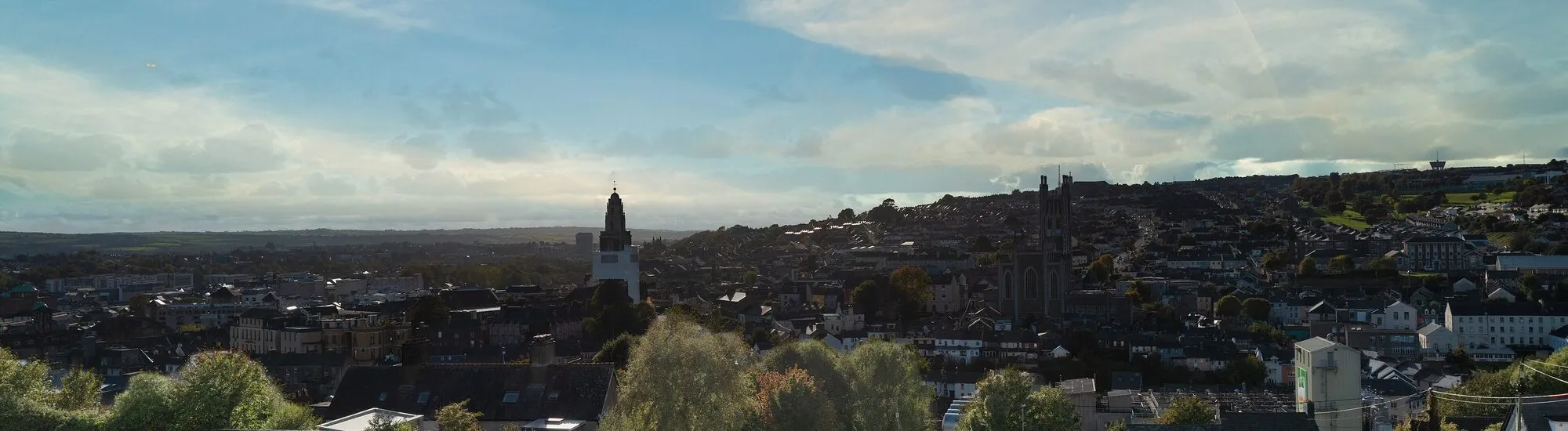
From Cork’s quays, Patrick’s Hill seems to rise straight into the sky. The street is short by the city’s standards, but its gradient invites you to slow down. At the top, on Audley Place, Bell’s Field is just a few steps away. The buildings fall away, opening up views across Cork’s rooftops and the hills on the other side of the valley. The viewpoint is worth the detour for its panorama. The climb itself offers an insight into how the terrain has shaped the city’s streets and neighbourhoods.
If you are coming from St Patrick’s Street, cross the northern branch of the River Lee via St Patrick’s Bridge. At the end of the bridge, make your way to the junction with MacCurtain Street, then head up Patrick’s Hill. At the top, look for Audley Place and the grassy space of Bell’s Field. Allow around 15 to 20 minutes from the bridge, including stops. The distance is modest, but the gradient matters more than the metres on the map. After rain, take your time on the pavements, especially on the way down. To make the climb easier, get dropped off at Audley Place and approach the viewpoint from above.
The climb begins in Cork’s Victorian quarter. Around MacCurtain Street, take a look at the shopfronts before setting off up the hill. The Cork City Council walking guide provides further pointers for exploring the north bank. On Patrick’s Hill, the houses and their walls follow the slope. Higher up, the terraces of Audley Place face west or south-west, taking advantage of the open views towards Shandon and the neighbouring hills. Once there, it is easy to see why the houses on this side of the valley make the most of the view.
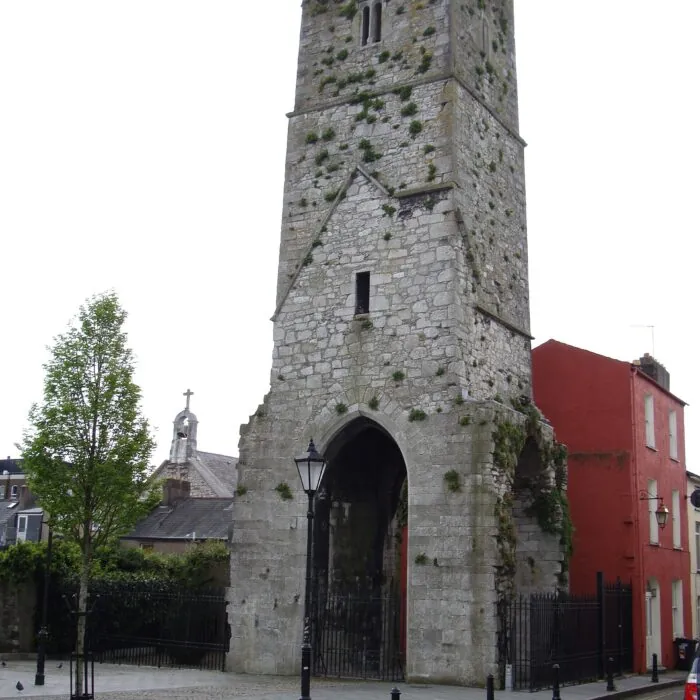
Once at the viewpoint, look west first for the tower of St Anne’s Church in Shandon. Then sweep your gaze southwards. The rooftops of the city centre fill the valley floor, while the neighbourhoods on the opposite bank rise towards the horizon. The Lee is partly hidden by the buildings. To trace its course, follow the line of the quays on your map, then return your gaze to the panorama. This viewpoint helps you get your bearings before heading back into the city centre’s network of streets.
For a wide view, frame your shot broadly enough to include some of the hills and show the depth of the valley. To isolate a church tower, use a tighter composition instead. If the weather is overcast, watch how the light changes from one side of the valley to the other. You can also return after a shower, when the rooftops stand out beneath a brighter spell. Set aside a few minutes to take in the view without a screen. Between the church towers and façades, the layout of the neighbourhoods becomes easier to read.
The climb crosses a hillside where rock outcrops are visible. The Cork City Council geological guide notes an old red sandstone outcrop near Bruce College. Lines can be seen in the rock, evidence of the compression it has undergone. The guide also explains that the contrast between more resistant sandstone and softer rock contributes to the variations in relief visible around the city. From Bell’s Field, the valley’s general east-to-west alignment can be glimpsed behind the buildings.
This geological detail gives meaning to the effort of the climb. Below, bridges and quays organise movement around the river. On the hillside, streets have to contend with the gradient. If you pass along Patrick’s Hill again, compare the profiles of the side streets with that of the main climb. Some follow the slope, while others tackle the terrain almost head-on. It is a way of reading Cork that remains useful long after you have left the viewpoint.
Bell’s Field has also been used as a filming location for the Irish series The Young Offenders. Local newspaper The Echo documented filming there. The panorama helps explain the choice of location. A wide shot is all it takes to place the characters in Cork and reveal the city’s topography. Fans of the series can spend a few minutes picking out the rooflines and the hillside from Audley Place.
To extend your visit, head down towards Shandon and combine the panorama with a stop at the Butter Museum. From the heights, you will have spotted the church tower. In the streets below, you will find the church at pedestrian level, along with buildings linked to the former butter trade. If you only plan to climb to Bell’s Field and return to the centre, allow around 40 minutes so you have time at the top. Once there, keep to the public access points on Audley Place and leave house entrances clear.
Want to extend your visit without having to rush around? Here are a few well-located places to stay near the must-see attractions.
Essential information to help you plan your visit, including key landmarks, access information, and booking options.
Audley Place, Cork, County Cork, Republic of Ireland, Tourist sites in Ireland
51.90494, -8.47029
Outdoor public space. No official visiting hours identified.
Check the opening hours and admission requirements before you leave, especially during peak season or on Irish public holidays.
Free access to the viewpoint.