Reservations are recommended

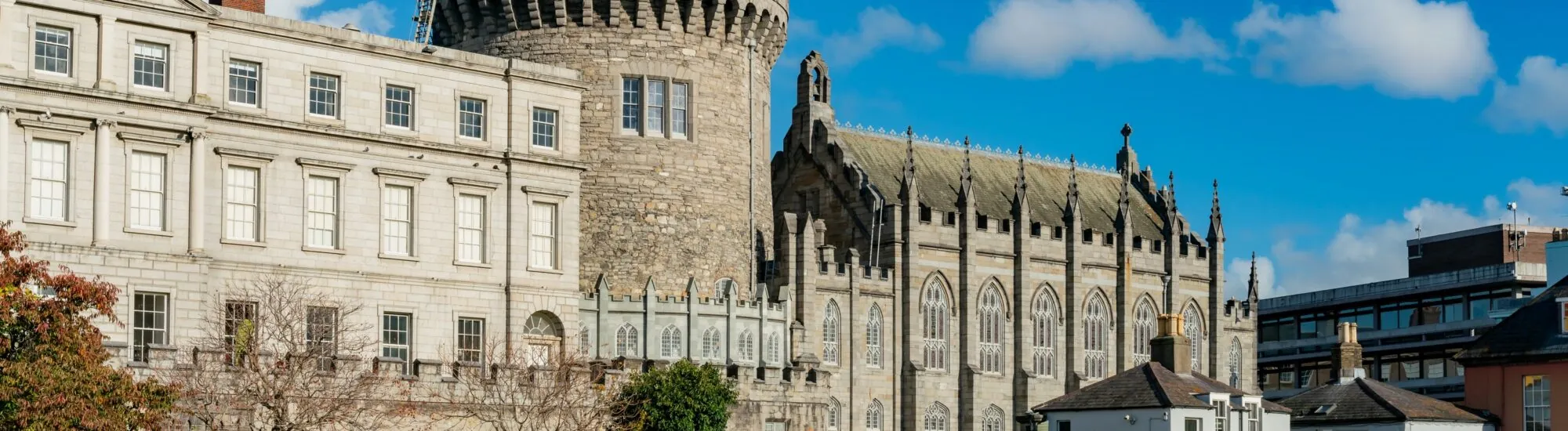
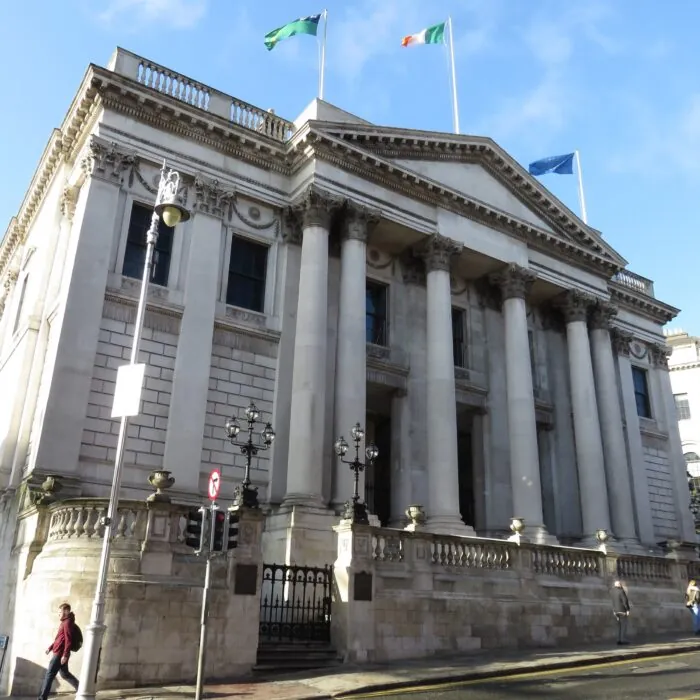
In the heart of the Irish capital, just minutes from Christ Church Cathedral and Temple Bar, Dublin Castle is one of the leading witnesses to Ireland’s political history.
Behind its elegant façades lies a site occupied since the Viking era, which became an Anglo-Norman fortress, the residence of the Crown’s representatives and, later, a venue for Irish State ceremonies. Yet the castle no longer truly resembles a medieval stronghold: fires, alterations and successive rebuilding have given it the appearance of a vast administrative palace.
A visit takes in the State Apartments, once used by the British viceroys, and descends beneath the castle in search of the remains of medieval Dublin. It is an especially interesting stop for understanding how power was exercised in Ireland for more than seven centuries.
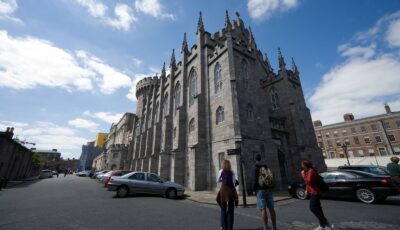
Dublin Castle
Dublin Castle was built from 1204 on the orders of King John of England. The Anglo-Norman conquest of Ireland had begun several decades earlier, in 1169.
The site was not chosen by chance. It stands close to the River Poddle, not far from its confluence with the Liffey, on part of the former Viking settlement of Dublin. The Anglo-Norman fortifications therefore reinforced an area that was already strategically important.
The first fortress had an almost quadrangular layout, protected by powerful walls, circular towers and moats fed in part by the Poddle. It bore little resemblance to the elegant palace visitors see today.
Its construction served both military and administrative purposes: to protect the king’s representatives, safeguard the royal archives and treasury, control the city of Dublin, and assert English authority over part of Ireland.
For almost 700 years, Dublin Castle remained the centre of English, then British, power in Ireland. It housed government offices, courts, a prison, a garrison and the headquarters of the Crown’s representative.
From the 17th century onwards, the castle also became the official residence of the Lord Lieutenant of Ireland, commonly known as the viceroy. He represented the British sovereign and directed the country’s administration from Dublin.
The viceregal court held lavish receptions, balls and ceremonies in the State Apartments. The castle then became a fashionable gathering place for the political and aristocratic elites of Ireland under British rule.
This outward splendour should not obscure its symbolic significance. For Irish nationalists, the castle long represented the heart of colonial power and one of the principal symbols of the British presence in Ireland.
Most of the medieval castle disappeared over the centuries. A major fire in 1684 destroyed part of the complex. The buildings were subsequently rebuilt and extensively altered during the 17th and 18th centuries.
The castle gradually adopted a more classical architectural style, better suited to the requirements of an official residence. Today, two large courtyards structure the complex: Upper Castle Yard and Lower Castle Yard.
The Record Tower is the main visible remnant of the medieval fortress. Built in the 13th century, it formed part of the original defensive system. Its particularly thick walls were used, among other things, to protect the documents and valuable objects of the royal administration.
Nearby stands the Chapel Royal, completed in 1814. This neo-Gothic chapel is distinguished by its pinnacles, carvings and striking interior decoration. Its architecture gives the impression of a medieval building, although it is relatively recent by the castle’s standards.
The Bedford Tower, meanwhile, overlooks the main entrance to Upper Castle Yard. It was built in the 18th century as part of the castle’s transformation into an administrative and residential complex.
On 16 January 1922, a few weeks after the Anglo-Irish Treaty was ratified, the castle was officially handed over to the Provisional Government led by Michael Collins.
The ceremony carried immense symbolic significance. The centre of British administration in Ireland passed into the hands of the representatives of the future Irish Free State. Contrary to a phrase often used, Ireland was not yet a republic: the Free State, officially established in December 1922, initially held dominion status.
The castle subsequently retained a governmental role. It hosts official meetings, diplomatic visits, international conferences and the inauguration ceremonies of Irish presidents.
The 1998 Good Friday Agreement was not signed at Dublin Castle. Negotiations took place mainly at Castle Buildings, on the Stormont estate near Belfast. Dublin Castle has nevertheless hosted other meetings concerning relations between Ireland, Northern Ireland and the United Kingdom.
The self-guided visit mainly provides access to the State Apartments. These rooms once served as the residential and ceremonial spaces of the viceregal court. They are still used for certain official ceremonies, which may occasionally alter the visitor route.
Among the most notable rooms is St Patrick’s Hall. Once a ballroom, it now hosts the inauguration of the President of Ireland. Its painted ceiling and imposing proportions make it one of the castle’s most prestigious spaces.
The Throne Room retains a throne installed for King George IV’s visit to Ireland in 1821. It is therefore not a gift presented by William of Orange after the Battle of the Boyne. The room offers a sense of the ceremonial pageantry and display of royal power in the 19th century.
The State Drawing Room, State Corridor, Battleaxe Staircase and ceremonial reception rooms complete the route. Their décor combines official portraits, period furniture, chandeliers and gilded ornamentation.
The guided tour is the most comprehensive option. It usually includes the State Apartments, the Chapel Royal and the underground foundations of the former castle.
The archaeological area reveals part of the medieval fortifications, the base of an old tower and the remains of defensive structures. Part of the structures associated with the former Viking settlement of Dublin can also be seen beneath the complex.
The Chapel Royal and archaeological excavations are normally accessible only as part of a guided tour. The self-guided option is better suited to travellers wishing to explore the State Apartments at their own pace.
Allow around one hour for a self-guided visit and up to 1 hour 30 minutes for a guided tour. Access arrangements may change when the castle is hosting a ceremony or government event.
The Dubh Linn Gardens lie behind the castle. Their name refers to the “black pool” said to have given Dublin its name. These geometric gardens offer a pleasant break, even when some of the castle buildings are inaccessible.
The Chester Beatty Library, also located within the complex, displays an outstanding collection of manuscripts, rare books and works from Asia, the Middle East, North Africa and Europe. Admission is usually free.
The castle is also close to several major sites. You can easily reach Christ Church Cathedral, St Patrick’s Cathedral, the Temple Bar district and Dublin’s former Viking quarter.
To plan your visit, always check the notices published by the Office of Public Works. The castle remains an active government complex and may close occasionally, sometimes at short notice.
Essential information to help you plan your visit, including key landmarks, access information, and booking options.
53.342899, -6.267428
45 minutes
Important information for 2026: the Office of Public Works has announced that Dublin Castle will be closed to the public from 5 May to 31 December 2026. This measure is linked to the hosting of official activities organised as part of Ireland’s presidency of the Council of the European Union.
The State Apartments, Chapel Royal and archaeological route will therefore not be accessible during this period. Access arrangements for the courtyards, gardens and independent establishments within the complex may vary according to security measures.
Under normal circumstances, the published opening hours are as follows:
Some rooms may close without notice when the castle is hosting a State ceremony, diplomatic visit or government event. Please check opening arrangements on the official website before travelling.
Address: Dublin Castle, Dame Street, Dublin 2, D02 XN27
GPS coordinates: 53.3429, -6.2674
Recommended duration: 1 hour to 1 hour 30 minutes
Access: approximately 10 minutes’ walk from Temple Bar and 15 minutes from Trinity College.
The State Apartments are accessible to people with reduced mobility via a lift. The Chapel Royal is only partially accessible, while the medieval excavations are not accessible, as they can only be reached by stairs.
Check the opening hours and admission requirements before you leave, especially during peak season or on Irish public holidays.
The usual admission prices published by Dublin Castle are as follows. They will apply again, subject to confirmation, after the exceptional closure in 2026.
Self-guided visit of the State Apartments:
Guided tour:
The outdoor courtyard and Dubh Linn Gardens are normally free to access. Admission to the Chester Beatty Library is also free, although donations are appreciated.
Dublin Pass holders can generally take the self-guided visit. A supplement may be charged for the guided tour.
Tickets are available online from 15 days before the date of the visit. A limited number of places may also be sold on site. Booking is strongly recommended during the tourist season.
Compare tickets, guided tours, and excursions available through our partner platforms.