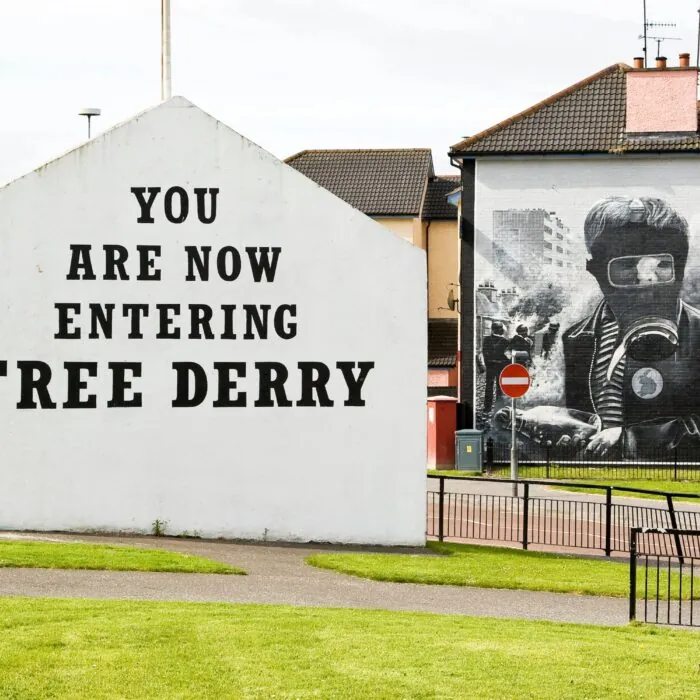


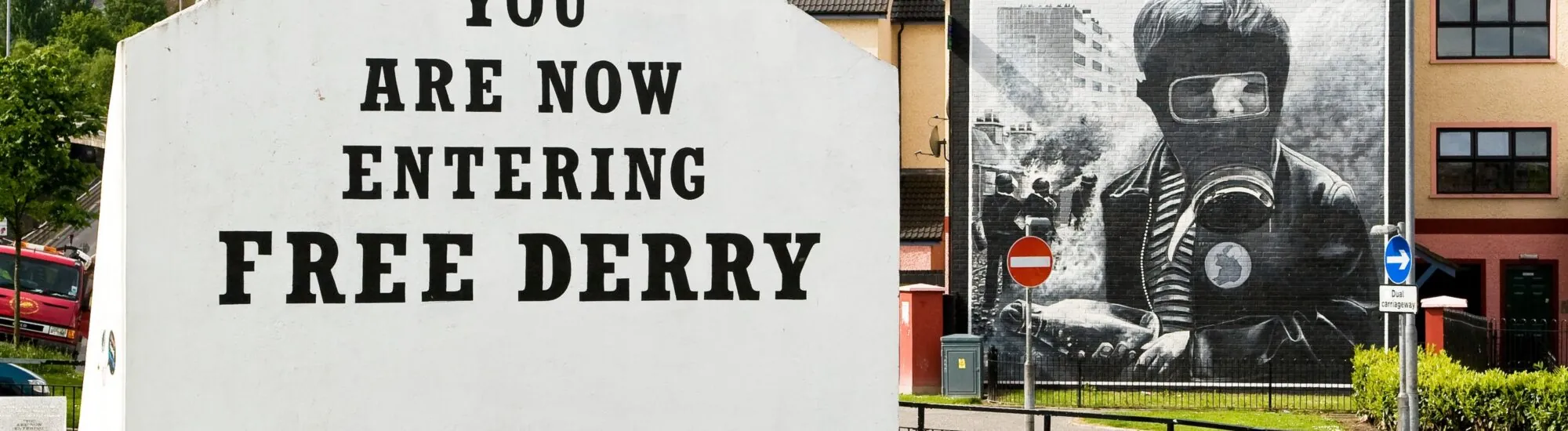
In the heart of the Bogside, a white wall stands alone, as though the house around it had vanished to let its words speak. “You Are Now Entering Free Derry”: you are now entering Free Derry. In Derry, Northern Ireland, Free Derry Corner is at once an urban remnant, a political symbol and a place of remembrance. To understand this inscription, look beyond the photograph: behind the gable lies the story of a neighbourhood and its people.
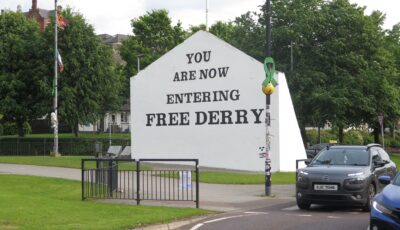
Free Derry Corner — photo: Cutlass, Wikimedia Commons, CC0. Image resized and recompressed.
The slogan first appeared in early January 1969 on the gable end of a house in the Bogside. At the time, the neighbourhood was shaped by civil rights demonstrations and violent tensions with the police. The demands concerned, in particular, discrimination and equal treatment in Northern Ireland.
According to the Museum of Free Derry, the phrase was inspired by student movements in Berkeley, California. Transposed to Derry, it expressed residents’ determination to protect their neighbourhood and assert their resistance. Barricades were erected, and the expression “Free Derry” became the name of a territory as much as a declaration.
In August 1969, the Battle of the Bogside pitted local residents against the police in the area. The neighbourhood took on a central role in the early years of the Troubles. The inscription accompanied this history: it marked a boundary claimed by the community, without denoting an official border or an independent state.
The surrounding streets are also associated with Bloody Sunday on 30 January 1972. It is essential to distinguish between these two landmarks: the slogan predates Bloody Sunday by several years. The wall was not created to commemorate that day, even though the memory of the victims and that of Free Derry now meet in the neighbourhood.
The houses to which the wall belonged were later demolished, but the gable was preserved. Its isolated presence accounts for the site’s visual power: the words remain where an inhabited street once went about its daily life. The surroundings have changed, while the wall has become a lasting landmark in the Bogside.
Free Derry Corner also remains a space for expression. Its paintwork may change with local or international campaigns and statements of position. A photograph therefore captures the wall at a particular moment in time. The monument belongs to a living memory, sustained by those who still live in the surrounding streets.
The visit takes place outdoors. Come to observe the gable, read the inscription and understand its place within the neighbourhood. Start with an overall view: the wall, the roads and the neighbouring façades show just how integrated this historic site remains within the city today.
Then approach on foot using the designated crossings. There is traffic in the area, so avoid standing in the road to take a head-on photograph. Stepping back a little often makes it possible to include the neighbourhood in the image, rather than isolating the slogan alone.
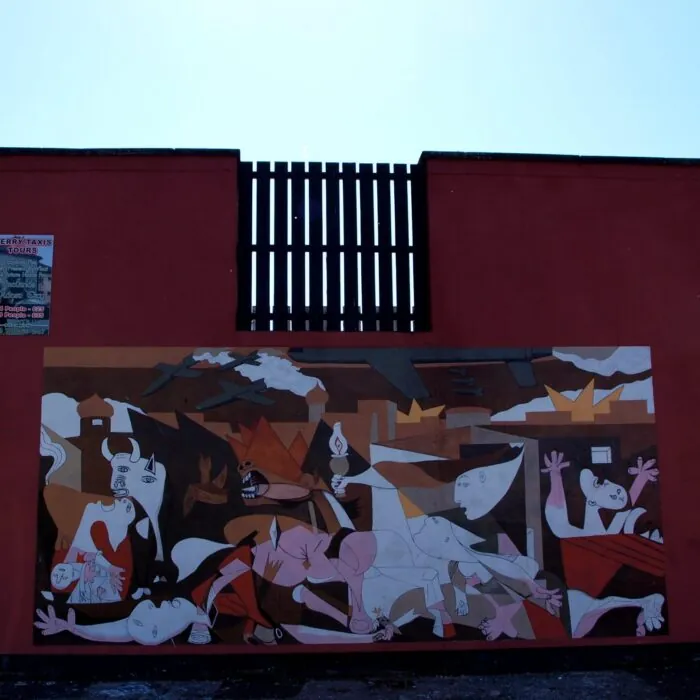
Free Derry Corner is a useful landmark from which to continue exploring the murals of the People’s Gallery. These works by the Bogside Artists form a distinct ensemble from the wall: they depict events, people and experiences connected with local history. Take time to read the available explanations rather than viewing the paintings as mere backdrops.
The Museum of Free Derry, in Glenfada Park, explores the civil rights movement and the early years of the conflict in greater depth. A guided tour of the Bogside can also offer an interpretation of its streets and places of remembrance. To extend the visit towards the peace process, the Peacemakers Museum, at the Gasyard Centre, provides a complement devoted to a different period and set of issues.
The wall itself can be seen quickly; allow more time if you wish to read, observe and continue on to the murals. Museums and guided tours require separate planning. If you have limited time, choose one in-depth visit rather than several rushed stops.
The Bogside is a residential neighbourhood. Respect the entrances to homes, ask permission before taking a close-up photograph of someone, and remain discreet during commemorations. With children, begin by explaining the context in simple terms: residents demanding equality, a neighbourhood marked by violence, and families keeping the memory of their loved ones alive.
A few words read before your walk can change the significance of the encounter. Standing before Free Derry Corner, the question then becomes one about the neighbourhood itself: how did an inscription born of urgency find its place in a city’s memory?
Essential information to help you plan your visit, including key landmarks, access information, and booking options.
Lecky Road / Rossville Street, The Bogside, Derry, County Derry, Northern Ireland, Tourist Attractions in Ireland
54.995778, -7.326778