
How does a city shaped by barricades learn to negotiate peace? In Derry, the Peacemakers Museum explores that question through the eyes of local people. Based at the Gasyard Centre on Lecky Road, it traces the years in which the Northern Ireland conflict gradually gave way to talks, compromise and power-sharing. Major political decisions sit alongside the memories of those who lived through this transformation.
In this Bogside museum, history has voices, faces and addresses. Its exhibition covers a specific period, from August 1972 to May 2007, inviting visitors to understand the journey between those two dates. It is particularly illuminating for anyone wishing to look beyond the most familiar images of the Troubles and grasp what building peace means in everyday life.
The name Gasyard preserves the memory of Derry’s former gasworks. Today, the site is home to a community centre whose activities contribute to life in the Bogside and Brandywell. The Gasyard Development Trust, an association founded in 1996, leads this local development project. The centre was completed in 2001 and refurbished in 2024.
This setting gives the museum a distinctive character. Visitors enter a place also used by local people for arts projects, community services or a break at the café. The history on display remains close to the neighbourhood that produced it. The building houses memory while continuing to serve the community.
After nearly ten years of preparation and development, the Peacemakers Museum opened to the public on 22 July 2024. Supported in particular by the National Lottery Heritage Fund, it gives a central place to local experiences. Its creation reflects a desire to pass on memories of the conflict and make the peace process comprehensible to visitors who may not necessarily know its stages.
Beginning in 1972 extends accounts devoted to the early years of the Troubles. The museum then follows several decades of change, through to the restoration of the power-sharing institutions in 2007. This chronological framework is one of its strengths: visitors can follow progress, setbacks and renewed dialogue without losing the thread.
On 10 April 1998, the Good Friday Agreement, also known as the Belfast Agreement, laid the foundations for a new institutional balance. Power-sharing, rights, identities and relations between the different parts of the island all have an essential place in this compromise. The principle of consent governs the question of Northern Ireland’s constitutional status.
Its signing did not, however, resolve every difficulty. Implementation was hindered in particular by disagreements over weapons and a lack of trust between political actors. In May 2007, the return of an Executive led by Ian Paisley as First Minister and Martin McGuinness as deputy First Minister marked a major step. The museum trail helps explain why an agreement must then be translated into lasting institutions and practices.
Objects, archive images and interactive displays accompany personal accounts. The project gathered the testimonies of fifty people. Listening to them brings political events closer to their impact on families, neighbours and neighbourhood life.
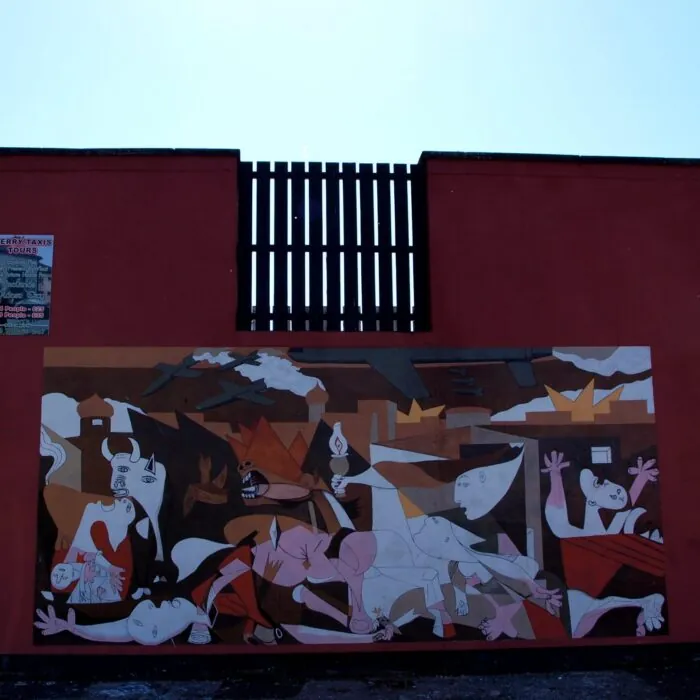
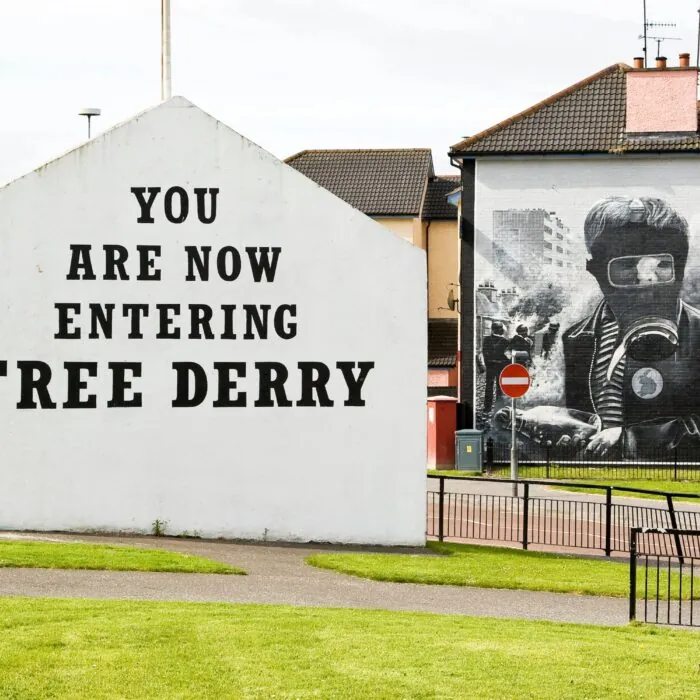
Installations evoke familiar places in the Bogside, including Free Derry Wall and the former Rossville flats. A reconstruction of a 1970s interior turns the focus towards domestic space. These shifts in scale are valuable, moving visitors from negotiations and speeches to the way a historical period becomes part of an ordinary life.
John Hume, Martin McGuinness and Mitchel McLaughlin have an important place in the exhibition. Their stories offer three ways into the political developments explored here. Take time to place them in the context of the discussions and decisions presented, rather than viewing the peace process as the work of a few isolated individuals.
The museum also explores the involvement of women and young people, trade union struggles, women’s rights, LGBTQ+ experiences, culture and sport. This broader focus expands the story: a society continues to organise, defend rights and create, even as it lives through conflict. For visitors, these testimonies often provide a more tangible entry point than political party acronyms alone.
Follow the sections in chronological order. Failed peace initiatives, prison protests and hunger strikes, followed by talks and ceasefires, take on greater meaning when viewed in sequence. The exhibition includes reconstructions and an immersive room devoted to riots: adjust your pace to suit those with you, particularly children or anyone made uncomfortable by intense atmospheres.
Also bear in mind the perspective of the place itself. The museum conveys a history rooted in the Bogside and in the experiences of its community. Setting this perspective alongside other collections and sources enriches understanding of a conflict whose memories remain multiple.
To plan your visit, allow around one to one and a half hours: this is a suggested pace, to be adjusted according to the time spent with the testimonies. Ask at reception which translated materials are available. The museum lists facilities including Braille, subtitles and a hearing loop; contact it before your visit to check which meet your needs, as well as access arrangements for the exhibition.
The Museum of Free Derry is a relevant complement for earlier events. You can also continue your visit on foot around the neighbourhood, allowing time for pauses and to observe the places mentioned in the exhibition. The Bogside is a lived-in neighbourhood: take photographs discreetly and respect private spaces.
Find booking details on the Peacemakers Museum’s official website. The museum’s opening hours differ from those of the community centre: be sure to check that the exhibition is open on your chosen day.
Sources: Peacemakers Museum, Gasyard Development Trust, National Lottery Heritage Fund and Visit Derry. Practical information checked on 5 October 2026.
Essential information to help you plan your visit, including key landmarks, access information, and booking options.
Gasyard Centre, 128 Lecky Road, The Bogside, Derry, County Derry, Northern Ireland, Tourist Attractions in Ireland
54.99272, -7.33040
Museum opening hours, distinct from those of the Gasyard Centre. Checked on 5 October 2026; check public holiday and exceptional opening arrangements before travelling.
Check the opening hours and admission requirements before you leave, especially during peak season or on Irish public holidays.
Prices in pounds sterling, checked on 5 October 2026 with Visit Derry and against the packages displayed on the museum website. Some older listings still mention £8 and £7: confirm the amount when booking. Children’s prices and concession terms: enquire with the museum.