

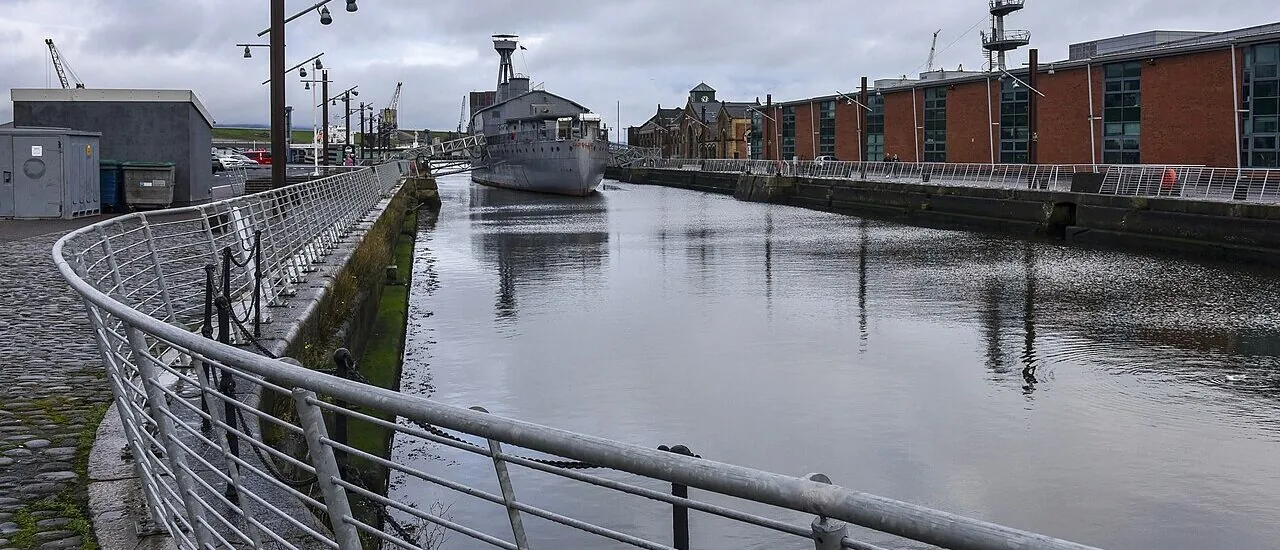
Moored in Alexandra Dock, at the heart of Belfast’s Titanic Quarter, HMS Caroline is more than simply a ship turned museum. This light cruiser, launched in 1914, is the last surviving vessel to have taken part in the Battle of Jutland, the largest naval engagement of the First World War. Once across the gangway, the modern docks fall away behind narrow passageways, engine rooms and the quarters once inhabited by several hundred sailors.
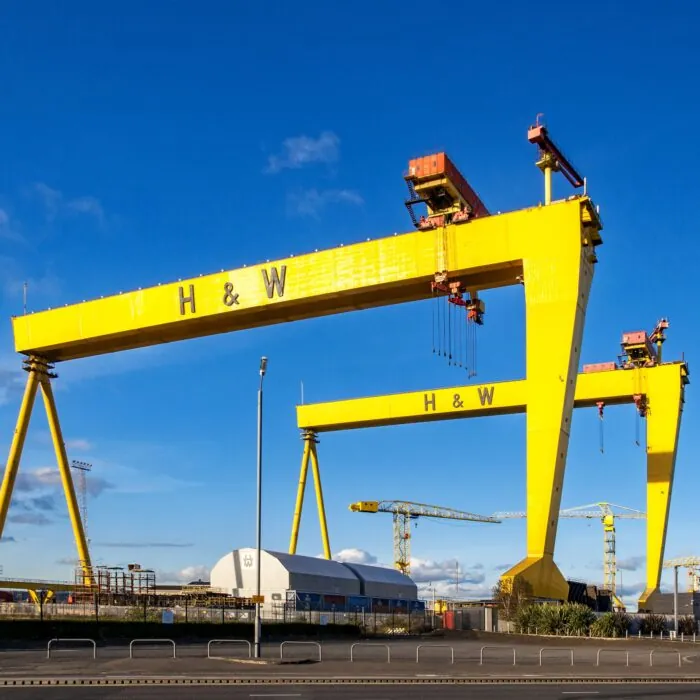
The ship lies in a historic basin at Belfast Harbour, close to the Samson and Goliath cranes and other major reminders of the city’s shipbuilding industry. Its grey silhouette, three funnels and equipment-lined deck evoke an era when speed, communication and firepower determined the outcome of battles at sea.
The visit unfolds through a series of restored spaces and interactive displays. The cabins, mess rooms, galley and work areas offer an insight into everyday life on board, far removed from romantic images of the open sea. Here, every square metre had to serve a purpose: sleeping, eating, relaying orders or maintaining machinery in a particularly compact world of metal.
HMS Caroline entered service during the First World War. Fast and relatively light, she was assigned, among other duties, to reconnaissance missions with the British Grand Fleet. On 31 May 1916, she took part in the Battle of Jutland, the vast confrontation between the British and German fleets off the coast of Denmark.
The battle produced no decisive victory for either side, but it left a lasting mark on naval history. HMS Caroline emerged unscathed and is now the only surviving ship from the battle. The projections and audiovisual displays on board place visitors amid the noise, confusion and urgency of combat, without reducing the experience to a simple military display.
The most striking part of the visit lies below deck. The engine room still contains the Parsons turbines that propelled the cruiser at more than 28 knots. Pipes, gauges, metal walkways and mechanisms offer a very tangible sense of the technical complexity required to move such a vessel in the early 20th century.
The contrast with the officers’ quarters is striking. The captain’s cabin and officers’ mess seem almost comfortable beside the crew’s far more basic accommodation. The route also takes in mess rooms, medical areas and spaces devoted to communications. Interactive activities invite visitors to try signal codes and discover how torpedoes worked.
HMS Caroline’s career did not end in 1918. Placed in reserve, the ship arrived in Belfast in 1924 to serve as a training vessel for the Royal Naval Reserve. During the Second World War, she became an important command centre for operations conducted from the Port of Belfast.
Generations of Northern Irish reservists subsequently trained on board. This long-standing presence explains Caroline’s particularly close connection with the city: even before becoming an attraction, she was already part of the docklands landscape and memory. Decommissioned in 2011, she underwent extensive restoration before opening to the public as a museum.
You do not need to know the difference between a cruiser and a battleship to enjoy the visit. Multimedia displays, personal accounts and reconstructed spaces make the story easy to follow. Children can use several hands-on installations, while technology enthusiasts will happily spend a little longer in the engine rooms.
It is worth remembering, however, that HMS Caroline remains a historic ship. The route includes narrow passages, thresholds and steep staircases. Part of the site is accessible to visitors with reduced mobility, but some original spaces cannot be adapted. If you have specific requirements, it is best to contact the museum before your visit.
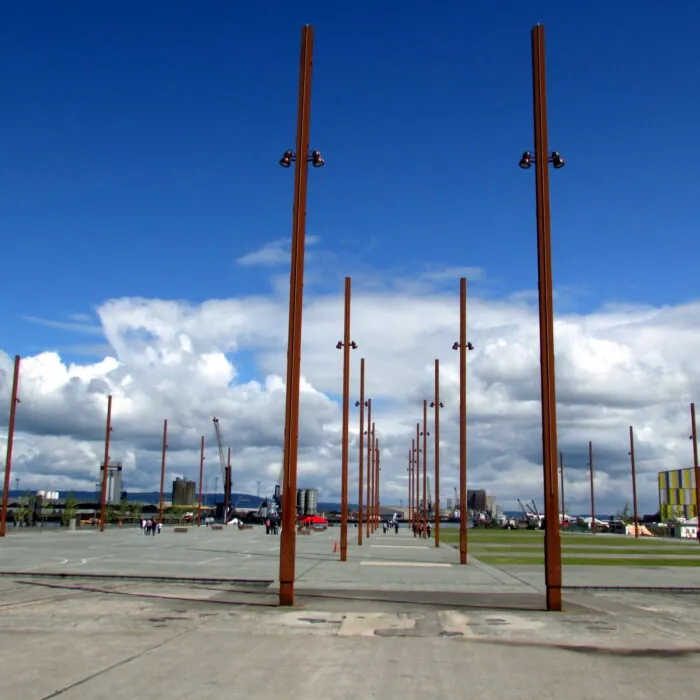
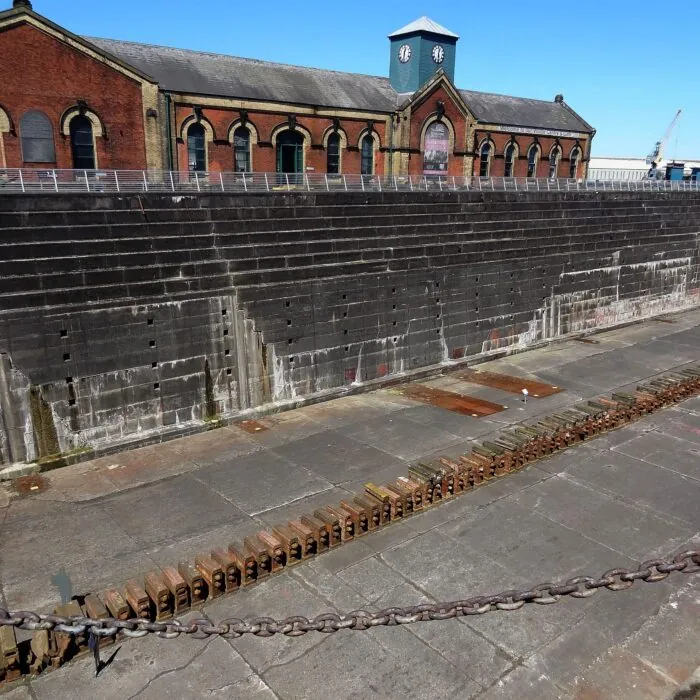
HMS Caroline fits naturally into a day in the Titanic Quarter. It can be combined with Titanic Belfast, the SS Nomadic, the Titanic Slipways or the Great Light. This concentration of sites allows you to explore more than a century of maritime history without leaving the former docks.
The ship also stands on the Maritime Mile, a walking route along the waterfront. This stroll gives the visit added context, linking museums, public artworks and industrial infrastructure that shaped Belfast. Wear comfortable shoes, as distances often seem shorter on the map than they are among the vast dock basins.
Essential information to help you plan your visit, including key landmarks, access information, and booking options.
Alexandra Dock, Queens Road, Titanic Quarter
54.6139, -5.9026