

When the door closes behind you, Dublin seems to disappear. A forest shrouded in twilight, a thatched cottage lit by its hearth and a hill inhabited by invisible creatures gradually replace the capital’s streets. At the National Leprechaun Museum, Irish folklore is not viewed behind glass: it is heard.
Located on Mary’s Abbey, north of the Liffey, this unusual venue explores the myths, legends and tales passed down in Ireland for centuries. The leprechaun naturally takes centre stage, but shares the spotlight with fairies, heroes, spirits and the unsettling characters of oral tradition.
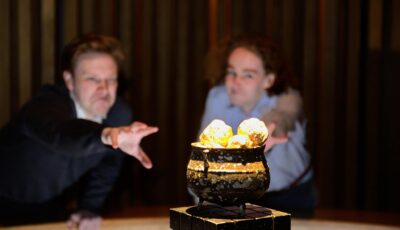
The leprechaun’s legendary treasure – © Leprechaun Museum
Despite its name, the National Leprechaun Museum is not a conventional museum. It has few display cases and does not offer a historical collection to explore at leisure. Instead, it is centred on a live guided tour led by a storyteller.
The group moves through a series of settings inspired by Ireland’s landscapes, homes and beliefs. Each room becomes the stage for a story: the storyteller uses voice, silence, light and the audience’s imagination to bring worlds to life that are never fully depicted.
The daytime tour lasts around 45 to 50 minutes. Recommended for ages 6 and over, it is suited to both families and adults interested in Irish folk traditions.
The museum was formerly located at 57 Jervis Street, an address that still appears in several older guidebooks. It has since moved just a few minutes from its original location.
The National Leprechaun Museum now welcomes visitors at 2/3 Mary’s Abbey, Dublin 7. It remains in central Dublin, close to Jervis Street, Henry Street and the north bank of the Liffey.
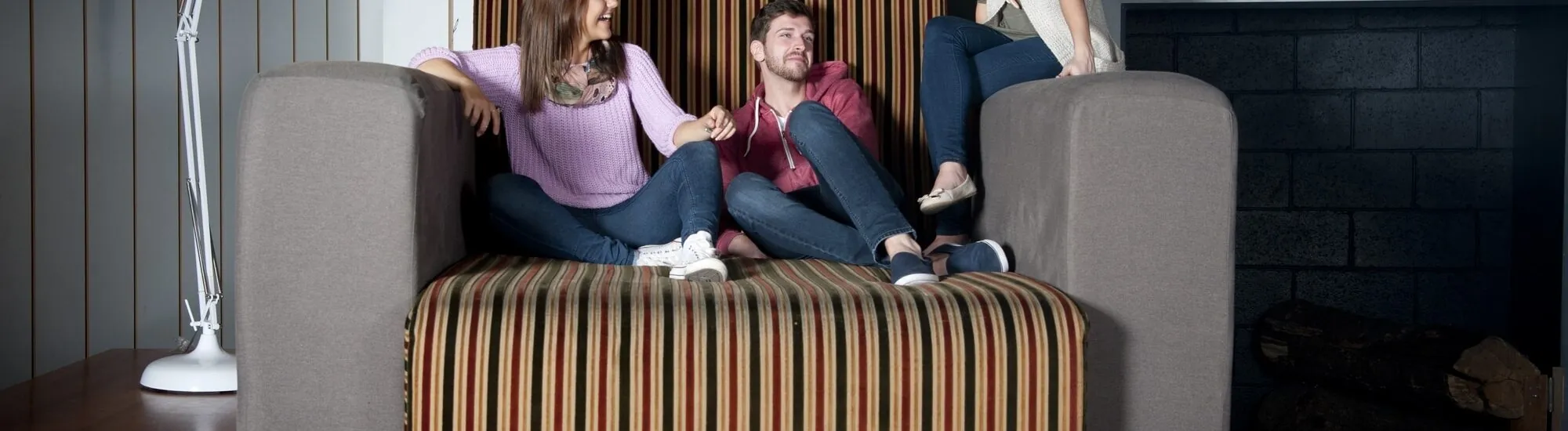
Photographs of the former tour, particularly those showing a huge room furnished to a giant’s scale, may therefore no longer reflect the current experience. The new design focuses on projections, lighting effects, forest settings and spaces evoking old thatched cottages.
The National Leprechaun Museum opened in Dublin in 2010. At the time, it was presented as the first attraction entirely devoted to the leprechaun, a figure instantly associated with Ireland in the international imagination.
From the outset, however, the project aimed to move beyond postcards and green-clad mascots. Its ambition was to place the leprechaun back within the far more complex world of Irish folklore.
The museum gradually established itself as a venue dedicated to the practice of traditional storytelling. It now describes itself as Ireland’s first museum devoted to the art of oral storytelling, the passing on of legends and the many creatures that inhabit the country’s mythology.
The stories told do not always follow a fixed script. Storytellers adapt their performance to the group, its reactions and the atmosphere of the session. Two tours may therefore follow the same route without being exactly alike.
The leprechaun is generally described as a small supernatural being belonging to the fairy world. Contrary to modern portrayals, it is not always cheerful, benevolent or dressed in green.
In traditional stories, the leprechaun usually lives alone. It works as a shoemaker, and the regular sound of its hammer striking a shoe can give away its presence. It also possesses riches, which it carefully hides from humans.
Anyone who manages to capture a leprechaun may try to force it to reveal the whereabouts of its treasure. Yet the creature is cunning, and takes advantage of the slightest distraction to vanish. The tale therefore highlights not so much the reward as the greed and recklessness of the person seeking to claim it.
The image of a cauldron full of gold at the foot of a rainbow belongs chiefly to more recently popularised versions. It sums up a much more nuanced tradition in which humans rarely emerge victorious from encounters with the supernatural world.
The English word leprechaun derives from terms in the Irish language, but its exact etymology remains debated.
It is sometimes linked to the Old Irish lúchorpán, which may be translated as “small body”. The term appears in a medieval tale recounting the encounter between King Fergus mac Léti and small aquatic creatures.
Another interpretation associates it with the Irish expression leath bhrógán, meaning approximately “shoemaker of a single shoe”. This explanation echoes the occupation traditionally attributed to the character.
The modern leprechaun probably results from the evolution and convergence of several traditions. Its appearance, clothing and character have changed over the centuries, from local tales to contemporary advertising portrayals.
In French, the leprechaun is often described as a farfadet or lutin. These translations convey the idea of a small supernatural creature, but do not capture the full distinctiveness of the Irish character.
The leprechaun belongs to a body of beliefs specific to Ireland. It is connected to fairies and beings from the Otherworld, without corresponding exactly to the goblins of French or Germanic traditions.
The museum highlights these differences. It shows how translation, tourism and popular culture have gradually simplified a figure that was once more ambiguous.
The daytime route takes in several spaces designed as storytelling scenes. A map introduces Ireland’s mythical geography, while images and objects recall different representations of folklore.
Visitors then enter settings evoking a traditional thatched cottage, a nocturnal forest or a fairy hill. Projections and changing light create an atmosphere without attempting to depict every detail of the story.
The storyteller remains the true focus of the tour. They may recount an encounter with the fairy folk, the adventures of a hero, the consequences of an ill-advised promise or the cunning of a supernatural being.
The route does not guarantee that every group will hear exactly the same legends. This element of variation is part of oral tradition, in which a story evolves according to the person telling it and the audience listening to it.
In Irish folklore, fairies do not always resemble the small winged beings found in children’s books. They may be beautiful, dangerous, generous or deeply unpredictable.
They are often associated with hills, ancient ringforts, solitary trees and certain natural places. Such spaces were traditionally approached with caution, as disturbing them could bring illness, bad luck or disappearance.
The terms used to refer to them reflect this mixture of respect and fear. They were often called the “little people”, the “good people” or the Aos Sí to avoid causing offence.
The tales regularly remind us that the human world and the Otherworld are separated only by a fragile boundary. Music heard at night, a path taken at the wrong time or an invitation accepted too quickly can be enough to cross it.
For centuries, Irish stories were passed on during evening gatherings, in homes and around the hearth. They were not simply entertainment: they helped to share social rules, explain the landscape and warn against certain behaviour.
The storyteller did not mechanically recite a learnt text. They adapted the story, added details and played with their audience’s expectations. Their voice and gestures gave shape to the characters.
The National Leprechaun Museum follows this principle. The settings support the story, but the essence of the experience lies in the relationship between storyteller and audience.
This approach may surprise those expecting a museum full of old objects or an attraction made up of special effects. The visit is closer to an intimate theatrical performance than a traditional exhibition.
The daytime tour is open to children aged 6 and over. The stories, settings and closeness to the storyteller make the experience especially vivid for younger visitors.
Some stories may nevertheless contain dark or unsettling passages. Irish folklore was not always intended to shield children from every kind of fear: supernatural creatures often served to warn of the dangers of the world.
The tour does not involve looking for a real leprechaun or taking part in a permanent treasure hunt. Families should therefore expect a visit focused on listening and imagination.
Children under 6 are not permitted on the daytime guided tour. This restriction helps preserve the atmosphere and attentive listening needed for the stories.
After nightfall, the museum offers a different experience called Darkland. This hour-long tour explores the most macabre, cruel and disturbing tales of Irish folklore.
The stories may involve death, violence, curses, mutilated bodies and fatal encounters with creatures from the Otherworld. They are a reminder that traditional Irish tales are far from being limited to rainbows and cauldrons full of gold.
Darkland is strictly for those aged 18 and over. Proof of identity may be requested at the entrance.
As with the daytime tour, the performance is delivered live and is not entirely fixed. The storyteller adapts their tales while retaining the dark atmosphere that defines this nighttime experience.
Regular tours are conducted entirely in English. A good understanding of spoken English is essential, as storytelling is at the heart of the experience.
The settings convey the general atmosphere, but they are not enough to understand the plots, wordplay and nuances used by the storyteller.
Tours in Irish can be arranged on request. The museum does not offer regular tours in French, and the experience cannot be followed using a translated audio guide.
The daytime family tour lasts around 45 to 50 minutes. Departures are organised every half hour, and the group completes the entire route together.
The Darkland experience lasts around one hour. It takes place on Thursday to Saturday evenings, with several departure times.
As places are limited, advance booking is recommended. Arriving late may mean you cannot join the group once the storytelling has begun.
The museum shop can be visited independently of the tour. It offers a selection of books about tales, legends, fairies and Irish mythology, as well as various souvenirs.
Up-to-date information is available on the National Leprechaun Museum’s official website.
Want to extend your visit without having to rush around? Here are a few well-located places to stay near the must-see attractions.
Essential information to help you plan your visit, including key landmarks, access information, and booking options.
53.347634, -6.266608
1 heure
Daytime family tour:
Darkland nighttime tour:
Tours are conducted live and in English only. Places are limited: online booking is strongly recommended.
Opening hours may change. We recommend checking the official page for museum experiences.
Exact prices are displayed at the time of booking and may vary according to visitor category or selected time slot.
The ticket is for a guided tour with a storyteller. It does not allow you to explore the museum freely before or after the session.
Prices may change. Booking is recommended on the National Leprechaun Museum’s official website.