
In Cobh, on the shores of one of the world’s largest natural harbours, the story of the Titanic has a particular resonance. On 11 April 1912, the liner made its final port of call here before heading out into the Atlantic. One hundred and twenty-three passengers boarded at Queenstown, as the town was then known, unaware that they would be the last to embark.
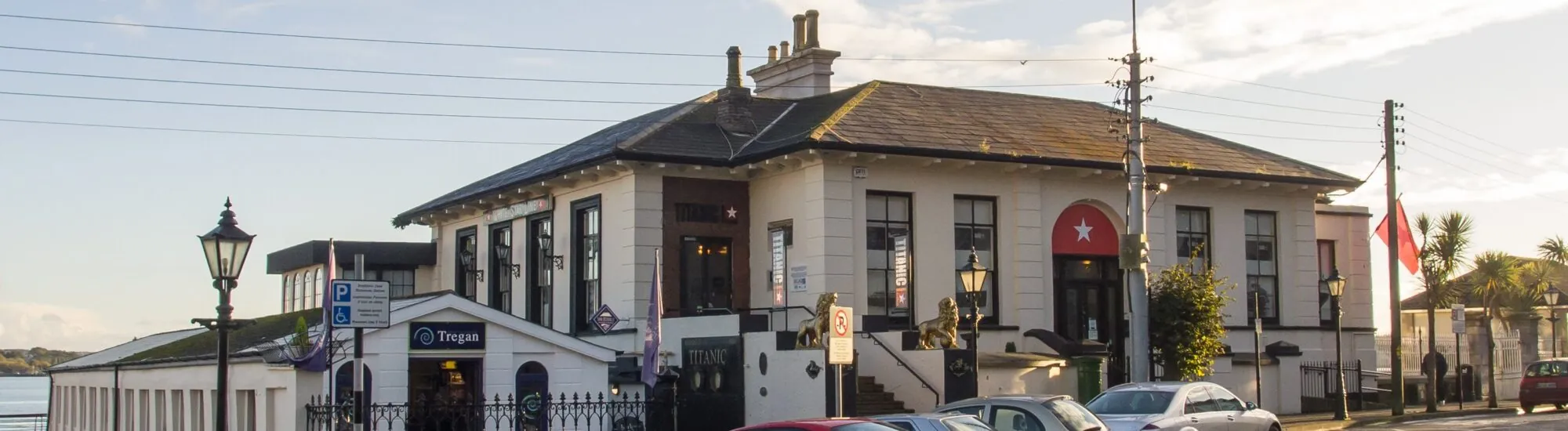
Housed in the former offices of the White Star Line, the Titanic Experience Cobh traces their journey, from their arrival at the port to the shipwreck in the night of 14 to 15 April 1912. More intimate than Titanic Belfast, this attraction draws on an authentic historic setting and the individual stories of the passengers who left from Cobh.
Titanic Experience occupies the former White Star Line premises at 20 Casement Square, in the centre of Cobh. The building once served as a booking office and meeting point for travellers embarking at Queenstown.
On 11 April 1912, the Titanic dropped anchor off Cork Harbour. Its size and the depth required for navigation prevented it from docking directly. Passengers, luggage and mail were therefore transferred to the liner aboard two tender vessels: the PS Ireland and the PS America.
Of the 123 travellers who boarded during this final stop, only 44 survived the sinking. Rather than focusing solely on the ship’s technical features, the museum tells the story of the disaster through these individual lives.
On arrival, each visitor receives a boarding card bearing the name of someone who joined the Titanic at Queenstown. The document includes their age, travel class and destination.
Visitors are then invited to follow in that passenger’s footsteps. Were they an Irish emigrant hoping to begin again in the United States? Were they travelling alone or with their family? Had they booked first-, second- or third-class accommodation?
Their fate is revealed only at the end of the experience. This approach puts a face to the statistics and serves as a reminder that the Titanic’s victims were women, men and children with plans, hopes and personal stories.
After leaving Southampton on 10 April 1912, the Titanic called at Cherbourg, France, before reaching Queenstown the following day. At the time, the Irish port town was a major departure point for emigrants crossing the Atlantic.
Of the 123 passengers who embarked at Queenstown, most were travelling third class. Many were Irish and hoped to find work, join relatives or start a new life in North America.
A few passengers also left the ship during this stop. Among them was Father Francis Browne, a young Jesuit priest whose photographs are now a valuable record of the voyage’s early hours. Before leaving the liner in Cobh, he captured its decks, facilities and several fellow passengers.
At around 1.30 pm, the Titanic weighed anchor and left Cork Harbour. It would not touch land again before colliding with an iceberg three days later.
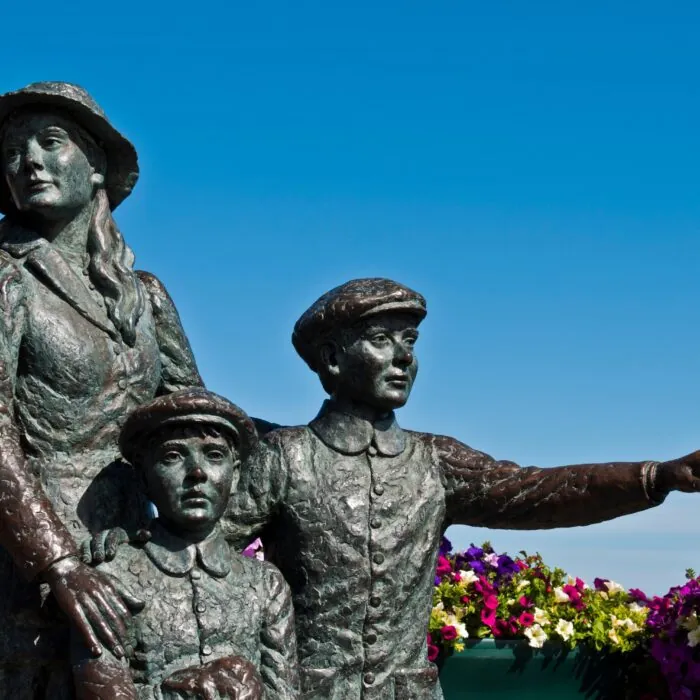
From the building, visitors can see the former pier associated with the passengers’ departure. Now known as Heartbreak Pier, the “pier of farewells” is one of the most poignant surviving reminders of this final stop.
Passengers waited here for the tender vessels that would take them to the large liners anchored in the harbour. For many emigrants, this pier was their final contact with Ireland.
The site is currently in a very poor state and cannot be visited directly. However, it remains visible from part of the route, helping to place the events in their original setting.
The first part of the experience is led by an English-speaking guide. Reconstructions, audiovisual projections, sound effects and sets evoke the departure from Queenstown, the transfer to the liner and daily life on board.
The visit highlights the profound differences between the classes. First-class passengers enjoyed luxurious cabins, richly decorated lounges and fine dining. In third class, the Titanic’s facilities were relatively comfortable for the time, but space was more limited and evacuation conditions far less favourable.
A film sequence then recreates the collision with the iceberg and the sinking. The experience favours atmosphere and storytelling, without seeking to turn the disaster into a sensational spectacle.
On the night of 14 April 1912, the Titanic was sailing through the North Atlantic towards New York. Despite several warnings of ice, the liner continued at high speed.
At 11.40 pm, lookouts spotted an iceberg. The evasive manoeuvre was initiated too late: the hull struck the ice on the starboard side. Several watertight compartments were breached, exceeding the limits the ship could withstand.
The Titanic sank at around 2.20 am on 15 April. Of the approximately 2,200 people on board, more than 1,500 died. The insufficient number of lifeboat places, confusion during the evacuation, the water temperature and the remoteness of rescue ships all explain the scale of the loss of life.
The exhibition looks back at the decisive role played by the RMS Carpathia. After receiving the Titanic’s distress calls, the liner changed course and travelled at high speed through a dangerous area strewn with ice.
It reached the site of the sinking several hours later and picked up around 700 survivors in the lifeboats. The Carpathia then took them to New York, where their arrival caused a worldwide stir.
Survivor accounts and recordings offer an insight into the confusion of that night, the extreme cold and the seemingly endless wait for rescue.
The self-guided part of the exhibition covers the investigations conducted in the United States and the United Kingdom after the sinking. These inquiries examined the ship’s speed, iceberg warnings, the number of lifeboats available, the crew’s conduct and the organisation of the evacuation.
The disaster led to major reforms in maritime safety. Ships were required, in particular, to provide enough lifeboat places for everyone on board. Continuous radio watches were also made compulsory, and an international ice patrol was established in the North Atlantic.
The museum also presents the discovery of the wreck in 1985. It lies at a depth of nearly 3,800 metres, around 600 kilometres south-east of Newfoundland. Observations confirmed that the ship had broken in two before reaching the ocean floor.
Titanic Belfast stands on the site of the former Harland & Wolff shipyard, where the liner was built. Much larger, it explores the ship’s design, Belfast’s industry, its launch, interior fittings, the sinking and underwater research.
Titanic Experience Cobh takes a different approach. Smaller and more narrative-led, it focuses on the final stop and the 123 passengers who boarded at Queenstown. Its main strength lies in the authenticity of the building and its proximity to the former embarkation pier.
While Titanic Belfast impresses with its architecture and the scale of its staging, the Cobh museum is moving for its human scale. The two attractions tell two distinct chapters of the same story.
The experience begins with a guided tour in English, followed by free time in an exhibition room. It brings together documents, letters, objects, testimonies, recordings and panels about the passengers, the rescue and the official inquiries.
Audio guides are available in French, German, Spanish, Italian, Polish and Chinese. They allow non-English-speaking visitors to follow the main explanations.
Allow between one hour and 1 hour 15 minutes to explore the full experience. The visit is suitable for families, although some sequences about the sinking may upset more sensitive children.
Tours begin at set times, and places on each departure are limited. Online booking is strongly recommended during the summer, at weekends and on days when a cruise ship calls at Cobh.
Arrive at least ten minutes before the start of your visit. If you are late, admission to the next group is not guaranteed, particularly during high season.
The building is accessible to wheelchair users and visitors with pushchairs. An adapted entrance and a lift allow visitors to access the route without using the stairs.
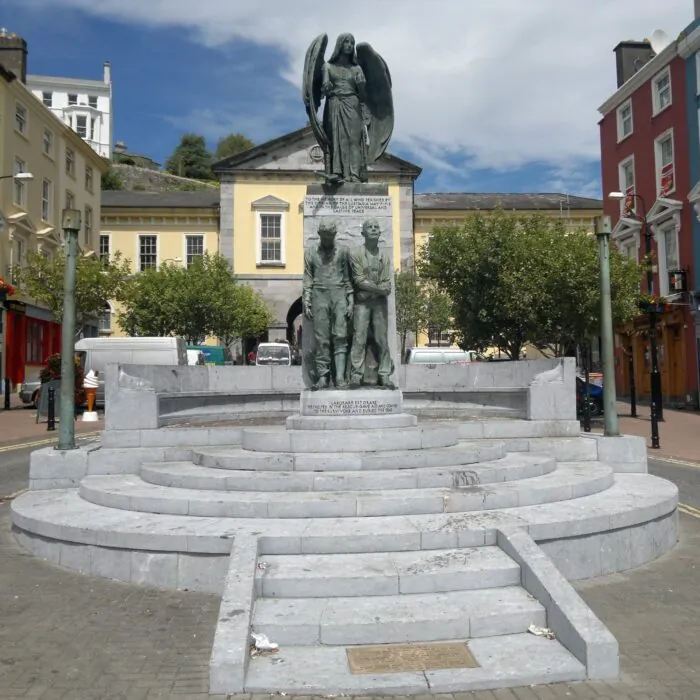
A few minutes’ walk away, the Cobh Heritage Centre explores the history of Irish emigration, convict ships sent to Australia, the Titanic and the Lusitania.
A walk along the harbour also offers views of Cobh’s colourful houses and vast Cork Harbour. From higher ground, St Colman’s Cathedral towers over the town with its neo-Gothic silhouette and offers a remarkable panorama of the bay.
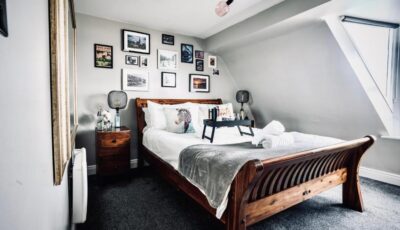
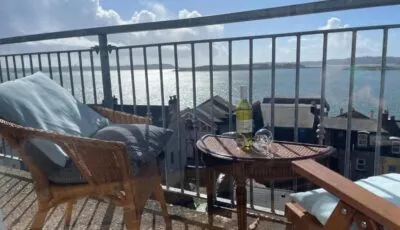
Want to extend your visit without having to rush around? Here are a few well-located places to stay near the must-see attractions.
Essential information to help you plan your visit, including key landmarks, access information, and booking options.
51.850160, -8.295021
1 heure
Extended opening hours are regularly offered in summer. Tours depart at set times: check the time shown on your ticket and arrive at least ten minutes in advance.
Check the opening hours and admission requirements before you leave, especially during peak season or on Irish public holidays.
Special rates are available for groups of at least ten people and visitors with specific needs. As prices and opening hours may change, check the official Titanic Experience Cobh ticket office before your visit.
Compare tickets, guided tours, and excursions available through our partner platforms.