A few buried flints can sometimes push a place’s history back by several thousand years. Near Blessington, County Wicklow, excavations carried out ahead of the construction of the Threecastles solar farm uncovered traces of human activity attributed to the Early Mesolithic, around 9,000 years ago. Behind the comparison with a prehistoric “toolkit” lies a story of movement, natural resources and everyday tasks.
At Threecastles, a discovery beneath the future solar panels
Tools uncovered through preventive archaeology
The discovery was reported on 29 October 2026 by RTÉ Radio 1, during an interview with archaeologist Laurence Dunne. The programme’s description refers to objects found in a charcoal-containing pit on the solar project site. It was the investigations carried out before construction began that brought these remains to light.
The story was subsequently reported on 3 November by Archaeology Magazine. The stated age relates to traces of occupation at the site: it does not refer to a single tool whose name, exact use and dating have all been established in a published report.
A “toolkit” rather than a Swiss Army knife
Flint, the working material of hunter-gatherers
Speaking to RTÉ, Laurence Dunne used the image of a versatile set of equipment to describe the flints, which were associated with cutting, scraping and sharpening activities. The comparison makes these objects more familiar, but should not be taken literally: this was neither a folding tool nor a metal object.
The archaeologist links this occupation to a small mobile group making use of the resources of the rivers and valleys. This interpretation is what makes the discovery so interesting: the objects tell us less about a spectacular monument than about the activities of people whose structures have left little visible trace.
Placing these remains in Ireland’s long history
A world before the first fields
The Irish heritage service places Mesolithic communities within an economy based on hunting, fishing and gathering, with close attention to seasonal resources. Their knowledge relied in particular on an understanding of the environment and of the times when food became abundant. These tools therefore belong to a world that long predates the agricultural landscapes now associated with Ireland.
The site also revealed an enclosure interpreted as a possible ringfort, a type of site dating from a much later period. According to the published information, the solar project was designed to preserve the enclosure in place. These two sets of remains must be distinguished: the prehistoric flints and the enclosure do not belong to the same period.
Can the discovery near Blessington be seen?
No public opening announced
The information available does not present Threecastles as a new tourist site open to visitors. Laurence Dunne told RTÉ that the objects were due to go to the National Museum of Ireland, which would decide whether they might be put on display. This is not an announcement of a public exhibition, nor of a date to add to an itinerary.
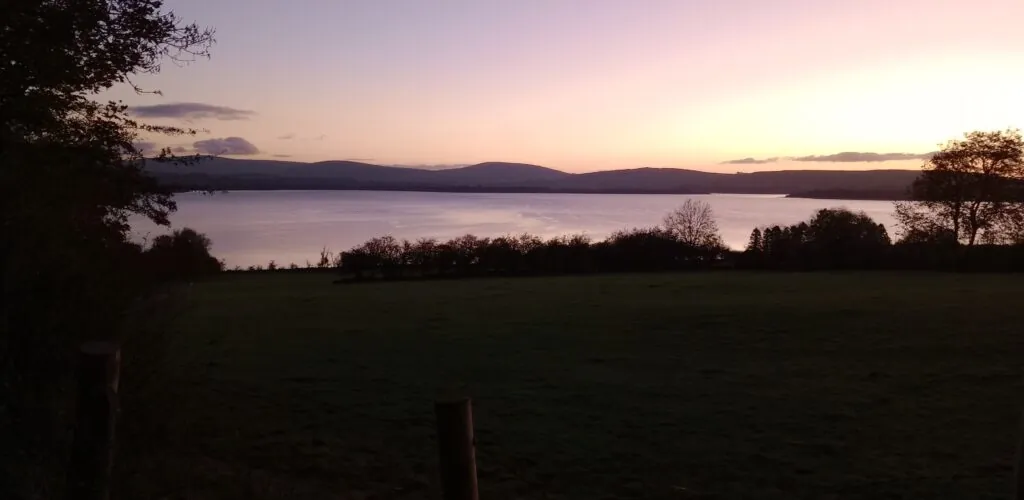
To discover the prehistoric collections, visitors can prepare their visit using the official presentation of Prehistoric Ireland. To explore the area around the discovery, our guide to the Blessington Lakes provides an overview of the present-day landscape. The lakes are, however, an artificial reservoir: their appearance cannot directly recreate the landscape known to Mesolithic inhabitants.
The detailed scientific excavation report was not identified among the documents consulted. The figure of 9,000 years and the interpretation of the objects are therefore presented here as the findings reported by the archaeologist, without adding any dating method, number of tools or undocumented ritual scenario.