

When night falls over Derry’s city walls, the gates seem to open onto another world. Banshees, skeletons, Celtic creatures and costumed characters take over the streets for one of Northern Ireland’s most spectacular events: Derry Halloween.
Described by its organisers as Europe’s largest Halloween festival, the event celebrates its 40th anniversary in 2026. Four decades after its modest beginnings, it now attracts around 120,000 visitors and transforms the walled city into a vast open-air theatre.
The main Derry Halloween 2026 celebrations will take place from Wednesday 28 to Saturday 31 October. The official platform also announces several events running until Sunday 1 November.
The highlight will take place on the evening of 31 October, with the grand carnival parade followed by the traditional fireworks display over the River Foyle.
This anniversary edition is expected to feature an enhanced programme. Derry City and Strabane District Council has announced plans for a major attraction created especially for the festival’s 40th anniversary, along with a proposed permanent mural in the walled city.
As the final programme is being released gradually, times for certain performances and activities may still change.
Derry Halloween is a celebration combining street theatre, carnival, illuminations, acrobatics, music, pyrotechnics and traditions inspired by Samhain and the Irish origins of Halloween.
For several days, the historic centre of Derry-Londonderry becomes a life-sized stage. The city walls, narrow streets and squares host light installations, fantastical characters and performances inspired by Irish folklore.
The atmosphere is not that of a horror theme park. The festival favours fantasy, creativity and visual spectacle. Some creatures may unsettle younger children, but most of the programme is designed to be family-friendly.
The festival’s story is said to have begun in 1986 with a fancy-dress party held in a pub. The success of this local celebration encouraged the city and its residents to gradually develop a fully fledged carnival.
Costumes became more elaborate, performers took to the streets, and fireworks were added to the festivities. The involvement of local associations, schools, musicians and arts companies gave the event its deeply community-minded character.
Forty years on, Derry Halloween has become one of Northern Ireland’s leading cultural events. The festival draws international visitors and records particularly high attendance levels. During the 2025 edition, accommodation in the city reportedly reached an average occupancy rate of 96% during the festivities.
This success has not erased the spirit of its early days. The grand parade still relies in part on the involvement of local residents, artists and organisations.
The Awakening the Walled City Trail is one of Derry Halloween’s highlights. During the festival’s first evenings, the city walls and historic streets are transformed by light installations, projections, actors and folklore-inspired creatures.
The trail usually passes through several areas of the city centre, around Guildhall Square, Shipquay Street, The Diamond, Bishop Street and the Cathedral Quarter. Its exact route may, however, change from one edition to the next.
Visitors make their way through a series of scenes populated by banshees, spirits, skeletons and beings from the legends of Samhain. Aerial performances, sound effects, fire and circus elements complete the experience.
For its 40th anniversary, the city is planning measures to better manage crowds on the upper section of the city walls. Some areas of the Awakening Trail are expected to be accessible with a free ticket and timed entry slot. This measure is not an admission charge: it is intended solely to reduce queues and the risk of congestion.
Booking arrangements will be published on the festival’s official website.
On Halloween night, thousands of spectators gather in the streets to watch the Carnival Parade. The 2026 edition is scheduled to begin at 7 pm, subject to later adjustments to the programme.
Illuminated floats, giant lanterns, musicians, dancers, acrobats and costumed characters make their way through central Derry. The parade draws inspiration from Irish tales, Celtic mythology and the supernatural figures associated with the night of Samhain.
The parade is as much a spectacle as a popular celebration. Spectators are strongly encouraged to come in costume, quickly turning the whole city into a vast carnival.
The best viewing spots are taken long before the procession begins. Arriving at least an hour early generally gives you a better view, especially with children.
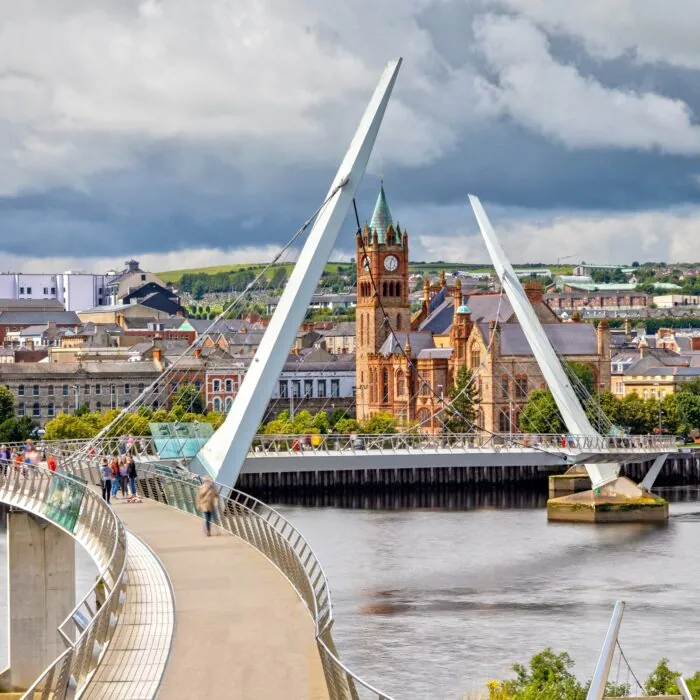
After the parade, attention turns to the River Foyle. The festival ends with a major fireworks display lighting up the quays, the Peace Bridge and Derry’s main landmarks.
The exact time of the 2026 pyrotechnic display has not yet been confirmed. It is expected to follow on from the parade, weather permitting.
The quays and the area around the Peace Bridge generally offer good viewing points. However, these spaces become extremely busy. Follow the organisers’ instructions and do not block emergency access routes.
The fireworks may be delayed or cancelled in strong winds or dangerous weather. Part of the 2025 programme had to be halted due to weather conditions.
Derry Halloween places great emphasis on families through its Little Horrors programme. Creative activities, shows, storytelling, animal encounters and costume workshops are generally offered during the day.
The activities are more fun than frightening. They allow young visitors to discover Halloween traditions without immersing them in an overly unsettling experience.
The nighttime trail may nevertheless unsettle sensitive children because of the noise, crowds, lighting effects and appearance of some characters. An early-evening visit is therefore preferable.
Families can also enjoy the food stalls, markets and musical entertainment set up around Guildhall Square and Waterloo Place.
During the festival, Guildhall Square and Waterloo Place become the Heart of Samhain. Stages host musicians and performers, while stalls offer hot drinks, local specialities and street food.
This area is ideal for taking a break between shows and enjoying the atmosphere without necessarily following the entire nighttime trail. It also makes a good meeting point for groups.
Music plays an important part in the programme. The Samhain and Cathedral Quarter stages generally host local artists in a festive atmosphere that later continues in Derry’s pubs.
Some concerts held in venues or private establishments may charge admission and require separate booking.
The grand parade, fireworks display and most outdoor activities are free. The booking system planned for certain sections of the Awakening the Walled City Trail is also intended to remain free.
Indoor shows, concerts, guided tours and certain workshops may, however, charge admission. Prices depend on each organiser and should be checked in the official programme.
Tickets should only be booked through the official Derry Halloween website or the platforms specified by the organisers.
Derry Halloween attracts around 120,000 visitors, and demand for accommodation is particularly high. For the 2026 anniversary edition, it is sensible to book several weeks, or even several months, in advance.
Staying in the city centre means you can reach the events on foot, but prices rise and availability becomes limited quickly. Neighbourhoods on the other side of the Foyle remain accessible via the Peace Bridge and may offer an appealing alternative.
It is also possible to look for accommodation near Derry, provided you plan your return journey in advance. Roads in the city centre are partially closed during the festival, and traffic can be difficult after the fireworks.
Arriving on 28 or 29 October allows you to experience the Awakening Trail before the particularly busy evening of 31 October. A stay of two or three nights offers a good balance between the festivities and visits to the city walls, the Guildhall and the Bogside.
The historic centre is largely pedestrianised during Derry Halloween. Road closures, parking restrictions and diversions are put in place around the city walls and quays.
It is not advisable to try to find parking at the last minute close to the parade route. Outlying car parks and public transport are simpler options, followed by a walk into the city centre.
The 2026 traffic arrangements will be published shortly before the festival. Information from previous editions should not be assumed to apply automatically.
Derry is built on hilly terrain, and some streets have steep gradients. People with reduced mobility or travelling with a pushchair should consult the festival’s accessibility guide before choosing their route.
Costumes are not compulsory, but they are very much part of the experience. Witches, ghosts, skeletons and folkloric creatures mingle with far more inventive costumes in the streets.
Wear warm, waterproof clothing underneath your costume. Late October evenings in Northern Ireland can be cold, wet and windy.
Comfortable shoes are essential: the trail takes in cobbled streets, slopes and the city walls. Reflective clothing or a small light-up accessory can also help you remain visible in the crowd, especially for children.
Essential information to help you plan your visit, including key landmarks, access information, and booking options.
centre-ville de Derry, Derry, County Derry, Northern Ireland, Tourist sites in Ireland
54.996608629146245, -7.308574066643609
The grand parade, fireworks display and most outdoor activities are free.
A free booking system is due to be trialled for access to certain busy sections of the Awakening the Walled City Trail. Details will be confirmed by the organisers.
Some concerts, indoor shows, workshops and guided tours may charge admission. Prices vary depending on the activity chosen.