Ireland, long considered one of the poorest countries in Europe, has undergone a spectacular transformation over recent decades. From subsistence farming to the rise of the high-tech industry, through the Great Famine, massive emigration, and the 2008 financial crisis, the Irish economy reflects the island’s turbulent history. Today, it is both a model of success and an example of the challenges posed by globalization.
Agricultural Foundations
A Rural Economy Dominated by the Land
Until the 19th century, the Irish economy was primarily based on agriculture. The majority of the population lived in rural areas, dependent on subsistence crops like the potato. This extreme dependence had dramatic consequences during the Great Famine (1845–1852), which caused the death of one million people and the emigration of two million others.
Although weakened, agriculture remained a pillar of the Irish economy until the first half of the 20th century. Cattle and sheep farming, as well as exports of agricultural products to the United Kingdom, represented a major share of the country’s income.
Limited Industrialization
Development Hindered by Colonization
Unlike Great Britain, Ireland experienced limited industrialization. While Belfast became a major center for linen and shipbuilding, notably with the Harland & Wolff shipyards where the Titanic was built, the rest of the country remained largely rural.
The colonial status hindered independent industrial development. Economic structures were shaped by British interests, preventing Ireland from developing a diversified economy.
Independence and the Emerging Economy
Protectionism and Initial Difficulties
After independence in 1922, the Irish Free State had to build an autonomous economy. The first decades were marked by a policy of protectionism, aimed at encouraging national industry. However, this strategy slowed modernization, and Ireland remained a poor country, marked by unemployment and emigration.
In the 1950s, the situation was critical: the economy stagnated, and many Irish people left to seek work in Great Britain or the United States.
Opening Up and Reforms in the 1960s
Towards a Modern Economy
Under the leadership of figures like Seán Lemass, Ireland adopted in the 1960s a policy of economic openness. The country began attracting foreign investment by offering tax incentives and developing its infrastructure.
Joining the European Economic Community (EEC) in 1973 was a decisive turning point. It allowed Ireland to benefit from structural funds and to integrate into a larger market, thus stimulating growth.
The Celtic Tiger
The Economic Boom of the 1990s and 2000s
In the 1990s, Ireland experienced rapid growth, earning the nickname the Celtic Tiger. Several factors explain this boom:
- Very attractive tax advantages for foreign companies.
- The establishment of technology and pharmaceutical giants such as Apple, Google, Pfizer, Intel.
- A young and educated population, with strong English proficiency.
- European funds that financed roads, schools, and infrastructure modernization.
Irish GDP per capita became one of the highest in Europe, and the country shifted from a peripheral economy to a global hub of innovation and finance.
The 2008 Financial Crisis
From Euphoria to Recession
The global crisis of 2008 hit Ireland hard. The bursting of the real estate bubble led to the collapse of the banking system, and the country had to be rescued by an international bailout plan from the European Union and the IMF.
Unemployment reached record levels, and severe austerity policies were imposed. Emigration, a historic phenomenon in Ireland, surged again in the 2010s.
Recovery and Return to Growth
A Model of Resilience
Despite the crisis, Ireland achieved a spectacular recovery. By 2014, it once again showed one of the strongest growth rates in the European Union.
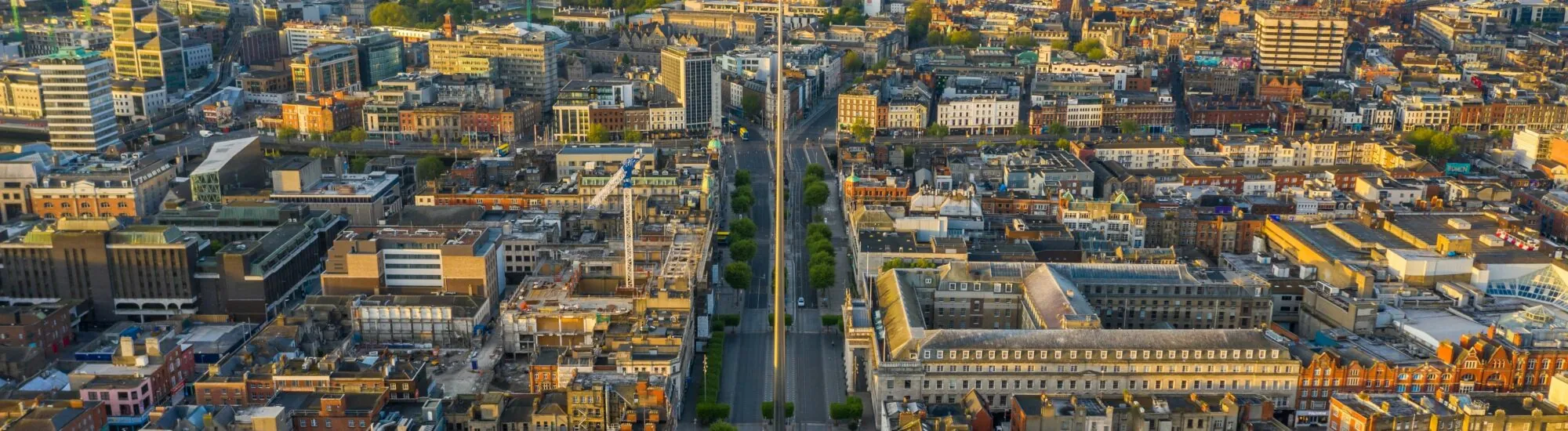
Multinationals continued to invest heavily, attracted by the corporate tax rate of 12.5%, one of the lowest in Europe. Dublin became an important financial center, strengthened by Brexit, which prompted several companies to transfer their European activities there.
Key Sectors of the Irish Economy
From Technology to Agri-food
The current Irish economy rests on several pillars:
- Technology and Digital: Apple, Google, Facebook, and Microsoft have European headquarters in Ireland.
- Pharmaceuticals and Biotechnology: Pfizer, Johnson & Johnson, and other giants have chosen Ireland as a base.
- Agri-food: Kerrygold butter, beef, and dairy products remain major export assets.
- Finance and Services: Dublin asserts itself as a center of European finance.
- Tourism: the Emerald Isle attracts millions of visitors each year, contributing to economic growth.
Criticism and Challenges
Taxation and Dependence on Multinationals
While the Irish economy is thriving, it is not without criticism. Its model heavily relies on the favorable taxation offered to multinationals, which causes tensions with other European countries.
Moreover, this dependence on foreign investment makes the economy vulnerable to global fluctuations. The rising cost of housing and social inequalities also constitute major challenges for Irish society.