Aran Islands
Travel Guide

Aran Islands

Inisheer - © Gabriela

A distinctive archipelago shaped by the ocean and tradition! Take the boat and enjoy the charm of these islands preserved by Irish tradition! Their landscapes are breathtaking!

Explore Aran Islands

Sites touristiques Tourist attractions Restaurants Restaurants, irish pubs Hébergements Where to sleep Campings Campings

Aran Islands : Must-See Attractions

Inspiration

Further Reading

Aran Islands

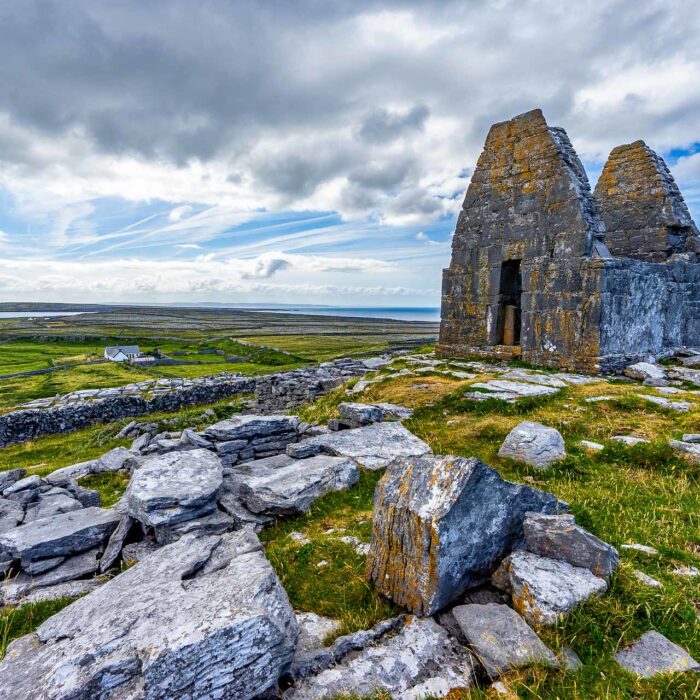
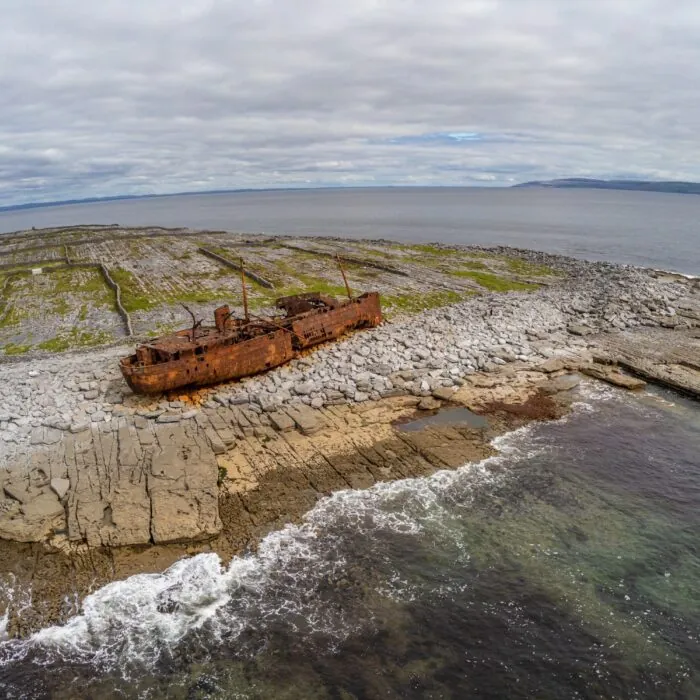
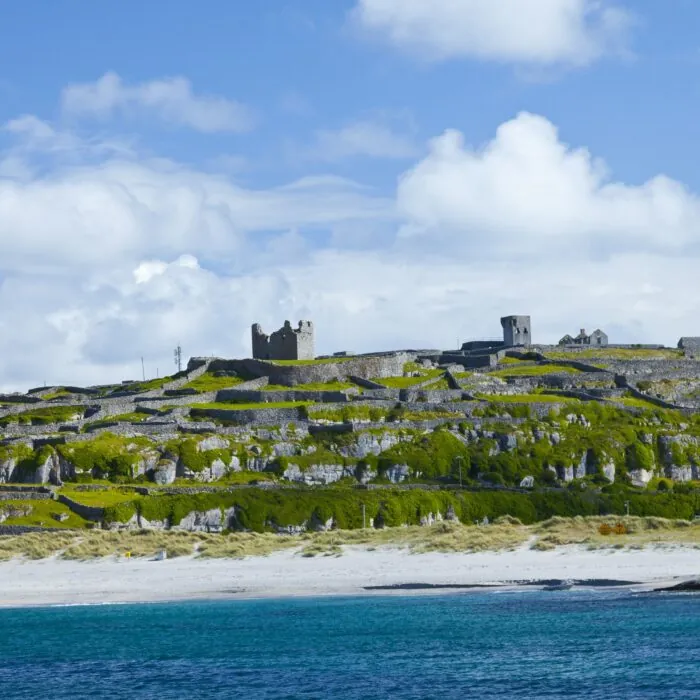
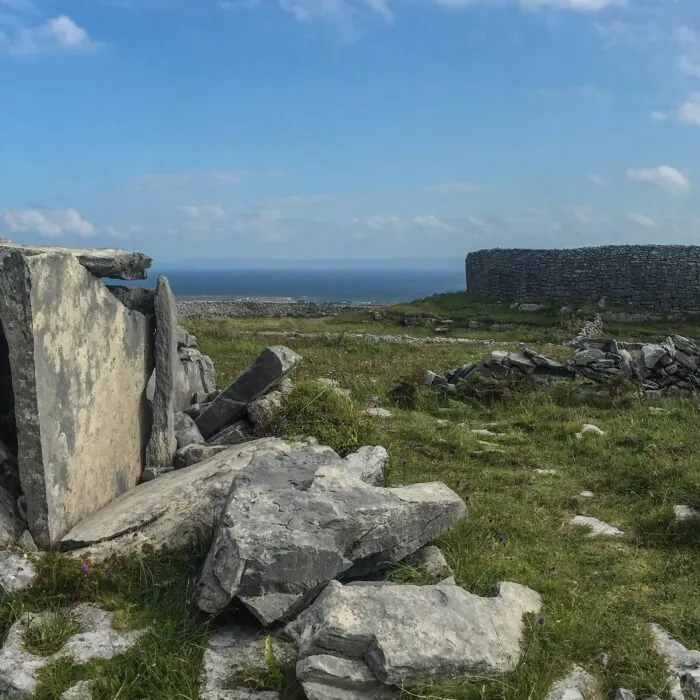
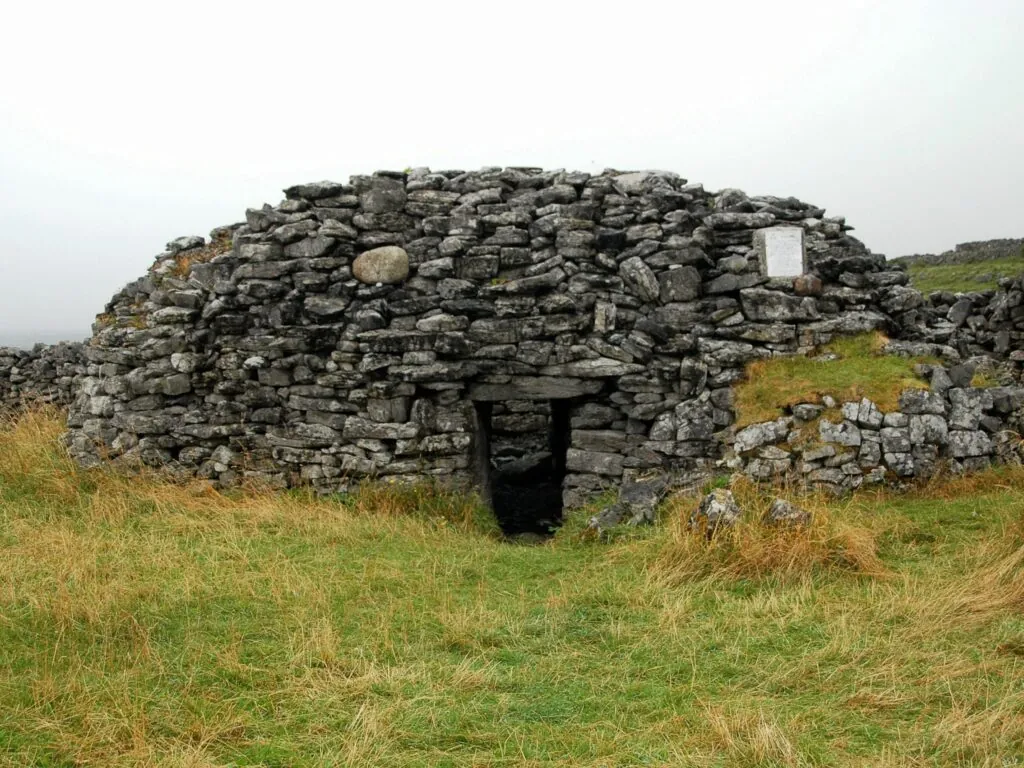
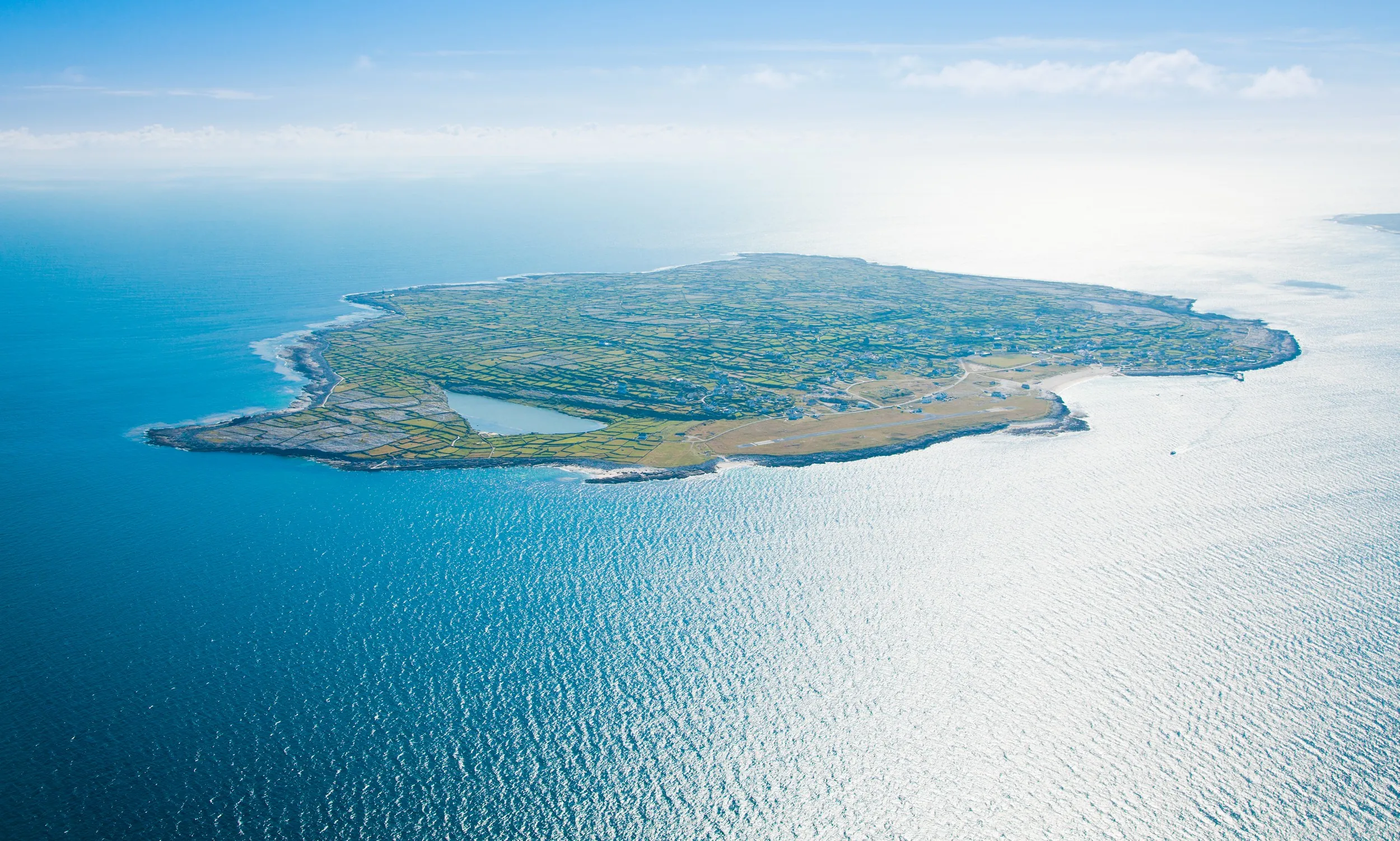
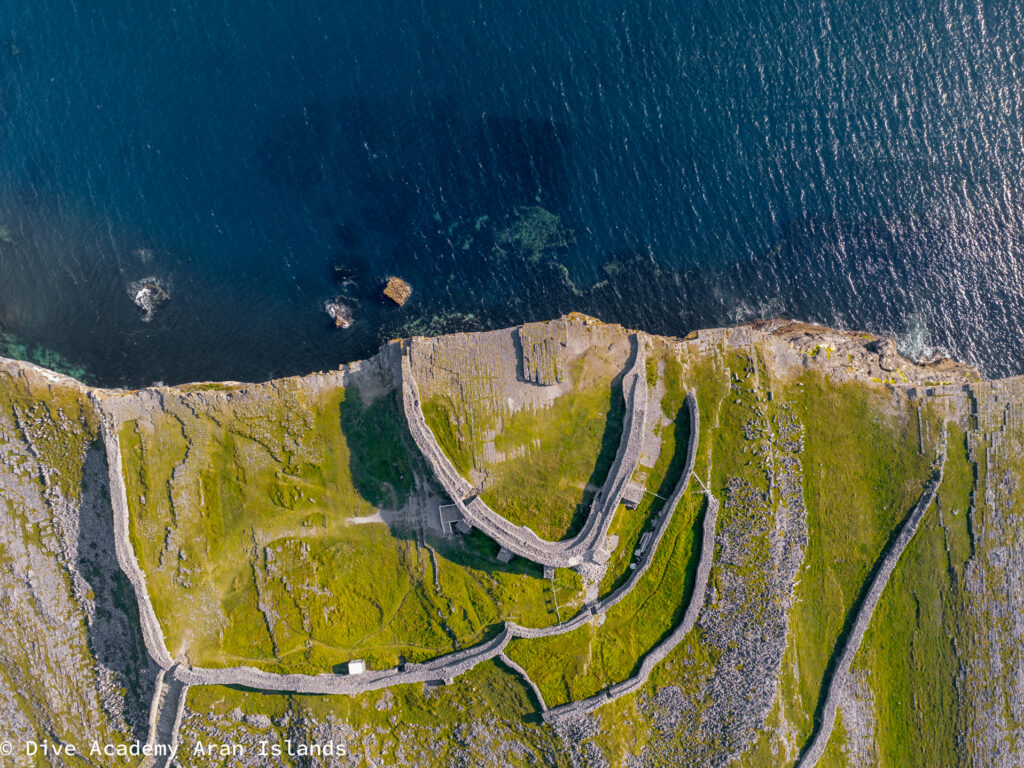
The Aran Islands (Oileáin Árann in Gaelic) are a group of 3 islands in Ireland, known worldwide for their wild, typically oceanic beauty! Located 18 km off the west coast of Ireland, near Galway Bay, these islands are the cradle of a rich history, between archaeological remains, ancestral traditions, and a life shaped by the climate and the ocean… Breathtakingly beautiful, they attract tourists with their wild landscapes and prehistoric remains (many forts still stand). The icing on the cake: it was originally on the Aran Islands that the famous Aran sweater (or Irish sweater) was born, made from incomparable local virgin wool!

A journey to these rugged Atlantic islands, ranked among the best places to visit in the country, is like a step back in time. Gaelic is the most commonly spoken language by the 12,000 inhabitants of the three islands – named Inishmore, Inishmaan, and Inisheer – and traditional Irish customs are very present.

History of the Aran Islands

Geological formation of the Aran Islands

Inisheer in the Aran Islands archipelago - © Gabriela Insuratelu

Inisheer in the Aran Islands archipelago – © Gabriela Insuratelu

According to legend, Galway Bay was originally a simple lake, blocked by a landmass. This landmass was destroyed by a strong storm, leaving behind only the three islands of Inishmore, Inishmaan, and Inisheer.

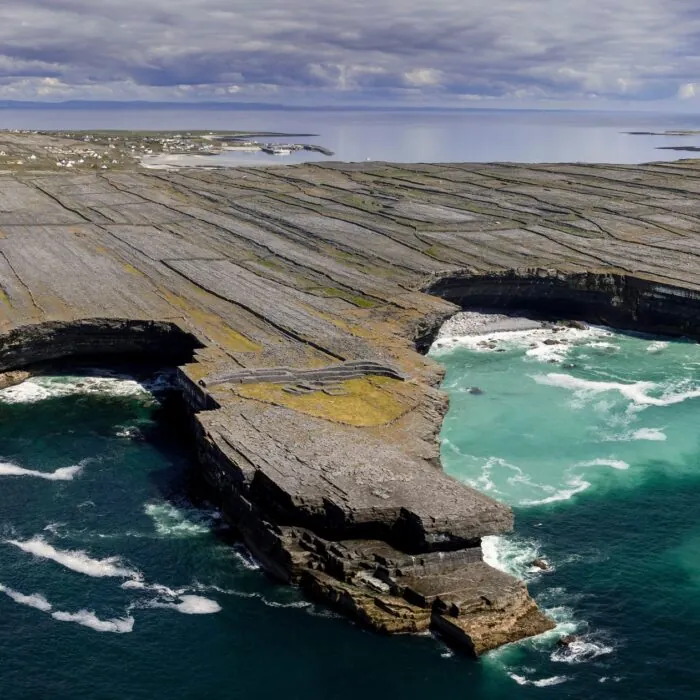
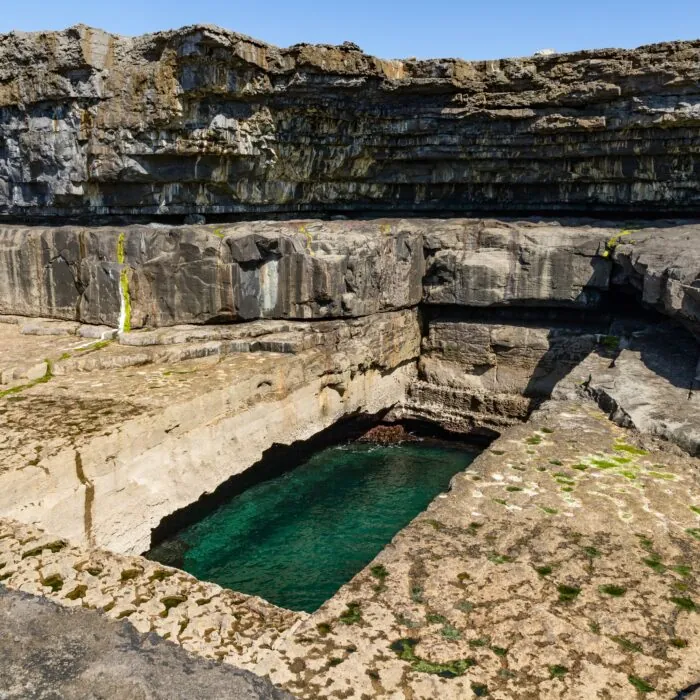
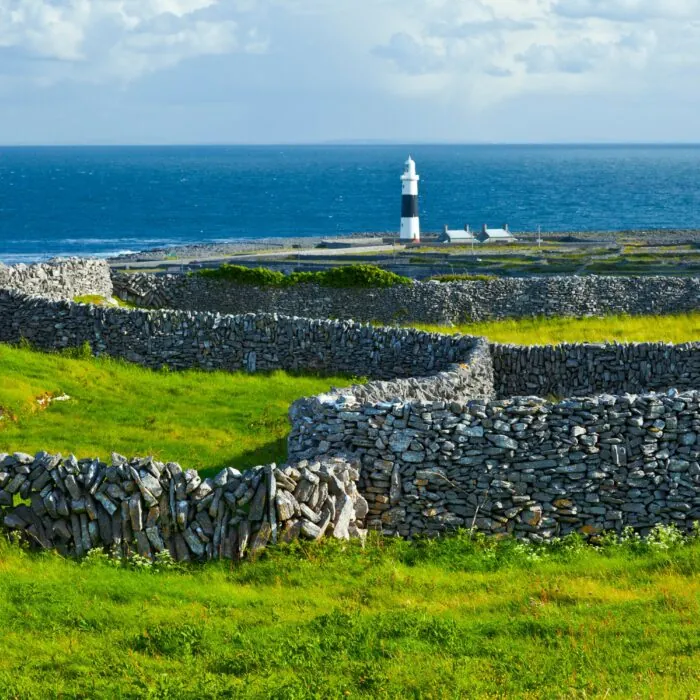
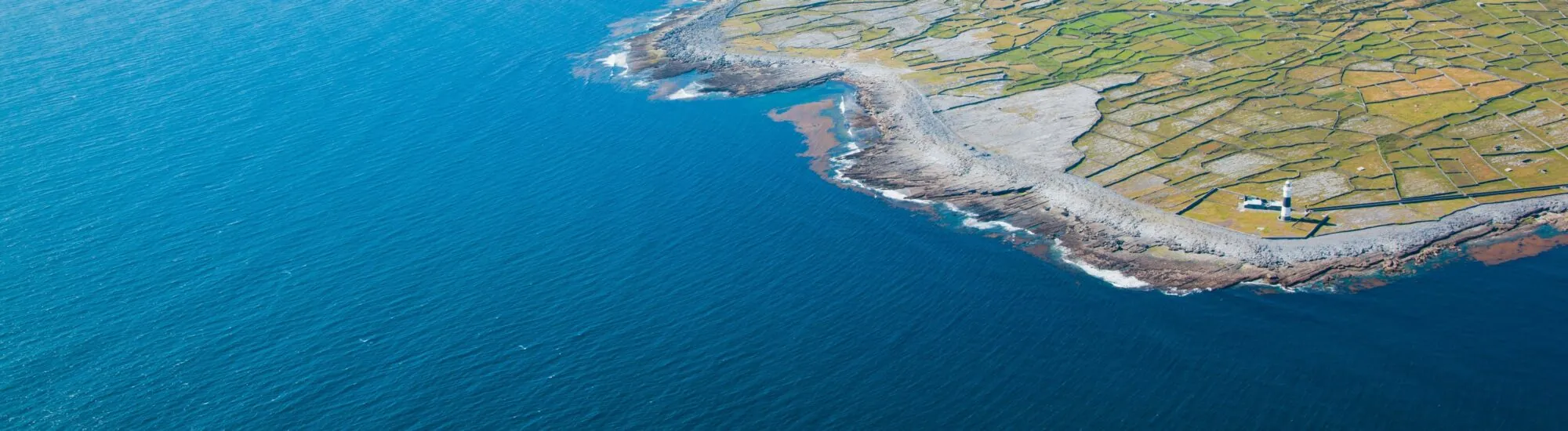
Beyond this legend, a more rational explanation has been proposed by geologists. The Aran Islands are actually an extension of the Burren (Co. Clare), located on the other side of the bay. This observation was made after noting a strong similarity between the soils of the Burren and the Aran Islands. Composed of limestone and shale, the soils share the same characteristics, appearing as large flat surfaces cracked by erosion and extensive pebble fields.

The inhabitants of the Aran Islands…

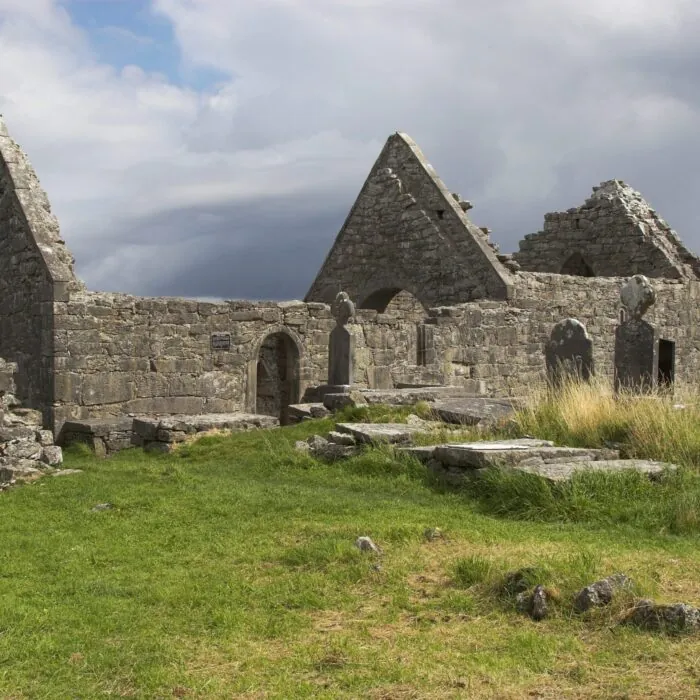
The Aran Islands have been inhabited since the 5th century, during the Christianization of Ireland. At that time, the islands mainly had a few small chapels and monasteries, as well as villages inhabited by farmers and fishermen. Life was harsh and followed Gaelic customs. From the 5th to the 20th century, lifestyles changed relatively little, and many traditions were preserved until the 1900s.

Thus, many travelers stopping on the Aran Islands at the beginning of the 20th century were surprised by the gap between their modern customs and the ancestral customs practiced on the islands.

The inhabitants lived in tiny cottages consisting of one room and a kitchen. They spoke only Gaelic, knowing nothing of English. Unfamiliar with modern timekeeping methods (watches), they used sundials and the wind to estimate the hours of the day.

They dressed only in wool produced by their sheep, wearing hand-spun and hand-woven clothes. They spent their days at sea fishing, using fragile boats called “Curraghs,” which only they knew how to handle…

In truth, the inhabitants of the Aran Islands categorically refused to buy resources available on the island of Ireland, except for peat!

With few means and living in evident poverty, they lived in total isolation, surviving on the products of their labor and the natural riches of their islands and the ocean. The island’s shores being relatively battered by the ocean, many fishermen lost their lives, and the daily precariousness, coupled with the widespread misery of those years, probably made these inhabitants a population much poorer than the rest of Ireland…

Free Ireland travel guide
Free guide

Planning a trip to Ireland?

Receive our free travel guide and discover the very best places, itineraries and practical tips to prepare your stay.

Culture, history, must-see attractions and local advice delivered directly to your inbox.