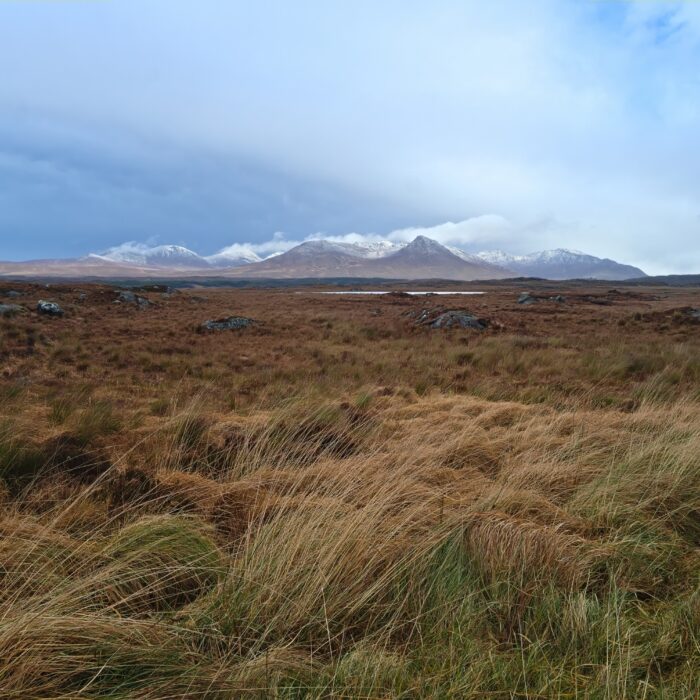
Dingle is a charming town in County Kerry, Ireland. Located by the sea on the Dingle Peninsula, the town is renowned for its authentic charm, with its small houses featuring colorful facades, its fishing port, and the surrounding wild landscape. Its location makes it one of the most famous villages in Ireland! The area is fabulous, and the village is the perfect place to stay for a few days and explore the Peninsula!
History of Dingle
From Pre-Christian Origins to Monastic Builders
At the tip of County Kerry, the Dingle Peninsula was home to communities long before the Christian era. Megalithic tombs, stone forts, and circular enclosures still shape the landscape, recalling an ancient settlement living off pastoralism, coastal fishing, and coastal trade. The arrival of Christianity transformed this part of Ireland into a monastic center: isolated monks chose these wind-beaten headlands to draw closer to the divine and to keep watch over the sea, a gateway to the unknown.
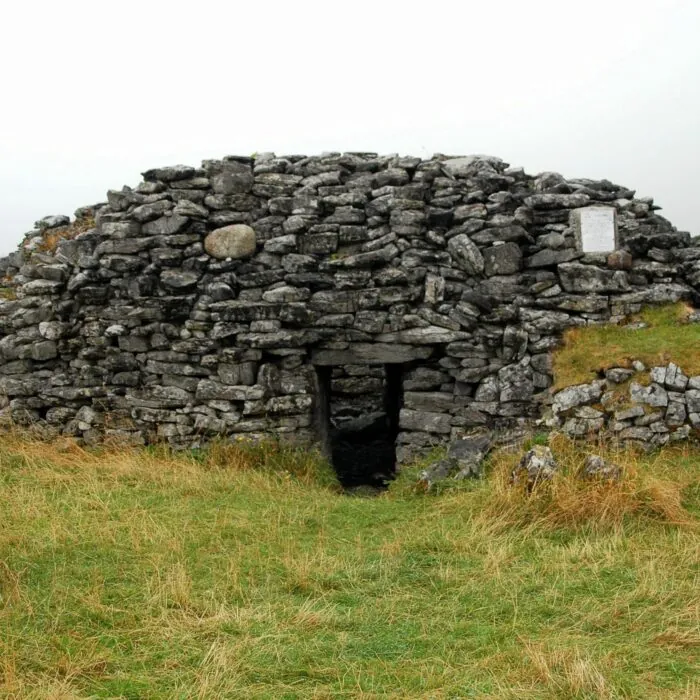
The Gallarus Oratory, a small corbelled chapel perfectly fitted without mortar, symbolizes this pragmatic spirituality. Dated between the 7th and 9th centuries, it demonstrates rare technical mastery and a faith deeply rooted in stone. Nearby, oratories, Celtic crosses, ogham stones, and monastic enclosures form an open-air archaeological mosaic.
Ports, Fairs, and the Atlantic: An Economy Shaped by the Sea
From the Middle Ages to the modern era, Dingle became an active port connected to Atlantic routes. Fishing and trade in cattle, hides, and salt supported seasonal markets and fairs. Links with Spain and Brittany left traces in customs and surnames. Storms, wars, and the 19th-century Great Famine challenged the population, but attachment to the land remained strong.
In the 20th century, the rise of exploratory tourism—initially discreet, then boosted by the fame of the Wild Atlantic Way—redirected the local economy: guesthouses, music pubs, artisans, guides, and small food businesses clustered around the harbor. The town of Dingle (An Daingean) became the gateway to the peninsula: a human-scale town, lively year-round, which has preserved its local shops and maritime rhythm.
From the Blasket Islands to Today: Memory and Transmission
Offshore, the Blasket Islands were inhabited until the 1950s by an island community whose literature—stories of daily life, the sea, and loss—shaped Ireland profoundly. Their evacuation, imposed by isolation and harsh winters, left a precious intangible heritage. The Blasket Centre in Dún Chaoin tells this story, giving travelers the keys to a vanished world that continues to illuminate Dingle’s identity: pride, resilience, and joy in togetherness despite the roaring Atlantic.
Culture of Dingle
Living Gaelic, Toponymy, and Identity
Here, Irish (Gaelic) is more than a word on a sign: it is a spoken, taught, and sung language. The peninsula is part of the Gaeltachtaí, regions where Irish remains vibrant. Bilingual signs, Gaelic place names, and conversations at the bar affirm a cultural identity unapologetic about its existence. For travelers, it’s a chance to hear ancient sounds and learn a few simple words—a further bridge with the local community.
Traditional Music, Sessions, and Festivals
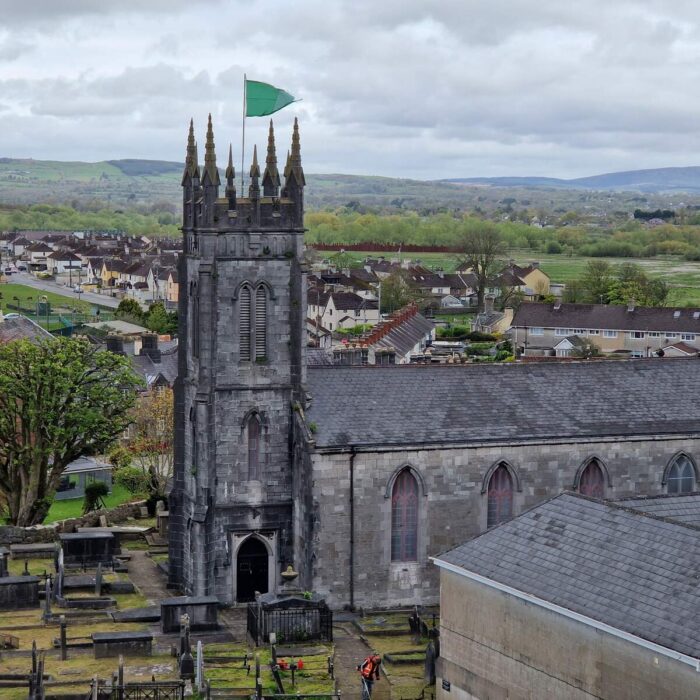
Music in Dingle is not just programmed: it emerges spontaneously. Fiddle, flute, uilleann pipes, bodhrán… Pub sessions mix seasoned musicians and newcomers in a back-and-forth of reels and jigs. In autumn, Other Voices gathers Irish and international artists for intimate concerts in the small St. James church, while the whole town buzzes with showcases and meetings.
Flavors of Kerry: Sea on the Plate, Land in the Glass
At the harbor, crab and lobster pots set the tone. Bistro menus list haddock, pollack, mussels, and scallops by season. Murphy’s artisanal ice cream, with flavors of dried seaweed, sea salt caramel, or local whiskey, has won over traveling palates. In contrast, hill farms, cheesemakers, and smokehouses defend the hinterland: pasture lamb, farmhouse cheeses, sourdough breads. One sips gin from the Dingle Distillery, a whiskey in the making, or a local craft beer, listening to conversations shifting from Gaelic to English without warning.
Cinema, Literature, and the Edge-of-the-World Imagination
Cliffs, winds, and changing light have attracted film shoots: routes of the Slea Head Drive, beaches of Coumeenoole and Inch, Mount Brandon… The peninsula also inspires writers and photographers, fascinated by the juxtaposition of the near (the town, the table, the music) and the infinitely distant (the Atlantic, the Blaskets). Dingle cultivates this dual register: a strong community anchor and a constant openness to the wide sea.
Visiting Dingle
The Town: Colors and Friendliness
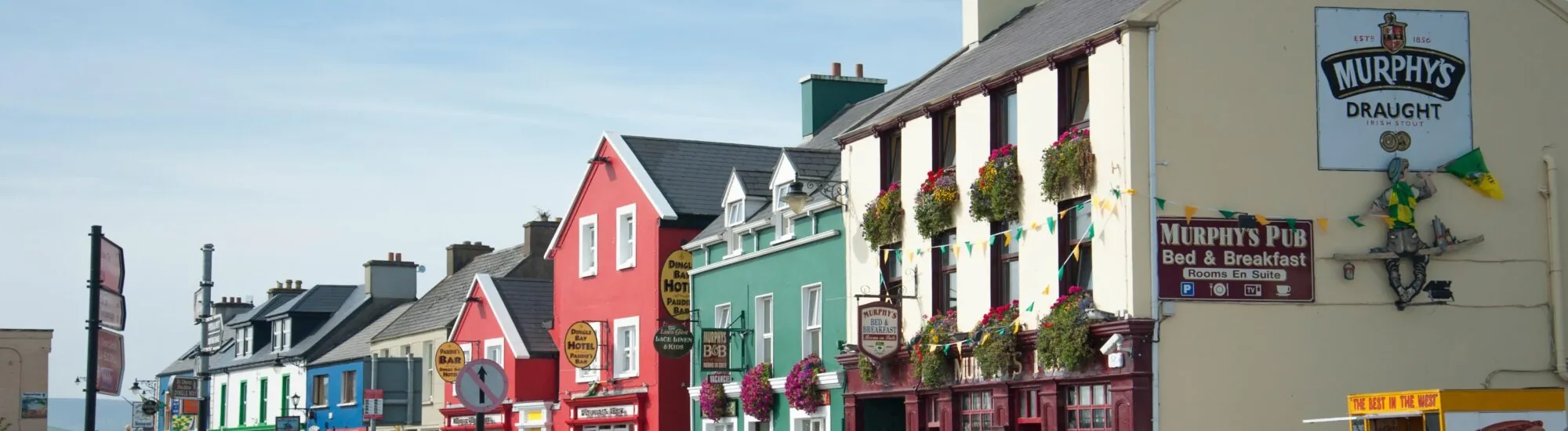
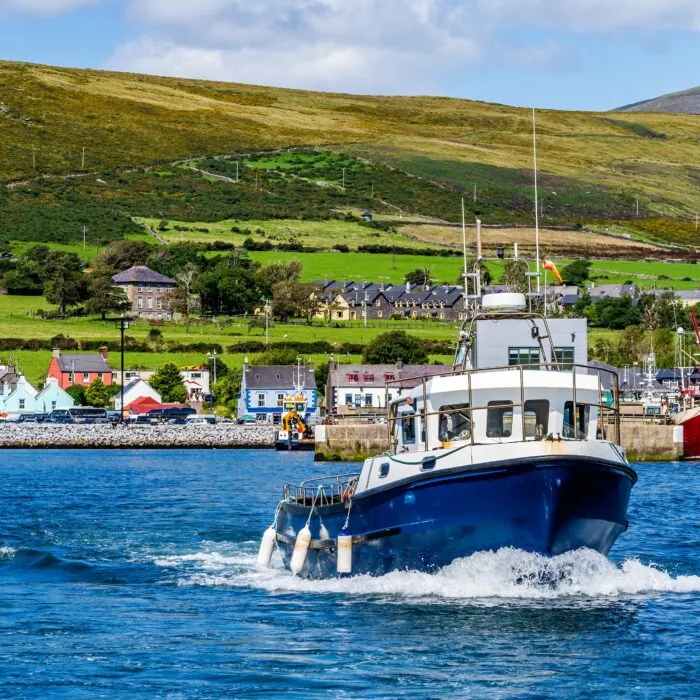
Start by exploring the small town of Dingle itself. Its colorful houses line the harbor and create a joyful atmosphere. You can stroll along the quays, enter artisan shops, and discover local products. The pubs are open doors to Irish conviviality.
Once, the town was known for its most unusual resident: Fungie the dolphin, who accompanied boats in the bay from the 1980s. Though he has disappeared, his memory remains alive, and you will still see statues and images in his honor.
The Slea Head Drive: A Legendary Route
If you were to make only one excursion, it would probably be the Slea Head Drive. This circular road skirts the peninsula’s tip and offers spectacular views of the Atlantic Ocean. You will pass wild beaches like Coumeenoole Beach, glimpse the Blasket Islands, and encounter dry-stone huts that testify to an ancient way of life.
Each stop invites contemplation: vertiginous cliffs, grand panoramas, changing light. Take your time, as it is an experience to savor.
Hiking and Summits
For walking enthusiasts, Mount Brandon is a must. Ireland’s second-highest mountain, it is steeped in spirituality: according to legend, Saint Brendan began his voyage to Paradise here. Climbing its slopes offers breathtaking views of the sea and peninsula.
If you prefer gentler walks, the Slieve Mish Mountains or coastal trails offer accessible hikes, always accompanied by the Atlantic breeze.
The Conor Pass and Beaches
Leaving Dingle to the north, you can take the spectacular Conor Pass, a narrow and winding road crossing the mountains. The view from the summit is one of the most impressive in Ireland. Drive carefully and stop at designated areas to admire the scenery.
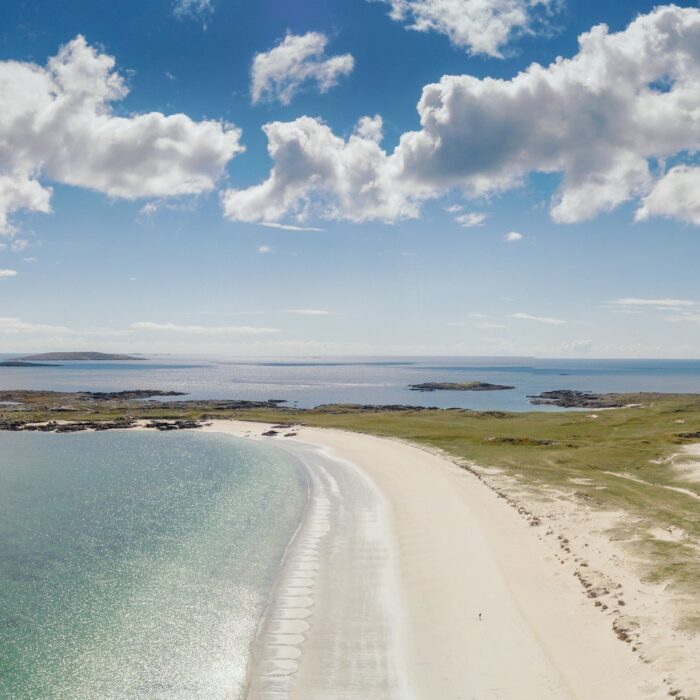
For a sandy break, head to Inch Beach. This long beach, open to the Atlantic, is popular with surfers and families who come to walk or picnic.
Practical Tips for Your Stay
Dingle can be visited year-round, but the experience varies by season. Spring and early summer offer long, bright days with moderate crowds. Summer attracts more visitors, but the atmosphere is festive with many festivals. Autumn is especially photogenic, thanks to its golden light. Winter reveals a rawer, wilder side of the peninsula, ideal for those who enjoy the dramatic atmosphere of Irish landscapes.
Be sure to bring appropriate clothing: the weather changes quickly, and it’s not uncommon to experience four seasons in one day. When driving, go slowly on narrow roads and watch out for sheep that like to cross without warning.