Downpatrick (Dún Pádraig in Irish) is a historic town in County Down, Northern Ireland. Located approximately 35 km south of Belfast, it has a deep connection with Saint Patrick, a major figure in the Christianisation of Ireland. According to tradition, the country’s patron saint was buried on the hill where Down Cathedral now stands.
But Downpatrick is not limited to this famous pilgrimage site. Its heritage also includes a former Cistercian abbey, a prison converted into a museum, religious buildings and several medieval remains scattered throughout the Quoile Valley. It is a fascinating destination for discovering Ireland’s Christian and Anglo-Norman history.
Visiting Downpatrick
Saint Patrick’s town in Northern Ireland
Downpatrick’s history developed around Cathedral Hill, a strategic height once surrounded by marshes and flood-prone land. Its Irish name, Dún Pádraig, means “Patrick’s fort”, reflecting the spiritual importance the town acquired over the centuries.
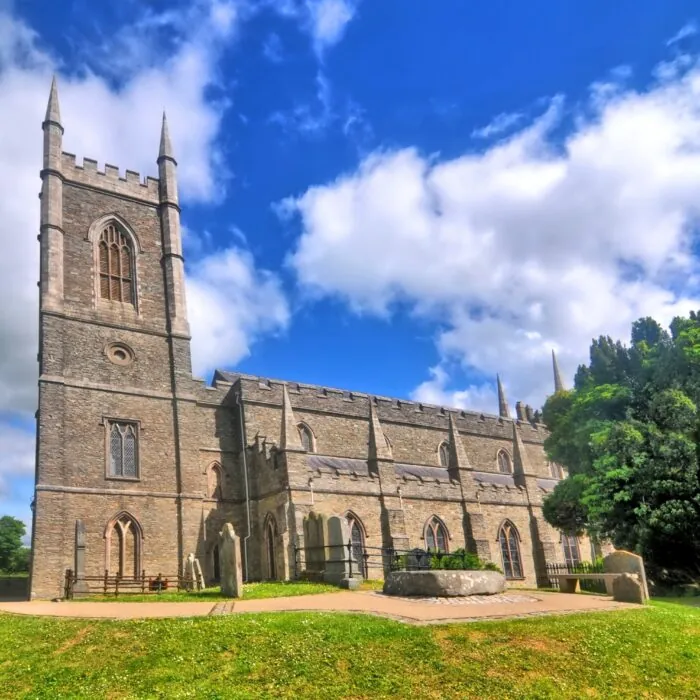
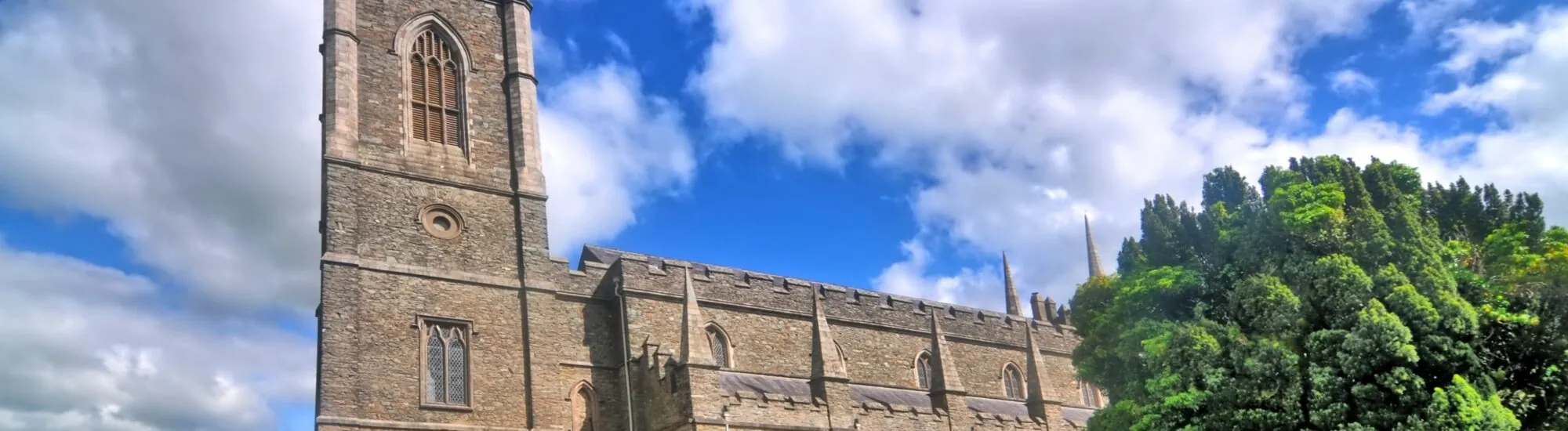
Downpatrick’s main landmark is Down Cathedral. The current building occupies the site of an early monastic settlement, which became a Benedictine abbey in the Middle Ages. Damaged several times, the cathedral was extensively restored from the late eighteenth century onwards.
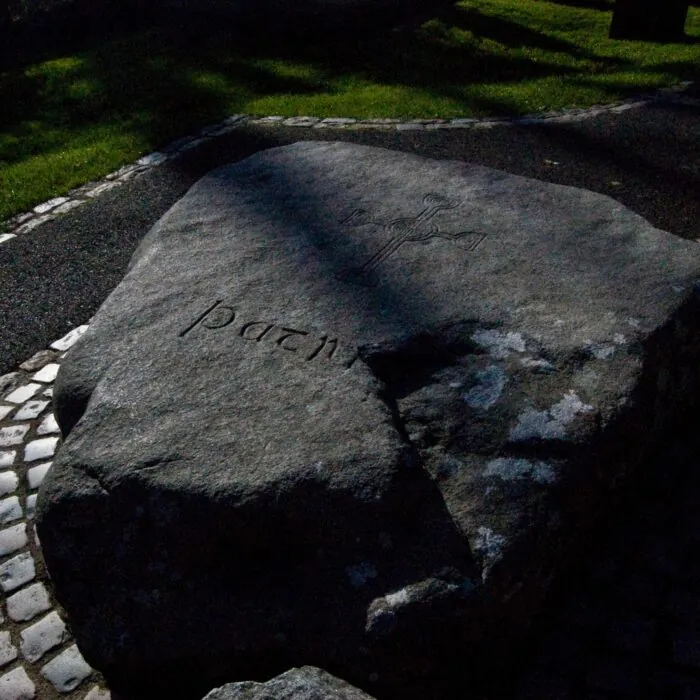
In its graveyard stands an imposing granite stone bearing simply the name “Patrick”. It marks the traditional location of Saint Patrick’s grave, where he is said to rest alongside Saint Brigid and Saint Columba. This burial site, which has become an important place of pilgrimage, cannot nevertheless be authenticated with certainty by archaeology.
Following in Saint Patrick’s footsteps
Religious heritage between history and tradition
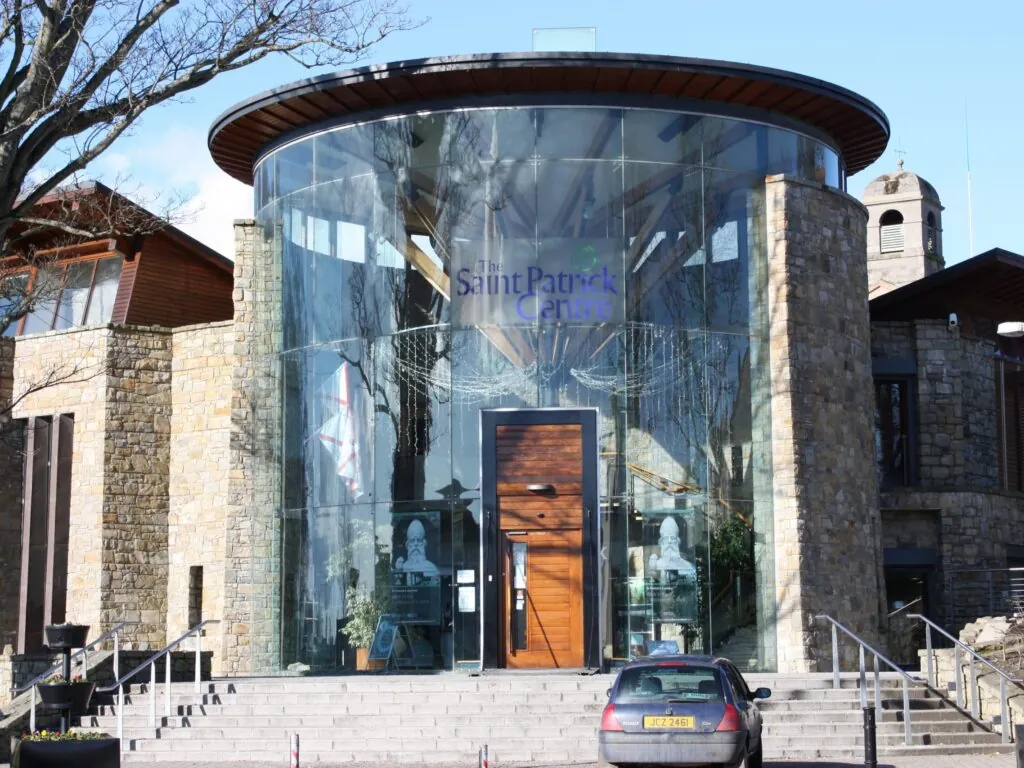
Located at the foot of the cathedral, the Saint Patrick Centre is an excellent starting point for exploring Downpatrick. Its permanent exhibition traces the missionary’s life through writings attributed to him, while also examining the many stories and legends associated with Ireland’s patron saint.
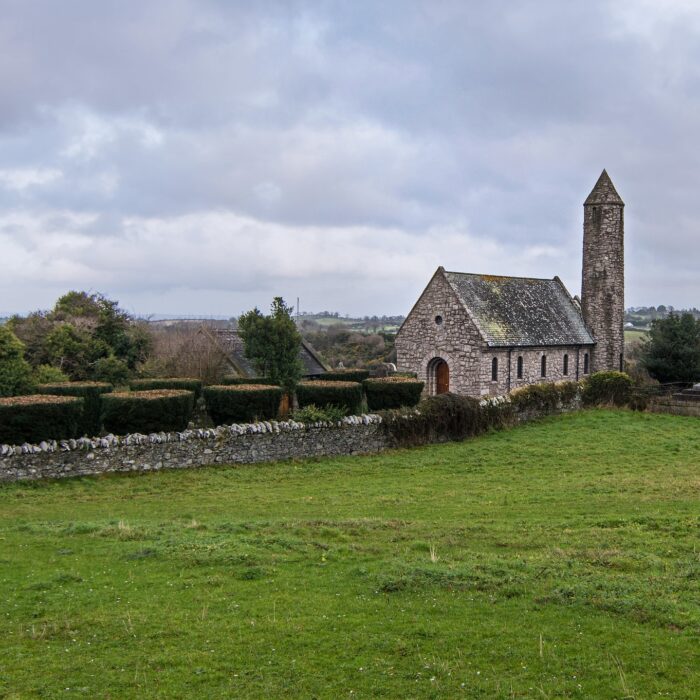
The area around Downpatrick is home to other important sites connected with this heritage. A few kilometres from the town centre lies Saul Church, built on the site where Saint Patrick is said to have established one of his first Christian communities in Ireland. The former pools and springs at Struell Wells, meanwhile, bear witness to a pilgrimage tradition dating back to the Middle Ages.
Downpatrick is also the terminus of the Saint Patrick’s Way, a waymarked walking route of approximately 132 km linking Armagh with the saint’s traditional grave.
Other sites to discover in Downpatrick
Medieval abbey, museum and the Quoile Valley
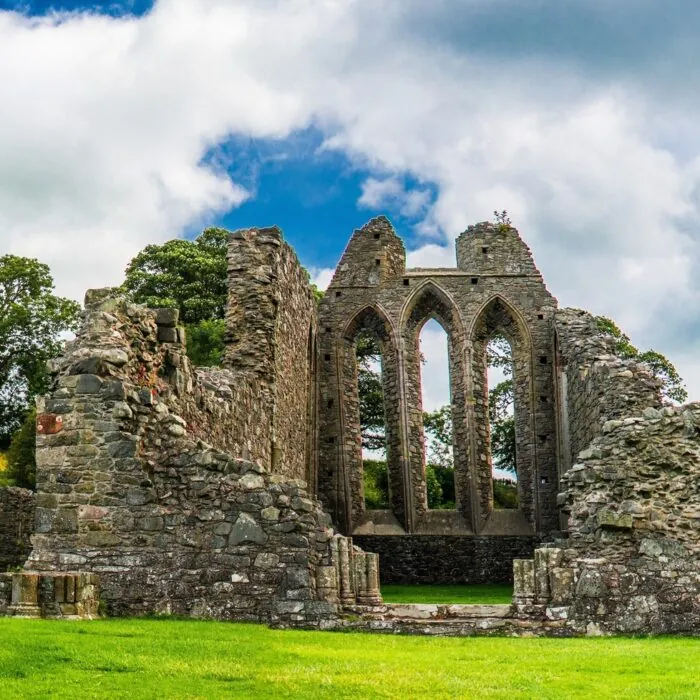
To the north of the town, the ruins of Inch Abbey stand in a peaceful setting beside the River Quoile. This Cistercian abbey was founded at the end of the twelfth century by the Anglo-Norman knight John de Courcy. Its walls, Gothic arches and large windows opening onto the countryside now form one of the most photogenic landscapes in the area.
Down County Museum, housed in an eighteenth-century former prison, offers an insight into the history of the county through archaeological collections, everyday objects and restored former cells.
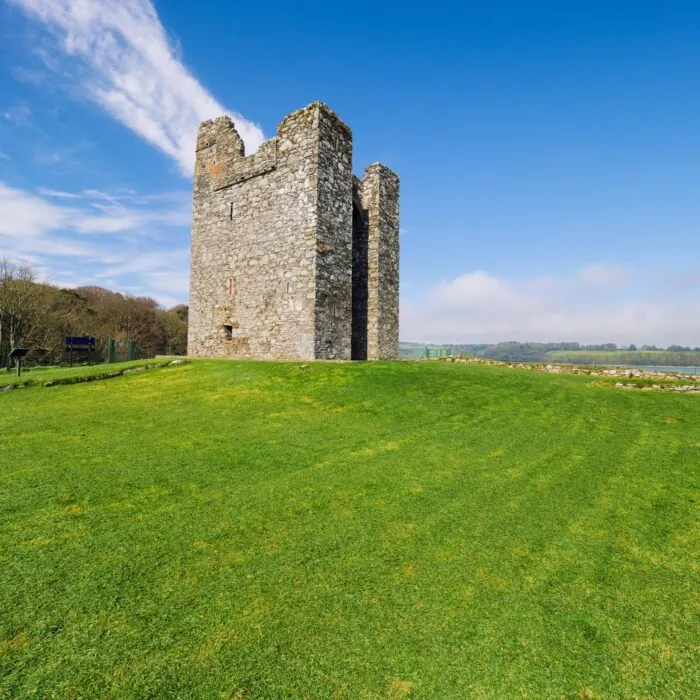
More discreetly located, Quoile Castle is a late sixteenth-century tower house near Quoile Pondage Nature Reserve. Partly ruined, the building still retains its vaults, gun loops and some of its former levels. As interior access is regulated, visitors are advised to check the visiting arrangements before going there.
With its religious heritage, medieval ruins and the green landscapes of the Quoile, Downpatrick deserves a day trip from Belfast. The town will particularly appeal to travellers interested in Saint Patrick, Irish history and the county of Down’s well-preserved sites.