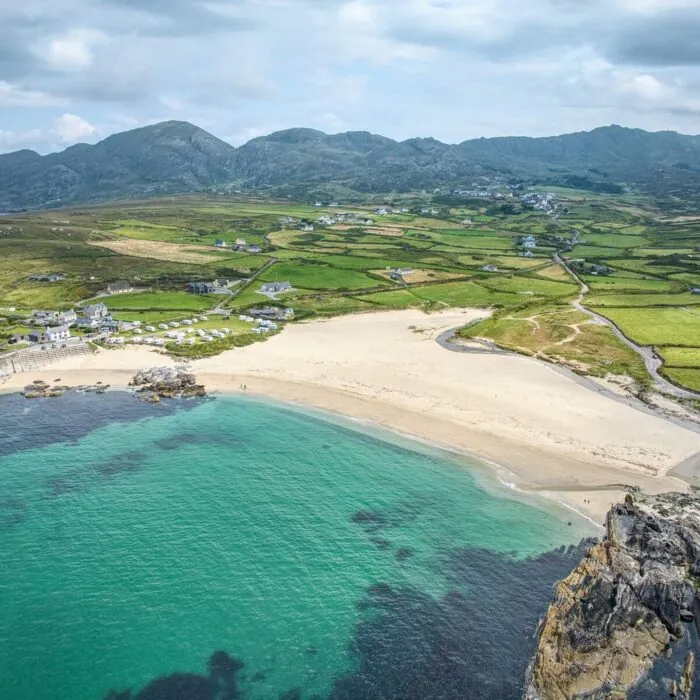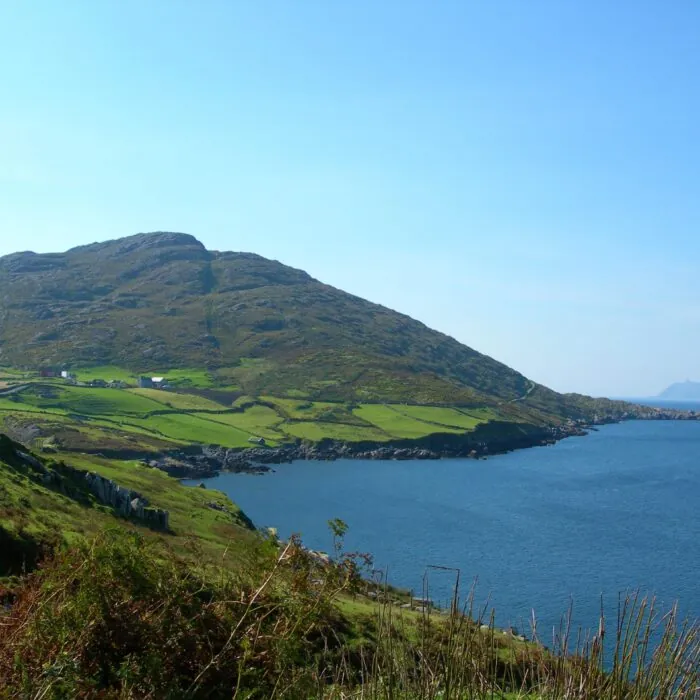


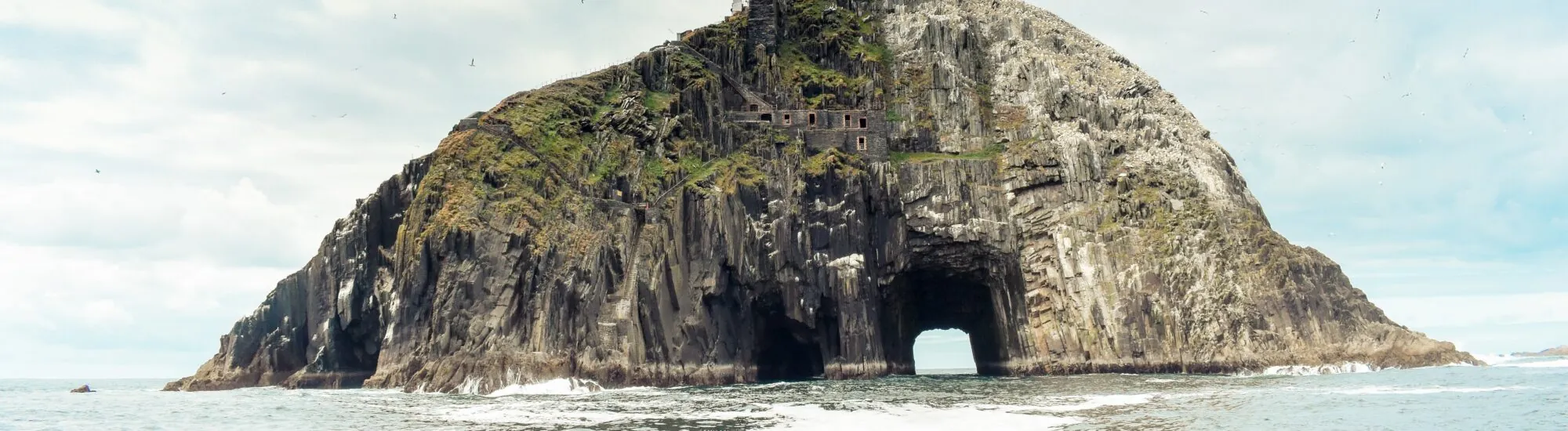
Off the Beara Peninsula in County Cork, Bull Rock rises from the Atlantic like a natural fortress. This rocky islet, located around 4 kilometres from Dursey Island, is known for its isolated lighthouse, steep cliffs and the striking sea tunnel that runs right through it.
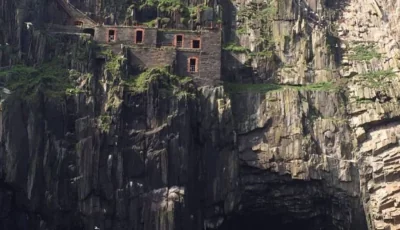
Inaccessible to visitors on foot, Bull Rock can only be experienced from the sea. Its rugged terrain, the buildings of its former keepers’ station and the birds circling above its cliffs create a spectacular scene worthy of a grand adventure film set.
Trips to Bull Rock depart from Garnish Pier, at the western end of the Beara Peninsula. This small harbour should not be confused with the pier for Garnish Island at Glengarriff: departures are from Garnish, near Dursey Island.
The trip offered by Dursey Boat Trips lasts around 1 hour 30 minutes. The route generally follows Dursey Island before heading towards three islets exposed to the full force of the ocean: Calf Rock, Cow Rock and Bull Rock. This is a boat-based sightseeing trip. No tourist landings are scheduled on Bull Rock, although the former station has landing points reserved for its maintenance.
When the swell and safety conditions allow, the boat may pass through some of the natural arches along the route. Passage through Bull Rock’s tunnel should never be considered guaranteed, however: the skipper adapts the route according to the wind, waves and tide.
Bull Rock measures approximately 229 metres long and 165 metres wide. Its summit rises nearly 93 metres above the sea. Its almost vertical sides are constantly battered by the waves, leaving little foothold for vegetation.
The island’s main attraction is its sea tunnel. This vast natural opening passes all the way through the rock, creating a striking view of the ocean from the boat. It is sometimes called the Entrance to the Underworld, a name that adds to the site’s mysterious atmosphere.
The appearance of Bull Rock changes constantly with the light. In clear weather, its cliffs take on shades of grey and ochre, while the lighthouse stands out clearly against the ridge. Under darker skies, the islet becomes an almost black mass, shrouded in foam and low cloud.
The first major lighthouse in this area was not on Bull Rock but on neighbouring Calf Rock. Its metal tower entered service in 1866. Despite strengthening work, it did not withstand a violent storm: on 27 November 1881, the upper part of the structure broke off and fell into the sea.
A temporary light was then installed at the western end of Dursey Island. In 1882, the authorities responsible for maritime signalling selected Bull Rock as the site for a new permanent station.
Construction was particularly difficult. Miners and labourers had to climb the cliff face using ropes, install lifting equipment and cut more than 300 steps into the rock. A substantial quantity of stone was excavated to create platforms stable enough for the tower, accommodation, workshops and technical equipment.
The station was completed in 1888. The lighthouse and its fog signal officially entered service on 1 January 1889, allowing the temporary light on Dursey Island to be withdrawn.
The station included an octagonal tower, keepers’ accommodation, a gas-production system, winches and various service buildings. The structures visible in photographs are therefore not cave dwellings, but the remains and facilities of this maritime station built directly on the rock.
Keepers lived and worked on Bull Rock until 31 March 1991, when the lighthouse was automated. The station was subsequently placed under remote monitoring. Its power supply was converted to solar energy in October 2000.
The lighthouse remains active. Its tower is 15 metres high, but the elevated position of the islet places the light around 91 metres above high water. Its official nominal range is 18 nautical miles, or just over 33 kilometres.
Bull Rock and the neighbouring islets provide an important refuge for seabirds. Gannets are particularly numerous here. Depending on the season, it is also possible to spot puffins, guillemots and other species that nest or feed in these fish-rich waters.
The journey may also bring encounters with seals, dolphins, whales, otters or basking sharks. These animals live freely, and their presence varies with the season, weather and food availability. Sightings therefore cannot be guaranteed.
Trips are normally run from April to September, subject to favourable weather conditions. Departure times vary by day and are listed on the booking calendar. As each boat is limited to 12 passengers, advance booking is strongly recommended, particularly during summer.
It is recommended that you arrive at Garnish Pier 30 minutes before departure. Public parking is available at the harbour. Toilets can be found at Garnish Beach, around 300 metres from the pier.
Even in good weather, it can feel chilly at sea. Bring warm, windproof clothing and a jacket that can withstand sea spray. Sun protection is still useful on clear days. Those prone to seasickness may also wish to take precautions before departure.
The trips take place in rigid inflatable boats with fixed saddle-style seats. The minimum age is 6, and a reasonable level of fitness is required. The boats are not currently wheelchair accessible. The operator also advises against the trip for pregnant women and people with heart or back problems. If in doubt, it is best to contact the company before booking.
The trip can be combined with a visit to Dursey Island, known for its wild scenery and archaeological remains. The villages of Allihies and Castletownbere also make good stops for exploring this remote part of County Cork.
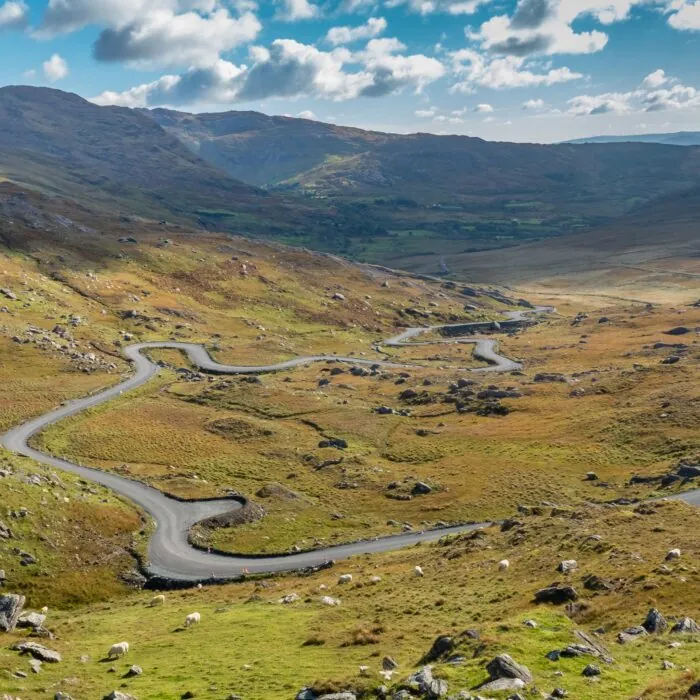
The coastal road around the Beara Peninsula crosses mountain passes, small harbours and landscapes that are much less visited than some of the major routes in western Ireland. It is therefore wise to allow a full day in the area, while keeping plans flexible in line with sea conditions.
Essential information to help you plan your visit, including key landmarks, access information, and booking options.
51.592315, -10.301925
1h30