

The Irish Museum of Modern Art, better known by its acronym IMMA, is Ireland’s leading national institution dedicated to modern and contemporary art. Located in Kilmainham, west of Dublin city centre, the museum holds several thousand works by Irish and international artists, with a particular focus on art created since the 1940s.
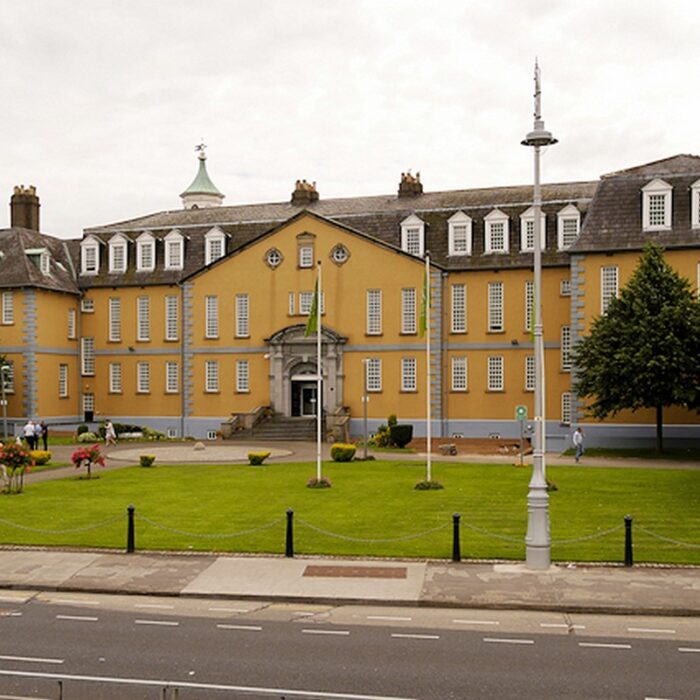
IMMA is also well worth visiting for its exceptional setting. The museum occupies the Royal Hospital Kilmainham, an imposing 17th-century building surrounded by extensive green spaces and formal gardens. The contrast between this historic architecture and the contemporary works exhibited inside is a large part of the site’s appeal.
There is more good news: general admission to IMMA is free, as is entry to most exhibitions. It makes an excellent visit to combine with Kilmainham Gaol or the Liberties district.
IMMA is one of Dublin’s principal cultural institutions. Its mission is to preserve, develop and present the Irish National Collection of Modern and Contemporary Art, while also organising exhibitions, artistic commissions, events and public programmes.
The collection brings together works by Irish and international artists. Painting, sculpture, photography, installation, video and other forms of contemporary art all play an important role.
However, IMMA should not be thought of as a conventional museum permanently displaying its entire collection in a succession of galleries.
Works from the collection are regularly featured in thematic and monographic exhibitions. The programme therefore changes throughout the year, allowing visitors to discover the museum from a different perspective on repeat visits.
IMMA’s collection has grown considerably since the museum was founded. It now comprises several thousand works and continues to expand through acquisitions, donations, commissions and loans.
Irish art is naturally given an important place, but the museum is by no means limited to artists from the country.
Its ambition is, on the contrary, to place Irish modern and contemporary art in an international context, creating a dialogue between artists, generations and practices.
The modern collection pays particular attention to works created since the 1940s, while contemporary acquisitions enable the museum to follow the latest developments in artistic practice.
This diversity makes IMMA interesting even for visitors who are not specialists in contemporary art. Some works are immediately accessible, while others are more experimental or challenging: that very encounter is part of the experience.
Much of the appeal of the Irish Museum of Modern Art lies in its temporary exhibitions.
The museum regularly devotes its spaces to Irish and international artists, as well as to artistic movements, historical periods and major contemporary issues.
Monumental installations, photography, painting, sculpture, performances and multimedia works may all feature in the galleries.
Before your visit, it is therefore particularly useful to check the museum’s programme. Two trips a few months apart can offer very different experiences.
The building housing IMMA is almost as interesting as the collections themselves.
The Royal Hospital Kilmainham was founded in the late 17th century at the instigation of James Butler, Duke of Ormonde and Lord Lieutenant of Ireland during the reign of Charles II.
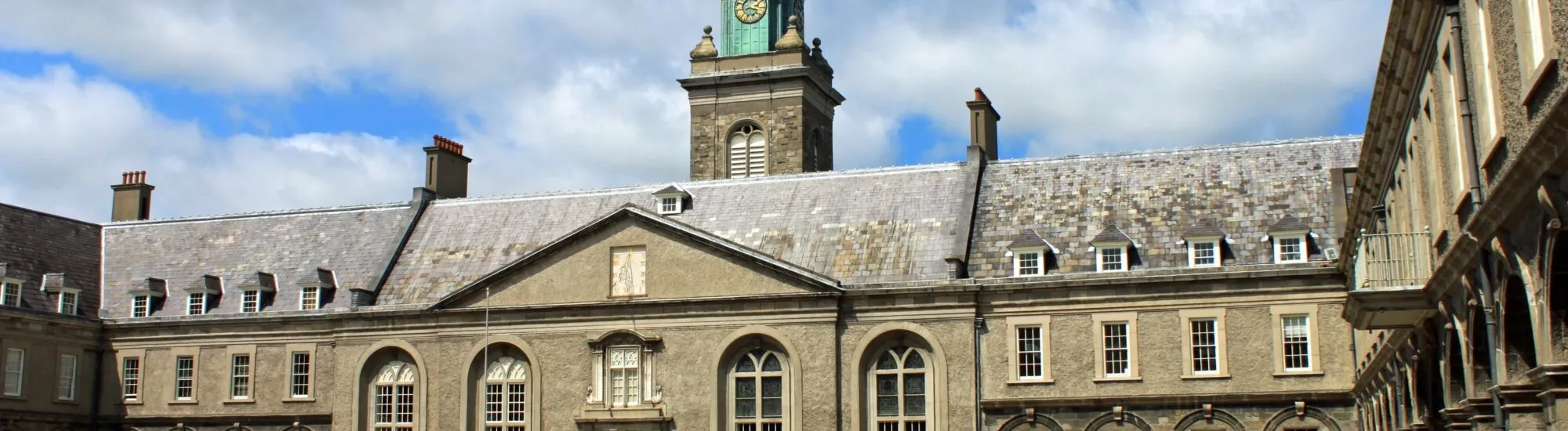
The foundation stone was laid in 1680, and the complex was completed four years later. Architect William Robinson designed a vast classical building arranged around an elegant inner courtyard.
The project was notably inspired by the Hôtel des Invalides in Paris, established a few years earlier to house elderly and disabled French soldiers.
The Royal Hospital served a similar purpose: it was intended to accommodate former soldiers of the British Crown.
The result is one of Dublin’s most impressive historic architectural ensembles.
The Royal Hospital Kilmainham retained its role as a residence for former soldiers for almost 250 years.
In the 19th century, it also gained increasing military importance, notably housing the residence and headquarters of the Commander-in-Chief of the British Army in Ireland.
After the creation of the Irish Free State, the building was transferred to the new Irish authorities. Among other uses, it served as Garda headquarters between 1930 and 1950 before being put to various other uses.
A major restoration was undertaken during the 1980s.
The government eventually decided to establish the new national museum of modern and contemporary art there.
The Irish Museum of Modern Art opened in May 1991. Its inaugural exhibition, entitled Inheritance and Transformation, marked the beginning of a new life for this building, then more than three centuries old.
Arriving at the Royal Hospital is an experience in itself.
The building’s four wings frame a vast inner courtyard with remarkably regular proportions. Arcades, stone façades and large windows lend the setting an elegance far removed from the image usually associated with a contemporary art museum.
The contrast works particularly well: behind the historic façades are spaces hosting some of the most contemporary forms of art.
The main galleries occupy the historic building, while other exhibition spaces are spread across the site.
Do not leave IMMA straight after exploring the galleries.
The Royal Hospital is surrounded by extensive grounds that are an integral part of the visit. The present-day estate covers almost 48 acres, combining lawns, meadows, trees, outdoor works and historic gardens.
The Formal Gardens are particularly pleasant. These geometric gardens date back to the early 18th century and recall the historical importance of the Royal Hospital.
Today, they provide a peaceful place to pause after the exhibitions, away from the bustle of Dublin city centre.
Several contemporary works are also installed outdoors, naturally extending the museum into the landscape.
For a first visit, allow at least 1½ hours to explore the main exhibitions.
Contemporary art enthusiasts can easily spend two hours or more here, especially when several major exhibitions are running at the same time.
Allow extra time if you would like to explore the gardens and outdoor works. With a walk around the grounds and a stop at the café, the visit can easily take up half a day.
IMMA also has a shop, with a particular focus on art, design and exhibition-related publications, as well as a café where you can extend your visit.
IMMA is not aimed solely at specialists. The museum also develops interpretation and learning programmes for a range of audiences, including families.
Installations, sculptures and large-scale works can be especially interesting for children, who sometimes approach contemporary art far more spontaneously than adults.
The extensive outdoor spaces are another welcome advantage for a family visit.
IMMA lies slightly outside Dublin’s historic centre, but its location makes it possible to combine several particularly interesting visits.
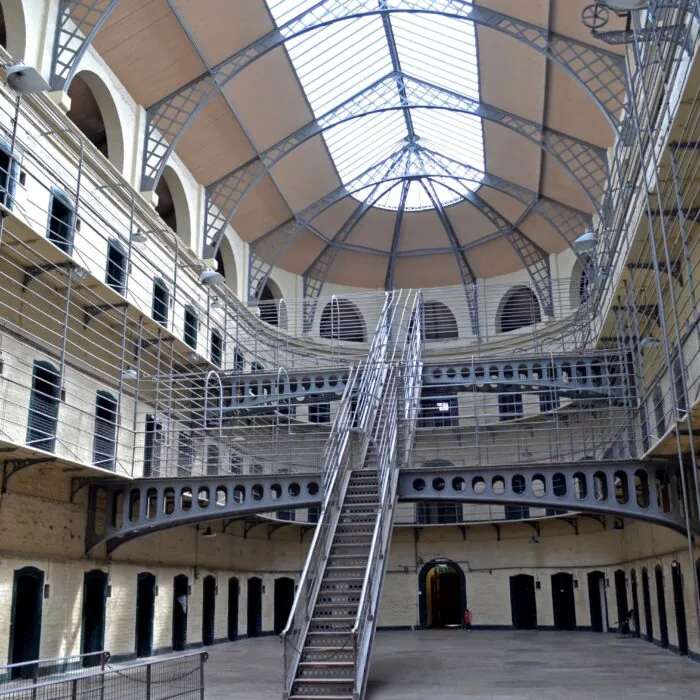
The famous Kilmainham Gaol is in the same area. Closely associated with the history of Irish independence, and particularly with the events of 1916, it is one of Dublin’s major historical attractions.
Nearby are the Irish National War Memorial Gardens, created in memory of Irish soldiers who died during the First World War.
Continuing towards the city centre, you can reach the Liberties and the Guinness Storehouse area.
Combining these different sites makes it possible to devote a full day to this part of Dublin, alternating between historic heritage, green spaces and contemporary art.
The Irish Museum of Modern Art has a rather unique profile among Dublin’s museums.
Visitors come, of course, to discover Irish and international modern and contemporary art, but also for its architecture, immense inner courtyard and gardens.
The contrast between a former 17th-century military hospital and works that are sometimes radically contemporary gives the place a particularly strong identity.
And because general admission is free, IMMA is an excellent opportunity to venture slightly beyond Dublin city centre’s busiest routes and discover one of Kilmainham’s finest cultural ensembles.
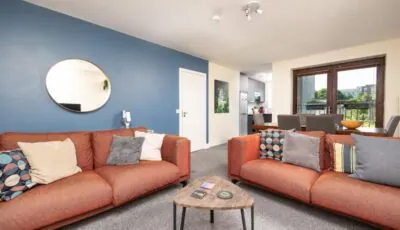
Want to extend your visit without having to rush around? Here are a few well-located places to stay near the must-see attractions.
Essential information to help you plan your visit, including key landmarks, access information, and booking options.
Royal Hospital Kilmainham, Military Rd, Kilmainham, Kilmainham
53.342904, -6.300059
1h30
Compare tickets, guided tours, and excursions available through our partner platforms.