

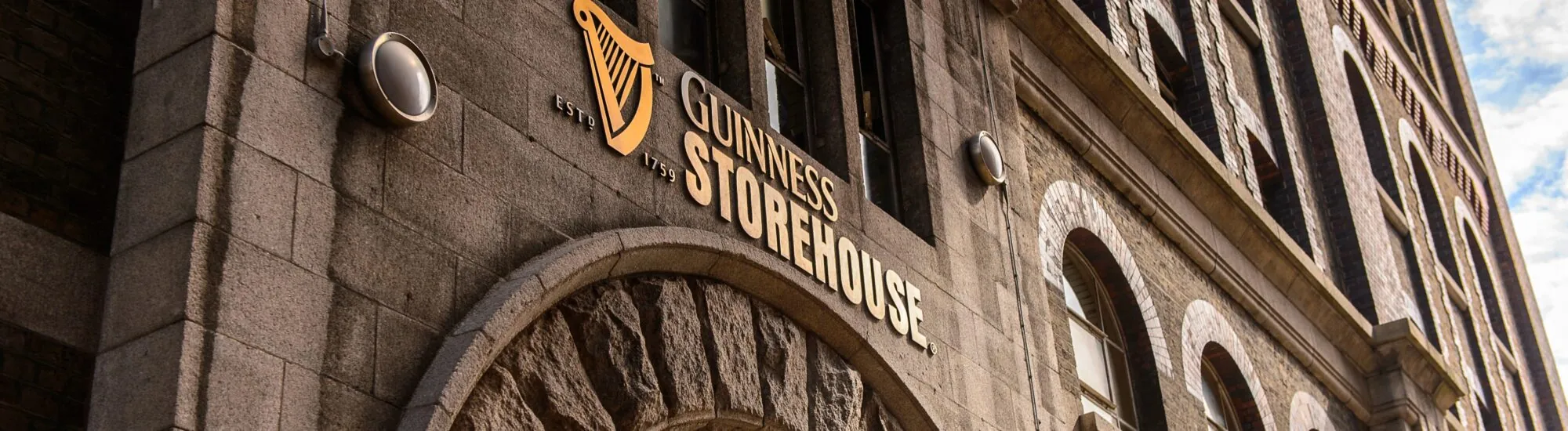
Located in the heart of the historic Liberties district, the Guinness Storehouse tells the story of Ireland’s most famous beer through seven floors of exhibitions and immersive experiences. Far more than a simple beer museum, it explores Guinness’s ingredients, brewing process, advertising campaigns, Arthur Guinness’s journey and the brand’s influence on Dublin’s identity.
The visit takes place in a former industrial building at the St James’s Gate brewery. It ends at the Gravity Bar, a glass-walled panoramic space with 360-degree views across the rooftops of the Irish capital. A Guinness, Guinness 0.0 or soft drink is included with the classic experience.
The tour is particularly popular and can be very busy. To make the most of it, it is worth understanding exactly what the visit includes, choosing the experience that suits you and allowing enough time to explore the exhibitions without rushing to the Gravity Bar.
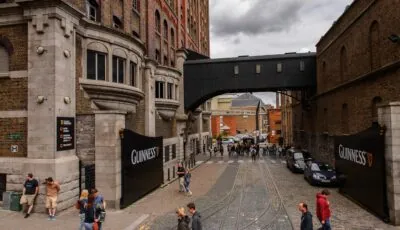
The Guinness Storehouse in Dublin
The Guinness Storehouse occupies a building constructed between 1902 and 1904 within the St James’s Gate brewery complex. Inspired by the Chicago School of architecture, it was among the first Irish buildings to use a steel-frame structure. It was once used for beer fermentation before that activity ceased in 1988.
Its conversion into a visitor centre began in the late 1990s. The Guinness Storehouse opened to the public in 2000, with the aim of telling the brand’s story, explaining how stout is brewed and showcasing Dublin’s industrial heritage.
The vast central atrium was conceived as a giant pint rising through the middle of the seven levels. The comparison is chiefly symbolic, but it shapes the story of the visit: from the ingredients on the lower floors to the tasting at the top of the building.
The Storehouse is not the production brewery itself. The classic experience takes place in a converted former industrial building, while Guinness continues to be brewed in the neighbouring facilities at St James’s Gate. Only the premium brewery experience provides access to certain parts of the working production site.
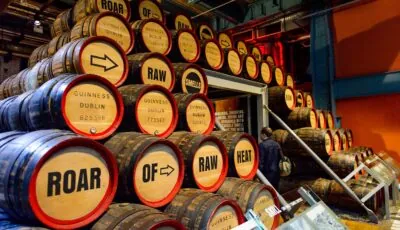
An immersive visit dedicated to the history of Guinness
The classic experience is a self-guided tour. Visitors can move at their own pace between audiovisual displays, historical objects, sensory spaces and presentations on brewing. Audio guides and supporting material are available in several languages.
The tour begins with the famous 9,000-year lease signed by Arthur Guinness. It continues with the beer’s four ingredients, the stages of production, the craft of coopering, barrel transport and the advertising campaigns that established Guinness in the public imagination.
A tasting room then invites visitors to identify the stout’s characteristic aromas before discovering its texture and balance. The upper floors focus more on advertising, popular culture and the brand’s international history.
The visit normally ends at the Gravity Bar, but there is no need to rush through the lower levels. The areas devoted to the ingredients, Arthur Guinness and vintage advertising are among the most interesting for understanding how a Dublin brewery became a global brand.
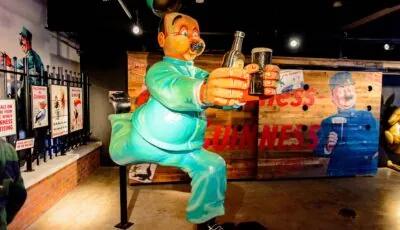
Ingredients and brewing lie at the heart of the exhibition
Guinness is made from four main ingredients: water, barley, hops and yeast. The tour explains how their selection and transformation contribute to the beer’s colour, roasted aromas, bitterness and texture.
Contrary to a widespread belief, the water used to brew Guinness does not come from the Liffey. It comes from the Wicklow Mountains, south of Dublin. The quality and consistency of this water play an important part in the beer’s final profile.
Some of the barley is roasted to produce the dark colour and the coffee or cocoa notes associated with stout. Hops provide bitterness and historically helped preserve beers intended for export. Yeast converts sugars into alcohol and also contributes to the creation of aromas.
The floor devoted to ingredients has been redesigned as a more spectacular experience. It includes a tall water installation, immersive spaces centred on hops and a display evoking the work of yeast. This approach markedly improves a part of the museum that was once more descriptive.
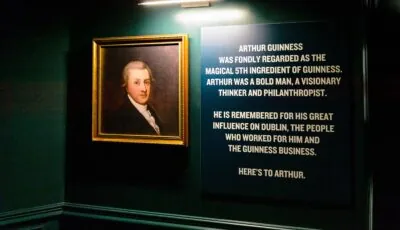
Arthur Guinness, founder of the brewery
Arthur Guinness was 34 when he signed the famous lease for the disused St James’s Gate brewery on 31 December 1759. The contract ran for the unusual term of 9,000 years, at an annual rent of £45. A copy of the document is displayed beneath a glass slab at the beginning of the tour.
Arthur Guinness initially brewed ale. During the 1770s, he gradually turned towards porter, a dark beer that was then highly popular in London. Its success was such that in 1799 the brewery stopped producing ale to focus on this family of beers.
The first known export of Guinness left Dublin for England in 1796. West India Porter appeared in 1801; it was more heavily hopped and designed to withstand long sea voyages more effectively. This beer is regarded as one of the ancestors of Guinness Foreign Extra Stout.
The museum presents Arthur Guinness as an especially visionary entrepreneur. This is, naturally, the brand’s own narrative, but the historical documents, the lease and the objects connected with the brewery’s early years give the tour real depth.
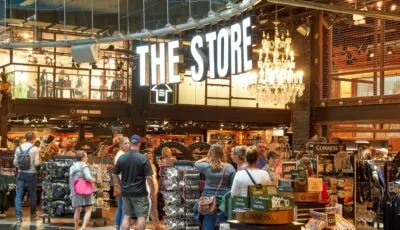
Guinness advertising is an integral part of the visit
One of the Guinness Storehouse’s most successful spaces traces the brand’s advertising history. Vintage posters, bottles, signs, films and promotional objects show how Guinness built an instantly recognisable identity.
The famous toucan appeared in campaigns created from the 1930s onwards by the British agency S. H. Benson. The bird often carried several glasses of Guinness on its beak, accompanied by pun-based slogans. Other animals, including the seal, ostrich and kangaroo, also populated this advertising world.
The tour also looks back at now-famous slogans, notably “Guinness is Good for You”. They reflect a time when alcohol advertising was governed by rules very different from those in force today. They should be understood as elements of advertising history, not as health claims.
More recent television campaigns also occupy an important place. They show how Guinness has maintained its image by associating the brand with patience, the serving ritual, sport, music and certain portrayals of contemporary Ireland.
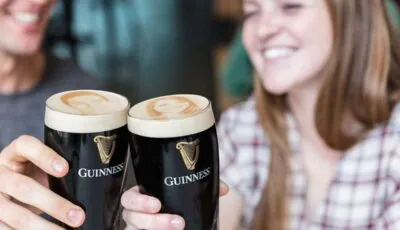
A tasting overlooking Dublin’s rooftops
Located on the seventh floor, around 46 metres above the street, the Gravity Bar is the highlight of the Guinness Storehouse. Its glass walls offer 360-degree views across Dublin, from the Wicklow Mountains to the bay and Howth Head when visibility is good.
Inscriptions on the windows help visitors identify the main landmarks. These include the spires of the Liberties, St Patrick’s Cathedral, the rooftops of the historic centre and the hills surrounding the capital.
The drink included in the classic experience may be a Guinness, Guinness 0.0 or a non-alcoholic alternative. It is more accurate to describe it as a drink included with the ticket than as a “free pint”.
The Gravity Bar can be particularly lively when several groups finish their tours at the same time. To enjoy the view more easily, avoid the busiest periods where possible and take time to look out from every side of the room before looking for a seat.
The Guinness Storehouse Experience is the best option for a first visit. It includes the self-guided tour across seven floors, the tasting spaces and a drink at the Gravity Bar.
Most visitors spend around an hour and a half there, though two hours allow for a more comfortable pace. This option is enough to discover the story of Guinness, understand its brewing process and enjoy the panorama.
The Guinness Academy adds an introduction to serving the beer. A member of staff explains the different steps needed to achieve the characteristic head, texture and presentation of a pint of Guinness.
Participants then step behind the bar to pour their own pint and receive a souvenir certificate. This experience suits travellers looking for a more interactive activity than a simple tasting.
The STOUTie experience allows a photograph to be reproduced on the head of a Guinness. The portrait is created using malt extract placed on the surface of the beer by a food printer.
This activity is essentially intended as a photographic souvenir. It is added to the classic visit and involves a separate drink from the one served at the Gravity Bar.
The Connoisseur Experience takes place in a small group in a more intimate setting. A specialist presents several beers brewed at St James’s Gate, their aromatic profiles and the differences between the main Guinness varieties.
This experience includes instruction in pouring a pint and is aimed primarily at visitors aged over 18 who want to explore tasting in more depth rather than simply tour the exhibition.
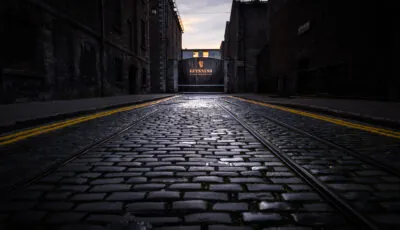
The Guinness brewery at St James’s Gate
The Guinness Brewery Tour is the only option that allows visitors into certain parts of the working brewery. Accompanied by a Guinness ambassador, participants pass through the historic 1759 gate, walk through underground tunnels and discover Brewhouse 4, one of the modern facilities where beer is produced.
This guided experience takes several hours and involves considerable walking as well as stairs. It also includes instruction in pouring a pint, a meal and a visit to the Guinness Storehouse before a final tasting at the Gravity Bar.
The tour is conducted exclusively in English and is for adults only. As it is a genuine production site, safety clothing is provided and suitable footwear is essential.
Another option combines the Guinness Storehouse tour with a tasting at the Guinness Open Gate Brewery, a few minutes’ walk away. This small experimental brewery offers the chance to taste limited-edition creations, sometimes very different from classic stout.
The appeal of this experience lies in comparing several beer styles and discovering the brewers’ experimental work. The Open Gate Brewery is a separate venue from the Storehouse and is for adults only.
In 2026, the Guinness Storehouse continues to develop as a cultural and events venue beyond the traditional museum tour. Additional evening slots are offered during the summer, in particular, to accommodate visitor numbers and allow later visits.
Thursday Night Social brings music, DJ sets at the Gravity Bar, food offerings and an atmosphere more geared towards Dublin locals to Thursdays in July and August. These evenings are for adults only and require separate tickets.
The SETS at the Guinness Storehouse music programme also welcomes artists and DJs for occasional evenings held in the building. These events temporarily turn the Storehouse into a performance venue and are not included in the usual visitor experience.
St Patrick’s week 2026 confirmed this direction, with eight days of music, art and food across the various spaces. More than a hundred artists and contributors took part in this edition, alongside graphic installations and seasonal menus.
These events change regularly. They can enrich a visit, but may also make some floors livelier than usual. It is useful to check the official programme when your stay coincides with St Patrick’s Day, a summer weekend or a special evening.
The Guinness Storehouse has several dining spaces where visitors can take a break during their visit. The Roasthouse offers hot drinks, cakes, sandwiches and quick snacks.
The 1837 Bar & Brasserie takes its name from the year when the pairing of Guinness and oysters is said to have been publicly celebrated. Its menu revisits several Irish classics and offers pairings with different beers from the brand.
The Brewers’ Dining Hall draws inspiration from the rooms where brewery employees once ate their meals. Its open kitchen and large communal tables create a more sociable atmosphere.
The restaurants are accessible during the visit, but tables can be in high demand. If a meal is an integral part of your plans, it is better to check booking options rather than rely on finding a table at the last minute.
Under-18s may visit the Guinness Storehouse when accompanied by an adult. The tour features numerous visual installations, advertising objects and activities that may interest them, even though it remains entirely devoted to a beer brand.
No alcoholic drink may be served to visitors under 18. Guinness 0.0 is not offered to them in this context either. A suitable soft drink replaces the drink included with the visit.
The Storehouse can be noisy and very busy. With young children, a morning visit is often more comfortable. Pushchairs can be used thanks to the lifts, though moving around becomes slower at peak times.
The different levels of the Guinness Storehouse are served by ramps and lifts. The restaurants, bars and exhibition spaces have accessible counters, while wheelchairs can be borrowed free of charge, subject to availability.
Guide dogs and assistance dogs are permitted. A companion may qualify for free entry to the classic visit, subject to the venue’s conditions.
The Guinness Storehouse also holds certification from the Irish association AsIAm for welcoming autistic and neurodivergent people. Sensory kits, maps identifying stimulating areas and visual guides are available.
In 2026, reduced-lighting and reduced-noise sessions are held on the first Wednesday of each month, usually during the morning. Announcements and music are then limited, and sensitive areas have dedicated signage.
The Guinness Storehouse is an attraction devoted to the history of a company and the promotion of its brand. Visitors should not therefore expect an independent museum offering a critical perspective on Guinness or on the effects of alcohol in Irish society.
That commercial dimension does not prevent the tour from being particularly well presented. The building is of genuine industrial interest, the advertising archives are fascinating and the installations make the main stages of brewing easy to understand.
The visit will particularly appeal to beer lovers, advertising design enthusiasts and fans of industrial heritage. It may also appeal to travellers looking for an indoor activity in Dublin, especially when the weather is poor.
Visitors hoping to see all stages of production directly should choose the Brewery Tour rather than the classic experience. Those who do not drink alcohol can enjoy the tour, the Gravity Bar and its view with a Guinness 0.0 or another suitable drink.
Online booking is strongly recommended, especially at weekends, during holidays, around St Patrick’s Day and in high season. Premium options have much more limited capacity than the classic experience.
Tuesday to Thursday mornings are generally quieter. Starting early makes it easier to move around the exhibitions and enjoy the Gravity Bar before the largest groups arrive.
Allow at least an hour and a half for the classic tour, or two hours if you want to read the panels, explore the advertising archives and take time to look out across Dublin from the top.
It is best not to begin by going straight up to the Gravity Bar. The tour has been designed in a specific order, and the first floors contain the bulk of the historical and technical information.
The Storehouse occupies a former industrial building at St James’s Gate, but the classic experience does not visit the current production facilities. The Guinness Brewery Tour, however, provides access to certain parts of the working brewery.
The classic visit lasts an average of an hour and a half. Two hours are preferable for exploring the seven floors without rushing. Premium experiences can take between two and four hours.
A Guinness, Guinness 0.0 or soft drink is included with the classic experience and may be consumed at the Gravity Bar. It is a drink included with the ticket, rather than a genuinely free pint.
Yes. The historical tour and exhibitions can be enjoyed independently of the tasting. A Guinness 0.0 or soft drink can replace classic stout, depending on the visitor’s age and serving conditions.
Yes, provided they are accompanied by an adult. Visitors under 18 may consume neither alcoholic beer nor Guinness 0.0 at the venue.
Yes. The STOUTie experience reproduces a photograph on the head using malt extract. This activity is a separate option from the classic experience.
Yes. The Guinness Academy teaches the serving ritual and allows participants to pour their own pint. This experience must be added to the classic visit or selected as part of an option that includes it.
The Gravity Bar is part of the Guinness Storehouse tour. Access is normally reserved for ticket holders or attendees of certain events held in the building.
The classic tour is self-guided and multilingual materials are available. Premium experiences, including the Connoisseur Experience and the Guinness Brewery Tour, are conducted in English.
Want to extend your visit without having to rush around? Here are a few well-located places to stay near the must-see attractions.
Essential information to help you plan your visit, including key landmarks, access information, and booking options.
St. James Gate, The Liberties, The Liberties (County Dublin) - Republic of Ireland
53.341889, -6.286694
1h30
Compare tickets, guided tours, and excursions available through our partner platforms.