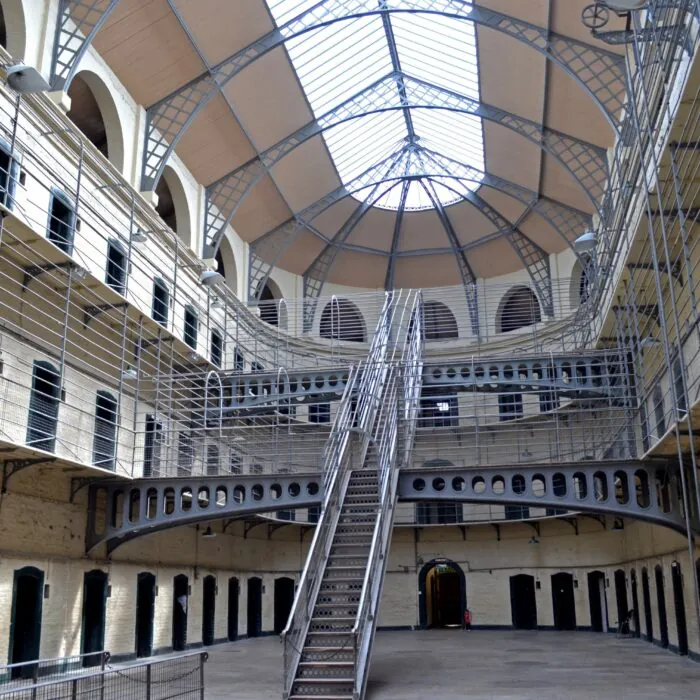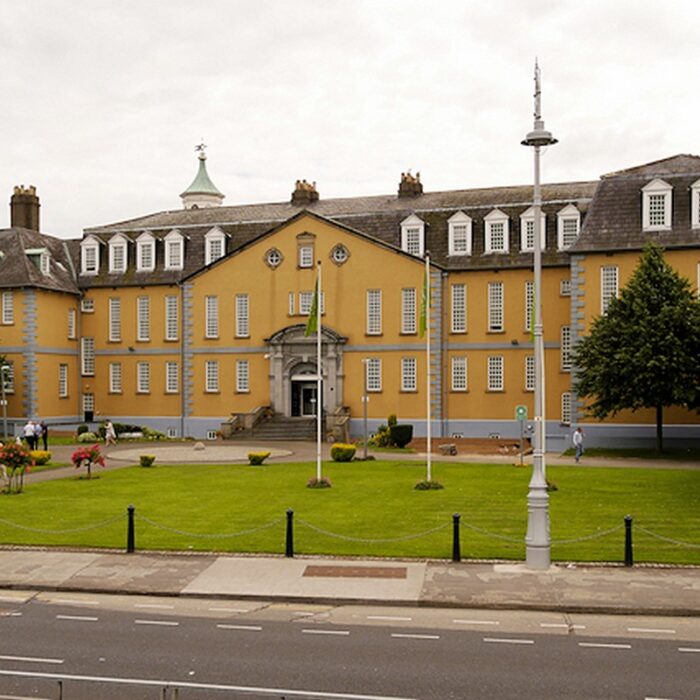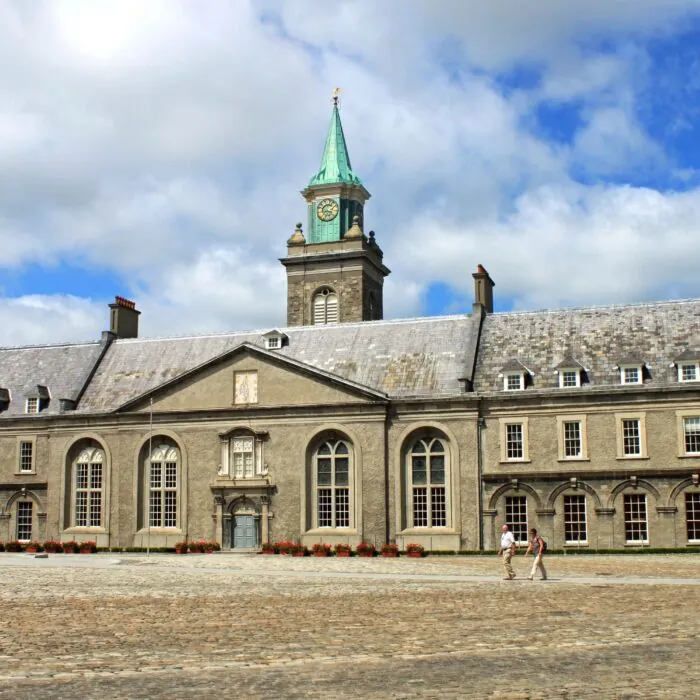


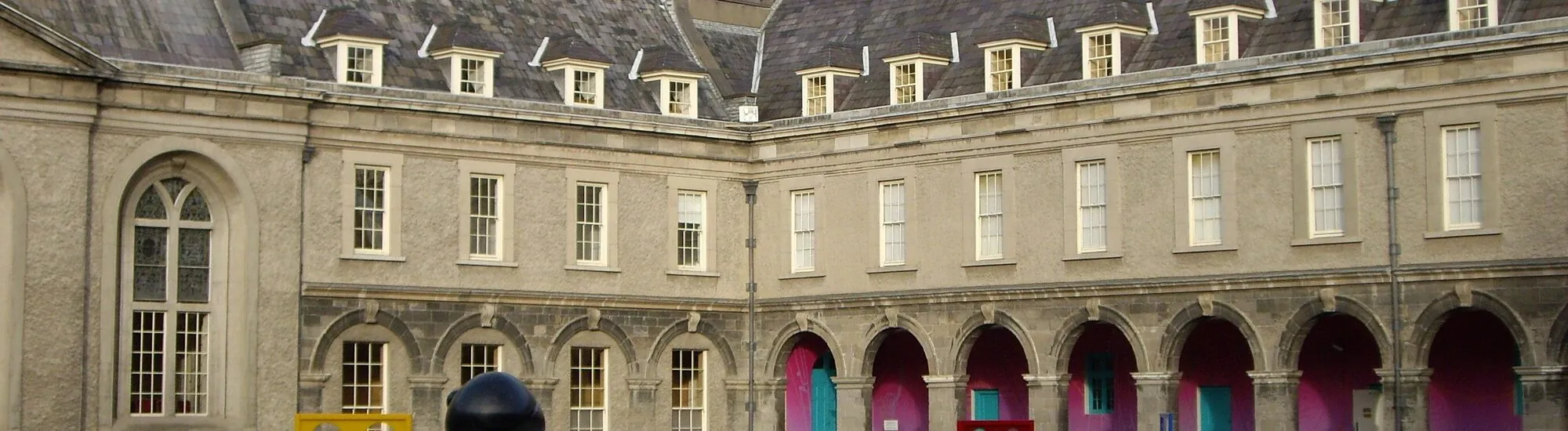
From Military Road, the silhouette of the Royal Hospital Kilmainham is heralded by its bell tower and long stone façades. Passing beneath the arcades, you emerge into a vast courtyard, lined with wings that once housed retired soldiers. The site is now home to the Irish Museum of Modern Art, but it is also worth visiting for its architecture, gardens and the history of the men who lived here. Just a few minutes’ walk from the former Kilmainham Gaol, it is one of the major heritage sites in west Dublin.
James Butler, Duke of Ormonde and Lord Lieutenant of Ireland under Charles II, championed the project for an institution where former soldiers could be housed and cared for. The first stone was laid in 1680, and the building was completed in 1684. Les Invalides, opened shortly beforehand in Paris under Louis XIV, provided the model for the project. In Dublin, the chosen site had previously been home to an early Christian settlement, followed by a medieval monastery of the Hospitallers. The hospital’s military purpose was therefore established in a place already shaped by several centuries of occupation.
The layout of the building still makes the division of its functions easy to read. The south, east and west wings were given over to residents’ accommodation. The north wing contained the ceremonial and communal spaces, including the master’s quarters, the chapel and the Great Hall. At the centre, the quadrangular courtyard offers a view of the entire complex at a glance. To understand the logic of the site, cross the courtyard and then turn back towards the arcades: the building’s organisation is clearer from the courtyard than from the road.
The Royal Hospital retained its role as a military retirement home until 1927. The building subsequently served as Garda headquarters from 1930 to 1950. Following its restoration and several years of cultural events, it became the home of the Irish Museum of Modern Art (IMMA) in 1991. The museum’s arrival changed the way visitors move through the site. The former residential wings now provide a setting for exhibitions, while the history of the hospital is explored through a separate visitor trail.
Start in the courtyard, then continue into the formal gardens. The geometry of the enclosed garden extends that of the building. The lawns and paths offer a more open walk, with different views of the façades. Bully’s Acre, the former cemetery on the site, is occasionally included in guided tours offered by Heritage Ireland. Check the dates if you would like to include it in your visit.
The Old Man’s House exhibition, created by the Office of Public Works, traces the daily lives of veterans and staff. It is the best place to start if you want to understand the monument itself. It shows how people lived in the institution, and how the buildings later found a new purpose with IMMA. If you are also planning to visit the art galleries, check what is on display on the day of your visit.
The chapel and Great Hall form part of the Royal Hospital’s historical visitor trail. For the remainder of 2026, Heritage Ireland has announced their closure as part of Ireland’s presidency of the Council of the European Union. The programme of outdoor guided tours is announced separately. If you are visiting for a particular room, check the Office of Public Works notice before setting out.
The Luas Red Line serves Heuston. From the station, the site is around a ten-minute walk via Military Road. The east entrance has a steep slope. If you are using mobility assistance or travelling with a pushchair, consult the IMMA access map to choose your entrance. Also check whether Richmond Gate, to the west, is open if you plan to cross the site towards Inchicore Road.
To combine the two major landmarks of the Kilmainham area in half a day, book your guided tour of Kilmainham Gaol first. Plan the courtyard, gardens and Old Man’s House before or after your time slot. The gaol tells the story of imprisonment and Irish uprisings. The hospital reveals another side of Dublin: that of a 17th-century military institution whose courtyard has become a place for strolling and culture.
Want to extend your visit without having to rush around? Here are a few well-located places to stay near the must-see attractions.
Essential information to help you plan your visit, including key landmarks, access information, and booking options.
Military Road, Kilmainham, Dublin, County Dublin, Republic of Ireland, Tourist sites in Ireland
53.34330, -6.30018
Opening hours for the site, Old Man’s House and the IMMA galleries vary. Check the official page before setting out. Heritage Ireland has announced that the chapel and Great Hall will remain closed until the end of 2026. Outdoor tours are announced separately.
Check the opening hours and admission requirements before you leave, especially during peak season or on Irish public holidays.
Free access to the site and the Old Man’s House exhibition. Some special exhibitions may charge admission. Paid parking.