In Ireland, some garments go far beyond their original purpose. Ghillies are a perfect example. At first glance, these lightweight shoes with long laces may seem unusual. Yet they are one of the most instantly recognisable symbols of Irish culture, closely linked to dance, music and national identity. Understanding ghillies means stepping into the world of Irish step dancing and the traditions that animate the Emerald Isle.
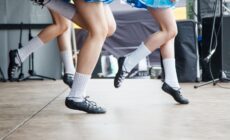
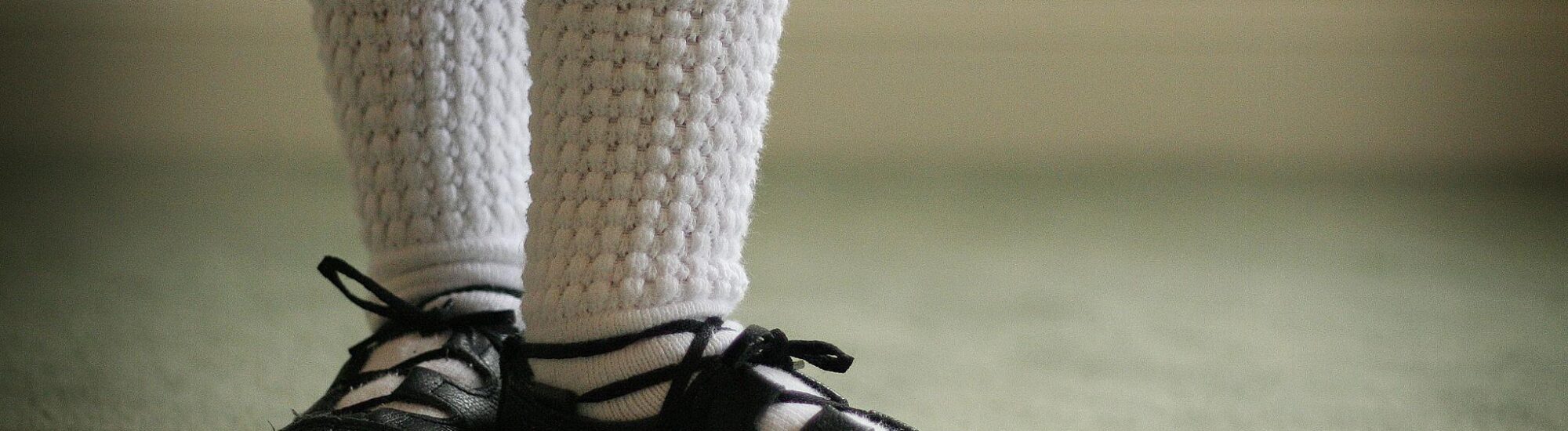
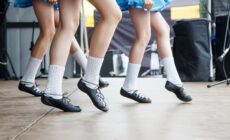
Ghillies are soft dance shoes traditionally worn by female Irish dancers, although male versions also exist. Made from thin leather, usually black, they are characterised by the absence of a rigid sole and heel. Their most distinctive feature is the long laces, which wrap around the foot and ankle.
This design allows exceptional freedom of movement, essential for executing the fast footwork, jumps and intricate steps typical of Irish dance. The foot is supported without being restricted, enabling both control and fluidity.
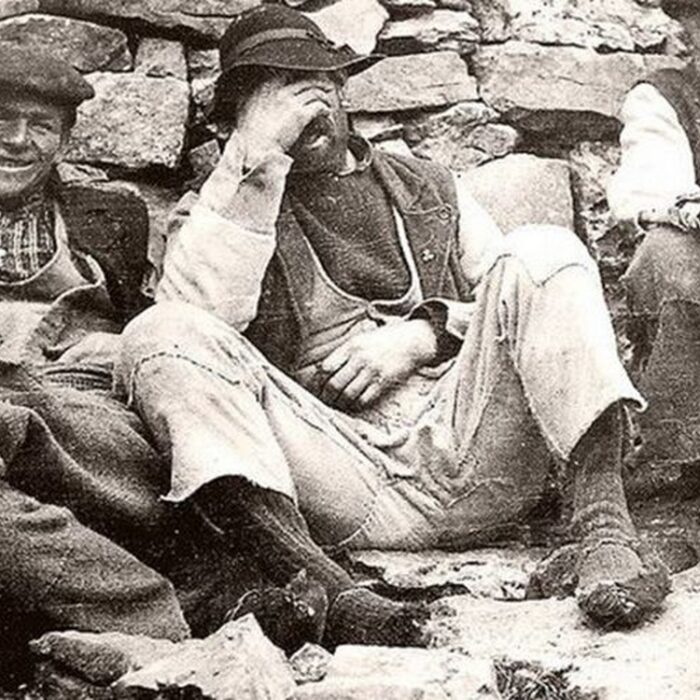
The word “ghillies” is believed to come from the Gaelic term gillie, originally referring to a servant or young man attached to a landowner, often in a rural context. Over time, the term came to describe lightweight shoes suited to uneven terrain and activities requiring agility and endurance.
As Irish traditional dance developed and became more structured during the 18th and 19th centuries, these shoes evolved to meet the specific needs of dancers. Modern ghillies are therefore the result of a long process of adaptation, balancing technical requirements with visual tradition.
In Irish dance, every detail matters. Ghillies allow dancers to keep their feet close to the ground while maintaining excellent grip and control. Unlike hard shoes, which are designed to create percussive sounds, ghillies are soft shoes. They are worn for lighter, flowing dances such as the reel, slip jig and light jig.
Their flexibility highlights the intricate foot and leg work that defines Irish dance, while the upper body remains upright and largely motionless.
In official competitions, particularly those governed by An Coimisiún Le Rincí Gaelacha, ghillies must meet strict criteria. Colour, shape, lacing and fit are carefully regulated. This standardisation ensures fairness between dancers while preserving the traditional aesthetic.
Today, manufacturers offer models adapted to all levels, from beginners to professional dancers, using more durable leathers, reinforced stitching and subtle technical improvements.
Beyond dance studios and stages, ghillies have become a powerful cultural symbol. They frequently appear in international Irish dance shows, festivals, parades and cultural events. They embody the discipline, elegance and passion that define Irish tradition.
For many people in Ireland, putting on a pair of ghillies is a way of reconnecting with a shared history of music, movement and cultural pride.
Ghillies are often tied to childhood memories, first dance classes, local competitions and performances on major international stages. They symbolise Ireland’s ability to preserve its traditions while sharing them with the world.
Quiet yet essential, ghillies remind us that Irish culture is expressed as much through movement as through words.





 4.64/5 (56 votes)
 3.71/5 (45 votes)