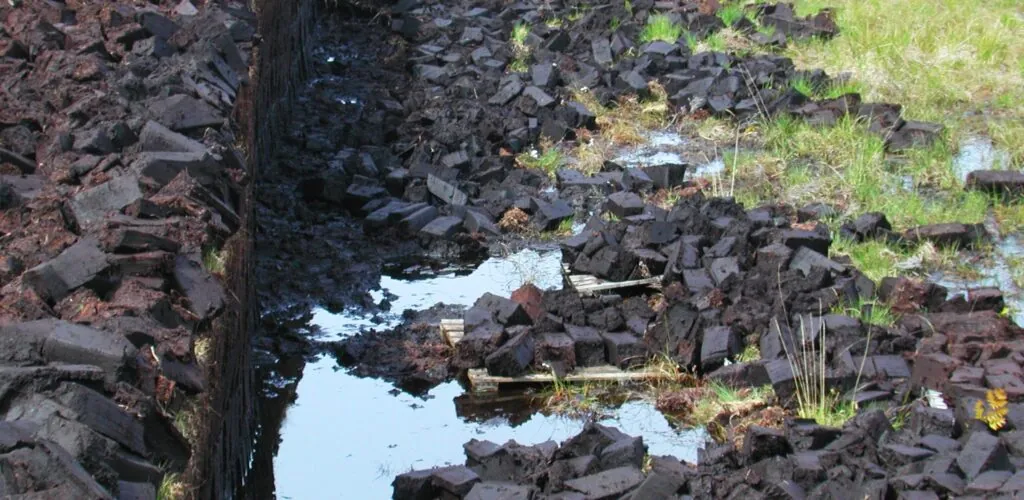
In the wetland landscapes of County Derry, Northern Ireland, an archaeological discovery has taken on the air of a criminal investigation. Human remains uncovered in a bog near Bellaghy were examined over several years. At a public presentation at Belfast’s Ulster Museum on 16 November 2026, specialists revealed what they had been able to establish: a young woman who lived around two millennia ago met a violent death, marked by deliberate decapitation. The reasons behind the killing, however, remain entirely unknown.
A young woman found in the peat near Bellaghy
A discovery that has endured through the centuries
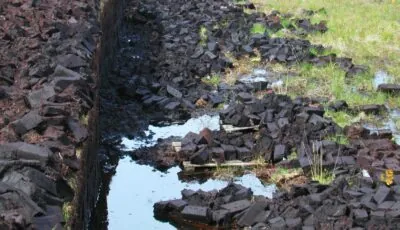
The story begins in October 2023 in Ballymacombs More, in the countryside near Bellaghy. Peat extraction work uncovered human remains and fragments of organic material. In this waterlogged, oxygen-poor and highly acidic environment, some elements that would disappear elsewhere can survive for centuries, even millennia.
The discovery was initially referred to by the masculine nickname “Bellaghy Boy”. However, analysis led researchers to an entirely different conclusion: the remains belong to a young woman. Scientifically designated Ballymacombs More Woman, she is also known as Áine in local accounts, a name drawn from Irish tradition.
This identification changes how the bones are viewed. They are no longer simply a spectacular find: behind the remains lies the interrupted life of a person whose community, beliefs and final moments have yet to be reconstructed.
How scientists reconstructed a violent death
Deliberate decapitation, but an unknown motive
The investigation brought together specialists in archaeology and forensic science. Examination of the remains, scientific imaging and digital reconstruction made it possible to study the injuries and distinguish ancient damage from that which may have been caused by time or burial conditions.
The most striking finding concerns the neck: according to conclusions presented in November 2026, the marks are consistent with deliberate decapitation using a bladed weapon. The head was not recovered. Researchers can therefore describe an act of violence, without identifying the perpetrator or asserting the precise circumstances of the death.
The analyses also provided clues about the body and its surroundings. They offer a glimpse of a life in Iron Age Ireland, amid a landscape of farmland and wetlands very different from the romantic image of bogs encountered today.
Human sacrifice in Iron Age Ireland?
A compelling hypothesis, not scientific certainty
Why was this young woman decapitated? One possibility raised is that she was put to death as part of a ritual. Across north-western Europe, several ancient bodies preserved in bogs bear signs of extreme violence, which researchers have sometimes linked to sacrificial practices.
In Ireland, the discoveries of Clonycavan Man, Old Croghan Man and Cashel Man have profoundly reshaped understanding of ancient societies. These bodies tell of an era in which power, belief and death were bound together in ways archaeologists are still trying to understand.
It would, however, be excessive to present Áine as a confirmed sacrificial victim. Decapitation alone is not enough to demonstrate a religious ritual. An execution, interpersonal violence or other circumstances cannot be ruled out on the basis of the publicly available evidence. Science has identified the violence of her death; it has not resolved the motive.
In Belfast, a 2,000-year-old investigation takes the form of a hearing
The Ulster Museum turns archaeology into a public investigation
On 16 November 2026, Belfast’s Ulster Museum hosted a particularly unusual presentation of the research. With the participation of Northern Ireland coroner Joe McCrisken, the event adopted the framework of a forensic investigation: establishing the victim’s identity, placing her death in context and examining the evidence that might explain what happened.
This was not an Iron Age trial, nor the reopening of a contemporary criminal case. Rather, it showed how current scientific techniques can give a voice to people who died long before written records emerged.
Beyond its striking nature, the initiative raises a delicate question: how should an ancient human body be presented to the public without turning a tragedy into an attraction? Museums must balance the pursuit of knowledge with the respect owed to human remains.
In Bellaghy, the story recalls the poetry of Seamus Heaney
When bogs become Ireland’s memory
Bellaghy’s proximity gives this discovery a remarkable literary dimension. It was in this region that Seamus Heaney grew up, the Irish poet awarded the Nobel Prize in Literature in 1995. In several of his works, bodies preserved in peat become powerful figures of memory, violence and the passage of time.
The comparison plainly proves no historical link between the ancient inhabitants of Ballymacombs More and poetic narratives. Yet it gives this landscape a particular resonance. The dark earth, accumulated layers of vegetation and traces of forgotten lives are precisely the images that nourished part of Heaney’s work.
Can you see the remains of Ballymacombs More Woman in Ireland?
A discovery to understand, without turning the body into a spectacle
For travellers interested in archaeology, the Ulster Museum offers an excellent introduction to the island’s prehistory and ancient cultures. However, visitors should not plan a trip on the assumption that Áine’s remains are necessarily on public display: no permanent exhibition of the human remains should be presumed. Information on any interpretation or exhibition should be checked directly with the museum.
To explore another aspect of these remarkable landscapes, discover the role of peat in Irish history, or the trails of the Derrygimlagh Bog in Connemara. These sites are not where Ballymacombs More Woman was discovered, but they help explain why bogs occupy such a distinctive place in the island’s imagination and geography.
In Ballymacombs More, one question continues to echo across the millennia: what happened to this young woman, and why? The discovery does not yet provide all the answers. Above all, it is a reminder that beneath Ireland’s most tranquil landscapes, human stories of extraordinary intensity may lie sleeping.