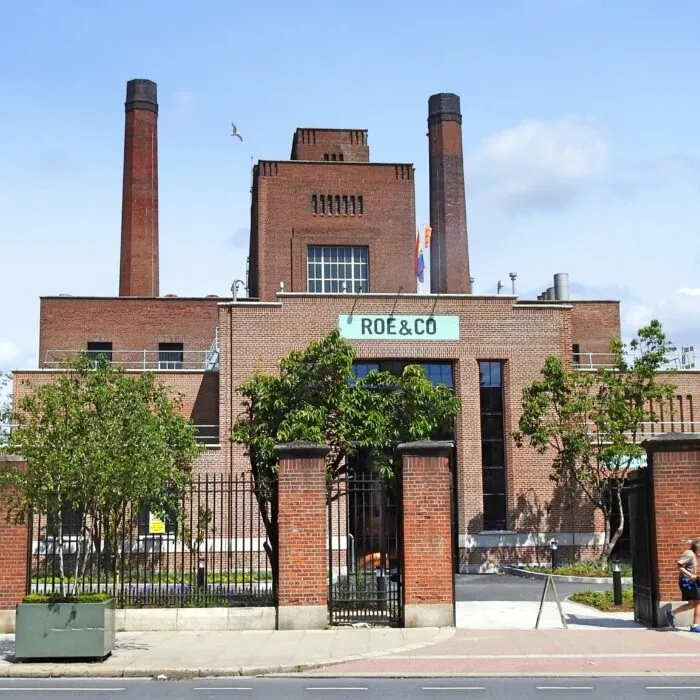
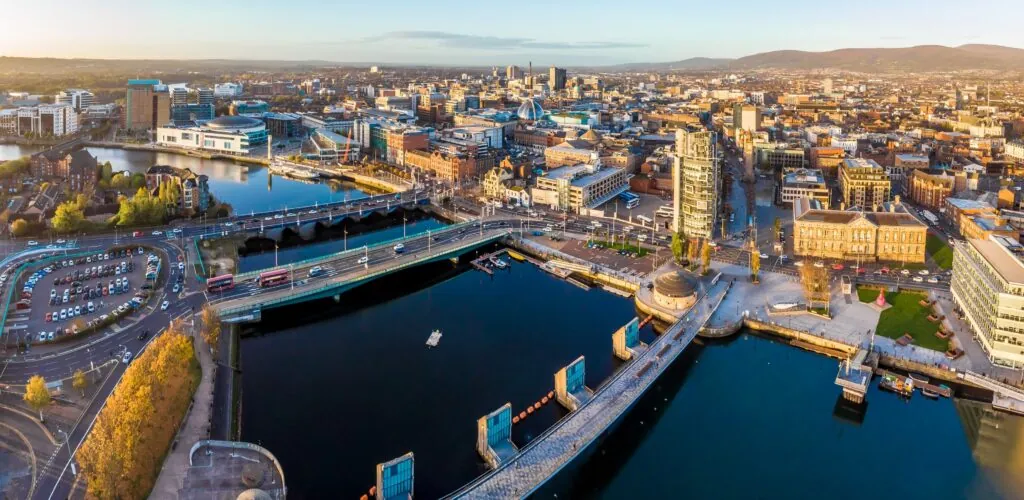
In Belfast, cranes, hotels and lively terraces have long replaced the images of streets deserted by violence. Northern Ireland’s capital now welcomes millions of visitors drawn by Titanic Belfast, its historic districts, pubs and political murals. In Derry/Londonderry, the city walls and the Bogside still tell the story of the Troubles, but the city now moves to the rhythm of its festivals and cultural scene.
This contrast sums up Northern Ireland in 2026: a territory that has enjoyed lasting peace, does not deny its past, but is no longer defined by it. The armed conflict is over. Political disagreements remain, without compromising the everyday safety of residents and travellers.
Northern Irish conflict: has the page been turned for more than twenty-five years?
The Good Friday Agreement has profoundly changed the territory
Between the late 1960s and 1998, the Troubles pitted republican groups in favour of Irish reunification against loyalist paramilitary organisations attached to the United Kingdom and the British security forces. The conflict claimed more than 3,500 lives.
The signing of the Good Friday Agreement on 10 April 1998 marked the turning point. The agreement established power-sharing between nationalists and unionists, recognised the right of residents to feel British, Irish or both, and affirmed that the territory’s status could change only with the consent of its population.
The Provisional IRA ended its armed campaign in 2005. Since then, the main parties have defended their positions at the ballot box. The text of the Belfast Agreement remains, nearly three decades later, the foundation of this peace.
The conflict has shifted to the political arena
Nationalists and unionists now govern together
The fundamental disagreement has not disappeared. Unionists want Northern Ireland to remain part of the United Kingdom. Nationalists support the prospect of reunification with the Republic of Ireland. But this opposition is no longer expressed through widespread confrontation.
Since February 2024, Michelle O’Neill, a member of Sinn Féin, has held the position of First Minister. She shares power with Emma Little-Pengelly, a representative of the Democratic Unionist Party. Although their titles differ, the two leaders have the same powers.
Seeing a nationalist leader and a unionist leader jointly administer Northern Ireland illustrates how far the territory has come. Debates remain heated at times, particularly over Brexit and the territory’s constitutional future, but they take place within the institutions.
A peaceful society, despite visible scars
Traces of the past are now part of the collective memory
History remains very present in certain districts of Belfast and Derry/Londonderry. Political murals, memorials, flags and peace walls still bear witness to the former divisions. Some gates separating community districts even continue to be closed at night.
These elements do not indicate an ongoing conflict. They tell the story of a society whose reconciliation is progressing gradually. Former areas of confrontation have, moreover, become places of education and heritage tourism.
In Belfast, black cab tours offer the chance to discover the Falls Road and Shankill Road districts with local guides. In Derry/Londonderry, the Bogside, the Museum of Free Derry and the murals of the People’s Gallery place events in context. The aim is no longer to perpetuate divisions, but to explain how they shaped the territory.
The security situation needs to be viewed in context
Residual groups with no connection to the Troubles
A few dissident republican groups, including the New IRA, remain active. Very much in the minority and widely rejected by the population, they mainly target law enforcement and British institutions in localised areas.
The level of the Northern Ireland terrorism threat officially remains classified as “substantial”. However, this classification does not mean that residents or travellers live under a permanent threat. It mainly leads the authorities to maintain increased surveillance around police infrastructure.
Incidents remain occasional and do not reflect everyday life in the territory. The unrest observed in June 2026 was also related to racist and anti-immigration tensions, rather than a resumption of the conflict between nationalists and unionists.
For travellers, Northern Ireland presents a situation comparable to that of other destinations in the United Kingdom. France Diplomatie also continues to place the whole of the United Kingdom under normal vigilance. You can therefore certainly travel to Northern Ireland, provided that you avoid high-risk areas and do not raise sensitive subjects.
Brexit did not reinstate the Irish border
Travel remains smooth across the island
The United Kingdom’s departure from the European Union had raised fears of the return of a physical border between Northern Ireland and the Republic of Ireland. This scenario, particularly sensitive for border communities, did not happen.
Travellers continue to move freely between Dublin and Belfast. No border checkpoint interrupts the journey, and it is common to cross from one territory into the other without noticing.
The Windsor Framework shifted some of the checks towards trade with Great Britain. This solution continues to fuel political debate, particularly among unionists, but it has preserved free movement across the island.
Reunification remains a prospect, not an emergency
No referendum is scheduled for 2026
Demographic changes and Sinn Féin’s electoral successes have revived discussions about a united Ireland. The Good Friday Agreement provides for the possibility of a referendum if a majority of the population appears likely to support the project.
However, no vote is planned for 2026. The question of reunification belongs to democratic debate and is not causing any particular instability. Discussions now focus on very practical issues: healthcare, taxation, social protection, institutions and respect for British identity.
Travelling to Northern Ireland in 2026
An accessible, welcoming and profoundly transformed destination
There is no reason to give up a trip to Northern Ireland because of its past. Belfast, Derry/Londonderry, the Giant’s Causeway, the Mourne Mountains and the Causeway Coast can all be explored under perfectly normal conditions.
As everywhere, you should simply avoid a demonstration or an agitated gathering. Occasional caution may be useful during marching season, around 12 July, but these events are generally announced and managed.
The history of the conflict is not a warning signal directed at travellers. Today, it is one of the keys to understanding a warm, lively territory that is proud of the progress it has made since 1998.