

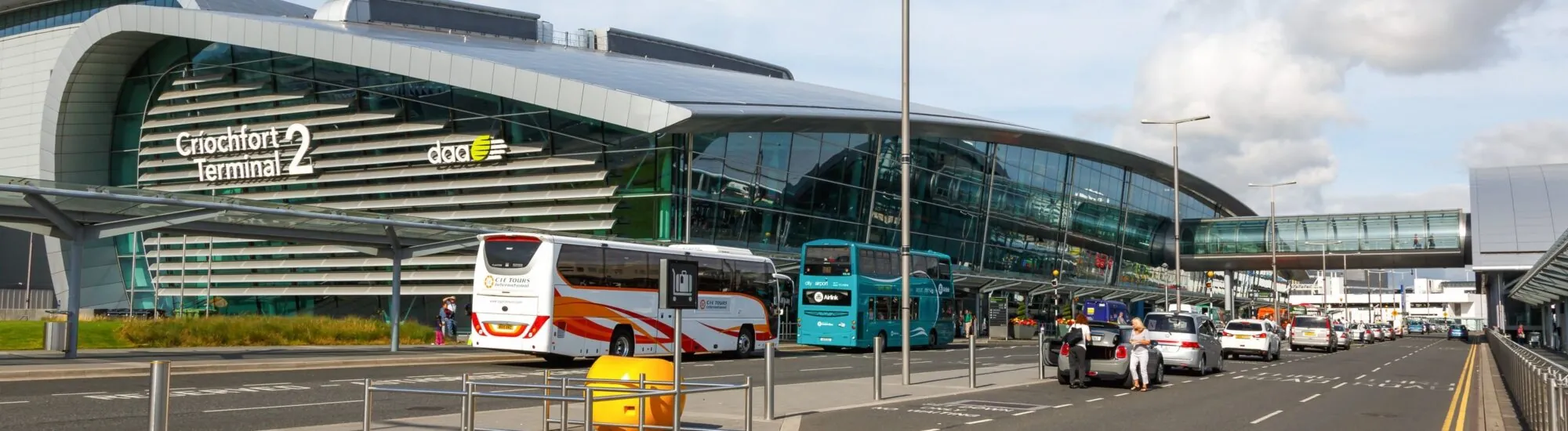
Have you just landed in Dublin and want to get to your accommodation quickly? Dublin Airport is about 10 km north of the city centre. In 2026, it is still served by neither rail nor the Luas tram: the journey is mainly made by bus, express coach or taxi.
The cheapest option is to take a bus on the public TFI network. For a faster journey better suited to luggage, Dublin Express and Aircoach serve the capital’s main areas. Taxis are a good option for families, small groups or late arrivals with several suitcases.
Depending on traffic, your chosen stop and mode of transport, allow between 20 minutes and an hour to reach Dublin. Traffic can significantly lengthen the journey at peak times, so “30 minutes to the centre” should be seen as an optimistic estimate rather than a guarantee.
| Transport | Indicative fare | Journey time | Best for |
|---|---|---|---|
| Public TFI bus | €2 with a Leap Card or €2.60 cash | Around 40 to 60 minutes | Budget travellers and those who already have a Leap Card |
| Aircoach | From €6 online | Around 20 to 40 minutes | O’Connell Street, Drumcondra, Ballsbridge and south Dublin |
| Dublin Express | From €9 online | Around 20 to 40 minutes, depending on the stop and traffic | Temple Bar, Trinity College, the quays, Heuston Station and the Liberties |
| Taxi | Around €30 to €45 to the centre | Around 20 to 45 minutes | Families, groups, bulky luggage and door-to-door travel |
These fares and journey times are indicative. Commercial coach fares may vary according to the date, time and booking method. Taxi fares depend on the meter, traffic, time of day and any applicable surcharges.

Dublin Express serves many areas of central Dublin
Dublin Express is one of the most convenient ways to reach the capital’s tourist areas directly. Its coaches depart from Zone 1 at Terminal 1 and Zone 21 at Terminal 2. They have luggage space, Wi-Fi and power sockets or charging ports, depending on the vehicle.
In 2026, Dublin Express operates three main routes between the airport and Dublin:
Route 782 is generally the most useful if your accommodation is near Temple Bar, Christ Church, Smithfield, the Guinness Storehouse or Heuston Station. Route 784 is particularly handy for Trinity College, College Green, O’Connell Street and the Docklands.
One-way tickets start at €9 when bought online. Services can run every 7 minutes 30 seconds during the busiest periods and every 15 minutes for much of the day. The first services run very early in the morning and the last ones after midnight, but services do not run continuously throughout the night.
A ticket booked for routes 782, 783 or 784 can generally be used up to twelve hours before or after the original departure time, on a standby basis and subject to availability. This flexibility is useful when flights arrive early or are delayed.
The advertised journey time of from 14 minutes refers to the fastest trip to the first Docklands stops. For Temple Bar, Trinity College or Heuston Station, allow 25 to 45 minutes depending on the route and traffic.
Tickets are available on the official Dublin Express website, at airport sales points or directly from the driver, subject to availability. On-board payment is by card and may cost more than booking online.
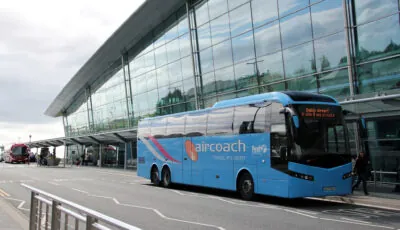
Aircoach connects Dublin Airport with the city centre 24 hours a day
Aircoach is the other main express option. Its coaches depart from Zone 2 at Terminal 1 and Zone 20 at Terminal 2. The company offers departures as often as every 15 minutes and runs city-centre services 24 hours a day.
Three routes are especially useful for travellers staying in Dublin:
Route 700 or 700X is best if you are staying near O’Connell Street or north of the city centre. Route 702 is more suitable for the Docklands, Ballsbridge and coastal neighbourhoods on the south side of the bay.
One-way tickets booked online start at €6. Aircoach also accepts contactless payment on its city-centre routes, including bank cards, Apple Pay and Google Pay. Booking ahead is still recommended for the best fare and to secure a seat during busy periods.
The journey between the airport and the centre usually takes 20 to 40 minutes, but can take longer at peak times. Tickets, stops and up-to-date timetables are available on the official Aircoach website.
Buses on the Transport for Ireland network are considerably cheaper than express coaches. However, they make more stops, have less room for large suitcases and generally take longer to reach the city centre.
In 2026, several TFI routes serve the airport, including routes 16, 19, 24 and 41:
Route 41 is particularly useful for a low-cost late-night arrival. However, it may be slower than Aircoach or Dublin Express, as it is an urban service with many stops.
TFI buses leave from public transport zones signposted outside both terminals. As locations can change, check the screens, signs or the airport’s interactive map before going to your stop.
With a TFI Leap Card, the adult fare for a long journey within Dublin’s urban area is €2. The same journey paid in cash generally costs €2.60. Reduced fares for children, students and young adults require the relevant card.
The Leap Card is a rechargeable card used to pay for buses, the Luas, the DART and commuter rail services. It can be bought from various shops and sales points, including at the airport.
If you plan to use public transport regularly during your stay, the Leap Visitor Card may be worthwhile. It provides unlimited travel for the chosen period on Dublin Bus and Go-Ahead Ireland city buses, the Luas, the DART and commuter rail services within the permitted area.
The Leap Visitor Card is valid on urban routes 16, 19, 24 and 41, but not on the commercial Dublin Express or Aircoach coaches.
The two terminals each have their own departure areas. Dublin Express uses Zones 1 and 21, while Aircoach leaves from Zones 2 and 20. TFI network routes are spread across other dedicated zones, including Zones 11, 13 and 15.
Signage is in place as soon as you leave baggage reclaim. Do not rely solely on an old photograph or a map downloaded years ago: routes and stop locations have changed since the rollout of the new BusConnects network.
The safest option is to check the map and bus list published by Dublin Airport, then follow the signs for your zone number.
Also check the destination displayed on the vehicle. The airport has many coaches bound for Belfast, Cork, Galway, Derry, Donegal and other Irish towns and cities: not every bus outside the terminals goes to central Dublin.
The best bus is not necessarily the one with the shortest advertised journey time. A slightly slower coach that drops you near your accommodation can save you a 20-minute walk with your luggage.
Before buying your ticket, enter the exact address of your accommodation into a map app and compare walking distances from the various stops.

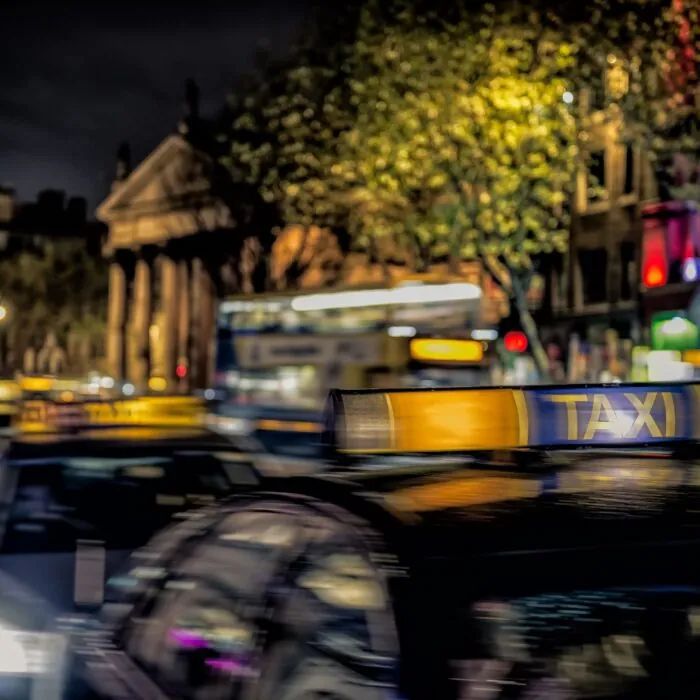
A taxi takes you directly to your accommodation
Official taxis wait outside Terminals 1 and 2 at all hours. Staff at the ranks organise departures and can assist if needed.
In 2026, a taxi from the airport to central Dublin generally costs between €30 and €45. Dublin Airport also estimates a journey to Busáras at €25 to €40, and one to Heuston Station at €40 to €50. These amounts depend on distance, traffic, day, time and applicable surcharges.
Irish taxis are required to use a meter. The base fare is higher at night, on Sundays and public holidays. Surcharges may also apply for advance bookings, additional passengers or certain services.
The driver must be able to provide a receipt generated by the taximeter. You can ask for an estimate before setting off, but the final fare will normally be the amount shown on the meter.
For three or four people, a taxi can be competitive with buying several coach tickets. Above all, it offers a genuine door-to-door service, useful in the rain, with children, after a long flight or when your accommodation is far from a stop.
In Dublin, ride-hailing apps do not necessarily work as cut-price private-car services. They mainly connect travellers with licensed drivers, and fares may still be subject to national taxi rules, with possible booking or platform fees.
FREENOW is one of Dublin’s most widely used taxi apps. It lets you see an estimate, pay cash-free and book in advance. Other apps may also offer vehicles, subject to availability.
On arrival, the official rank outside the terminals is often the simplest option: no booking is needed and taxis are available at all times.
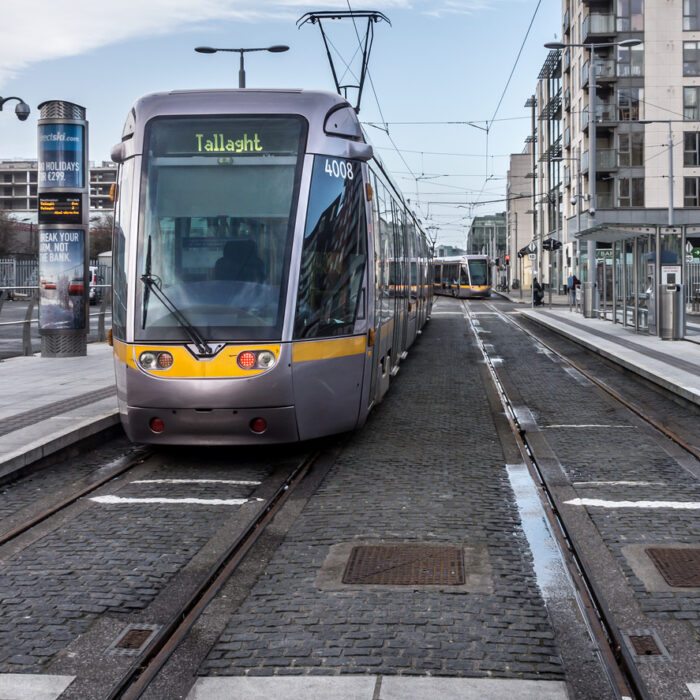
As of July 2026, no train, DART or Luas tram serves Dublin Airport directly. Travellers wishing to continue by train must first reach a station such as Connolly, Tara Street or Heuston by bus, coach or taxi.
The MetroLink project is intended eventually to link Swords, the airport, central Dublin and Charlemont. Its railway order became legally effective in January 2026, and procurement procedures for the first major works progressed during the year. However, the metro is not yet in service and is not an option for current travellers.
If you arrive after midnight, check when you will actually leave the terminal rather than your landing time. Baggage collection, checks and the walk to the stops can add several tens of minutes.
Aircoach 700 and 700X run 24 hours a day. Public bus 41 also runs all night and is the cheapest option for reaching the Abbey Street area. Taxis are always available outside both terminals.
Dublin Express has very early and very late departures, but does not operate continuously at every hour of the night. Check the timetable for the exact day of your arrival before choosing this option.
For your return journey, do not calculate your departure time based solely on the operator’s advertised travel time. Heavy traffic, roadworks, a sporting event or a temporarily relocated stop can all make the journey longer.
Dublin Airport recommends arriving at the terminal two hours before a short-haul flight and three hours before a long-haul flight. Allow more time if you need to check bags, are travelling in a group or your airline requires an earlier check-in desk opening time.
From the city centre, add at least one hour for travel and contingency when taking a bus. At peak times, roughly between 7.30am and 9.30am, then 4.30pm and 6.30pm, it is best to allow extra time.
For flights to the United States, US immigration and customs formalities are generally completed in Dublin through the US preclearance system. Follow the recommendation to arrive three hours before departure and check your airline’s specific instructions.
A pre-booked transfer may suit a large family, group, business trip or an arrival requiring a suitable vehicle. The driver will generally wait at an agreed meeting point and take travellers straight to their accommodation.
Before booking, check whether the price is per vehicle or per person, the waiting time included in the event of a delay, the actual boot capacity and the cancellation terms. For a couple or solo traveller, the bus or an official taxi is often simpler and cheaper.





 3.50/5 (4 votes)