
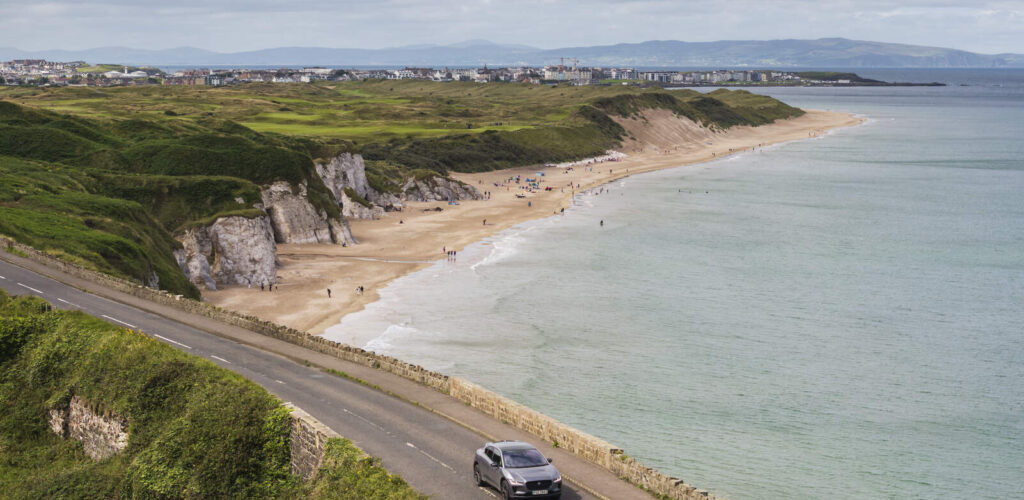
Dreaming of traveling by car from France to Ireland? That’s a fantastic idea! You’ll get to explore stunning wild landscapes while enjoying the freedom and flexibility this mode of transport offers. However, keep in mind that this kind of trip requires thorough preparation to ensure your road trip goes smoothly. Here are some tips to help you choose your stops and identify the steps to take in case of a breakdown on the road.
Choose Your Starting Route
To reach Ireland from mainland France by car, you have two main options: take a ferry from northern France or from the United Kingdom.
Taking a Ferry from Calais or Cherbourg
Calais and Cherbourg are the two main French ports connecting to Ireland.
- Calais: From here, you can travel to the UK via Dover. Once in the UK, you’ll drive across England to catch a second ferry to Ireland (usually from Holyhead) heading to Dublin.
- Cherbourg: From this port, you can take a direct ferry to Ireland, for example to Dublin or Rosslare. This option is smart if you want to avoid passing through England.
To help you decide between these two, ask yourself: do you want to minimize driving time? The direct link from Cherbourg is the best choice. However, going via the UK offers the chance to discover more varied landscapes.
Driving Differences in France, the UK, and Ireland
Driving Side
First of all, note that driving rules differ between France and the Anglo-Saxon countries.
In France, we drive on the right side of the road, like most European countries. In contrast, in the UK and Ireland, driving is on the left. Be especially careful in areas requiring quick reflexes, such as roundabouts and intersections.
Speed Limits
In France, speed limits are 130 km/h on highways, 110 km/h on dual carriageways, and 80-90 km/h on secondary roads.
In the UK and Ireland, motorways are limited to 112 km/h, and secondary roads have limits between 80 and 100 km/h. Lower limits apply in urban areas.
How to Prepare Your Car for a Long Journey
Properly preparing your car is essential for a long trip like your journey to Ireland. Here are some key points to check before you hit the road.
Check Your Car’s Condition
- Tires: Make sure they are in good condition and properly inflated. Remember, weather can vary significantly in the UK and Ireland!
- Oil and Fluids: Check oil levels, coolant, brake fluid, and ensure the windshield washer reservoir is full.
- Brakes and Battery: Test your brakes thoroughly and verify the battery is in good shape to minimize breakdown risks.
- Clutch: As explained by AUTODOC, the car’s clutch can seize for various reasons (broken cable, hydraulic fluid issues, etc.). Be sure to inspect this component before departure.
Tools and Documents to Bring Along
- First aid kit and warning triangle: These are mandatory in most European countries.
- Reflective vest: Essential if you need to exit your vehicle on the roadside in an emergency to stay visible to other drivers.
- Car insurance and green card: Check with your insurer to confirm coverage for all countries you’ll cross, including the UK and Ireland.
- Vehicle documents: Don’t forget all your car papers, especially the registration and your driver’s license.
- GPS and maps: A paper map is invaluable in case your electronic device fails.
What to Do If Your Car Breaks Down?
Despite careful preparation, breakdowns can happen. Here are some tips to help you handle this issue in France or abroad.
Contact Roadside Assistance
If your breakdown occurs in France, call 112 for help. If you’re a member of an organization like the Automobile Club, check their emergency number.
In the UK or Ireland, services like the AA (Automobile Association) or RAC provide quality roadside assistance. It’s wise to subscribe to an international breakdown service. Some insurance policies already include roadside assistance, sometimes covering towing and accommodation if repairs take longer than expected.
Good to know: For minor issues (dead battery, flat tire…), it’s smart to carry a repair kit so you can fix the problem yourself and get back on the road quickly.
As you can see, traveling from France to Ireland by car is a great idea, as long as you plan ahead. Ready for the adventure?