Belfast
Travel Guide

Belfast

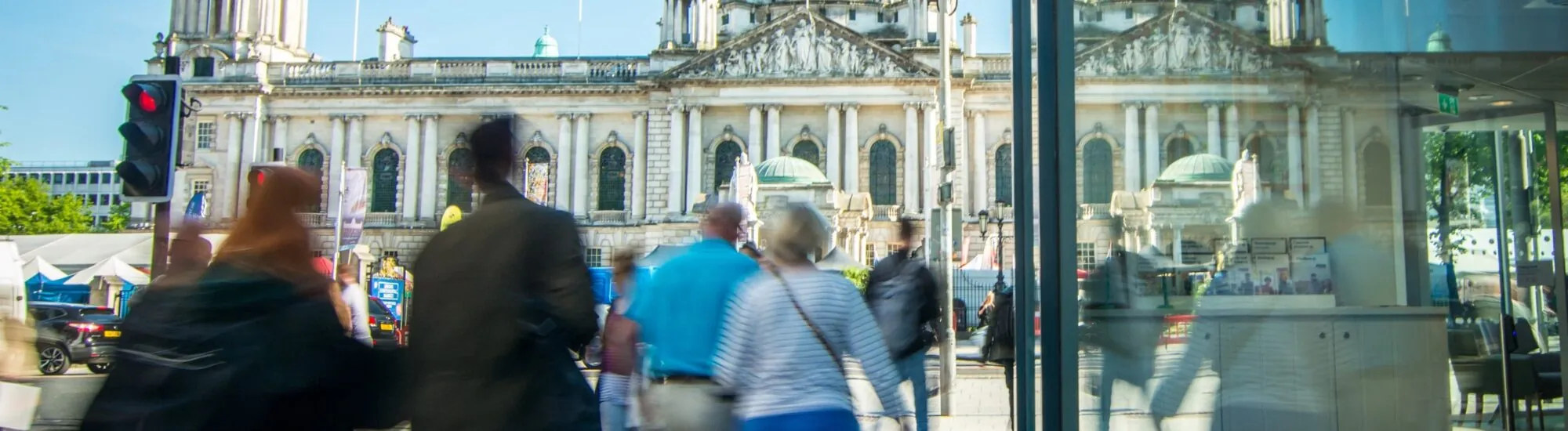
Le Belfast city hall - © William

A city marked by history, in perpetual renewal!

Explore Belfast

Sites touristiques Tourist attractions Restaurants Restaurants, irish pubs Hébergements Where to sleep Campings Campings

Belfast : Must-See Attractions

Inspiration

Further Reading

Belfast

Before you start, here is a piece of advice: forget everything you think you know about Belfast! The famous capital of Northern Ireland no longer has anything to do with its notorious reputation from the 1960s to 1998! Although the city still bears the marks of a painful history marked by war, British domination, politics, and religion, Belfast is undergoing a true transformation and reinvents itself every day, offering travelers a unique experience!

History of Belfast

A city fractured by centuries of territorial conflict

Belfast - © Alexey Fedorenko

Belfast – © Alexey Fedorenko

To truly understand a city, it is important to look at its history. And it must be admitted, Belfast’s history is undoubtedly one of the most tumultuous on the island of Ireland (along with its neighbor Derry).

The image of Belfast is hard to shake. A wounded city, surrounded by barbed wire, torn apart by violent communal wars where Catholics and Protestants, Irish and pro-British, Republicans and Loyalists clash…

This is the dark side of Belfast, still ingrained in our minds today. An apocalyptic vision, now outdated, because the city has managed to pacify its demons, rebuild, and reinvent itself.

Certainly, not everything is resolved yet. Some tensions remain alive, but one thing is sure: Belfast is now a city made to be visited, explored, and appreciated.

To better understand, here is a brief overview of its history.

Belfast, a city sacrificed for the independence of the Republic of Ireland

We are in the 16th century. At that time, the British Empire decided to invade the island of Ireland and impose its power… despite the anger of the Irish, determined to refuse the English presence on their territory.

Hundreds of conflicts followed between the English and the Irish, mostly suppressed in blood by better-armed and often more numerous British forces.

The conflict lasted until a War of Independence broke out in 1919. In 1921, the Irish and British finally reached an agreement: the English ceded the island of Ireland to the Irish… except for the province of Ulster in the North, which includes six counties.

Belfast was one of the sacrificed cities: it remained English and plunged into a toxic atmosphere. It was occupied by “enemy” communities: Irish Catholic Republicans and British Protestant Loyalists.

In the 1960s, Belfast became the scene of violent clashes between Catholics and Protestants through deadly attacks orchestrated by the IRA (Catholic side) and Protestant militias (UVF). The conflict (known as “The Troubles”) lasted more than 30 years.

Terror reigned: bombs exploded everywhere, militants blew up strategic areas, assassinations were ordered on both sides… innocent people died…

The British police imprisoned many Irish suspected of resistance without prior trial…

This period caused over 3,000 deaths, creating fear and devastation within the city.

Towards a lasting peace process

In 1998, the Good Friday Agreement appeared as a first step in the peace process. It guaranteed the possibility to create an Assembly representing Catholics and Protestants, to organize the functioning of internal political institutions in the North, and to communicate and cooperate with the Republic of Ireland.

For Belfast, these advances were real progress towards peace, and the situation tended to calm down (the IRA and other paramilitary militias suspended violence and now proceed democratically).

The streets of Belfast are now calmer, safer, and secured by surveillance cameras and police presence.

Today, the city is unrecognizable. Although Brexit has revived some ghosts of the past, the conflict seems contained, with only minor incidents and inter-neighborhood provocations.

Simply avoid certain areas to fully enjoy the city!

Belfast today

A pacified city, in constant motion!

The Titanic Belfast Experience © - Nataliya Hora

The Titanic Belfast Experience © – Nataliya Hora

Belfast has now become a warm, dynamic, and friendly city, where life is good!

You will discover a joyful city where art, culture, history, and the love of good things coexist passionately. Not to mention its close link to the history of the Titanic: Belfast is the city that built the ship! On this occasion, do not miss the brand-new “Titanic Belfast Experience,” a museum entirely dedicated to the ship that unfortunately sank in 1912.

You can further explore the city by discovering its murals, its city center, its magnificent City Hall, its botanical garden, then head to Cave Hill to enjoy the view over Belfast and visit Belfast Castle.

For lovers of good gastronomy, do not hesitate to step into the city’s establishments. You will discover a traditional cuisine in full renewal, driven by chefs renowned worldwide!

Free Ireland travel guide
Free guide

Planning a trip to Ireland?

Receive our free travel guide and discover the very best places, itineraries and practical tips to prepare your stay.

Culture, history, must-see attractions and local advice delivered directly to your inbox.