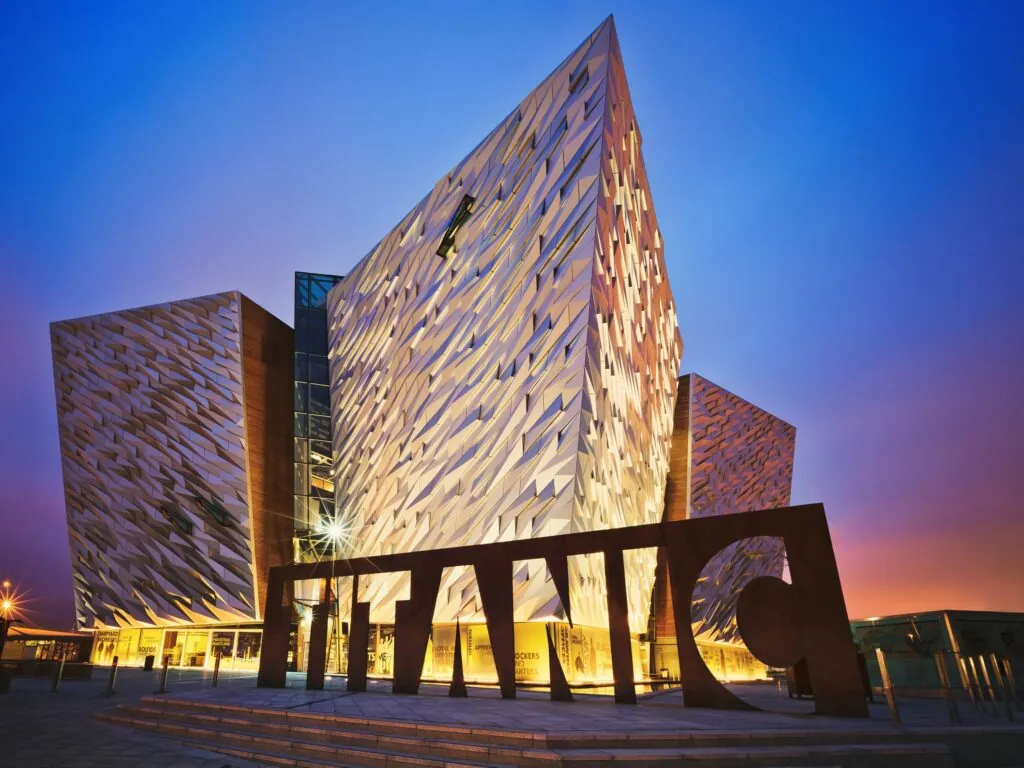
Titanic Belfast
Built on the former shipyards where history’s most famous ocean liner was constructed, Titanic Belfast is far more than a museum dedicated…


 Tourist attractions
 Irish Restaurants and Pubs
 Partner Accommodations
 Campgrounds and Lodging
Built on the former shipyards where history’s most famous ocean liner was constructed, Titanic Belfast is far more than a museum dedicated…
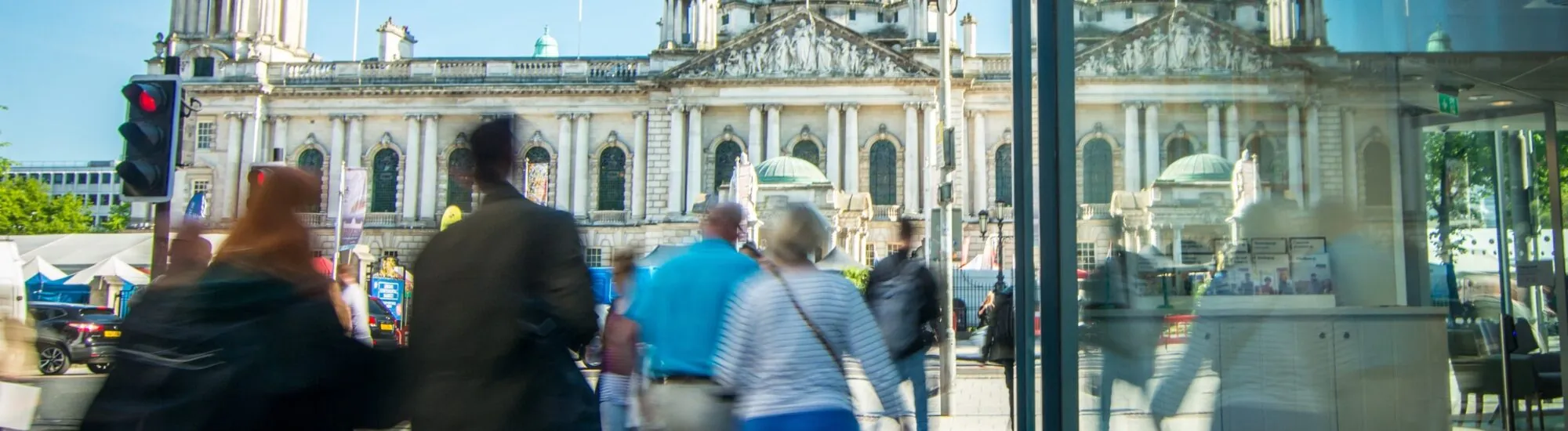
At the heart of Belfast, a green dome rises above the buses, shopfronts and constant bustle of Donegall Square. Belfast City Hall,…
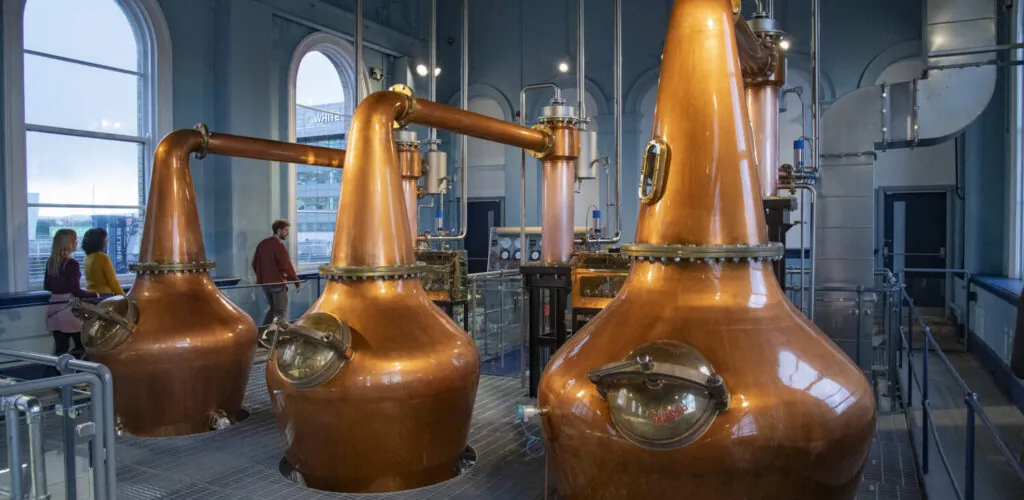
Did you know that there’s a distillery producing “Titanic” whiskey in Belfast? Based in the heart of the Maritime Mile, where the…
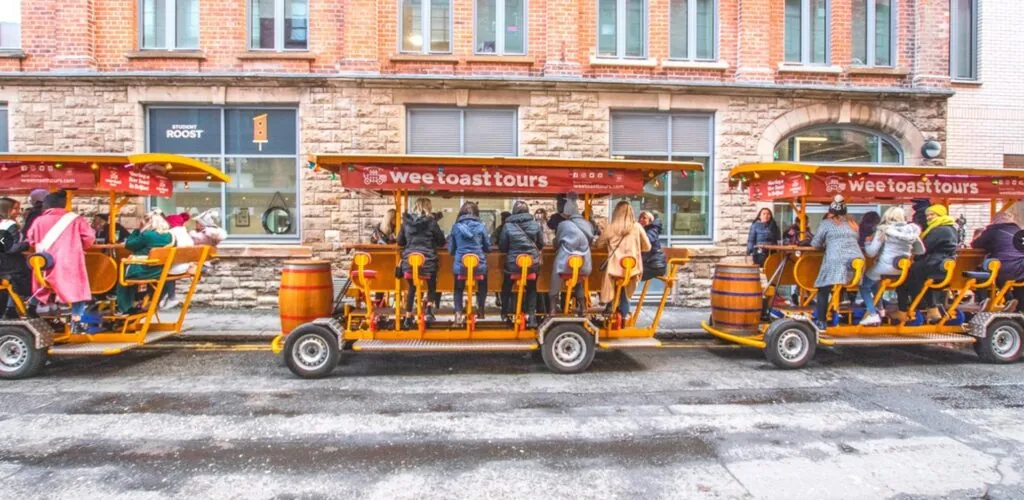
If you’re in Belfast and traveling with more than 5 or 6 people, for a stag or hen party, then a Wee…
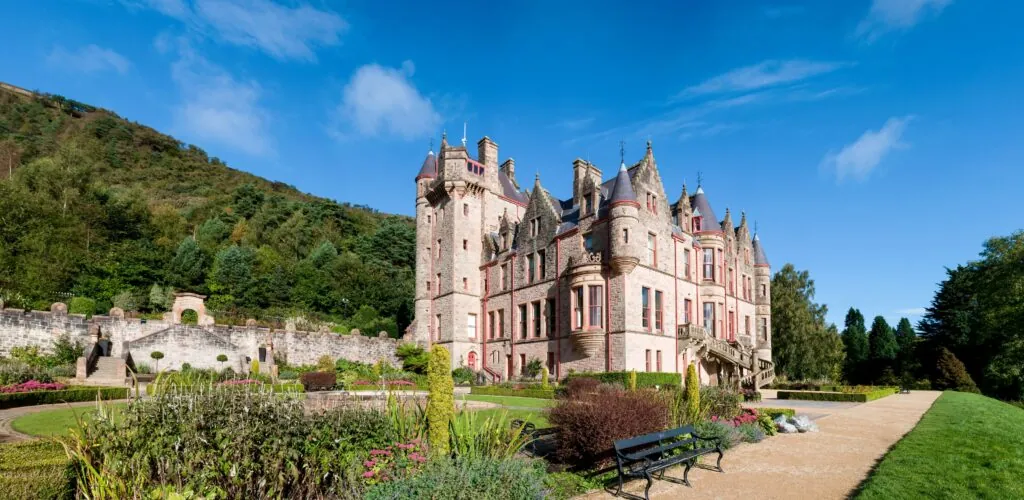
Set on the eastern slope of Cave Hill, around 120 metres above Belfast, Belfast Castle overlooks the city, Belfast Lough and the…
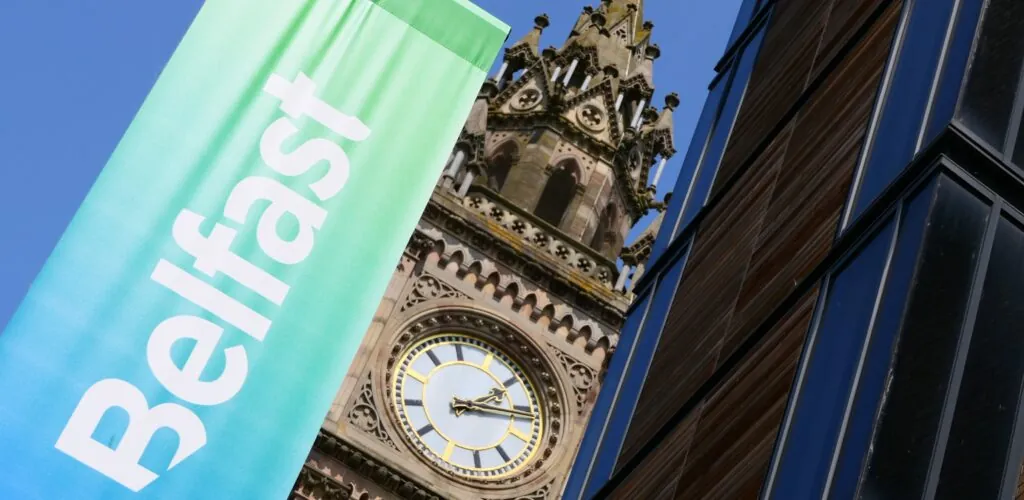
The Albert Memorial Clock Tower is a bell tower in the middle of Belfast's Queen's Square. An integral symbol of the Northern…
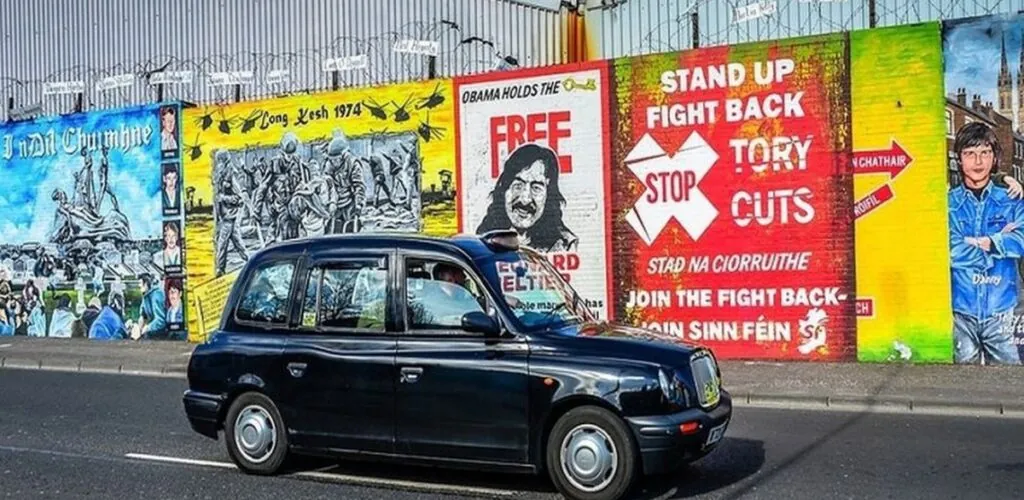
It's impossible to visit Belfast without admiring the city walls, with their frescoes testifying to the tormented history of the Northern Irish…
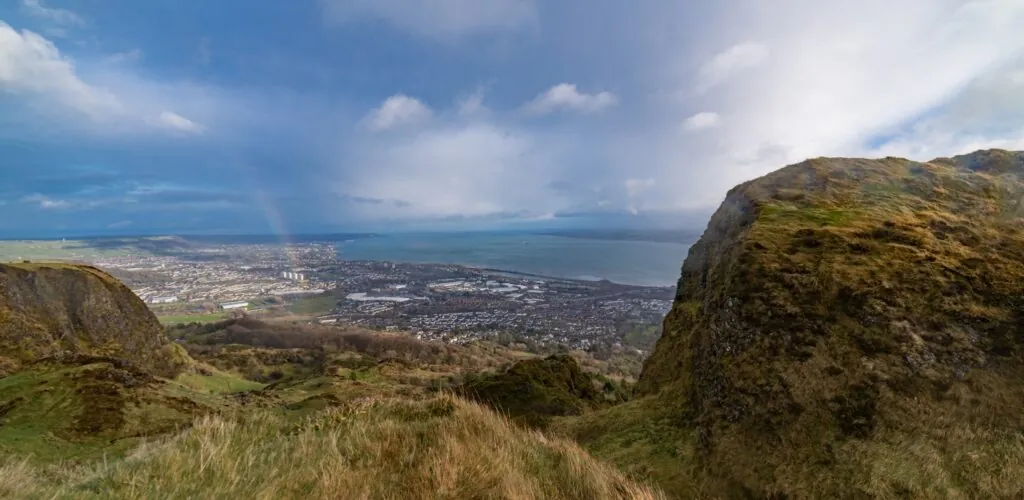
Cave Hill is a basalt hill overlooking the city of Belfast. Also known as "Napoleon's Nose", Cave Hill is said to have…
Want to discover Belfast the Northern Irish way? Don't miss the Black Taxi Tour, a unique experience that will take you from…
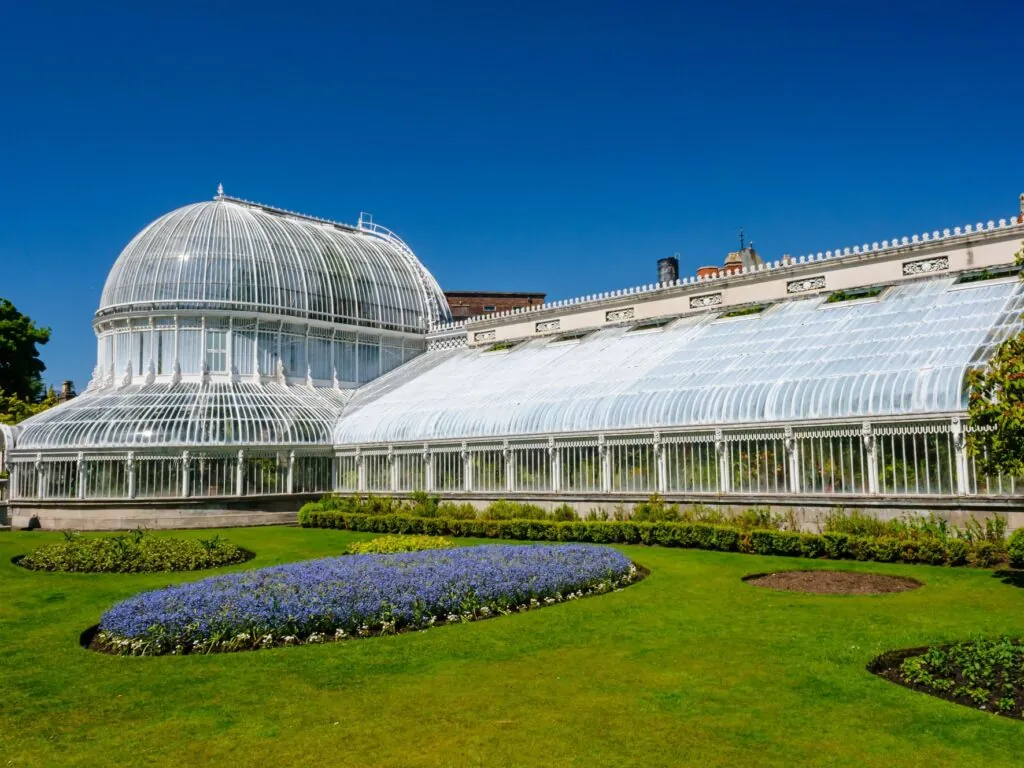
South of Belfast, between the brick façades of Queen’s University and the lively streets of the university quarter, the Belfast Botanic Gardens…
Kenneth Branagh is a world-famous Northern Irish actor and director. A great lover of theater and Shakespeare, the actor has never hesitated to bring…
The Titanic is recognisable by its silhouette. In Belfast, however, one experience invites visitors to approach it through a sense less often…
Long associated with the dark images of the Troubles, Belfast now reveals a very different face. The capital of Northern Ireland has become a cultural, creative and welcoming city, where former shipyards stand alongside contemporary museums, Victorian markets and lively neighbourhoods.
Yet its past remains visible. Political murals, peace walls and memorials recall a painful history that would be impossible to erase. Belfast does not seek to forget it: it explains, questions and gradually transforms it into a remarkable tool for passing on history.
Visiting Belfast means discovering a city in motion, more complex and endearing than its reputation might suggest. A city deeply marked by the history of Ireland, yet firmly looking towards the future.

Belfast – © Alexey Fedorenko
Belfast lies at the mouth of the River Lagan, at the head of Belfast Lough. Its position, between sea, river and hills, encouraged trade from an early date. The city’s name comes from the Irish Béal Feirste, generally translated as “the mouth of the sandbank” or “the passage of the sandy ford”.
During the Middle Ages, Belfast remained a small settlement, far less important than Carrickfergus, then the region’s main stronghold. Its development accelerated at the beginning of the 17th century, in the context of the Plantation of Ulster organised by the British Crown.
A royal charter was granted to Belfast in 1613. English and Scottish settlers, mostly Protestant, gradually settled in the region. This demographic, political and religious transformation helped shape the divisions that would later mark the history of Northern Ireland.
However, Belfast only became a true metropolis with the Industrial Revolution. In the 18th and 19th centuries, the city experienced spectacular growth thanks to trade, the linen industry, rope-making, tobacco and, above all, shipbuilding.
The prosperity of its textile industry earned it the nickname “Linenopolis”, the world capital of linen. Its population grew rapidly, drawn by the factories and shipyards.
Founded in 1861, the Harland & Wolff shipyards became one of the largest shipbuilding complexes in the world. Tens of thousands of workers were employed there at the height of Belfast’s maritime industry.
Several White Star Line liners were built here, including the Olympic, the Britannic and the famous RMS Titanic. The latter was launched in Belfast on 31 May 1911, before sinking in the North Atlantic on her maiden voyage, during the night of 14 to 15 April 1912.
The memory of the liner remains closely linked to the city. The former slipways, Harland & Wolff offices, Thompson Dock, and the yellow Samson and Goliath cranes still recall the shipyards’ former power.
However, this industrial history should not be idealised. Working conditions were arduous, and recruitment often reflected the sectarian divisions of Northern Irish society. Catholic workers were notably the victims of intimidation campaigns and expulsions at different times.
Belfast’s present status is the result of a political process far more complex than a simple division decided at the end of the War of Independence.
The Government of Ireland Act of 1920 organised the partition of the island and created two self-governing entities: Northern Ireland, made up of six counties, and Southern Ireland. The six Northern Irish counties belong to the historic province of Ulster, which has nine counties in total. Donegal, Cavan and Monaghan are now in the Republic of Ireland.
Following the signing of the Anglo-Irish Treaty in December 1921, the Irish Free State was created across most of the island. The Northern Ireland Parliament chose to remain within the United Kingdom, as the treaty allowed it to do. Belfast then became the capital of Northern Ireland.
It is therefore inaccurate to portray Belfast as a city simply “sacrificed” in exchange for independence. Partition resulted from decades of tension between Irish nationalists, who supported self-government or independence, and the mainly Protestant Ulster unionists, who wished to maintain the union with Great Britain.
The choice of the six counties also reflected a demographic calculation: it made it possible to create a territory in which the unionist population then held an enduring majority.
From the late 1960s onwards, Belfast became one of the main centres of the Troubles. The conflict is often presented as a confrontation between Catholics and Protestants, but religion alone does not explain it.
The divisions were also political and national. A large proportion of Catholics identified with Irish nationalism or republicanism and wanted the island to be reunified. A majority of Protestants supported unionism or loyalism and sought to preserve Northern Ireland’s place in the United Kingdom.
These disagreements were compounded by deep inequalities. Catholics denounced discrimination in access to housing, employment and local political representation. Inspired by the American civil rights movements, the Northern Ireland civil rights movement organised peaceful demonstrations from the second half of the 1960s.
The repression of some marches, the riots of 1969 and the deployment of the British Army led to an escalation of violence. Several paramilitary organisations entered the conflict. The Provisional IRA conducted an armed campaign against British forces and the Northern Ireland state, while loyalist organisations such as the UVF and UDA carried out numerous bombings and killings, often targeting Catholic civilians.
British security forces were also involved in controversial episodes. Internment without trial was introduced in 1971, primarily against suspected republicans. Later investigations also revealed instances of collusion between certain members of the security forces and loyalist paramilitary groups.
Belfast was badly affected by bombings, shootings and riots. Entire neighbourhoods were gradually separated by security barriers known as peace walls. Some still exist today between the Falls Road and Shankill Road areas.
Across Northern Ireland, as well as in the Republic of Ireland and Great Britain, the Troubles caused the deaths of more than 3,500 people between the late 1960s and 1998. Belfast was among the cities most affected.
Signed on 10 April 1998, the Belfast Agreement, better known as the Good Friday Agreement, marked a historic milestone. It did not instantly erase divisions, but created a political framework that gradually replaced armed struggle with democratic debate.
The agreement recognises that the status of Northern Ireland can be changed only with the consent of a majority of its population. It also recognises the right of every resident to identify as British, Irish or both.
A Northern Ireland Assembly and a power-sharing government were established. Bodies for cooperation between Northern Ireland and the Republic of Ireland were also set up.
The Northern Ireland Assembly now has 90 representatives. Its institutions have experienced several periods of suspension, showing that the political balance remains delicate, but recourse to violence has diminished considerably since 1998.
The main paramilitary organisations announced ceasefires and began decommissioning processes. Sporadic violence, political tensions and acts linked to dissident groups persist, but they are not comparable to the situation during the Troubles.
Belfast should no longer be described as a city in which visitors should avoid numerous neighbourhoods. The Northern Irish capital receives substantial numbers of tourists every year and can now be explored in conditions comparable to those in other cities in the United Kingdom.
The usual precautions remain advisable: keep an eye on your belongings in busy areas, avoid provocative behaviour when leaving pubs, and do not raise political issues aggressively with local people.
Periods of loyalist parades, particularly around 12 July, can occasionally lead to street closures, disruption and localised tensions. It is generally enough to check which events are planned and follow the advice given locally.
Some peace walls have gates that may be closed in the evening. This does not mean that neighbouring areas are off limits or systematically dangerous. On the contrary, Falls Road, Shankill Road and their murals are among the areas regularly visited on historical tours.
To understand these places without reducing their history to mere scenery, it is best to choose a tour led by local guides. The famous Black Cab Tours in particular allow visitors to discover the murals, memorials and former separation points. Some tours deliberately combine nationalist and unionist accounts in order to present several memories of the conflict.

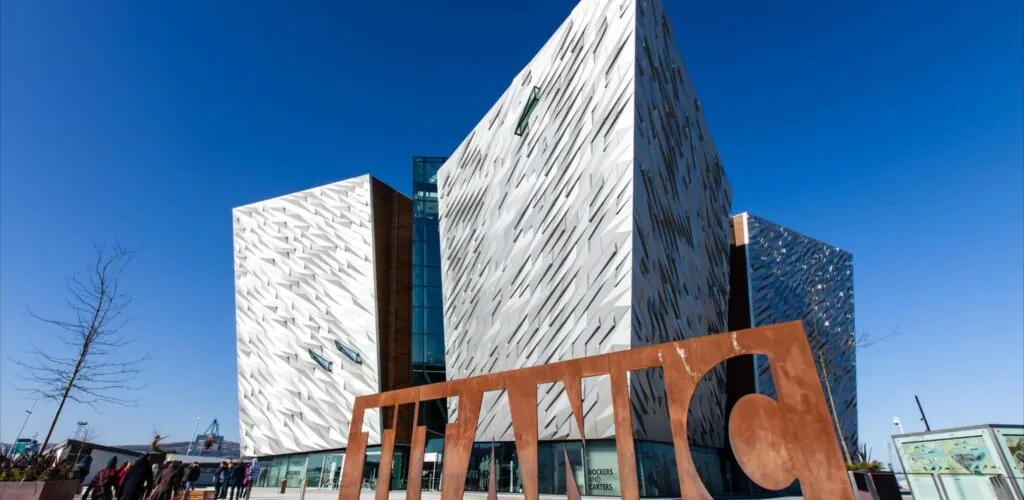
Titanic Belfast – © Nataliya Hora
Belfast’s revival is particularly visible along the River Lagan. Former industrial land has been redeveloped to form the Titanic Quarter, a vast district devoted to maritime history, leisure and culture.
Its flagship attraction, Titanic Belfast, stands immediately beside the slipways where the liner was assembled. Its exhibition traces the ship’s design, construction, maiden voyage and the discovery of its wreck. The ticket also includes a visit to the SS Nomadic, the last surviving White Star Line vessel.
The city centre is easy to explore on foot. Belfast City Hall, built at the beginning of the 20th century, is one of its most imposing landmarks. Nearby, shopping streets lead to the Cathedral Quarter, which has become one of the main hubs of nightlife and culture.
The district combines historic pubs, restaurants, performance venues and street art. The lanes around Commercial Court offer a particularly lively atmosphere in the evening, although they are now very popular with visitors.
St George’s Market is one of the best places to discover local produce. Housed in a Victorian building, it hosts food stalls, antiques dealers, craftspeople and musicians, depending on the day.
Further south, the Queen’s Quarter brings together Queen’s University, the Botanic Gardens and the Ulster Museum. The latter offers an exploration of Northern Ireland’s natural history, archaeology, arts and political history.
West of the centre, the former Crumlin Road Gaol tells nearly 150 years of prison history. Republicans, loyalists and ordinary prisoners were held within its walls. The visit includes the prison wings and the former tunnel linking the prison to the courthouse.
Belfast also has a remarkable natural setting. North of the city, Cave Hill overlooks the capital and Belfast Lough. Its outline is said to have inspired Jonathan Swift’s image of a sleeping giant in Gulliver’s Travels. Several trails lead to McArt’s Fort and offer sweeping views over the city.
Belfast Castle stands on the slopes of Cave Hill. The present building, constructed in the 19th century, is surrounded by public gardens. The estate is a pleasant gateway to the hill’s hiking routes.
Belfast has a particularly vibrant food scene. Traditional Ulster recipes stand alongside contemporary cooking that pays close attention to local produce: fish and shellfish from the coast, Irish beef, artisanal breads, farm cheeses and vegetables grown in neighbouring counties.
To try a local speciality, sample an Ulster fry. This hearty breakfast generally includes eggs, sausages, bacon, tomatoes, mushrooms, soda bread and potato bread. It is served in many cafés across the city, sometimes until late in the day.
Historic pubs are another essential side of Belfast. The Crown Liquor Saloon is famous for its wood panelling, stained-glass windows and small Victorian compartments. The Duke of York, Kelly’s Cellars and Madden’s are also valued for their character, concerts or traditional music sessions.
Beyond its landmarks, it is often in these establishments that Belfast reveals itself best. Here, visitors discover a straightforward city, full of humour and far more welcoming than images inherited from the past might suggest.