County Limerick is sometimes overshadowed by its neighbours Kerry, Cork and Clare. Yet this region crossed by the Shannon brings together a medieval city, historic villages, rural landscapes and one of Ireland’s most important archaeological complexes.
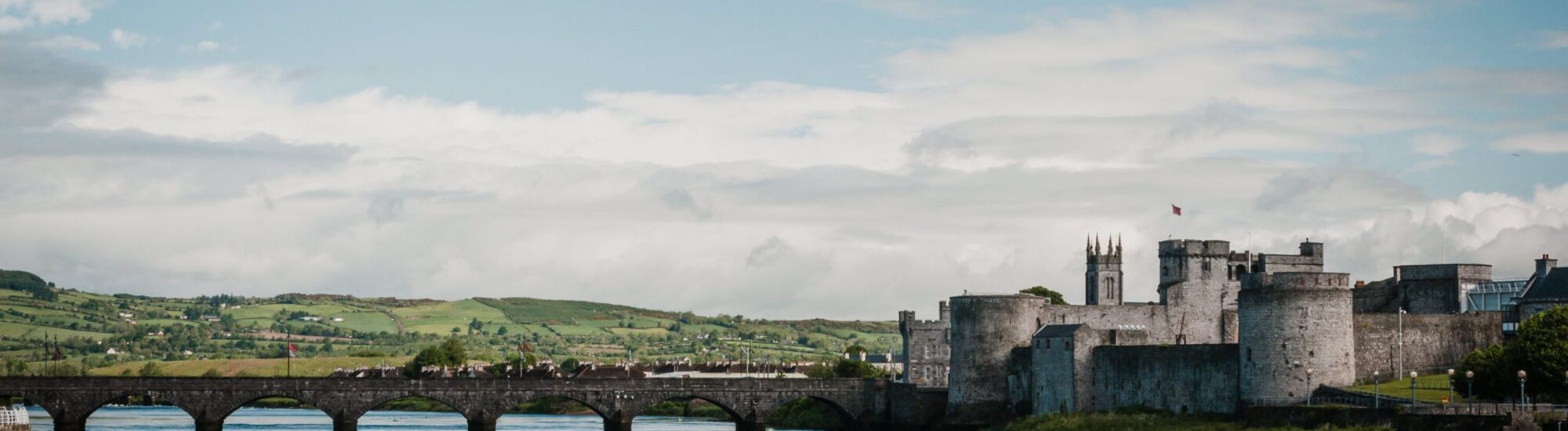
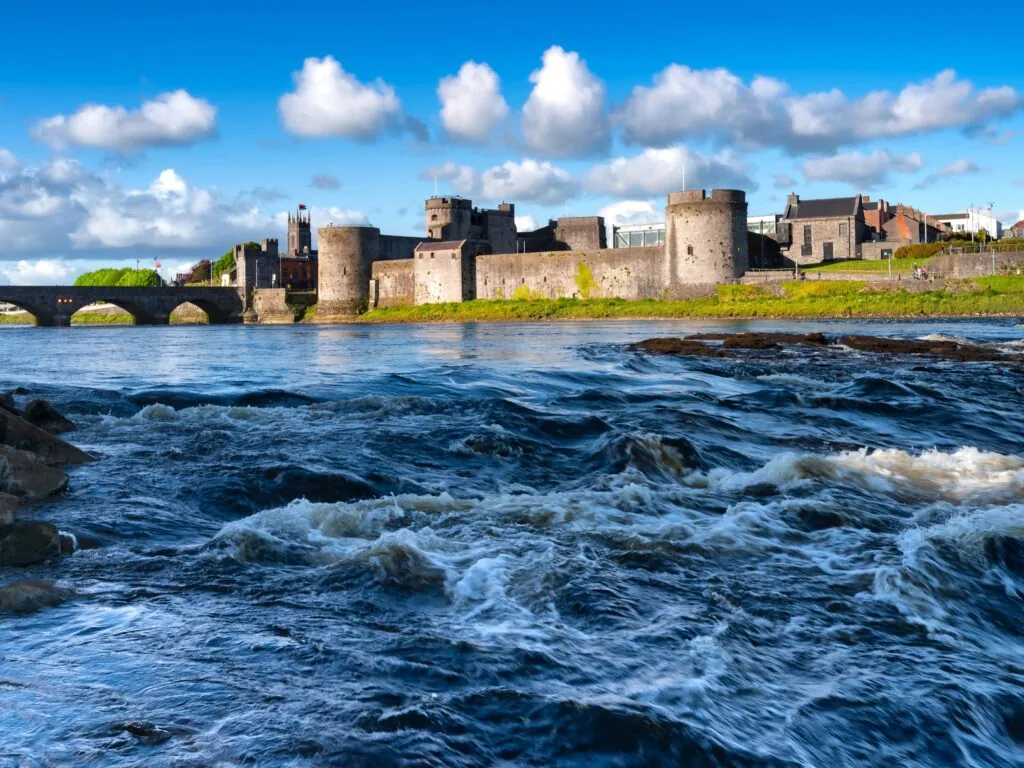
The city of Limerick is its main gateway. King John’s Castle has dominated the river for more than eight centuries, while its Georgian districts, museums and famous market reveal a history far richer than its former industrial reputation might suggest.
Visiting County Limerick
A historic region on the banks of the Shannon
County Limerick, Contae Luimnigh in Irish, belongs to the province of Munster. It covers approximately 2,756 km² between the Shannon Estuary, the Ballyhoura Mountains and the countryside of the Golden Vale.
Since 2014, the city and county have been administered by a single authority, Limerick City and County Council. This area had 209,536 inhabitants in the 2022 census, according to the Irish Central Statistics Office.
The Shannon shapes much of the territory. The river passes through Limerick city before gradually widening to form a vast estuary opening onto the Atlantic Ocean. It has played a central role in the region’s trade, transport and defence.
The inland county has a more rural character. The pastures of the Golden Vale are among Ireland’s most fertile agricultural lands, while southeast Limerick reveals hills, forests and prehistoric remains.
Discovering Limerick city
A medieval city that became the cultural capital of the Midwest
Limerick is one of the main cities in the Republic of Ireland. Its centre stretches across both banks of the Shannon and around King’s Island, home to its oldest monuments.
The city was successively occupied by Vikings, Irish kings, the Anglo-Normans and British forces. This turbulent history led to several sieges, particularly in the seventeenth century during the Williamite wars.
Limerick is sometimes nicknamed the “Treaty City”. This name refers to the Treaty of Limerick, signed in 1691 after the defeat of the Jacobite forces. The Treaty Stone, installed on a pedestal near Thomond Bridge, now recalls this episode.
The modern centre brings together shopping districts, cultural spaces and streets of Georgian architecture. The Shannon quays also offer a quieter way to discover the city, particularly around Arthur’s Quay and King’s Island.
King John’s Castle
A fortress more than eight centuries old
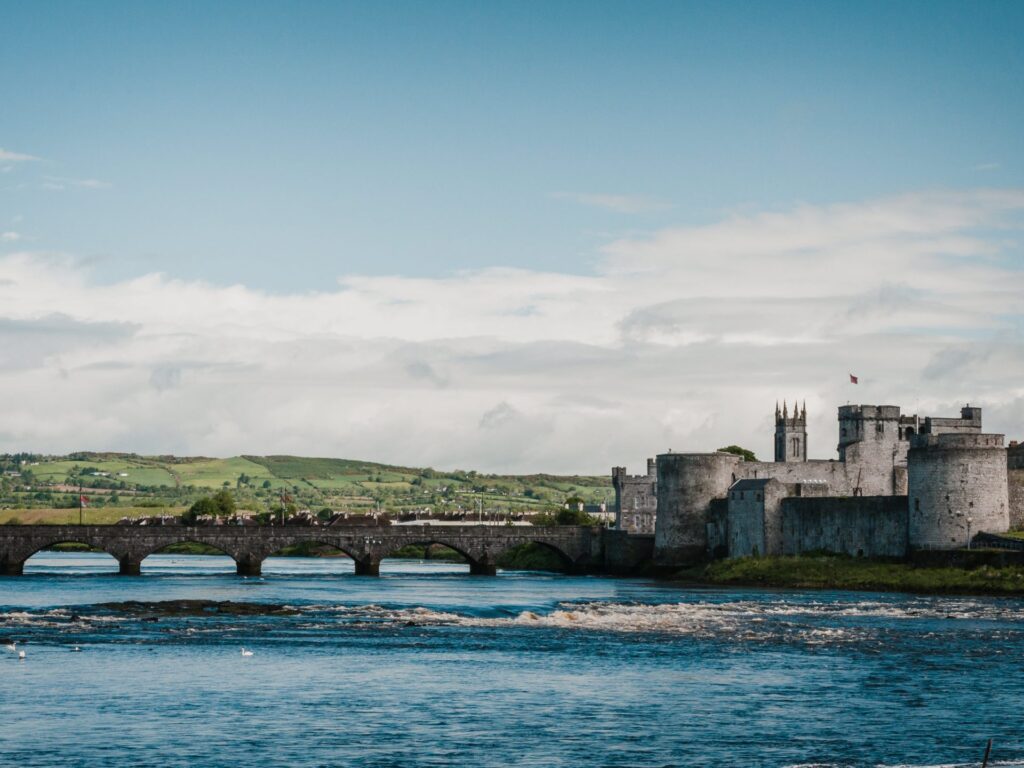
King John’s Castle dominates the Shannon from King’s Island. Its construction began at the start of the thirteenth century, on the orders of King John of England, to consolidate Anglo-Norman control over the region.
The site was already strategic before the arrival of the Normans. Vikings had established a settlement at Limerick as early as the ninth century and used the river for trade and expeditions.
The castle consists of massive towers, curtain walls and a large inner courtyard. Archaeological excavations have revealed traces of older buildings beneath the fortress.
The visit allows visitors to walk along the ramparts and learn about the history of Limerick’s various sieges. From the heights, the view extends across the Shannon, Thomond Bridge and the city’s historic districts.
St Mary’s Cathedral
Limerick’s oldest building still in use
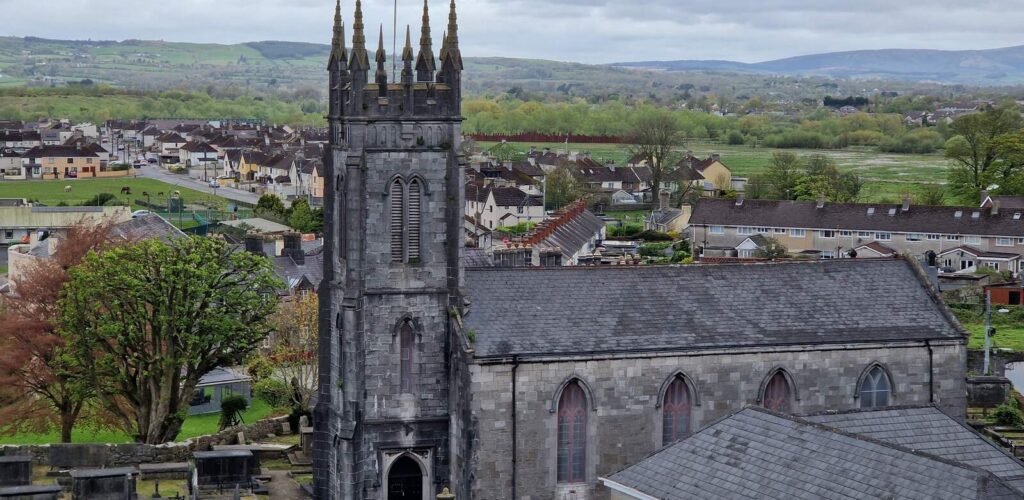
St Mary’s Cathedral was founded in 1168 by Domnall Mór Ua Briain, King of Munster. It is believed to have been built on the site of a former royal palace.
The building preserves Romanesque, Gothic and more recent elements, added over the course of its eight centuries of history. The western doorway may have come from the former palace of the kings of Limerick, although this tradition remains difficult to confirm.
Inside, the carved misericords in the choir are among the few surviving medieval examples in Ireland. The cathedral remains an active place of worship and also hosts concerts.
Its cemetery, stone walls and proximity to King John’s Castle make it an essential stop in the old city.
Limerick’s museums and cultural heritage
Irish and European collections beside the river
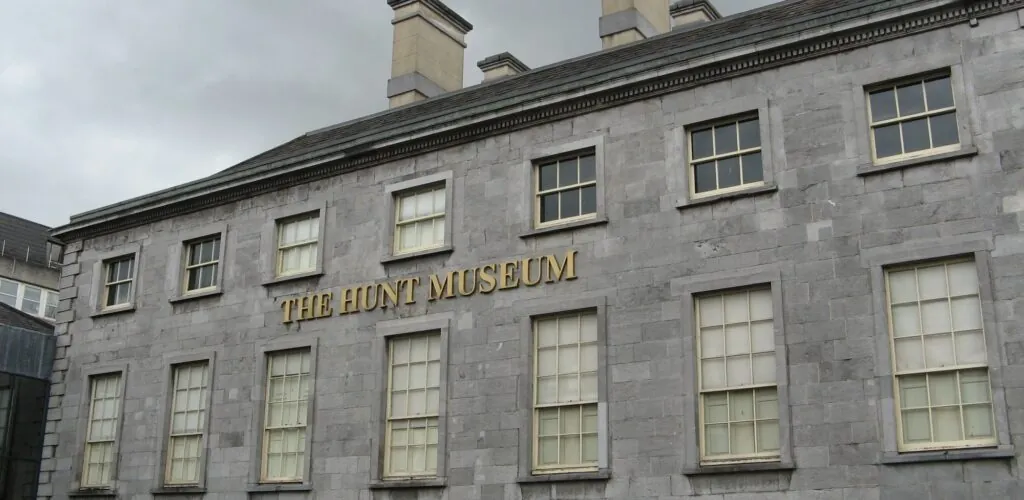
The Hunt Museum is housed in the former Custom House, an elegant eighteenth-century building overlooking the Shannon. Its collections bring together archaeological objects, works of art and decorative pieces from different periods.
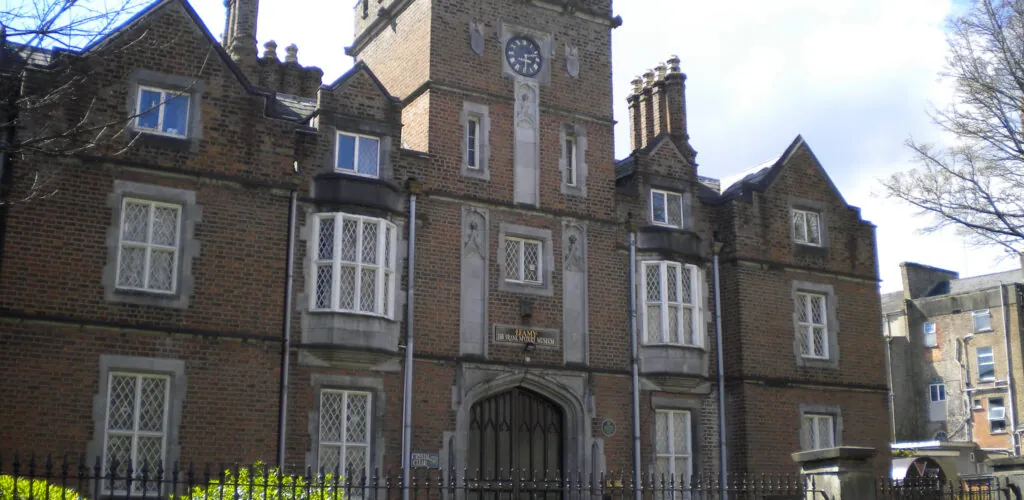
The Limerick City Gallery of Art occupies part of the Carnegie Building, near People’s Park. It displays Irish works from the nineteenth, twentieth and twenty-first centuries, as well as temporary exhibitions.
The Georgian Quarter extends around Newtown Pery. Its straight streets, brick houses and colourful doors bear witness to the city’s expansion during the eighteenth and nineteenth centuries.
Limerick is also associated with several writers. Frank McCourt spent part of his childhood there before recounting this period in his book Angela’s Ashes. His story profoundly influenced the city’s international image, even though it reflects only one particular period and experience.
The Milk Market
Limerick’s gourmet meeting place
The Milk Market is one of Ireland’s liveliest covered markets. Located in the city centre, it brings producers, traders and craftspeople together beneath a large protective structure.
It offers bread, cheese, vegetables, meat, fish, pastries and prepared dishes, among other products. The selection changes according to the days and events being held.
The market provides an opportunity to discover products from the Golden Vale, an agricultural region renowned for its fertile land and dairy farming. It also reflects Limerick’s gastronomic renewal, with the city now home to many contemporary cafés and restaurants.
Adare
A historic village of thatched cottages and medieval monuments
Adare is one of the county’s most visited villages. It lies on the banks of the River Maigue, around twenty kilometres southwest of Limerick city.
The village is known for its thatched cottages, although these represent only part of its heritage. Adare also preserves several medieval religious buildings, including the remains of a Franciscan friary and an Augustinian priory.
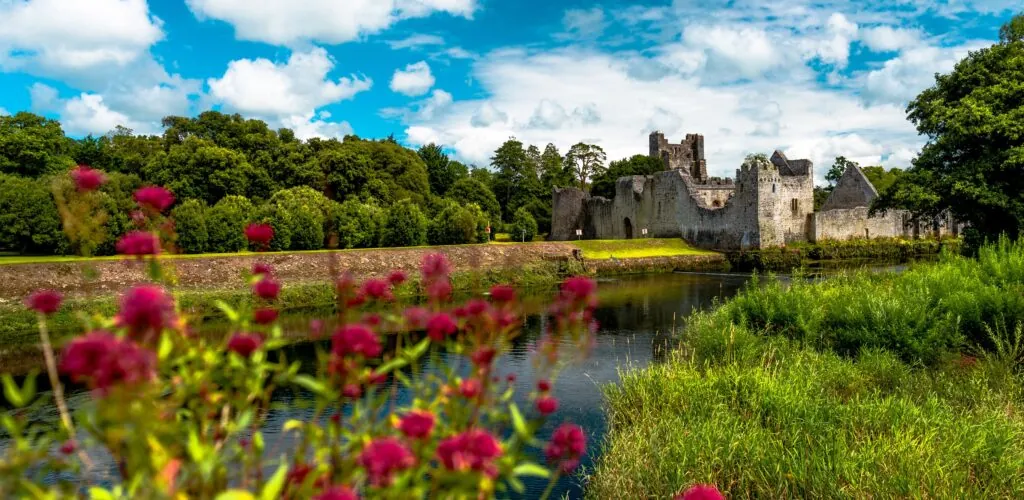
Adare Desmond Castle was built from the thirteenth century onwards to control the river and the roads leading towards the Shannon Estuary. Its imposing keep stands at the centre of an enclosure once surrounded by a moat.
The Adare Manor estate occupies a large part of the surrounding area. This neo-Gothic residence has now been converted into a hotel, and access depends on the conditions set by the establishment.
Lough Gur
Nine millennia of history around a lake
Lough Gur is County Limerick’s principal archaeological site. The lake is surrounded by hills, pastures and monuments bearing witness to human presence dating back approximately 9,000 years.
The first hunter-gatherer communities visited the region after the last ice age. Neolithic farmers, followed by Bronze Age and medieval populations, later settled there.
The landscape includes ancient dwellings, ring forts, tombs and medieval remains. An interpretation centre presents the main discoveries and helps visitors understand the site’s development.
Lough Gur is also associated with local legends. Several stories refer to the fairy world, the magical horse Gearóid Iarla and mysterious phenomena around the lake.
The Grange stone circle
Ireland’s largest stone circle
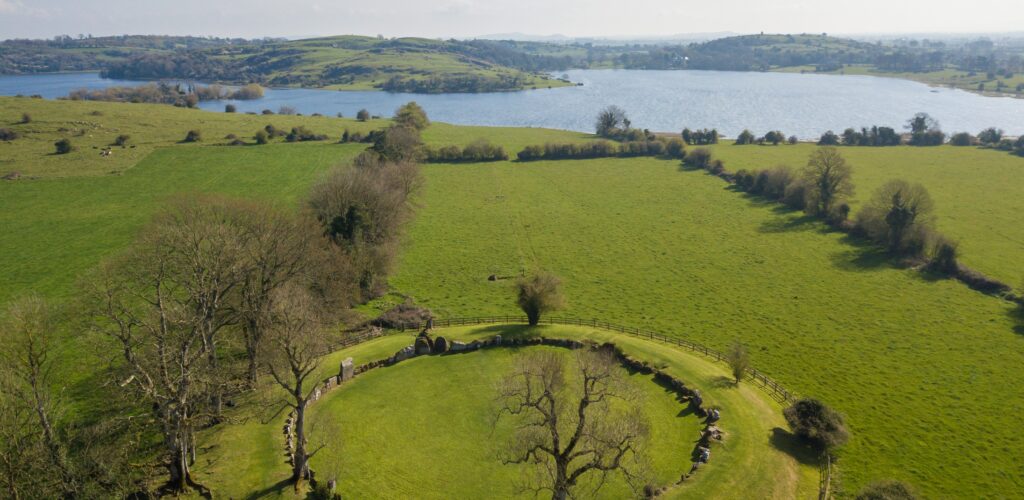
Near Lough Gur, the Grange stone circle is one of the country’s most impressive prehistoric monuments. Built approximately 4,000 years ago, it consists of 113 upright stones set closely together.
The enclosure measures approximately 45 metres in diameter. Its almost circular shape and the arrangement of its entrance testify to particularly careful design.
According to Heritage Ireland, the entrance and some of the stones align with the setting sun around the period of Samhain, at the beginning of November. The monument’s exact purpose nevertheless remains unknown.
The circle stands on agricultural land. It should be visited with respect for the site, the animals and the instructions provided by the owners.
Foynes and the history of aviation
The port where Irish coffee is said to have been born
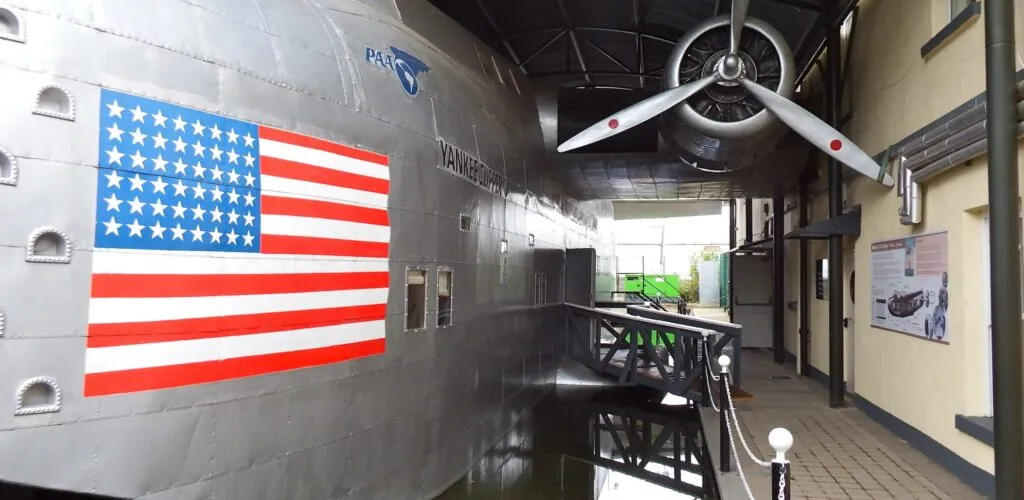
Foynes lies on the southern shore of the Shannon Estuary. In the 1930s and 1940s, its port was one of the main European stops for flying boats operating the first regular transatlantic air services.
The Foynes Flying Boat & Maritime Museum tells the story of this period, when passengers, pilots and international figures passed through this small port in Limerick.
Foynes is also associated with the birth of Irish coffee. In the early 1940s, chef Joe Sheridan is said to have served passengers delayed by bad weather a hot coffee enriched with Irish whiskey, sugar and cream.
The museum presents the history of this drink, which became famous around the world, as well as a full-size replica of a Boeing 314 flying boat.
Newcastle West and the west of the county
A former market town at the foot of the hills
Newcastle West is the principal town in western Limerick. It developed around a fortress associated with the earls of Desmond.
Desmond Hall is its most notable monument. This large medieval hall once hosted banquets, ceremonies and hearings. It forms part of a fortified complex whose other elements have largely disappeared.
The town also preserves a large park, known as Castle Demesne, as well as shopping streets inherited from its role as a regional market town.
The surrounding countryside is dotted with tower houses, ruined abbeys and small villages. Glenquin Castle, built in the late fifteenth or early sixteenth century, is among the best-preserved fortifications in the area.
Kilmallock
A medieval town at the heart of the Golden Vale
Kilmallock was one of Munster’s principal fortified towns during the Middle Ages. Its position on the trade routes allowed it to prosper before the wars and destruction of the sixteenth and seventeenth centuries.
The town preserves several elements of its former fortifications, including a town gate, merchants’ houses and the ruins of a Dominican friary.
Its heritage has sometimes earned it the nickname “the Balbec of Ireland”, a literary reference to a ruined city. Kilmallock nevertheless remains a living town, surrounded by the farmland of the Golden Vale.
The Ballyhoura Mountains
Hiking and cycling in the south of the county
The Ballyhoura Mountains extend between the counties of Limerick and Cork. The range features wooded summits, rural valleys and an extensive network of trails.
The region is particularly known for its mountain-biking routes. Several loops of different difficulty levels cross the forest plantations and hills.
The Ballyhoura Way is a long-distance walking route linking County Tipperary with County Cork via southeast Limerick. It follows rural roads, forest tracks and former paths.
The hills also offer views of several ancient monuments and traces of rural occupation dating from different periods.
The Limerick Greenway
A former railway line transformed into a cycling route
The Limerick Greenway follows the route of a former railway line in the west of the county. It connects Rathkeale, Newcastle West and Abbeyfeale through countryside of pastures, hedgerows and small towns.
The route is separated from motor traffic along much of its length. It is suitable for cyclists, walkers and families seeking an activity less demanding than mountain trails.
Former stations, railway bridges and various structures recall the history of transport in the region. The route also connects with the Kingdom of Kerry Greenway network near the border between the two counties.
Rugby culture in Limerick
A passion deeply rooted in the city
Limerick is considered one of Ireland’s great rugby cities. Munster Rugby plays some of its matches at Thomond Park, a stadium known for the intensity of its atmosphere.
Rugby extends far beyond the professional game. Several historic clubs are based in different parts of the city and maintain a strong local culture.
The Thomond Park museum traces the history of Munster, its players and its major European matches. On match days, the pubs and streets around the stadium fill with supporters dressed in red.
This passion coexists with a love of Gaelic sports. Hurling in particular holds a major place throughout the county, whose team has won several national titles in its recent history.