

A few kilometres from the Giant’s Causeway, the River Bush flows through a village whose name has appeared on bottles of Irish whiskey for centuries. Here in Bushmills stands the Old Bushmills Distillery, one of Northern Ireland’s best-known distilleries.
Still in operation, it opens part of its facilities to visitors. Amid the scents of grain, copper stills and quiet warehouses, the tour follows the main stages in making Bushmills whiskeys, from its signature blends to single malts matured for several decades.
Bushmills presents itself as the world’s oldest licensed whiskey distillery. However, this claim requires some historical context.
In 1608, King James I granted Sir Thomas Phillipps a licence authorising him to distil and sell alcohol across a large part of northern County Antrim. This authorisation applied to the Bushmills area, rather than to the present-day distillery, which did not yet exist in its modern form.
The date 1608, proudly displayed on the brand’s bottles, therefore reflects the long history of local tradition. The company behind the Old Bushmills Distillery was officially founded much later, in 1784, by Hugh Anderson.
It would also be inaccurate to claim that the site has produced whiskey continuously since 1608. The distillery has gone through several periods of closure or uncertain activity. Nevertheless, it can claim an exceptionally long association with the documented history of distillation in Ireland.
Oral tradition dates the production of uisce beatha, meaning “water of life” in Irish, to long before the royal licence. The mills along the River Bush, the presence of barley and an abundance of good-quality water created favourable conditions for artisanal distilling.
One legend has it that, in 1276, the Anglo-Norman chieftain Robert Savage served aqua vitae to his soldiers before a battle. This story belongs more to local folklore than to a firmly documented chronology. It nevertheless illustrates the long-standing connection between this part of County Antrim and grain spirits.
In 1885, a fire devastated much of the site. The distillery was quickly rebuilt and modernised, enabling it to resume production at a time when Irish whiskey still enjoyed a considerable international reputation.
In 1890, the company-operated steamship SS Bushmills crossed the Atlantic carrying a cargo of whiskey. After calling at Philadelphia and New York, the vessel continued on to Asia, including Singapore, Hong Kong, Shanghai and Yokohama. This journey reflected the brand’s global ambitions at the end of the 19th century.
The following century was more difficult. American Prohibition, trade wars and the general decline of Irish whiskey weakened the entire industry. Bushmills nevertheless survived this long period of downturn.
The Old Bushmills Distillery joined Irish Distillers in 1972, before coming under Diageo’s control in 2005. In 2014, it was sold to the Mexican group José Cuervo, whose international distribution is handled by Proximo Spirits.
Since the acquisition, substantial investment has been made. A new production facility, named Causeway Distillery, opened in 2023 near the historic buildings. This modern facility, representing an announced investment of £37 million, has considerably increased the site’s capacity.
Bushmills is no longer the only working distillery in Northern Ireland. The revival of Irish whiskey has led to the opening or relaunch of several establishments, including Echlinville, Hinch and McConnell’s in Belfast.
Bushmills single malts are made from malted barley. It is first milled, then mixed with hot water to extract fermentable sugars. After fermentation, the resulting liquid is sent to the distillery’s large copper stills.
Like many Irish whiskeys, Bushmills single malts are generally triple-distilled. This sequence of distillations produces a purer spirit and contributes to the smooth, fruity and approachable profile associated with the brand.
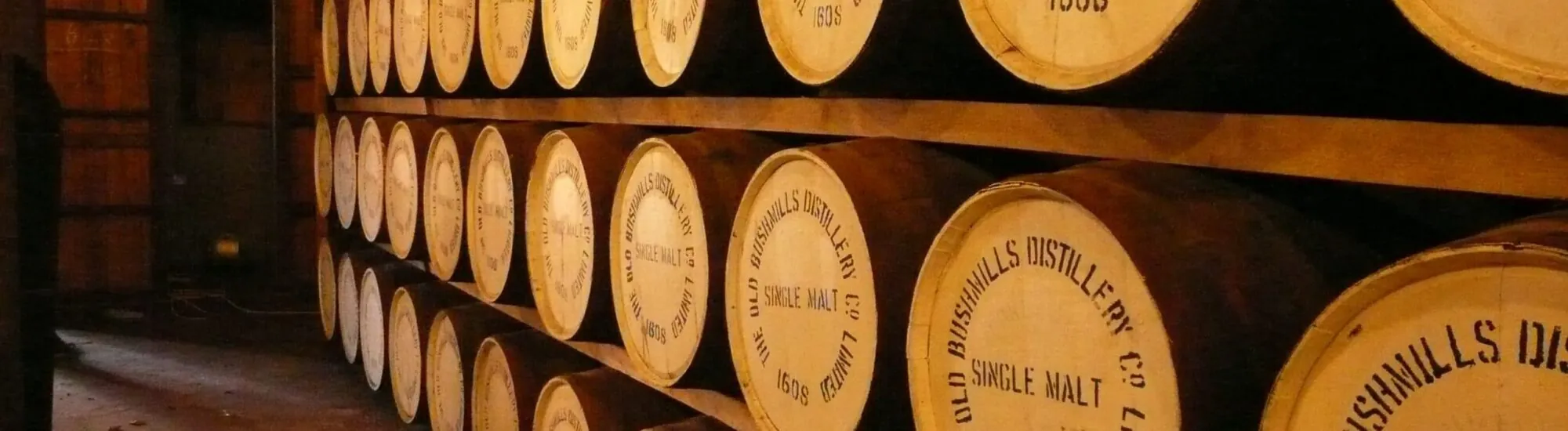
The distillate is then matured in oak casks for several years. Bushmills uses, among others, former bourbon casks and casks that previously held oloroso sherry. The wood gradually imparts notes of vanilla, honey, spice, dried fruit and chocolate.
Bushmills production is not limited to single malts. The range also includes blended whiskeys, combining single malt made on site with a lighter grain whiskey.
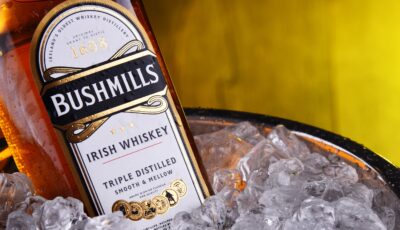
Bushmills Original is the brand’s most accessible expression. Black Bush stands out for its high proportion of malt whiskey and the pronounced influence of sherry casks. The 10-, 12-, 16- and 21-year-old single malts offer more complex profiles, complemented by limited editions and distillery-exclusive bottlings.
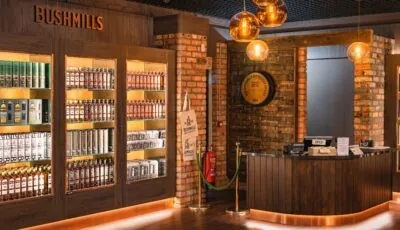
Old Bushmills Distillery shop – © Dawid
The guided tour takes visitors into the heart of a genuine production site. It offers the chance to see the equipment used during the main stages of production: processing barley, fermentation, distillation in copper stills and cask maturation.
The aromas change as the tour progresses. The warm scent of grain gives way to notes of fermented fruit, followed by the woody character of the ageing areas. This sensory dimension is one of the tour’s main attractions.
As the distillery remains in operation, certain areas may be temporarily closed for production, safety or maintenance reasons. Visitors are therefore not guaranteed to see every machine in operation, particularly at weekends.
The standard tour generally ends with a tasting at the 1608 Bar. The exact content depends on the option chosen. Non-drinkers and drivers can request a non-alcoholic alternative.
More in-depth experiences are also offered on certain dates. They allow visitors to compare several expressions from the range and better understand the influence of age, cask type and blending. These premium tastings are strictly for adults only.
Alcohol abuse is dangerous to health. Tastings should be enjoyed in moderation, especially if you are driving after your visit.
The shop stocks the main Bushmills expressions, gift sets, glasses and various branded items. It also sells some exclusive bottlings that are difficult to find elsewhere.
The shop and the 1608 Bar can be accessed without joining a guided tour. However, the distillery’s former café is no longer operating in 2026. The village of Bushmills has several cafés, pubs and restaurants within a few minutes’ walk.
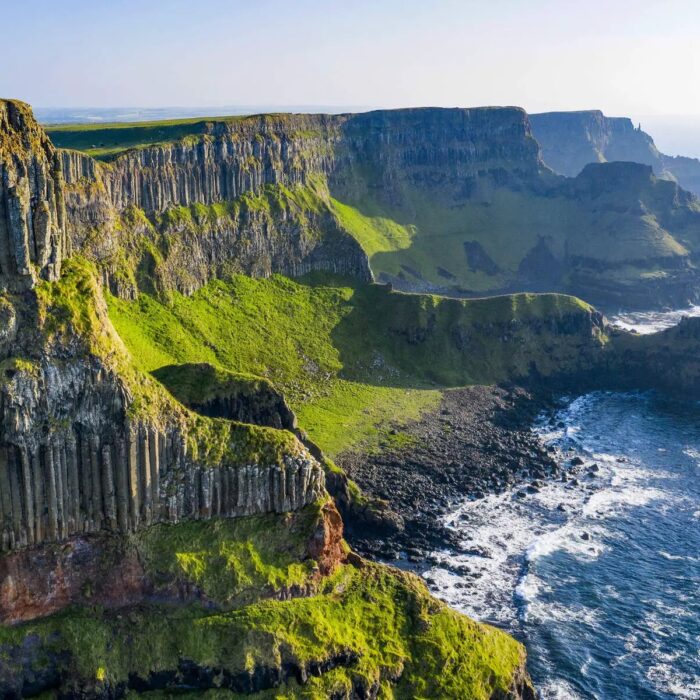
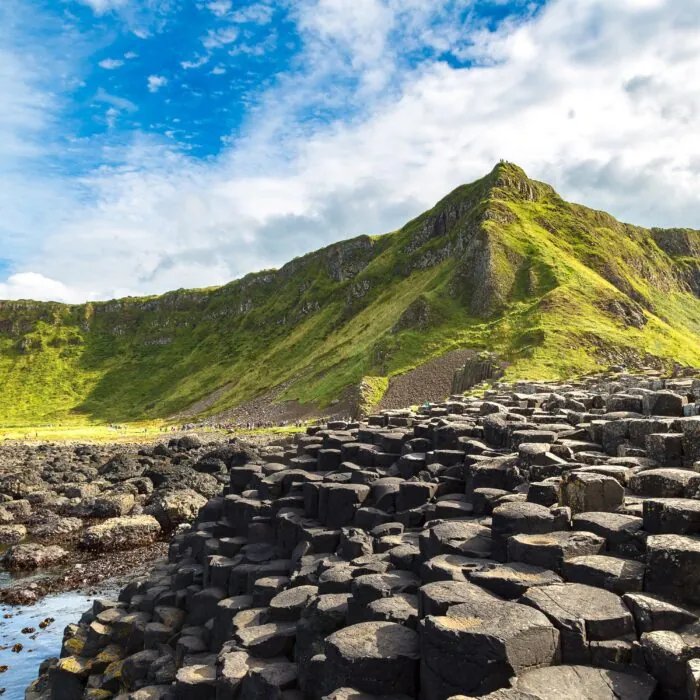
The Old Bushmills Distillery lies at the heart of one of Northern Ireland’s most spectacular regions. The Giant’s Causeway is only around 3 kilometres away, making it easy to combine both visits in a single day.
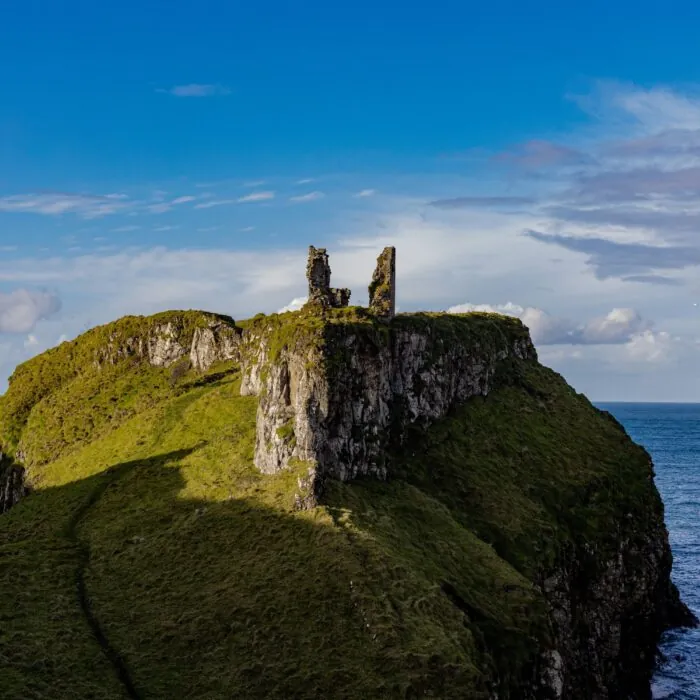
Dunluce Castle, perched on the clifftop, is also just a few minutes’ drive away. Further east, the Carrick-a-Rede rope bridge and the seascapes of the Antrim coast extend this exploration of heritage, geology and Atlantic sea spray.
To make the most of the day, it is best to book the distillery for a specific time, then plan the other stops around that slot.
In 2026, tours are available from around £15 per person. Depending on the option, the number of whiskeys tasted and the level of guidance, experiences can cost up to around £50.
As prices and tour times vary by date, checking the official booking calendar before travelling is strongly recommended. Booking is particularly advisable in summer and at weekends. Groups of 12 or more must contact the distillery in advance.
The distillery is located at the entrance to the village of Bushmills, around 3 kilometres from the Giant’s Causeway. Parking is available on site. By public transport, Translink buses serve Bushmills from Coleraine and the main attractions along the Causeway Coast, with services varying by season.
Allow between one hour and one and a half hours for the standard tour, tasting and visit to the shop. Children under 8 are not permitted on the guided tour. Under-18s can take part in certain tours, but may not consume alcohol or attend premium tastings.
The route passes through a working industrial distillery and may include steps, noise and areas that are difficult to access. Visitors with reduced mobility or particular needs should contact the venue before their visit to find out what facilities are available.
Essential information to help you plan your visit, including key landmarks, access information, and booking options.
2 Distillery Road, Bushmills, Bushmills (County Antrim) - Northern Ireland
55.202792, -6.516677
1h30
The shop and the 1608 Bar are usually open:
Guided tours run at set times, depending on availability and the production schedule. These times may change throughout the year, so checking in advance is essential.
Check the opening hours and admission requirements before you leave, especially during peak season or on Irish public holidays.