Imagine a rain-soaked forest in north-west Ireland, home to brown bears, wolves and lynx. At dusk, the trees light up, reindeer and Arctic foxes appear, and a virtual sleigh ride takes families to meet Father Christmas. This setting exists at Wild Ireland, near Burnfoot in County Donegal. On 20 November 2026, the sanctuary opens its winter experience, Wild Arctic Christmas. Yet behind the lights lies an even more remarkable story: that of two bears, Bu and Tyapa, freed from years of captivity in Russia after a five-year rescue operation.
In Donegal, a forest sanctuary becomes an Arctic world
An unusual Christmas among wild animals
Wild Ireland is unlike a typical Christmas attraction. Set in woodland near Burnfoot on the Inishowen Peninsula, this sanctuary takes in animals rescued from captivity or poor living conditions. Its aim is to provide spaces where these species can rediscover natural behaviours, while raising visitors’ awareness of their stories.
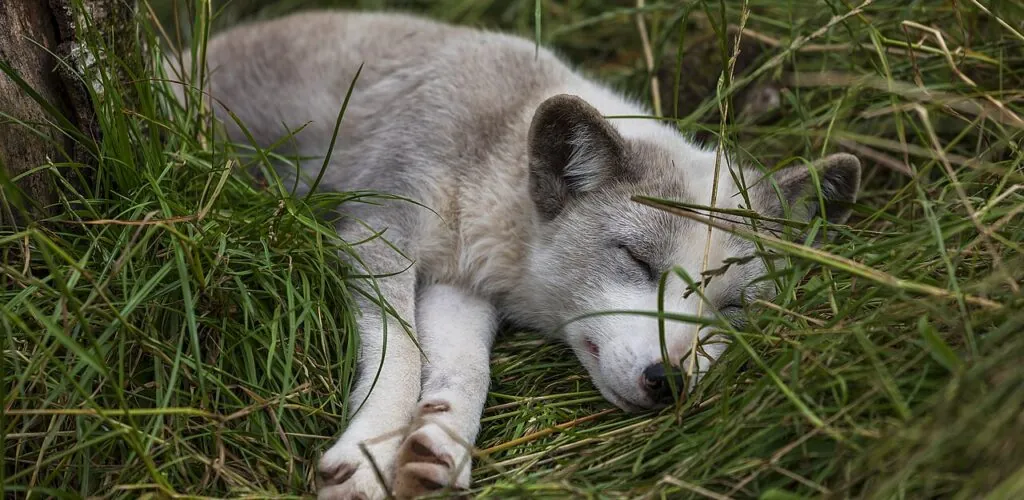
From 20 November to 23 December 2026, the site presents Wild Arctic Christmas, a family experience combining encounters with northern animals and a festive walk. Reindeer, Arctic foxes, snowy owls and an Arctic wolf are among the species announced. As daylight fades, light installations take over, transforming this already distinctive forest into a festive setting.
It is important, however, to distinguish the sanctuary’s animals from the Christmas entertainment. The brown bears do not take part in a show, and no demonstrations involving them are planned. Like the other residents, they have natural spaces where they can retreat. Seeing them therefore depends on their behaviour and on the areas open to visitors.
Bu and Tyapa: two bears from the Caucasus after five years of rescue efforts
From a circus and a cramped cage to the freedom to choose
Wild Ireland’s story took on an international dimension in 2026 with the arrival of Bu and Tyapa, two brown bears previously kept in unsuitable conditions in Dagestan, a republic of the Russian Federation. Bu had experienced life in the circus. Tyapa had lived in a cage so small that he could not stand up properly. According to the sanctuary’s managers, his future might even have ended with a taxidermist.
In 2021, Killian McLaughlin, founder of Wild Ireland, committed to taking them in. At first, the project appeared relatively straightforward on paper: arranging care for and transport of animals from a facility unable to provide for them in the long term. But the war in Ukraine, international restrictions and the complexity of securing permits transformed the operation.
More than a hundred people had to be mobilised, including vets, animal transport specialists, volunteers, lawyers and airport teams. A decisive stage came when Bu and Tyapa were transferred to a specialist facility near Saint Petersburg for care and quarantine. Their international journey ultimately took them via Moscow, Abu Dhabi and Dublin before they reached Donegal in August 2026.
Their arrival marked the culmination of five years of effort, but not the end of their recovery. Their carers are encouraging them to explore, forage for food, walk on natural ground and learn to use a habitat far larger than the cages they had known. There is nothing spectacular in the sense of a circus act: it is precisely this regained freedom that represents the true success of their rescue.
Why are bears now living in an Irish forest?
A species lost from the island, but part of its natural history
Wild Ireland’s setting was not chosen by chance. Brown bears once lived in Ireland before disappearing from the island several millennia ago. The Burnfoot sanctuary now gives them a protected space, without claiming to reintroduce them into the wild in Irish landscapes.
With Bu and Tyapa, the site is home to four brown bears. The animals live in habitats where they can walk, hide, bathe and forage. Wolves, lynx and wild boar help tell the story of the large European fauna associated with ancient forests at different points in history.
The sanctuary’s role remains, above all, to house and rehabilitate rescued animals. Its Celtic forest atmosphere provides a wonderful setting for discovery, but it is neither a wildlife reserve with freely reintroduced animals nor a zoo where every individual is guaranteed to be visible.
What does Wild Arctic Christmas have in store for families in 2026?
Reindeer, Arctic foxes, lights and a virtual sleigh ride
The Christmas experience is designed as a series of discoveries. Children and their parents can meet the Arctic animals featured in the programme before continuing on to the Christmas village attractions. A virtual-reality sleigh ride offers an imaginary journey around the world, while a gingerbread biscuit workshop invites families to meet Mrs Claus.
Meeting Father Christmas and his elves is another highlight of the visit. The organisers say that every child with a ticket appropriate to the experience will receive a gift. Once night falls, illuminations, glowing characters and animal-themed decorations take centre stage: in November and December, the early darkness adds to the atmosphere of this Donegal forest.
The experience does, however, include flashing lights, loud music and sound effects. Anyone sensitive to visual or auditory stimulation is advised to enquire before booking. Animals are also free to take shelter; no responsible organiser can guarantee that a bear, fox or wolf will be visible at any particular moment.
How to visit Wild Ireland at Christmas
Book a special experience, not a standard admission ticket
Wild Ireland is located near Burnfoot in northern County Donegal, close to the border with Northern Ireland. The Christmas visit runs on dedicated dates and time slots, with advance booking required. For 2026, the official website announces opening mainly on Fridays, Saturdays and Sundays, with additional dates as Christmas approaches.
Please note: Wild Ireland does not operate as a freely accessible park on days dedicated to Wild Arctic Christmas. The special experience replaces normal admission on the dates concerned. Some areas and habitats may remain closed. It is therefore essential to select a time slot and check the booking terms directly on the official Wild Ireland website, rather than assuming that an ordinary ticket provides access to the experience.
Part of the walk takes place outdoors, in Inishowen’s often wet and cool climate at this time of year. Waterproof footwear, a warm coat and clothing suitable for children are particularly recommended. Families wishing to photograph the animals must respect staff instructions, safety barriers and the residents’ pace.
A Christmas break to extend in Inishowen
Between Donegal’s wild coastline and small villages
The visit can be combined with exploring the Inishowen Peninsula, one of the lesser-known regions of the Wild Atlantic Way. Nearby, Fort Dunree overlooks Lough Swilly, while the Inishowen 100 route leads through a coastline of bays, hills and wind-swept beaches.
For travellers discovering the country in winter, the experience also offers an unusual contrast with Irish Christmas traditions. Here, the fairy lights and elves do not eclipse what matters most: behind the wonder enjoyed by families, a place continues to care for animals, some of which have endured years of suffering.
Bu and Tyapa did not cross several borders to become the stars of a celebration. Their new life unfolds in the peace of an Irish forest, with the freedom to move away from prying eyes. Perhaps it is this story, even more than the illuminations, that makes Christmas at Wild Ireland so special.