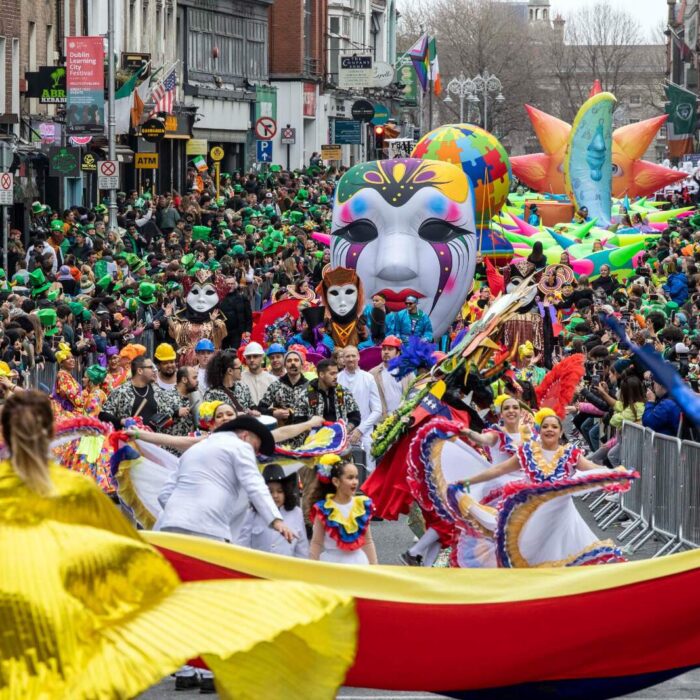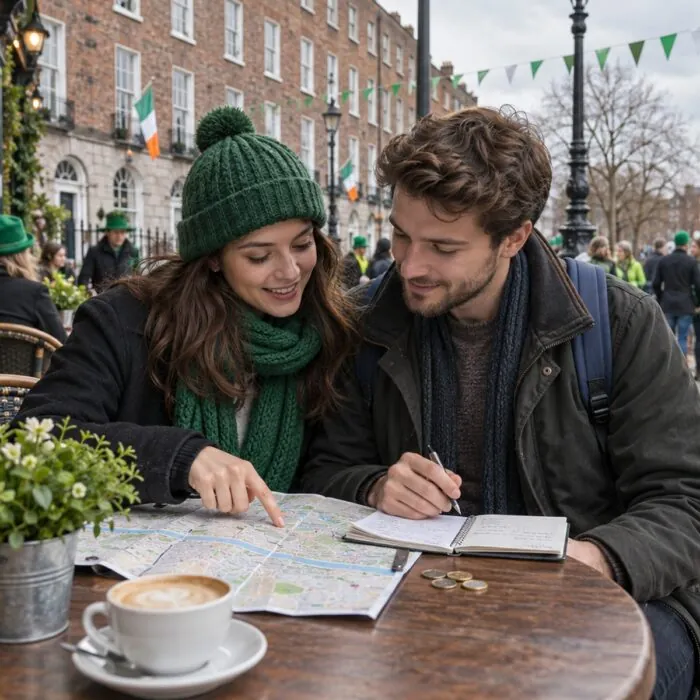


Choosing where to stay in Dublin for St Patrick’s Day can completely transform your trip. A hotel right in the centre puts the parade and festivities within walking distance, but also means noise, crowds and particularly high prices. A neighbourhood further out offers more peace and quiet, and sometimes better value for money, provided you check transport links and the actual distance to the city centre.
There is therefore no single ‘best neighbourhood’. Temple Bar suits travellers who have come for the atmosphere, St Stephen’s Green and Grafton Street those who want to do everything on foot, while Docklands, Ballsbridge and Smithfield often offer a more comfortable compromise. Here are the areas to consider, depending on your budget, plans and tolerance for noise.
Compare available accommodation in Dublin for St Patrick’s Day
The area between St Stephen’s Green, Grafton Street and Dawson Street is one of the most convenient locations for a first visit. It offers quick access to much of the historic centre, shopping streets, Trinity College and numerous restaurants. During St Patrick’s Day, being able to walk back to your hotel is a real advantage when public transport is busy or temporarily diverted.
The neighbourhood has a more elegant feel than Temple Bar, with a wide selection of comfortable hotels. It is nevertheless in high demand, and prices rise quickly around 17 March. Some rooms overlooking busy streets can also be noisy, so it is worth reading recent reviews about soundproofing before booking.
Best for: a first trip, a short break, couples and travellers who want to minimise journeys by public transport.
Good to know: an exceptional location, but generally a high budget and limited availability as the festival approaches.
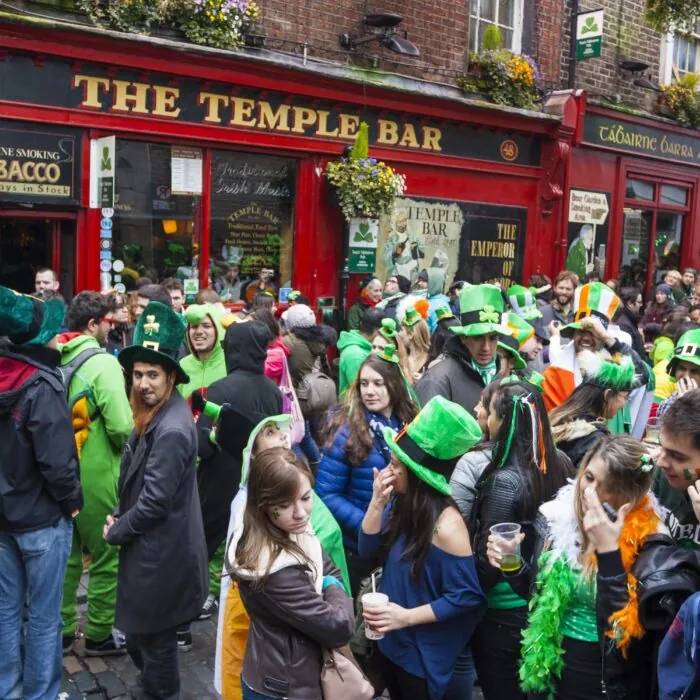
Temple Bar is Dublin’s most iconic nightlife district. Staying here means being surrounded by pubs, music and entertainment, with no need for a taxi to get back. For a group of friends looking for a particularly festive atmosphere, that proximity may seem ideal.
It is important to be realistic, however: Temple Bar is one of Dublin’s noisiest, busiest and most expensive areas during St Patrick’s Day. Its streets remain lively late into the night, and crowds can make getting around more difficult. A room above or immediately beside a pub will suit neither families nor light sleepers.
An address on the edge of Temple Bar, rather than at its heart, often offers a better compromise. You will retain the convenience of the centre without experiencing all the late-night bustle.
Best for: groups of friends and travellers who prioritise atmosphere over peace and quiet.
Avoid if: you are travelling with young children, looking for a peaceful night’s sleep or hoping to keep your budget under control.
The north side of the city centre keeps you close to the main thoroughfares, the Liffey and the liveliest districts. Around O’Connell Street and Parnell Square, accommodation ranges from large hotels to more affordable establishments. The location is convenient for getting around on foot and reaching bus or tram connections.
The atmosphere changes noticeably from one street to the next. Before booking, check the exact address, recent reviews and the route between the hotel and the places you plan to visit. Accommodation advertised as ‘near O’Connell Street’ may be significantly farther away than its marketing suggests.
Best for: a central location, travellers without a car and those arriving by bus from the airport.
Good to know: compare streets carefully and do not rely solely on the neighbourhood’s general name.
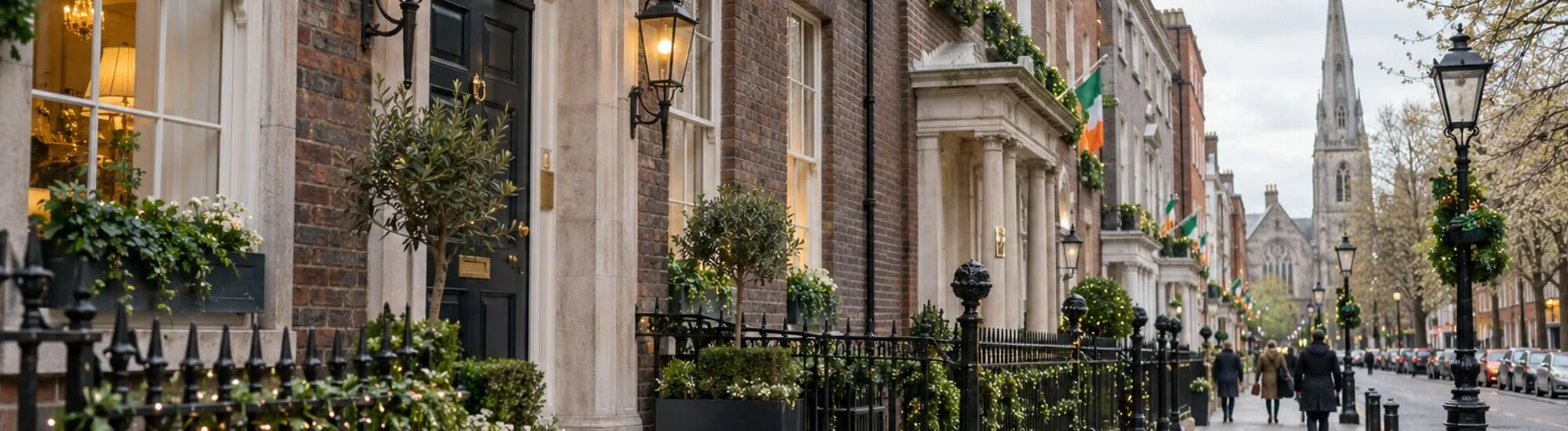
East of Grafton Street, the area around Trinity College, Merrion Square and Fitzwilliam Square offers fine Georgian streetscapes and a more relaxed atmosphere. It remains close to the heart of Dublin while sitting slightly away from Temple Bar’s concentration of pubs.
It is an excellent choice for combining the festivities with the capital’s museums, parks and heritage. Hotel options tend to be mid-range to upmarket, but the location saves time and several public-transport journeys.
Best for: couples, cultural breaks and travellers looking for a central address without sleeping in the middle of the festivities.
The Docklands stretch east of the centre around the Liffey, while Grand Canal Dock lies further south. These modern areas are home to recent hotels, restaurants and numerous office buildings. They are generally quieter in the evening than Temple Bar, without being isolated.
Depending on the address, you can walk into the centre or use the DART, Luas and buses. This option is particularly well suited to travellers who want to join the festivities while returning to a quieter atmosphere at night. Be aware, however, that ‘Docklands’ covers a fairly large area. Check the actual walking time to O’Connell Bridge or Trinity College.
Best for: families, couples, modern hotels and travellers who prefer comfort to folklore.
Good to know: some areas become very quiet after office hours and may feel less typically Dublin.
Smithfield lies west of the historic centre, near the Jameson distillery and not far from the Liffey. The neighbourhood has a Luas stop and allows you to reach the centre on foot. Further north, Stoneybatter has a neighbourhood atmosphere appreciated for its cafés, pubs and small local spots.
These areas are an attractive compromise when accommodation in the centre becomes unaffordable. They allow you to stay in a lively part of Dublin without sleeping in the heart of the most tourist-focused area. Distances nevertheless vary greatly depending on the property: an address far into Stoneybatter will require more walking.
Best for: independent travellers, couples, stays of several days and those wishing to discover a more local side of Dublin.
The Liberties is one of Dublin’s most interesting historic neighbourhoods. It is home to the Guinness Storehouse and lies close to St Patrick’s Cathedral and several major sights. From many addresses, Temple Bar and the city centre are within walking distance.
The accommodation offering is less consistent than in traditional hotel districts. Some streets are very convenient, while others are further from public transport. It is therefore best to check the precise location rather than choosing solely on the name of the neighbourhood.
Best for: heritage enthusiasts, visitors to the Guinness Storehouse and travellers seeking a less polished atmosphere.
South of the centre, Rathmines and Ranelagh offer numerous restaurants, cafés and pubs frequented by locals. Ranelagh has Luas access, while Rathmines is served by several bus routes. These neighbourhoods are suited to a longer stay or to those who want to step away from the tourist bustle.
Walking back after a long day is still possible from some addresses, but the distance can become tiring. During St Patrick’s Day, check timetables and any transport changes before relying entirely on buses or trams.
Best for: stays of several nights, travellers looking for good restaurants and a neighbourhood feel.
Ballsbridge lies south-east of the centre and offers a residential atmosphere, broad avenues and several family-friendly hotels. The area is served by buses and certain DART stations, notably around Lansdowne Road and Sandymount, depending on your chosen location.
The distance from the centre requires more planning, but the evening calm can more than make up for this drawback. It is a good option for parents who want to enjoy the daytime events without exposing children to Temple Bar’s night-time noise.
Best for: families, travellers seeking peace and quiet, and those happy to make a slightly longer daily journey.
Grand Canal Dock combines modern hotels, relatively open promenades and rail connections. During large gatherings, the area is often easier to navigate with a pushchair than the centre’s most crowded streets.
Before booking, however, check the route to the family events you have selected. The programme and access arrangements may change each year, as can traffic restrictions.
Drumcondra and Phibsborough can offer more reasonable rates than the very centre while retaining relatively quick access to Dublin. Drumcondra is convenient for certain bus connections, while Phibsborough has the Luas. You will find hotels, guesthouses and rooms in private homes.
Savings are not guaranteed during St Patrick’s Day, however. Demand affects the entire urban area, and an outlying address can also become expensive. Always compare the total cost, cancellation terms and journey time, rather than the room price alone.
Hotels near the airport can be useful for a very early flight or a late arrival. They are, however, a poor option for making the most of St Patrick’s Day in the city centre. Travelling back and forth takes time and depends on transport services, precisely when traffic may be more complicated.
Choose this option only if your flight schedule genuinely warrants it. For several nights, a neighbourhood connected to the centre is generally preferable.
In Dublin, the period around 17 March is extremely busy. The more central the accommodation, the more quickly the choice dwindles. Booking early with flexible cancellation allows you to secure a suitable address while continuing to monitor availability.
Be wary of rates that seem exceptionally low. Check whether taxes are included, whether payment is refundable, whether the room has an en-suite bathroom and whether the property imposes a minimum stay.
The label ‘Dublin City Centre’ can cover very different realities. Measure the walking route to a central point such as Trinity College or O’Connell Bridge, then check whether a bus, Luas or DART service is nearby. Also consider the journey back: a perfect daytime connection will not necessarily be as convenient late in the evening.
For St Patrick’s Day, acoustic comfort matters almost as much as location. Look through recent reviews for mentions of street noise, neighbouring pubs, bedroom doors and single glazing. An address slightly further out but properly soundproofed can make for a much more pleasant stay.
The route and access arrangements may change. Avoid booking non-refundable accommodation solely because it appears to be on an assumed route. Consult the official St Patrick’s Festival website when the programme for the relevant edition is published.
To plan your entire stay, also see our three- or four-day itinerary for Dublin during St Patrick’s Day, our guide to the budget to allow for St Patrick’s Day in Dublin and our overview of the Dublin Grand Parade.
See hotels and accommodation still available in Dublin
For a first stay, St Stephen’s Green and the streets between Grafton Street and the Georgian quarter offer the best balance of central location, comfort and discovering Dublin. Temple Bar remains tempting on paper, but it is not the most sensible choice for most travellers. During St Patrick’s Day, a few extra minutes of walking are often worth a genuinely restful night.