
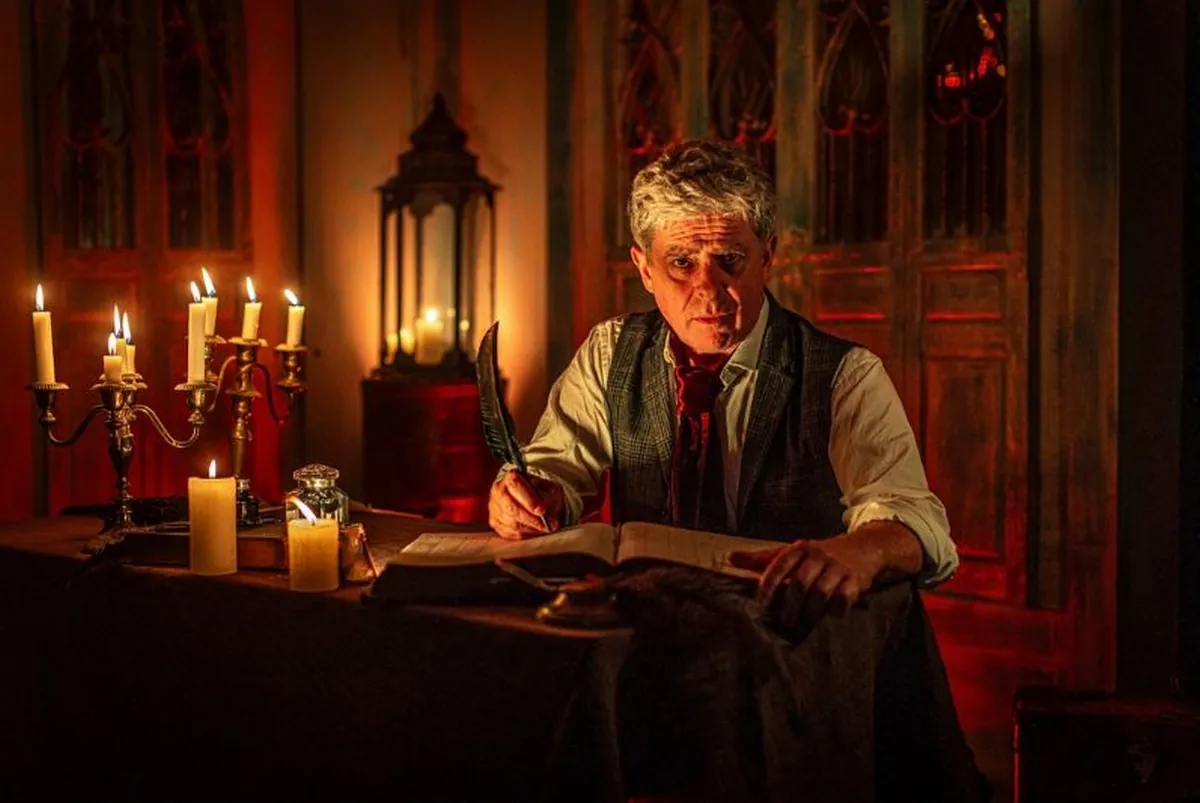
At the end of October, the shadow of Dracula falls across Dublin. For four days, theatres, libraries, parks and streets across the capital host the Bram Stoker Festival, a major celebration of the Gothic, the supernatural and the imagination of the celebrated Irish writer.
Far more than vampires and blood-soaked costumes, the festival explores Bram Stoker’s life, Victorian Dublin and the considerable influence of his novel Dracula on literature, cinema and popular culture.
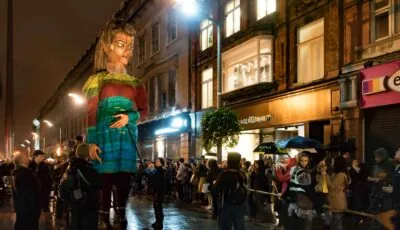
Bram Stoker Festival performance in Dublin – © William Murphy
The Bram Stoker Festival 2026 will take place from Friday 23 to Monday 26 October. For four days and four nights, Dublin will offer a programme combining street arts, literature, theatre, cinema, music and night-time experiences.
Events are held in various neighbourhoods and cultural venues across the capital. The festival therefore has no single site: each event has its own times, address and access arrangements.
The full programme for the 2026 edition has not yet been unveiled. For now, organisers are promising new “deadly adventures” for both Gothic culture enthusiasts and families.
Previous editions have featured large-scale parades, film screenings, outdoor performances, candlelit concerts, theatre productions, literary events and immersive experiences. Some of these formats may return in 2026, but their inclusion will need to be confirmed when the programme is released.
Created in 2012 at the initiative of Dublin City Council, the Bram Stoker Festival has become one of Dublin’s leading autumn cultural events. More than 60,000 people attended the 2025 edition.
The festival celebrates Bram Stoker’s legacy by exploring his work, his era and the many worlds that emerged in the wake of Dracula.
Its programme is not confined to horror. It regularly brings together live performance, contemporary creations, heritage, literature and popular culture. Visitors can move from a talk on Stoker’s writing to a night-time performance, then on to a film screening or a family workshop.
The atmosphere shifts over the course of the day. Daytime events are generally accessible and playful, while night-time performances favour a darker, more Victorian and mysterious mood.
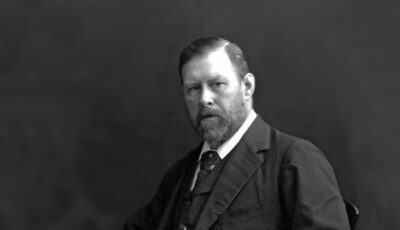
Bram Stoker, author of the novel Dracula – Public domain
Abraham Stoker, better known as Bram Stoker, was born on 8 November 1847 at Marino Crescent in Clontarf. Ill for part of his childhood, he was reportedly unable to walk properly until the age of seven.
His health nevertheless improved dramatically. A student at Trinity College Dublin between 1864 and 1870, he became an accomplished sportsman and took an active role in the university’s leading debating societies.
After his studies, Stoker worked for around ten years in the administration of Dublin Castle. He also wrote theatre reviews for the Dublin Evening Mail, a newspaper then jointly run by the Irish Gothic writer Sheridan Le Fanu.
In 1878, Bram Stoker married Florence Balcombe at St Ann’s Church on Dawson Street. The couple then left Dublin for London, where Stoker became secretary and manager to the celebrated actor Henry Irving at the Lyceum Theatre.
Bram Stoker published Dracula in 1897. The novel tells of the confrontation between a Transylvanian vampire and a group of characters determined to prevent his influence from spreading across England.
Contrary to a claim sometimes made, the book was not written entirely in Dublin. Stoker lived in London while writing it and spent several years on research.
His childhood and Irish roots may nevertheless have fed his imagination. His mother, Charlotte Thornley, told him stories marked by epidemics, death and folklore. Irish traditions also spoke of revenants, dangerous fairies and passages between the world of the living and that of the dead.
Some researchers also draw parallels between Dracula and figures from Irish folklore such as Abhartach. It would, however, be excessive to claim that this character was the definite origin of Stoker’s vampire. The writer’s influences were varied, also encompassing European Gothic literature, Victorian theatre and his historical research.
The festival programme changes completely from one year to the next. Each edition offers a selection of original creations and events staged in sometimes unexpected venues.
Large outdoor installations and parades are generally among the most popular events. They may bring together giant puppets, live music, lighting effects and fantastical characters on Dublin’s streets.
Performance venues and cultural institutions host theatre productions, concerts, cabarets, readings and talks. Cinemas also show horror films, Gothic classics and screenings accompanied by musicians.
Some events focus directly on Bram Stoker’s life, his archives and his lesser-known works. The festival therefore offers a chance to look beyond Dracula and discover an author far richer than his famous vampire might suggest.
The Bram Stoker Festival is not just for adults and horror-film fans. Part of its programme is specially designed for children.
Previous editions have included performances, creative workshops, face painting, musical activities and spaces inspired by Victorian fairgrounds.
Family events generally take place during the day and adopt a more fantastical than frightening tone. However, the age guidance published for each performance should be checked before booking.
Some night-time productions may include loud sound effects, unsettling scenes or an atmosphere unsuited to young children. Organisers normally specify any warnings on each programme listing.
The festival combines free outdoor activities with ticketed performances held in venues. In 2025, around one third of the programme was free.
Some free events, particularly major street performances, can be attended without booking. Others require a free ticket because venue capacity is limited.
Concerts, theatre productions, special screenings and immersive experiences generally require payment. Prices vary according to the venue and type of performance.
The most anticipated events can sell out several weeks before the festival. It is therefore advisable to check the programme as soon as it is published and book indoor events promptly.
Rather than taking place at a single enclosed site, the festival unfolds across different parts of Dublin. Performances may be held in theatres, parks, libraries, concert halls, cathedrals or directly on the streets.
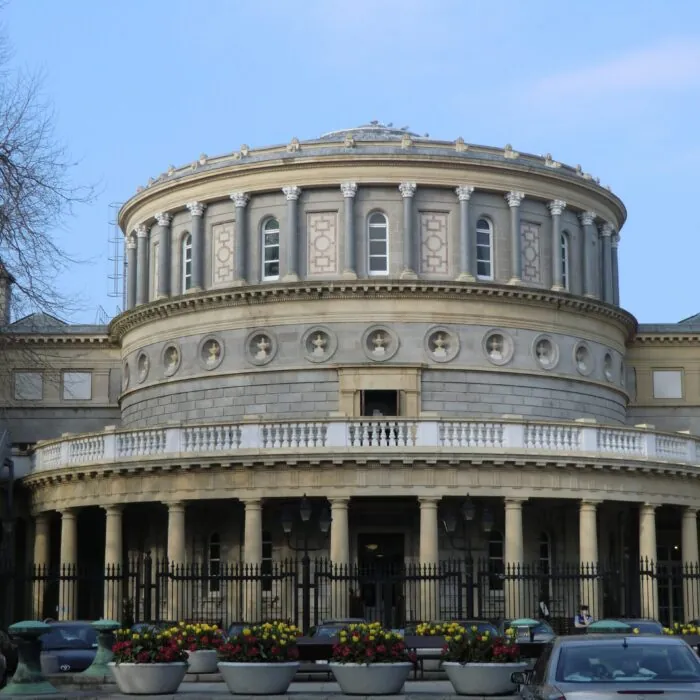
Participating venues change every year. Previous editions have worked with major institutions including the National Concert Hall, the National Museum of Ireland, the Abbey Theatre and the National Library of Ireland.
This spread offers the opportunity to discover several sides of Dublin, but it does require some advance planning. Before booking two consecutive performances, check their addresses and allow enough time to get from one venue to the other.
The city centre is easy to explore on foot, by Luas or by bus. However, transport services may be diverted during major parades and performances occupying public spaces.
A stay during the festival also provides an opportunity to discover several places associated with Bram Stoker. His birthplace is at 15 Marino Crescent in Clontarf. It is a private property and can only be viewed from outside.
Trinity College recalls his student years and his involvement in debating societies. Dublin Castle, meanwhile, recalls his career as a civil servant before he left for London.
St Ann’s Church on Dawson Street is where Bram Stoker married Florence Balcombe in 1878. Mount Jerome Cemetery is the burial place of several members of the Stoker family, although the writer himself was cremated in London.
These places are not systematically included in the official programme. They nevertheless make it possible to create a literary itinerary around the festival and gain a better understanding of the Dublin connections of Dracula’s creator.
The full programme is usually unveiled as autumn approaches. Signing up for the official newsletter makes it possible to hear when booking opens.
It is best to select ticketed or capacity-limited events first, then arrange outdoor performances around those times. Leave enough time between venues: crowds and occasional street closures can slow down travel.
The festival coincides with a particularly lively period in Dublin. Accommodation in the city centre can quickly become expensive. Booking ahead is recommended for the nights of 23 to 26 October.
Finally, bring warm clothing, a waterproof jacket and comfortable shoes. A significant part of the festival takes place outdoors, sometimes after nightfall.
Announcements and ticket information will be published on the official Bram Stoker Festival website.
Essential information to help you plan your visit, including key landmarks, access information, and booking options.
Consultez le programme pour vous rendre sur les lieux de chaque animations, Dublin, County Dublin, Republic of Ireland, Tourist sites in Ireland
53.34288609997942, -6.267449857723661
Bram Stoker Festival prices vary according to the event.
Part of the programme is free, including certain outdoor performances and family activities. Booking may nevertheless be required where capacity is limited.
Theatre productions, concerts, screenings and immersive experiences may require payment. Prices for 2026 will be announced when the programme is released and ticket sales open.