EPIC The Irish Emigration Museum
In the stone vaults of the CHQ Building, overlooking the Liffey, EPIC The Irish Emigration Museum tells one of Ireland’s great stories:…


 Tourist attractions
 Irish Restaurants and Pubs
 Partner Accommodations
 Campgrounds and Lodging
In the stone vaults of the CHQ Building, overlooking the Liffey, EPIC The Irish Emigration Museum tells one of Ireland’s great stories:…
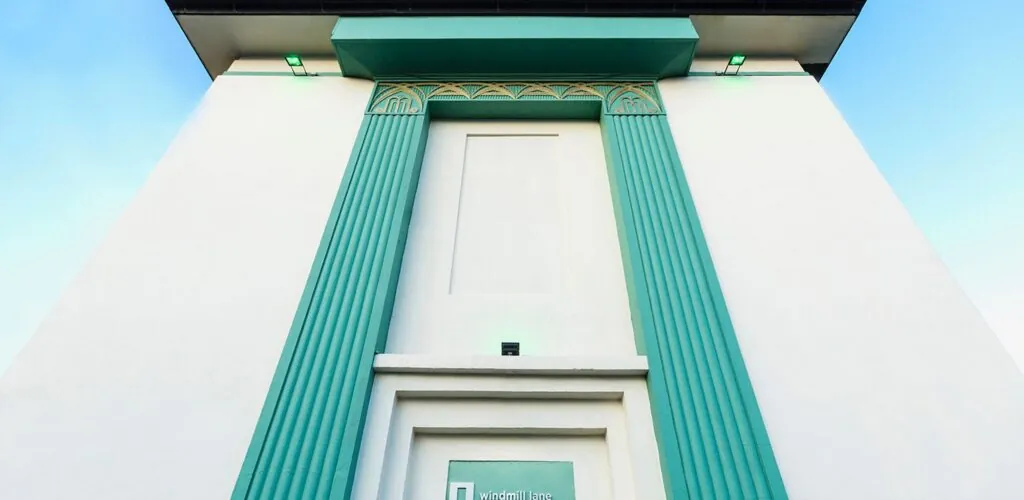
It’s common knowledge: Dublin is undoubtedly the capital that attracts the world’s greatest musical artists! And it’s all happening at Windmill Lane…
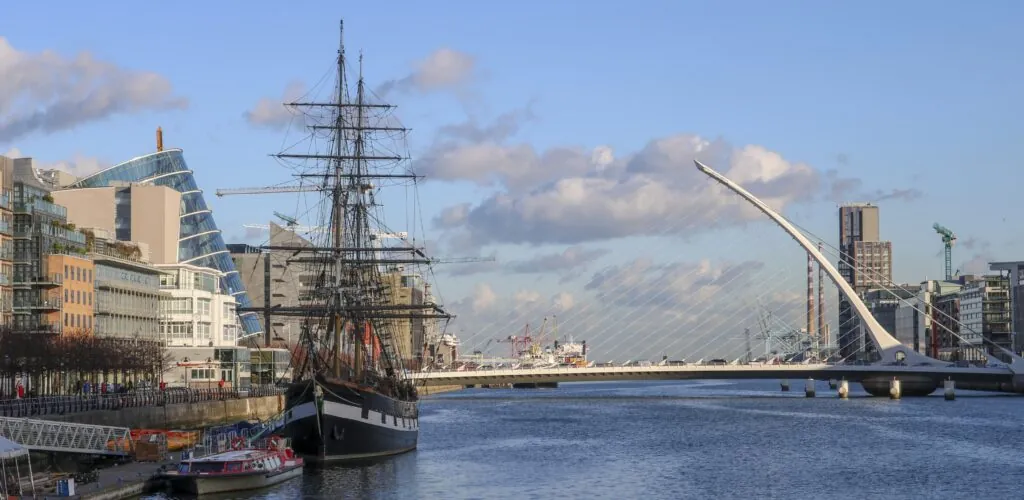
Moored along the Liffey quays, in the heart of Dublin’s Docklands, the Jeanie Johnston looks ready to set sail again. Yet its…
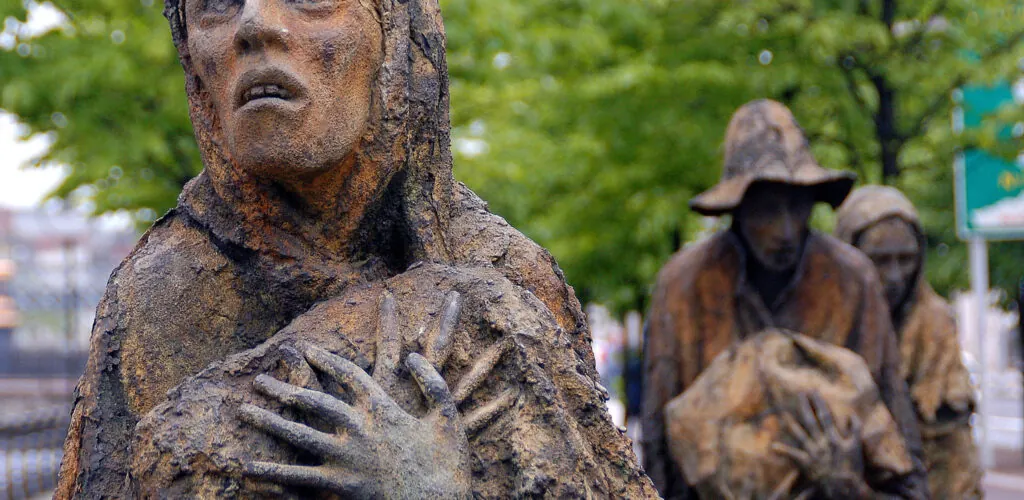
On the banks of the Liffey, seven emaciated figures walk silently towards Dublin Port. Clutching their luggage to their bodies, with hollow…
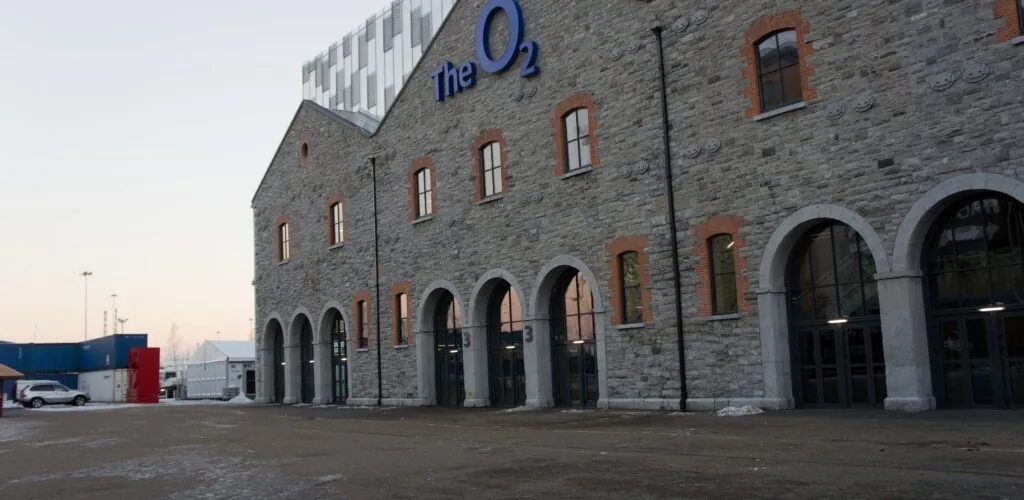
Just off the Liffey is a building much loved by Dubliners: The O2. Considered the capital’s largest concert hall, it has been…
The Samuel Becket Bridge is Dublin's ultra-modern cable-stayed bridge. Recognizable by its Celtic harp shape, it links the 2 banks of Dublin,…
Custom House is an imposing neo-classical building on the north bank of the River Liffey in Dublin. The building houses the Ministry…
The Convention Centre Dublin (often referred to as CCD) is a superb modern building in Dublin, inaugurated in 2010… One of the…
Butt Bridge is a Dublin road bridge that crosses the Liffey to link George's Quay and Beresford Place with the north quays…
The Royal Canal is a Dublin canal, linking the Liffey to the Shannon. Built in the early 19th century and then abandoned…
The artificial intelligence revolution is taking up residence along Dublin’s quays. OpenAI, the American company behind ChatGPT, has just announced a major…
East of Dublin’s historic centre, the Liffey widens, Georgian façades give way to glass and steel, and former dock warehouses stand alongside the headquarters of major international companies. Welcome to the Dublin Docklands, a vast district developed on both banks of the river, between the Custom House, Grand Canal Dock and the port.
Long associated with dockworkers, shipyards and emigrant departures, the quays have undergone one of Ireland’s most spectacular urban transformations. Today they feature major museums, contemporary bridges, works dedicated to the Great Famine, performance venues and some of the capital’s boldest buildings.
The Docklands are best explored on foot. A two- to three-hour walk follows the Liffey, crosses its footbridges and reveals another side of Dublin: less traditional than Temple Bar, but deeply connected to the city’s maritime history and economic development.
The Dublin Docklands are not an administrative district with clearly visible boundaries. The name refers to a large port area east of the city centre, on either side of the Liffey.
On the north bank, the area extends around Custom House Quay, the International Financial Services Centre, North Wall Quay, Spencer Dock and Point Village. On the south bank, it includes City Quay, Sir John Rogerson’s Quay, Hanover Quay and Grand Canal Dock.
Talbot Memorial Bridge provides a practical transition between the historic centre and the Docklands, although the port landscape already begins around the Custom House. Further east, the district meets the still-active infrastructure of Dublin Port.
The development of the quays accompanied Dublin’s expansion during the 18th and 19th centuries. The city became a major port for trade with Great Britain, Europe and North America.
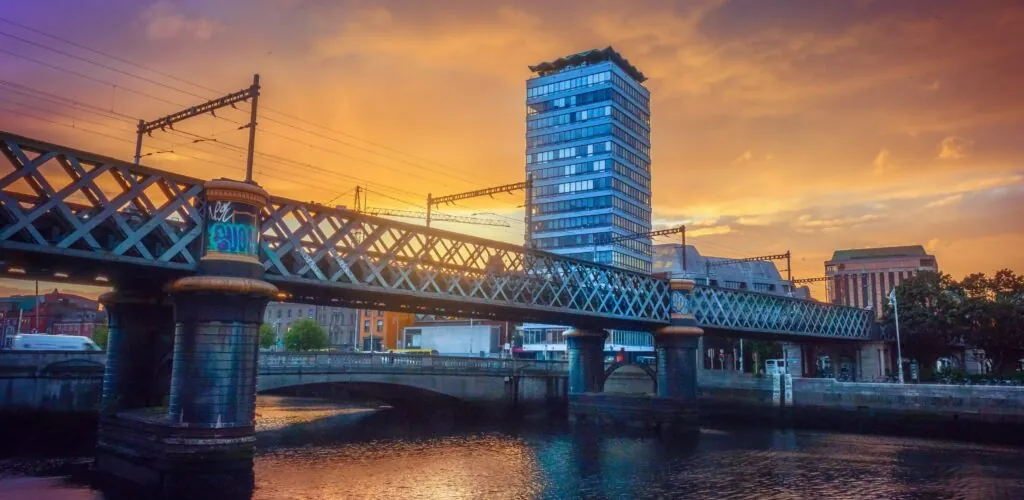
Grand Canal Dock opened in 1796 to connect sea routes to the inland Grand Canal network. On the opposite bank, the Royal Canal joins the Liffey at Spencer Dock. Warehouses, yards, flour mills, gasworks and workers’ housing developed around these basins.
The quays were brought to life by dockworkers loading and unloading timber, coal, grain, livestock and other goods. The work was physical, irregular and dangerous. Every morning, men waited to be selected for a few hours or days of handling work.
The Docklands were also a point of departure. During and after the Great Famine, thousands of Irish people reached the quays before embarking for Liverpool, Canada or the United States. This memory of exile remains particularly present around Custom House Quay.
During the 20th century, changes in maritime transport transformed dock activity. Ships became larger, while containerisation required more space and specialised facilities.
Port operations gradually moved eastwards, closer to the mouth of the Liffey. Former quays near the centre lost their economic purpose. Warehouses closed, jobs disappeared and several sites became wasteland.
This deindustrialisation hit local communities hard. For several decades, the Docklands appeared to be a neglected edge of the capital despite their proximity to the city centre.
Redevelopment began in the late 1980s with the creation of the International Financial Services Centre, better known as the IFSC. Banks, insurance companies and financial firms established themselves on the north bank.
The process accelerated from 1997 with the creation of the Dublin Docklands Development Authority. Its aim was to turn former industrial land into districts combining offices, homes, public spaces and cultural facilities.
New bridges reconnected the two banks. Promenades were redesigned, apartments replaced wasteland and contemporary architecture transformed the skyline. Yet the district retains warehouses, cranes, basins and quay walls that recall its industrial past.
This transformation has not been without criticism. Rising housing costs, the concentration of offices and contrasts with historic communities regularly fuel debate. The Docklands are at once an architectural success, an economic engine and an area where the effects of Dublin’s transformation remain especially visible.
The southern part of the Docklands, around Grand Canal Dock, is often nicknamed Silicon Docks. This play on words refers to Silicon Valley and the presence of many international technology companies.
Irish tax policies, an international workforce and access to the European market have attracted major digital groups. Google, Meta and several other technology companies have offices in the area.
This concentration has profoundly changed the district’s atmosphere. Former sheds now stand beside office buildings, hotels, restaurants and high-end residences. On weekdays, the quays follow the rhythm of employees; in the evening, Grand Canal Square and waterside terraces take over.
The Custom House marks the western entrance to the Docklands. Completed in 1791, this imposing neoclassical building was designed by James Gandon to house the customs administration of Dublin Port.
Its façade, dome and allegorical sculptures are among the capital’s architectural masterpieces. The sculpted figures represent, among other subjects, Ireland’s rivers and maritime trade.
Set on fire by the IRA in May 1921 during the War of Independence, the Custom House was severely damaged before being restored. An exhibition now explores its architecture, role in port history and the 1921 attack.
A few steps from the Custom House, the Famine Memorial is one of Dublin’s most moving sculptural ensembles.
Created by artist Rowan Gillespie, it depicts emaciated men, women and children walking along the quay with their meagre possessions. A starving dog accompanies the procession.
The figures appear to be heading towards the ships that carried away part of the population during the Great Famine. Their lack of a plinth places them at the level of passers-by and heightens the scene’s power.
The memorial also marks the end of the National Famine Way, a historic route linking Strokestown in County Roscommon to Dublin’s quays.
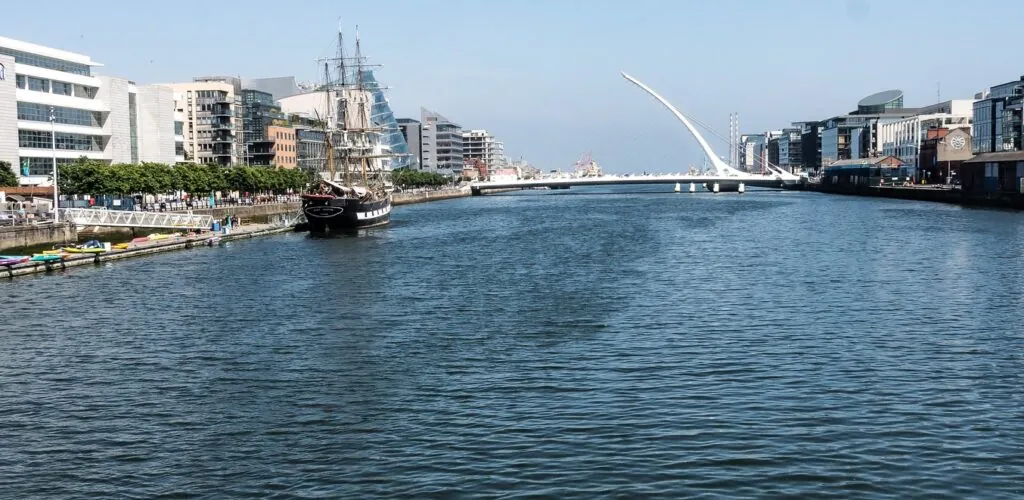
Moored near the memorial, the Jeanie Johnston is a replica of a three-masted vessel built in Quebec in 1847.
The original ship made 16 transatlantic crossings and carried around 2,500 Irish emigrants to North America. Thanks to its captain, the presence of a doctor and relatively rigorous sanitary measures, no passenger died on board.
A guided tour takes visitors down into the reconstructed lower deck and follows the fate of several real travellers. The ship is an ideal complement to the Famine Memorial and EPIC museum.
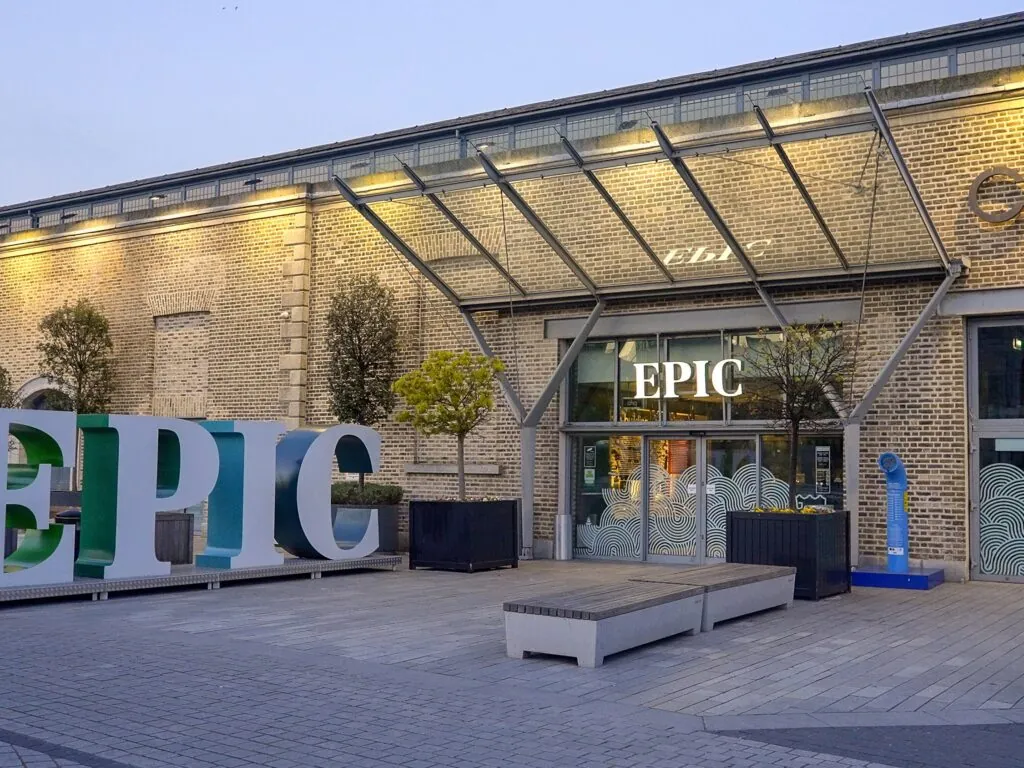
Located in the vaults of the CHQ Building, EPIC The Irish Emigration Museum traces more than 1,500 years of Irish departures.
Its interactive galleries explore the reasons for emigration, travel conditions, settlement in destination countries and the diaspora’s influence on politics, science, the arts, music and sport.
The museum is one of the Docklands’ main attractions. A visit takes around an hour and a half. A combined ticket with the Jeanie Johnston makes it possible to devote half a day to the history of Irish emigration.
The CHQ Building occupies a 19th-century port warehouse formerly known as Stack A. Its metal structure and stone vaults bear witness to the docks’ industrial architecture.
The building now houses EPIC, the Irish Family History Centre, shops and several places to take a break. Its transformation perfectly illustrates Docklands redevelopment: preserving a historic shell while giving it new uses.
Sean O’Casey Bridge links Custom House Quay on the north bank with City Quay on the south bank. Opened in 2005, it honours Irish playwright Sean O’Casey, who was born in a working-class district of Dublin.
This movable bridge is reserved for pedestrians and cyclists. It is one of the most convenient crossings for creating a circular walk through the Docklands.
From the bridge, the view takes in the Custom House, the Jeanie Johnston and the contemporary façades lining the Liffey.
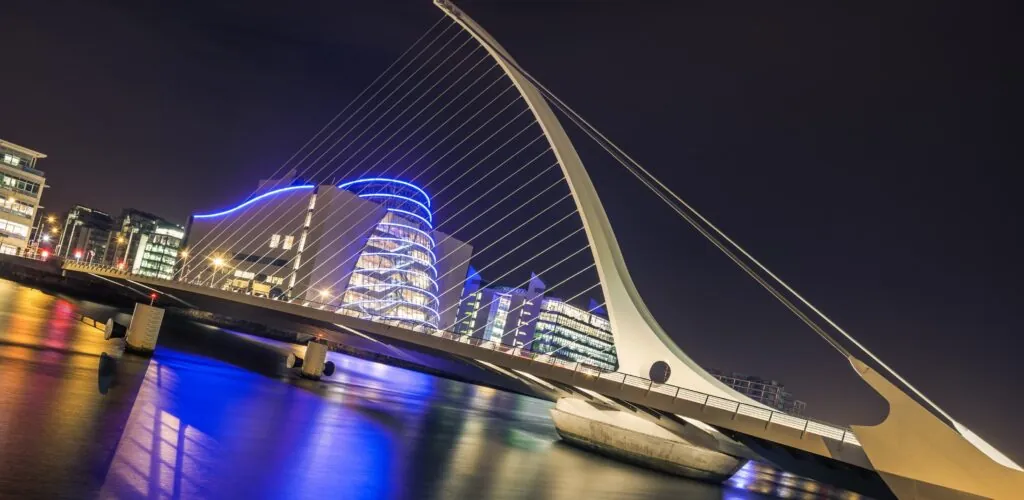
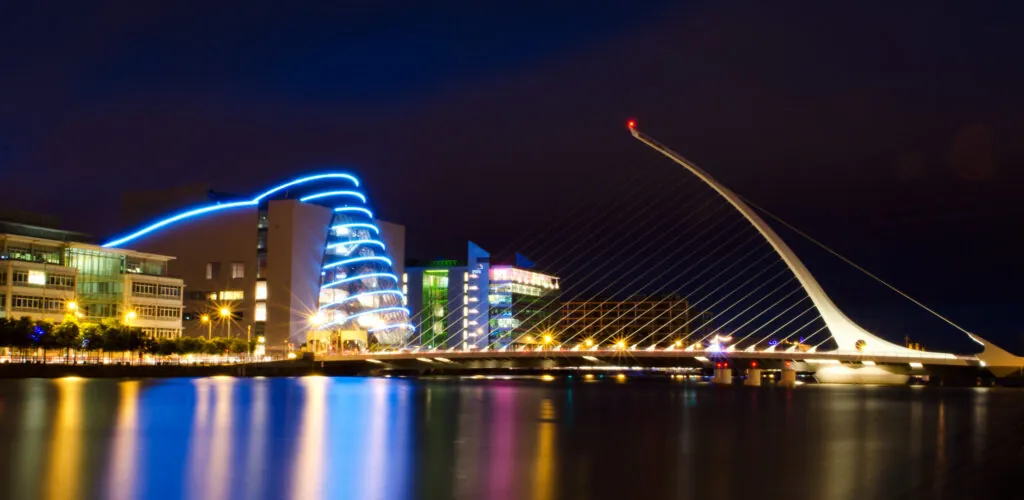
Further east, the Samuel Beckett Bridge has become the architectural symbol of the new Docklands. Designed by Spanish architect and engineer Santiago Calatrava, it opened in 2009.
Its inclined pylon and white cables form a reclining harp, a reference to Ireland’s national symbol. The bridge can rotate horizontally to allow ships to pass along the Liffey.
It links North Wall Quay with Sir John Rogerson’s Quay and carries cars, cyclists and pedestrians. Its silhouette is especially photogenic at sunset and after nightfall.
Opposite Samuel Beckett Bridge, the Convention Centre Dublin is immediately recognisable by its vast cylindrical glass atrium.
Designed by Irish-American architect Kevin Roche, the centre opened in 2010. Its tilted cylinder is one of North Wall Quay’s most important visual landmarks.
The building hosts conferences and business events. Its interior is therefore not a permanently open attraction, but its architecture is worth pausing to admire during a walk.
On the south bank, Grand Canal Square is one of the district’s most successful public spaces. Designed by landscape architect Martha Schwartz, this 10,000 m² square is one of Dublin’s largest paved squares.
Its design is based on two visual axes. An illuminated “red carpet” leads towards the theatre, while a “green carpet” of planting and street furniture heads towards the water.
In the evening, illuminated red poles, glazed façades and their reflections in the basin create an atmosphere very different from Georgian Dublin. The square is surrounded by cafés, restaurants and contemporary buildings.
The Bord Gáis Energy Theatre dominates Grand Canal Square with its angular glass façade. Designed by architect Daniel Libeskind, it opened in 2010.
Its programme includes musicals, plays, ballets, concerts and major international productions. Even without a ticket, the building is worth seeing for its dialogue with the square’s geometry.
On performance evenings, the area becomes one of the liveliest in the Docklands. It is then advisable to book nearby restaurants.
Located on Sir John Rogerson’s Quay, the Diving Bell is an imposing metal bell used in the 19th century to build the walls of Dublin Port.
Workers descended into this pressurised chamber to work below water level. Conditions were harsh and the risks associated with pressure were still poorly understood.
Restored and raised up, the bell is now accompanied by panels explaining how it worked. Free to view from the quay, it is one of the best surviving examples of the Docklands’ industrial heritage.
The Royal Canal joins the Liffey at Spencer Dock on the north bank. Contrary to what is sometimes written, it does not run along the entire river: it quickly heads away from it, crossing north Dublin and then central Ireland.
The surroundings of Spencer Dock reveal a landscape of basins, locks, old port walls and recent buildings. The canal also provides a walking and cycling route that gradually leaves the bustle of the centre behind.
At the eastern end of the Docklands stands the 3Arena. This large performance venue, formerly called The Point and then The O2, occupies a former railway depot connected with port activity.
It now hosts major international tours, shows and some sporting events. U2, Bruce Springsteen, Beyoncé and many other leading artists have performed there.
The name “The O2” is no longer current: the venue has officially been called 3Arena since 2014. On concert evenings, Point Village and nearby transport are particularly busy.
A coherent walk can begin in front of the Custom House. Following Custom House Quay eastwards leads successively to the Famine Memorial, the CHQ Building, EPIC and the Jeanie Johnston.
Continue to the Convention Centre and Samuel Beckett Bridge. After crossing the Liffey, the route returns west along Sir John Rogerson’s Quay, passing the Diving Bell.
A detour to Grand Canal Square reveals the Bord Gáis Energy Theatre and Grand Canal Dock basin. The return to the centre can be made via City Quay and then Sean O’Casey Bridge if you wish to return to the north bank.
This loop covers around four to five kilometres, depending on detours. Allow two hours for a simple walk, half a day with a museum visit, and a full day to combine EPIC, the Jeanie Johnston and Grand Canal Dock.
The Docklands change atmosphere after sunset. The cables of Samuel Beckett Bridge, the Convention Centre cylinder and Grand Canal Square’s light installations are reflected in the Liffey and its basins.
The south bank around Grand Canal Square is generally livelier in the evening, thanks to its restaurants, hotels and theatre. Quays further east can, however, become quite quiet outside concerts at 3Arena.
The district remains essentially urban and modern. Travellers seeking traditional pubs and old streets will probably prefer Temple Bar or the Liberties, but the Docklands offer one of Dublin’s finest architectural walks.
The wide, relatively level quays make walking with children easy. Bridges, boats and basins provide enough variety to keep the route engaging.
EPIC is the area’s most interactive attraction. The Jeanie Johnston is also suitable for families, although its story deals with famine, disease and exile. The ship’s stairs may also be difficult with a pushchair.
The quays remain close to the water and are not protected in the same way along their entire length. Close supervision of young children is therefore necessary, especially around the basins at Grand Canal Dock.