

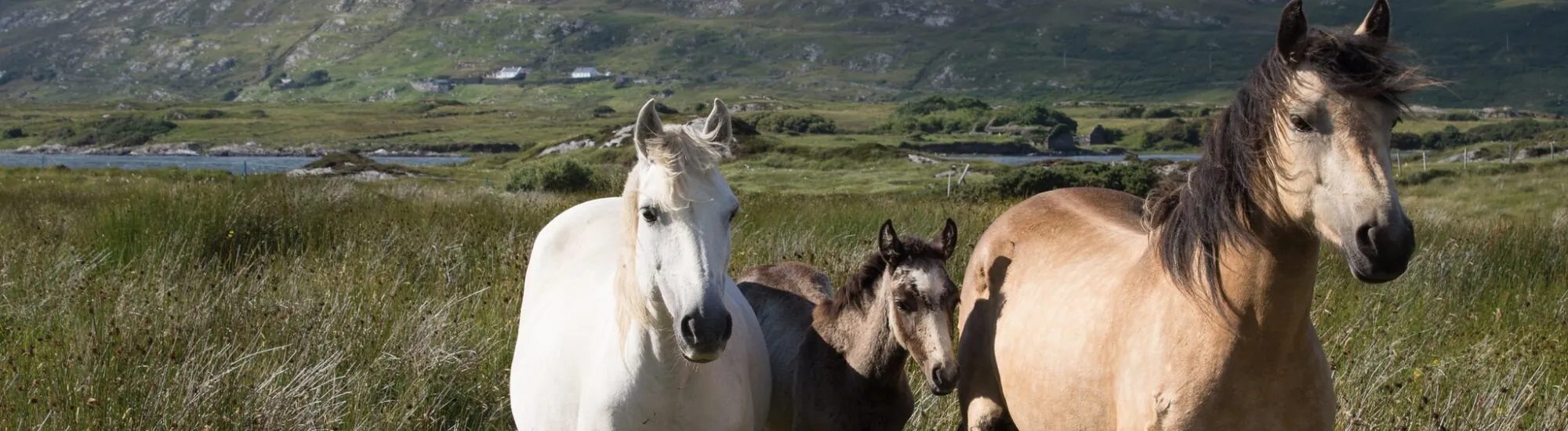
Small in stature but huge in reputation, the Connemara pony now has a centre dedicated entirely to its history. Opened in autumn 2025 in Connemara National Park, at Letterfrack, the Connemara Pony Heritage Centre offers a free visit combining heritage, films, interactive displays and encounters with the animals. A particularly family-friendly new stop… and one suited to anyone who has always dreamed of getting close to these famous grey ponies.
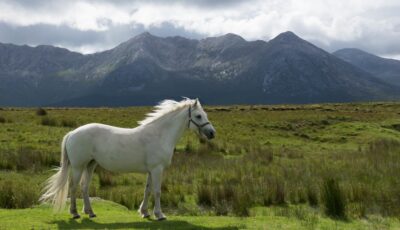
A Connemara horse – janmennens – cc
The Connemara Pony Heritage Centre opened its doors on 31 October 2025, close to the national park’s main visitor centre. Managed by the National Parks and Wildlife Service, it was created to better tell the story of the pony’s place in the history, landscapes and culture of western Ireland.
This opening is a smart addition to what the park has to offer. Until now, visitors mainly came to Letterfrack to hike Diamond Hill or explore the landscapes of the Twelve Bens. They can now discover one of Connemara’s living symbols before or after their walk.
The centre is free, accessible to people with reduced mobility and open all year round. Its opening also responds to strong demand: many visitors were already spotting the ponies in the park’s meadows, without necessarily knowing their history or understanding their importance to the region. The project was officially unveiled by the National Parks and Wildlife Service.
The Connemara pony originates from County Galway. For generations, it accompanied local rural life, carrying people, working on farms and making its way across terrain where heavier animals would quickly have struggled.
The bogs, Atlantic rains and stony soils encouraged the development of a sturdy, hardy pony that is particularly sure-footed. Usually measuring between 1.28 and 1.48 metres as an adult, the Connemara is also renowned for its intelligence, even temperament and athletic qualities.
Once used mainly as a working animal, it is now sought after for recreational riding, eventing and show jumping. Its versatility has allowed it to become popular well beyond Ireland’s borders.
The Connemara Pony Breeders’ Society was established in 1923 to preserve and improve the breed. The first studbook was published in 1926 and listed just 93 mares and nine stallions.
The exhibition traces the development of the Connemara pony, from its role on farms to its recognition in the international equestrian world. Photographs, historical panels, stories and clips from old films help visitors understand how the breed adapted to its environment.
The exhibition also explores its physical characteristics, breeding and various uses. Visitors can discover why this relatively compact pony can be so agile, hardy and capable.
Digital content complements the traditional displays. The most playful feature takes the form of a virtual pony ride through the national park. It allows children in particular to discover the landscapes of Connemara from an original perspective, without having to pull on their boots or worry about a brief Irish shower.
The centre also discusses the many stories surrounding the breed’s origins. Some legends attribute Viking ancestors to it or link it to the horses of the Spanish Armada. Attractive as they are, these theories remain difficult to prove with certainty: the true history of the Connemara is above all the result of several centuries of selection and adaptation to the land.
The visit is not limited to screens and information panels. Ponies can be seen in paddocks and specially designed areas close to the centre. At certain times, particularly during the summer season, presentations allow visitors to get closer to them and speak with their keepers.
The national park has a long-standing relationship with the breed. The first ponies arrived in Letterfrack when it opened to the public in 1980. They descended from animals presented to the Irish state by President Erskine Childers in 1974. The current herd therefore continues a history that already stretches back several decades.
However, the animals’ presence depends on their welfare, the weather and the park’s programme. A close encounter therefore cannot be guaranteed at every hour or in every season.
The Connemara Pony Heritage Centre is aimed both at riding enthusiasts and at visitors who are simply curious to discover an Irish emblem. The content is designed for several levels of understanding, with enough images and interactive displays to hold younger visitors’ attention.
The site is suitable for wheelchairs and pushchairs. The national park site also includes toilets, picnic areas, a playground and the Hungry Hiker Café. The centre is therefore a good option when the weather becomes too wet to set off on a hike straight away.
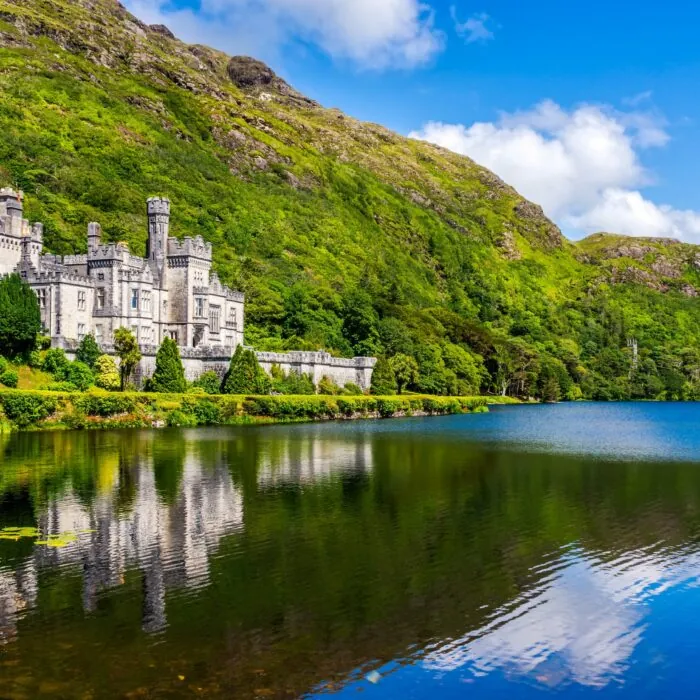
Free entry also makes it easy to include in a day spent in northern Connemara, alongside Kylemore Abbey, the village of Letterfrack or the Renvyle Peninsula.
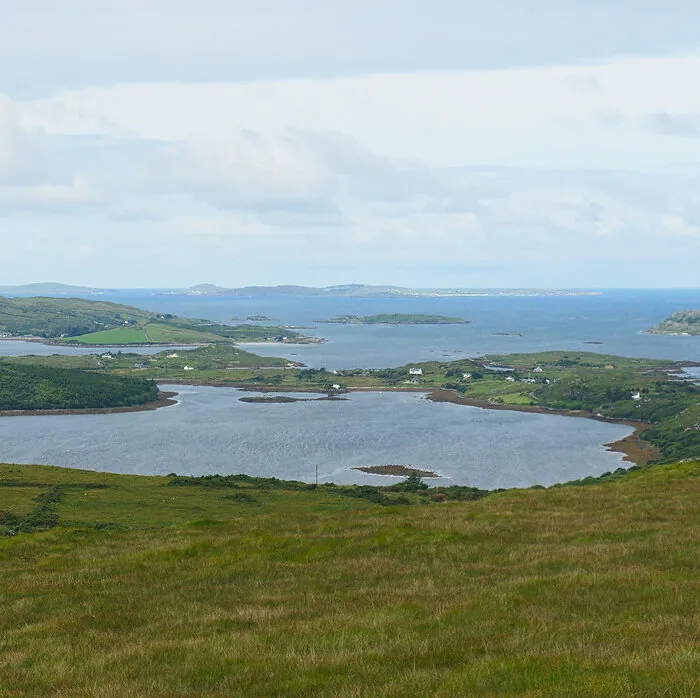
Connemara National Park protects around 2,000 hectares of mountains, bogs, heathland and meadows. Four marked trails start from the area around the visitor centre.
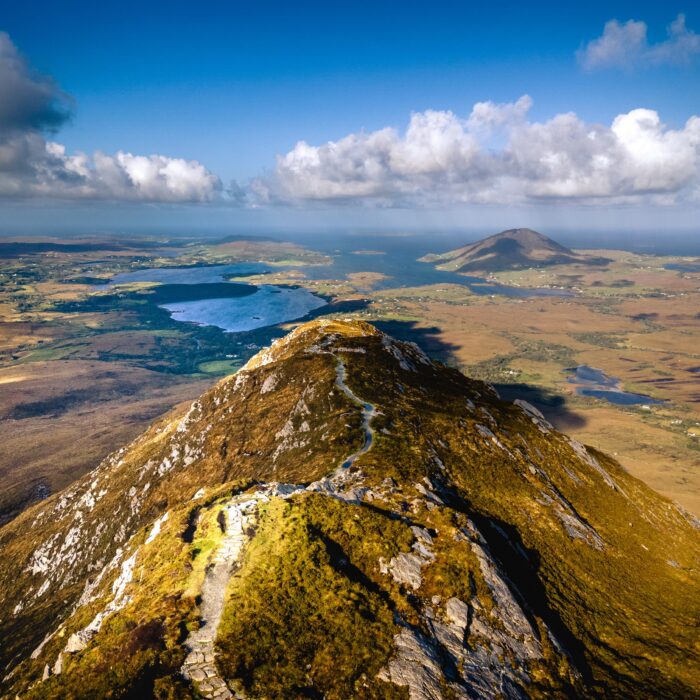
Families can choose the shorter walks through the woods and the Sruffaunboy valley. Better-equipped walkers can climb Diamond Hill, whose summit offers a broad panorama of Kylemore Abbey, the Twelve Bens, the Atlantic coast and the offshore islands.
Visiting the Connemara Pony Heritage Centre helps visitors better understand these landscapes: the pony’s strength and agility seem much less mysterious after seeing the terrain in which the breed developed.
The centre is located in Connemara National Park, near Letterfrack, in County Galway. It is around 15 kilometres from Clifden, 20 kilometres from Leenane and 53 kilometres from Westport. Buses serve Letterfrack from Galway, Clifden and Westport, but a car remains more convenient for exploring the region freely.
Admission to the centre and national park, as well as parking, is free. The Connemara Pony Heritage Centre remains accessible seven days a week. However, since July 2026, the main Visitor Centre building has been temporarily closed on Mondays and Tuesdays. The trails, café, toilets and pony centre remain open on those two days.
Modest in size but rich in content, the Connemara Pony Heritage Centre offers a sensitive interpretation of the area. Here, the pony is not merely a pretty silhouette in a meadow: it tells the story of the work, adaptation and identity of an entire region.
Want to extend your visit without having to rush around? Here are a few well-located places to stay near the must-see attractions.
Essential information to help you plan your visit, including key landmarks, access information, and booking options.
53.551571, -9.945262
Open all year round, 7 days a week, generally from 9 am to 5 pm
Check the opening hours and admission requirements before you leave, especially during peak season or on Irish public holidays.
Free entry for everyone