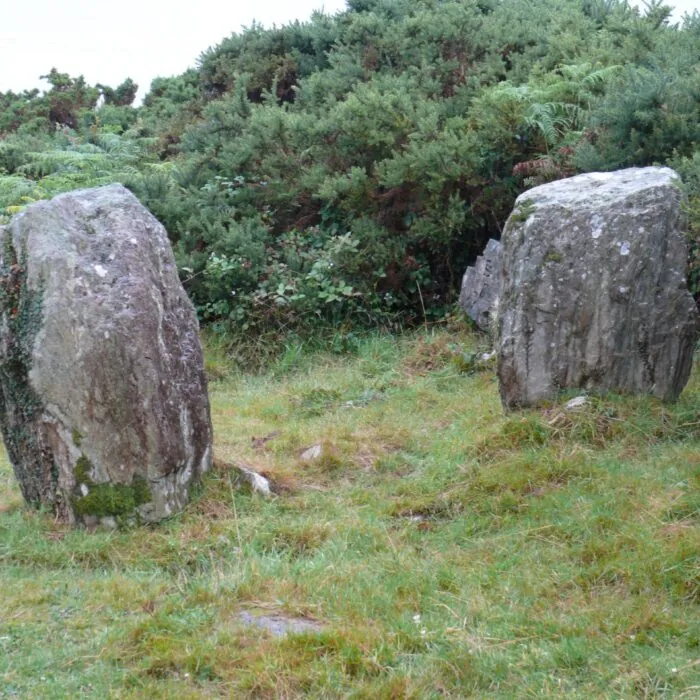
The Ahakista Stone Circle
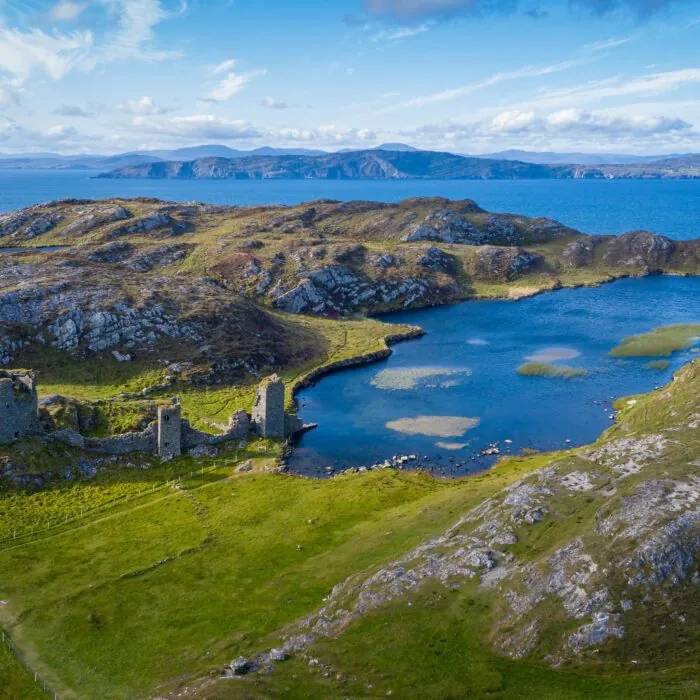
The Ahakista Stone Circle is a stone circle on the Sheep's Head Peninsula. Rich in mystery and legend, it was once a…

 Tourist attractions
 Restaurants et pubs irlandais
 Hébergements partenaires
 Campings et hébergements
Find a comfortable place to stay and make the most of your trip to Ireland.
With nearly 7,500 km², County Cork is the largest county in Ireland. Located at the southern tip of the country, it has more than 1,000 kilometres of coastline, a rich countryside and a remarkable succession of port towns, beaches and wild peninsulas.
From Cork city to Kinsale’s colourful houses, from Cobh’s quays to the cliffs of Mizen Head, the county reveals several faces of Ireland. You can visit a covered market in the morning, walk along the Atlantic in the afternoon and end the day in a lively pub in West Cork. This diversity makes it an ideal destination for a touring holiday in southern Ireland.
County Cork, Contae Chorcaí in Irish, belongs to the province of Munster. Its territory stretches from Youghal in the east to the Beara Peninsula in the west. The region is so vast that its landscapes and atmosphere change considerably from one area to another.
Cork city is its main urban centre. Around the city extends the immense Cork Harbour, considered one of the largest natural harbours in the world. Further west begins a region commonly known as West Cork, renowned for its maritime villages, beaches, small farms and more isolated landscapes.
With 584,156 inhabitants recorded in 2022, Cork is also one of the country’s most populous counties. According to the Cork County Council, it has the longest coastline of all the Irish counties.
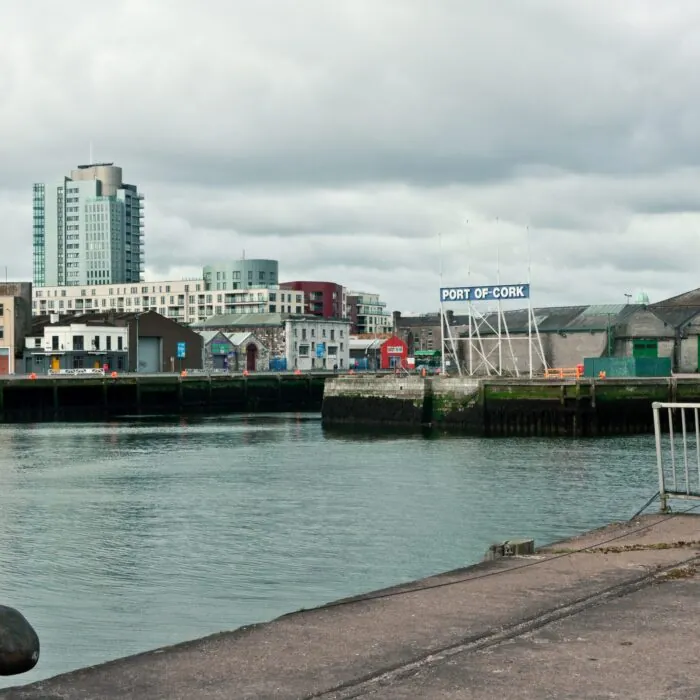
The county’s capital, Cork is the second-largest city in the Republic of Ireland by population. Its centre developed on several islands formed by branches of the River Lee, which explains the presence of numerous bridges and quays.
The city is particularly known for the English Market, a covered market operating since 1788. Its stalls bring together fish, meat, cheese, bread, artisan products and local specialities. It provides an excellent introduction to Cork’s gastronomic reputation.
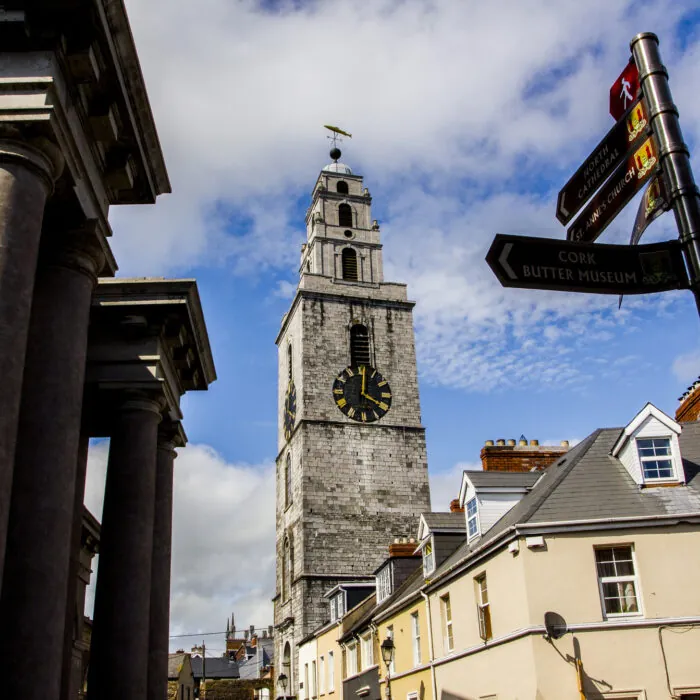
The Shandon district offers another view of the city. Dominated by St Anne’s Church and its famous tower, it retains sloping streets and former workers’ houses. Further south, Saint Fin Barre’s Cathedral impresses with its Gothic Revival architecture.
Cork also has a large student population, notably thanks to University College Cork. This youthful population contributes to the lively atmosphere of its cafés, performance venues and pubs. Traditional music exists alongside rock, jazz and contemporary creations.
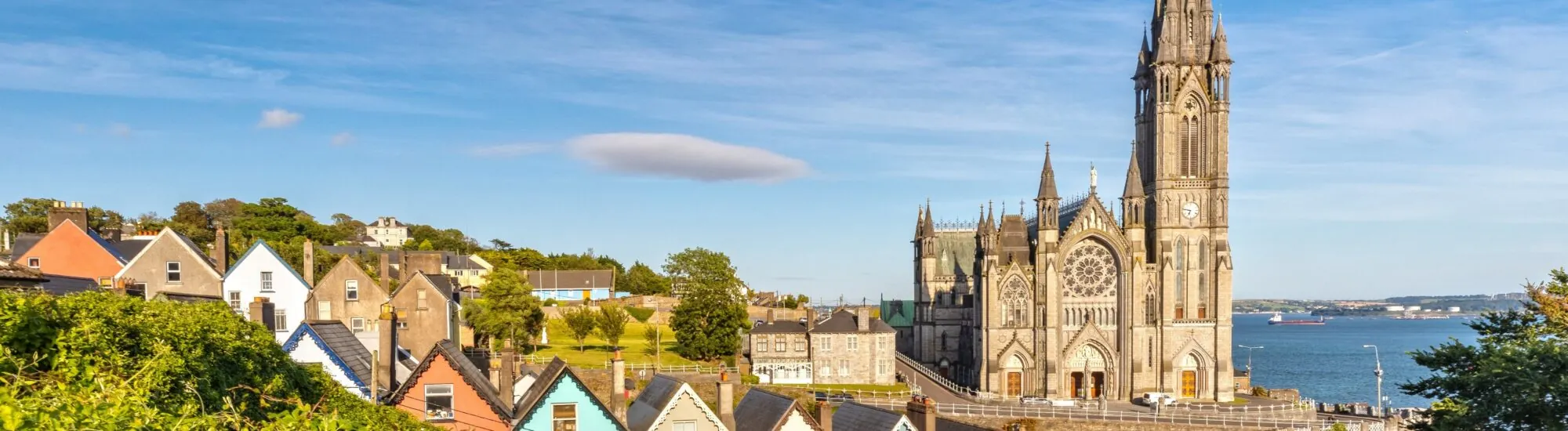
Located on Great Island, Cobh overlooks the waters of Cork Harbour. Its colourful-fronted houses rise up a hill crowned by St Colman’s Cathedral. Its Gothic Revival bell tower, approximately 90 metres high, is one of the most visible landmarks in the harbour.
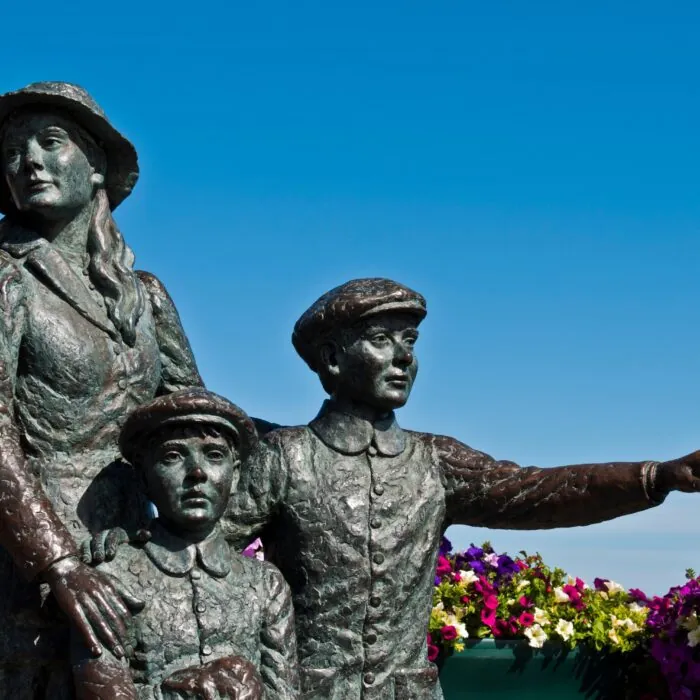
Formerly known as Queenstown, Cobh was one of the main departure ports for Irish emigrants. Between the 19th century and the middle of the 20th century, millions of people left Ireland from its quays to travel to North America. The town was also the Titanic’s final port of call before its Atlantic crossing in 1912.
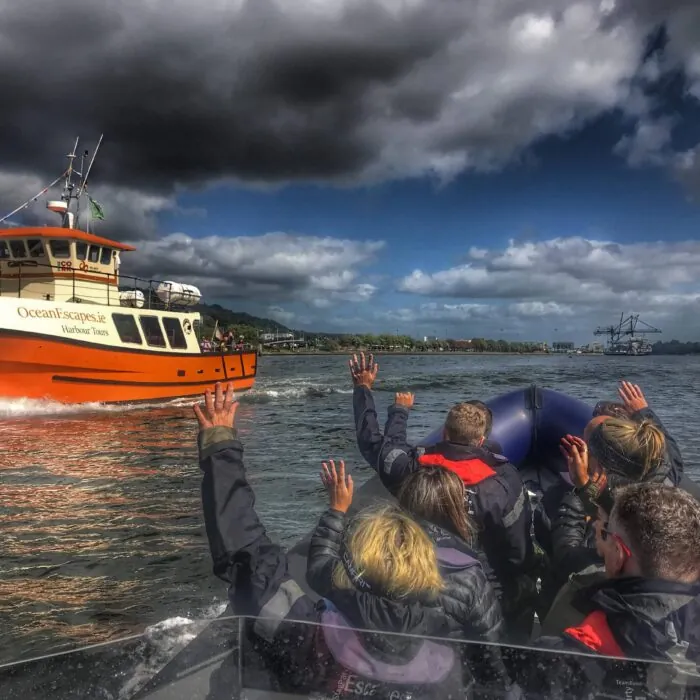
Opposite Cobh lies Spike Island. The island successively hosted a monastery, a fortress and a large prison. It can now be reached by boat and offers the chance to discover more than 1,300 years of history at the heart of Cork Harbour.
At the mouth of the River Bandon, Kinsale is one of the county’s most attractive towns. Its narrow lanes, galleries, colourful houses and marina give it a particularly pleasant atmosphere.
The town has also built a strong gastronomic reputation. Its restaurants showcase fish, seafood and produce from the surrounding countryside. This concentration of excellent restaurants regularly earns Kinsale the nickname of Ireland’s gastronomic capital.
The harbour is protected by two fortifications. Charles Fort, built at the end of the 17th century, has a remarkable star-shaped layout. Located on the heights of Summercove, it offers unobstructed views over the estuary and Kinsale’s maritime approaches. On the opposite bank, James Fort completes this former defensive system.
Kinsale also marks the southern starting point of the Wild Atlantic Way, the major tourist route that follows Ireland’s western coastline as far as Donegal.
West of Kinsale begins one of the county’s most appealing regions. West Cork does not correspond to a precise administrative division, but rather to an area with a particularly strong cultural and landscape identity.
Clonakilty is one of its main stops. This lively small town is known for its independent shops, music pubs and famous black pudding. Not far from the centre, Inchydoney Beach stretches its sand towards the Atlantic.
Further on, Skibbereen preserves the memory of the Great Famine, which hit the region hard in the 19th century. The town now serves as a base for exploring Baltimore, the islands of Roaringwater Bay and Lough Hyne. This sea lake, connected to the ocean by a narrow channel, has a unique ecosystem and is a popular destination for hiking and kayaking.
Bantry occupies the head of a large bay surrounded by hills. The town provides access to the Sheep’s Head Peninsula, renowned for its coastal trails, as well as the Beara Peninsula, shared by the counties of Cork and Kerry.
The western coastline contains some of the county’s most spectacular landscapes. Mizen Head forms one of Ireland’s southernmost points. A footbridge crossing a gorge leads to a former signal station built above wave-battered cliffs.
Nearby, Barleycove Beach stretches between protected dunes and green hills. Further north, the Sheep’s Head and Beara peninsulas offer more mountainous landscapes, dotted with small harbours, pastures and very narrow coastal roads.
The Beara Peninsula provides access in particular to Dursey Island. The island is separated from the mainland by a stretch of sea with powerful currents and remains known for its cable car, the only installation of its kind in Ireland.
The county also has many beaches along its eastern coast. Youghal, Garryvoe and Garrylucas have long stretches of sand suitable for walks and, depending on conditions, water sports.
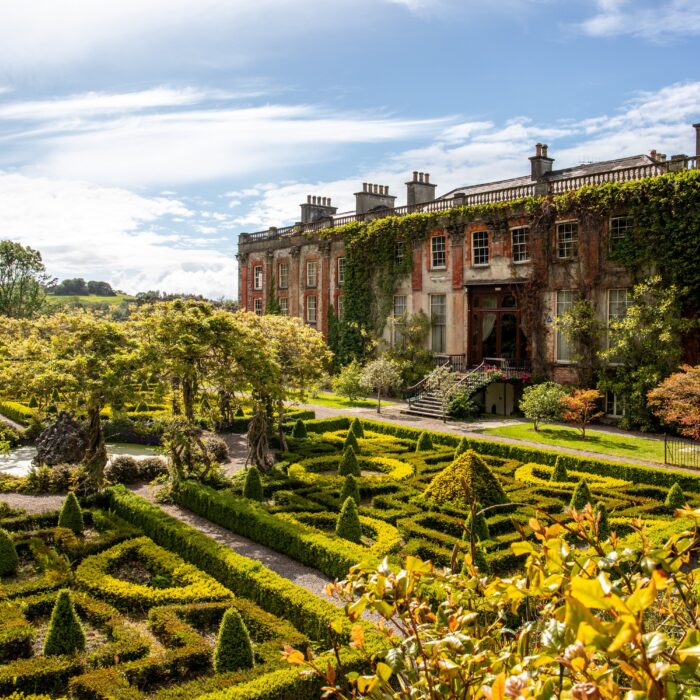
Blarney Castle is among the county’s most famous monuments. This medieval fortress is particularly known for its eloquence stone, the Blarney Stone. According to tradition, kissing this stone grants the gift of speaking with ease and persuasion.
Beyond this legend, the estate is worth visiting for its gardens, rock formations and various wooded areas. The castle also offers insight into the layout of a large Irish fortified house.
The county’s heritage also includes the Drombeg stone circle, near Glandore. Comprising seventeen blocks arranged in a ring, this Bronze Age site is sometimes known as the “Druid’s Altar”. Its setting in the West Cork countryside, a few kilometres from the sea, enhances its mysterious atmosphere.
East of Cork city, Fota Island brings together a historic house, a large arboretum and a wildlife park. Fota’s gardens benefit from a mild climate and contain an important collection of trees and plants from different regions of the world.
Cork has one of Ireland’s most renowned gastronomic scenes. Its countryside supplies meat, dairy products, vegetables and cereals, while its coastline provides restaurants with fish, oysters, mussels and shellfish.
Farmers’ markets are numerous throughout the county. They offer the chance to discover artisan cheeses, sourdough bread, jams, cured meats and seasonal produce. West Cork has notably distinguished itself through the development of small farms and food businesses that favour short supply chains.
This culinary culture is not limited to fine-dining restaurants. It is also expressed in pubs, cafés, bakeries and small harbours, where visitors can enjoy fish soup, a seafood dish or a simple sandwich prepared with local produce.