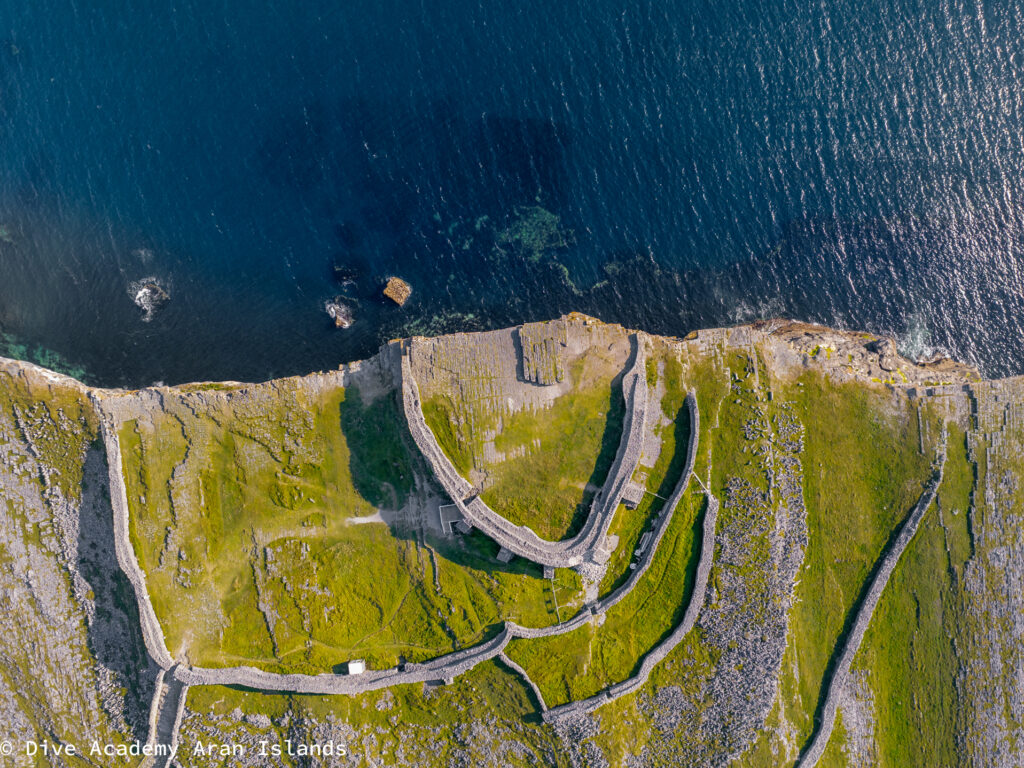
Dun Aengus Fort
At the edge of a limestone plateau, the walls of Dún Aonghasa (or Dun Aengus) appear to end abruptly at the Atlantic. No…


 Tourist attractions
 Irish Restaurants and Pubs
 Partner Accommodations
 Campgrounds and Lodging
At the edge of a limestone plateau, the walls of Dún Aonghasa (or Dun Aengus) appear to end abruptly at the Atlantic. No…
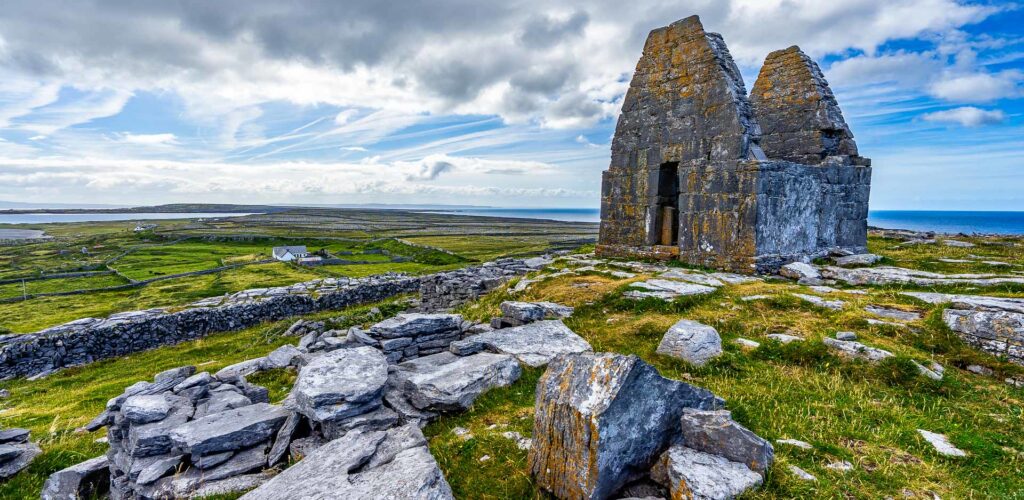
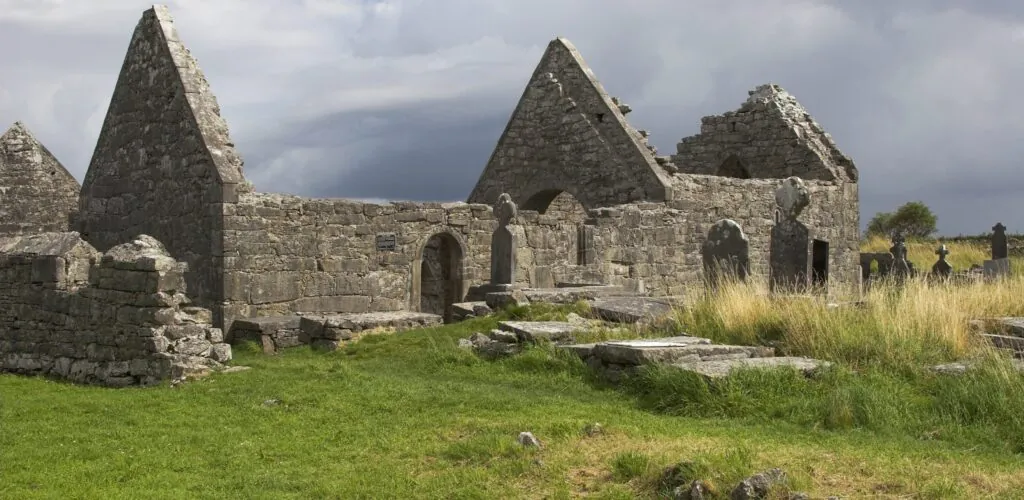
On the island of Inishmore, in the heart of the majestic Aran Islands, lies a little historical treasure: Teampall Bheanáin. Reputed to…
If you're on the island of Inishmore, don't miss Dún Dúchathair, an impressive prehistoric fort! Its walls measure 6 metres high and…
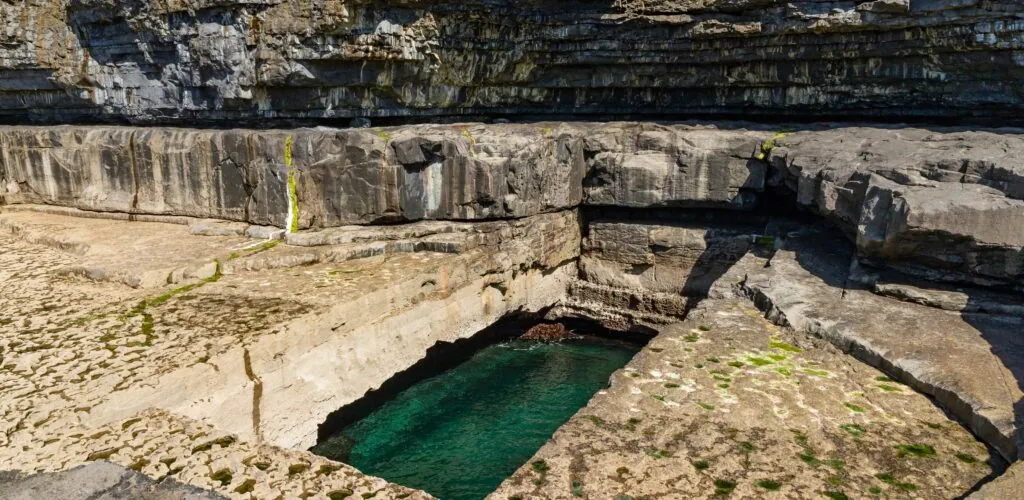
The Serpent's Lair (or Poll na Peist in Gaelic) is a natural formation much sought-after by extreme sportsmen and women! Located on…
Dún Eochla is a prehistoric fort dating from the Iron Age. Located on Inishmore Island in County Galway, it is open to…
Killeany Abbey is an ancient Irish monastery on the island of Inishmore in the Aran Islands. Founded in the 5th century, following…
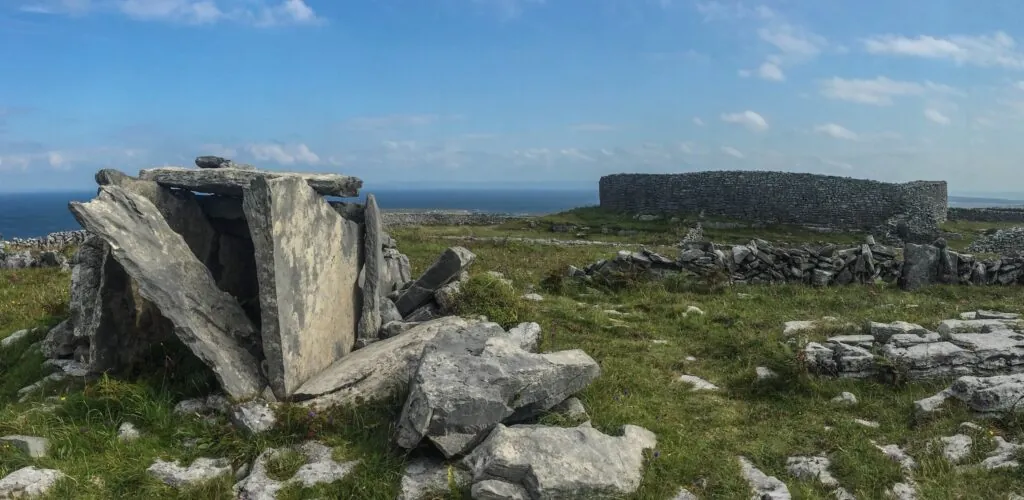
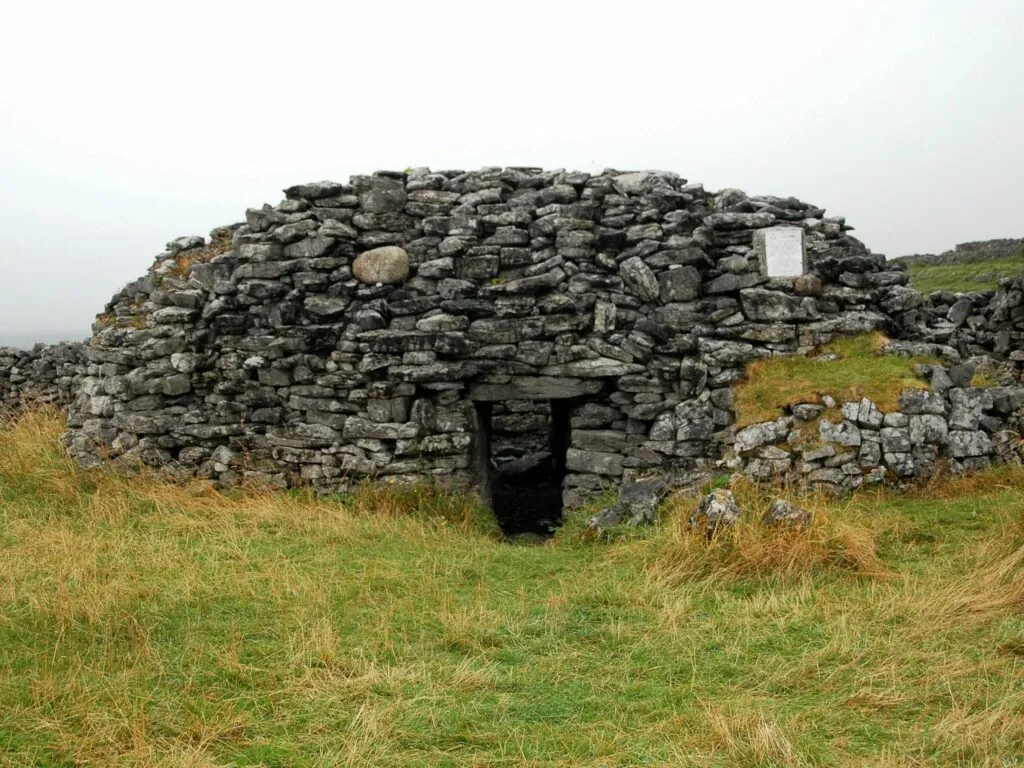
Clochan na Carraige is an archaeological site on the island of Inishmore in the Aran Islands. Just a 5-minute walk from the…
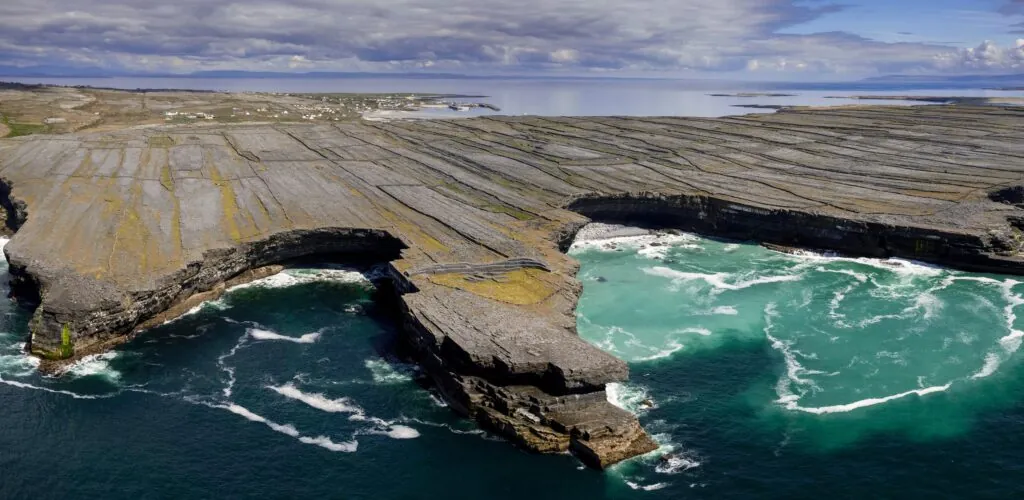
Do you like steep, vertiginous cliffs? You'll love the cliffs of Inishmore Island in the Aran Islands. Magnificent, they seem to plunge…
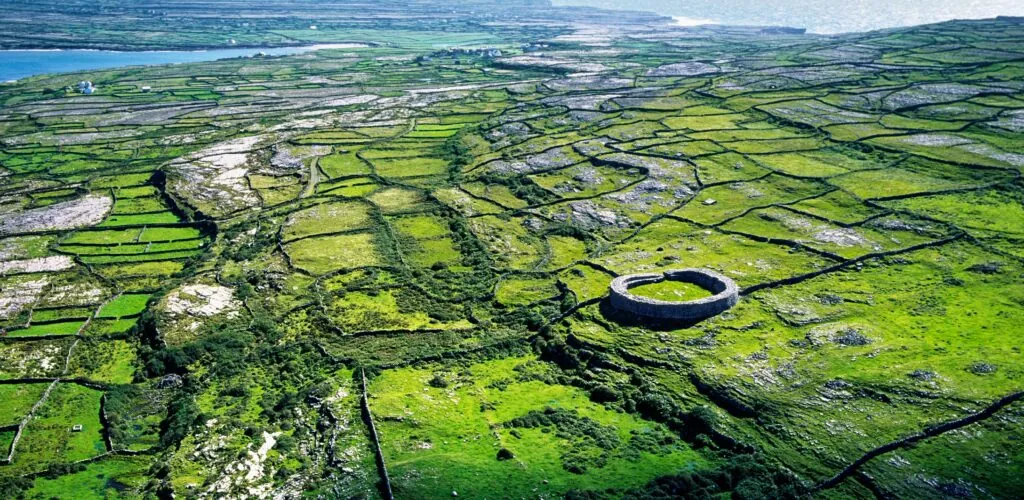
Dun Eoghanachta is a prehistoric ringfort located on Inishmore, one of Ireland's Aran Islands. Dating back to the Iron Age, this fort…
Port Chorrúch is a pretty beach on the island of Inishmore in the Aran Islands. It has the distinction of being a…
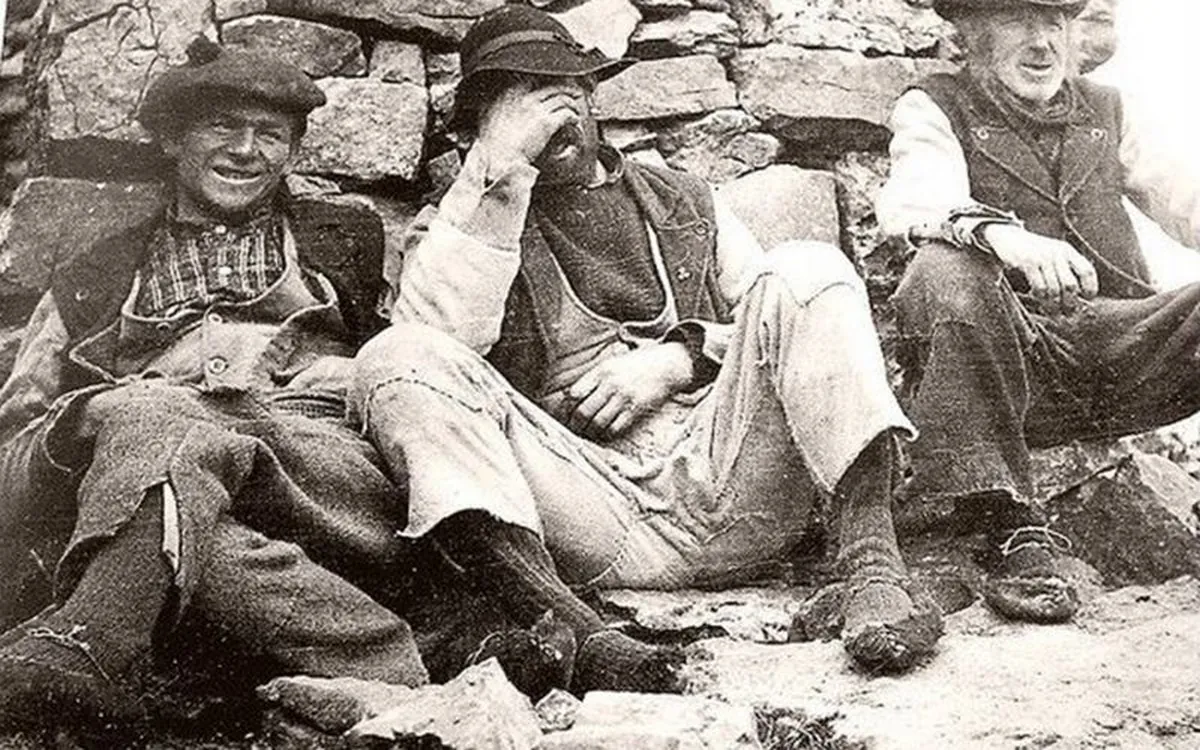
Did you know? The Aran Islands not only created the Irish sweater, but also pampooties, handcrafted leather shoes from the 1800s!
Inishmore (or Inis Mór in Irish) is the largest island of the Aran Islands archipelago, located in Galway Bay. Measuring 14 km long and 3 km wide, it is one of the most touristy islands in Ireland… And it’s easy to see why! Endless stone fields, majestic wild landscapes, and archaeological remains await visitors, not to mention the opportunity to purchase the traditional Irish sweater made locally!

Aerial view of Inishmore – © Viktor Posnov
Inishmore has a history dating back to the Iron Age, when the inhabitants built three imposing forts across the island… In the 5th century, Saint Eanna founded a monastery on the island, built in 490: Killeany Abbey. This monastery was an important religious center of the time and trained future monks and evangelists who then traveled throughout Europe.
From 546, the kings of Munster and Connaught decided to consider the Aran Islands independent from their territories, freeing the islands from any allegiance to the kings ruling provinces of the Kingdom of Ireland… This geopolitical decision allowed Inishmore and the other two islands to gain greater autonomy and independence…
In 1081, Inishmore was ravaged by the Danes… Houses were looted, burned, and inhabitants were killed or assaulted. The island took many years to recover from this attack… However, Inishmore was again looted and burned by Sir John D’Arcy, Lord Justice of Ireland, who in 1334 sailed into Galway Bay with a fleet of 56 ships.
Today, Inishmore has over 800 inhabitants, living mainly from local tourism…
Inishmore is a true wonder to explore. The island holds incredible treasures, starting with the beauty of its steep cliffs. These seem to plunge deeply into the ocean, offering a breathtaking view.
Another must-see tourist attraction is its ring forts (prehistoric forts). Starting with Dun Aengus, one of the most striking. It was built on the edge of the cliffs and seems ready to dive into the ocean. A magnificent sight!
Among the other ring forts are Dún Dúchathair, Dún Eochla, and Dun Eoghanachta. All testify to strong population activity during prehistoric times.