Viator

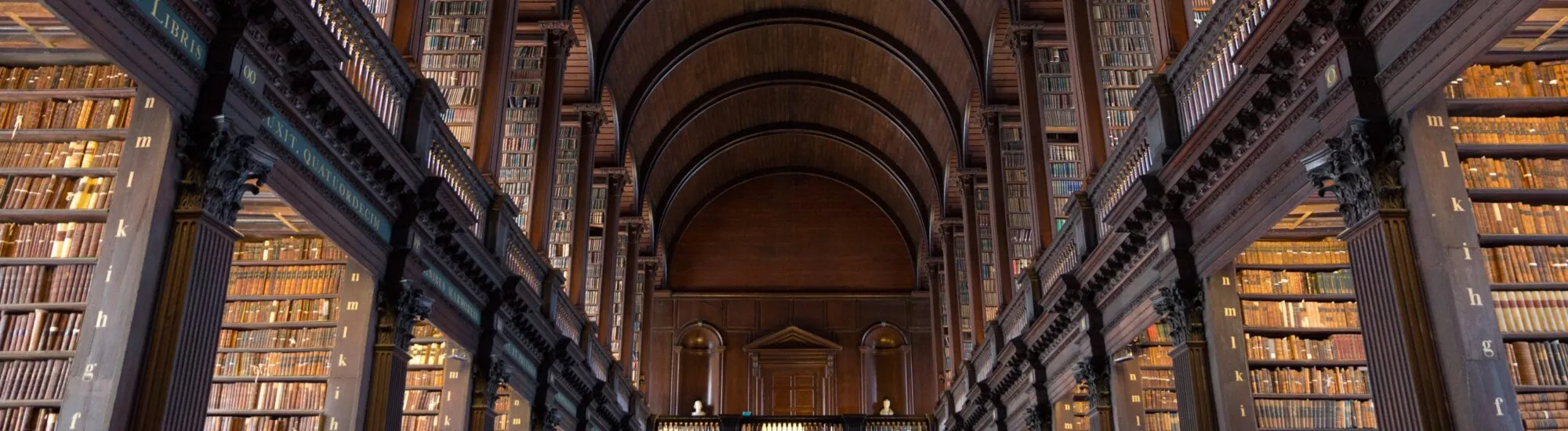
At the heart of Trinity College, the Old Library is home to two of Dublin’s greatest cultural treasures: the spectacular Long Room and the Book of Kells, an illuminated manuscript more than 1,200 years old. It remains an essential visit, but its appearance has changed dramatically: as part of a major conservation project, almost all the books have been removed from the shelves.
With its barrel vault, lofty wooden galleries and rows of sculptures, the Long Room is one of the world’s most photographed historic libraries. Its atmosphere readily brings to mind the setting of a fantasy novel, and it is often compared to the world of Harry Potter. However, beware of a persistent misconception: none of the films in the series were shot in Trinity College Library.
The visit is no longer limited to this monumental room. It is now part of the Book of Kells Experience, a route divided between the Old Library and the Red Pavilion, a temporary space dedicated to Trinity College’s collections and their digital presentation.
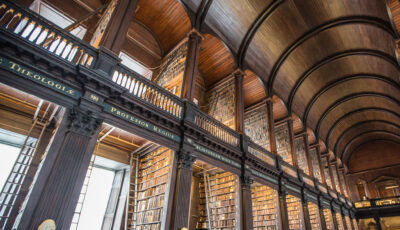
The Long Room vault before the collections were removed – Tony Webster – CC
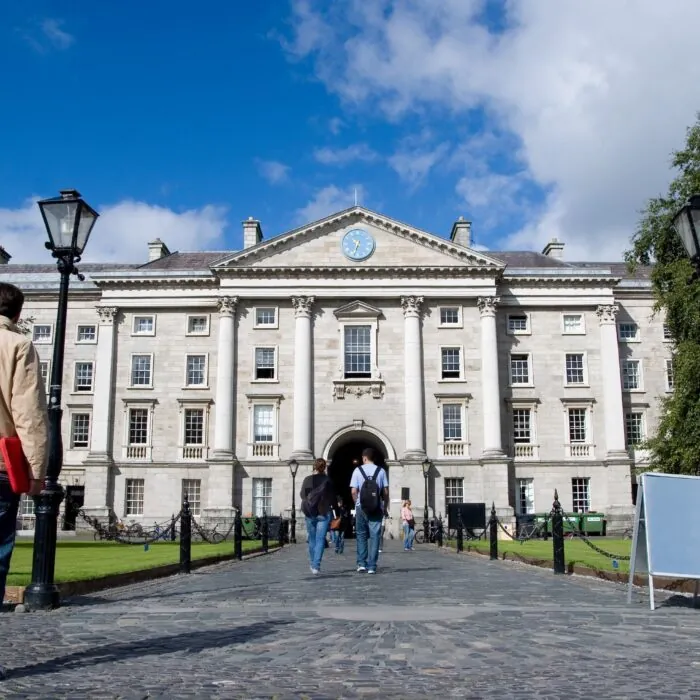
Built between 1712 and 1732, the Old Library belongs to Trinity College, Ireland’s oldest university, founded in 1592. It stands in the heart of Dublin, just a few minutes’ walk from Grafton Street, College Green and Temple Bar.
The library holds collections amassed over several centuries. The Long Room would normally house around 200,000 historic books, but almost all have been moved as part of the extensive Old Library Redevelopment Project.
Each volume was dusted using specialised equipment, measured, electronically tagged, linked to a catalogue record and transferred to storage with controlled temperature and humidity. Only the first shelves at the entrance currently retain a few books, allowing visitors to imagine the room’s historic appearance.
This transformation is important to bear in mind before booking. Photographs showing the Long Room filled entirely with books no longer reflect its current state. The room remains open and impressive, but it now has a much more stripped-back appearance.
The Long Room is the highlight of the visit. Almost 65 metres long, it was originally designed with a flat ceiling and shelves installed only on the lower level.
By the mid-19th century, the available space was no longer sufficient for the collections. Since 1801, the library had benefited from the right to receive books published in Great Britain and Ireland, resulting in a considerable increase in the number of volumes it held.
In 1860, the roof was raised to create the upper gallery and the imposing barrel vault still visible today. The shelves, balustrades and regular sequence of alcoves give the room an almost theatrical depth.
The removal of the books now makes it easier to appreciate the architecture. However, it radically changes the atmosphere once created by thousands of old bindings. A visit in 2026 should therefore be seen as a special opportunity to discover the library’s structure at a major point in its history.
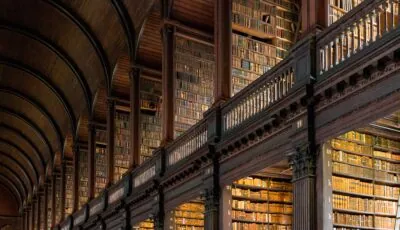
The Old Library before its collections were removed – © Sylvain Tanguy
The Old Library faces several risks connected to its age. Dust, outdoor pollution, climate fluctuations and the inadequacy of its former fire-protection systems threatened both the building and its collections.
The restoration project will modernise temperature and humidity control, fire safety and conservation conditions. Its aim is to protect the library without erasing its 18th-century architecture.
The Long Room and the Old Library are due to remain open to the public until the end of 2027. When the main phase of works begins, the Book of Kells will be displayed temporarily in the Printing House, another historic building on campus. As the timetable may change, it is essential to check the official information before planning a visit far in advance.
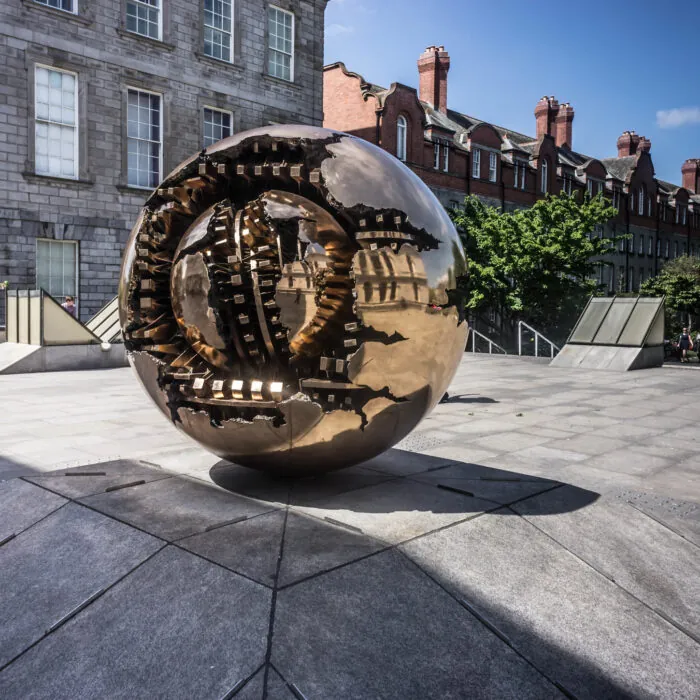
To accompany this transition period, Trinity College has installed Gaia beneath the Long Room’s great vault. Created by British artist Luke Jerram, this illuminated work reproduces the Earth’s surface using imagery supplied by NASA.
The suspended globe creates a striking contrast with the library’s dark wood. The installation also invites reflection on environmental issues and the preservation of heritage threatened by time, pollution and changing climates.
Gaia is a temporary installation. It is currently included in the Book of Kells Experience ticket, but it is not intended to remain in the Long Room permanently.
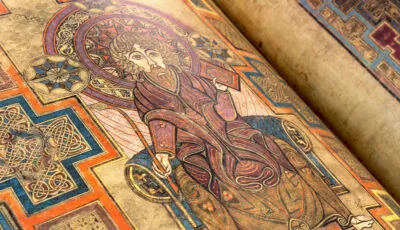
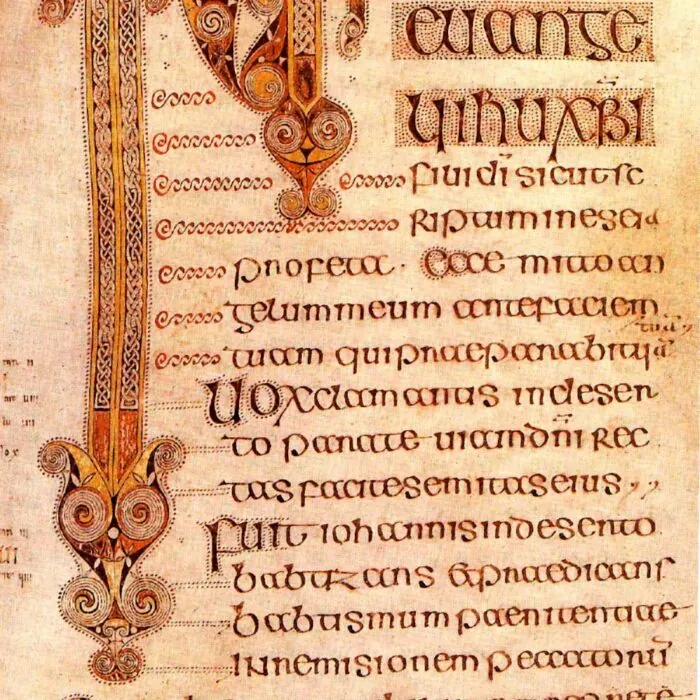
The Book of Kells – Gerhard Huber – CC
The visit begins with an exhibition dedicated to the Book of Kells, regarded as one of the finest illuminated manuscripts of the Middle Ages. Created around the year 800, probably by monks associated with the communities of Iona in Scotland and Kells in Ireland, it contains the four Gospels of the New Testament.
Its 680 pages are covered with ornate letters, interlace, animals, human figures and Christian symbols. Some motifs are so fine that they remain difficult to make out with the naked eye. The manuscript demonstrates exceptional mastery of calligraphy, colour and Insular illumination.
The book is now divided into four volumes, each corresponding to one Gospel. Only two pages are displayed at any one time in a climate-controlled case: usually one richly decorated page and one text page. The openings are changed several times a year for conservation reasons.
The low lighting in the room and the ban on photographing the manuscript help to protect it. At the busiest times, the area in front of the display case can become crowded. Visiting early in the morning generally offers a more comfortable experience, although it does not guarantee lower visitor numbers.
The Long Room also holds a medieval harp often called the ‘Brian Boru harp’. The name is misleading: the instrument probably dates from the 15th century, around four hundred years after the death of the famous Irish king in 1014.
Made of oak and willow, it has 29 brass strings. It is the oldest surviving harp of its kind in Ireland and one of the most important objects in the country’s musical history.
Its outline served as the model for the official emblem of the Irish State. It appears, notably, on Irish euro coins, as well as on numerous official documents and institutional symbols. The Guinness logo also uses a harp, but facing in the opposite direction.
The sculptures arranged on either side of the Long Room accompany visitors along the gallery. The collection began in 1743 with the commissioning of fourteen busts from Flemish sculptor Peter Scheemakers.
It depicts major figures from philosophy, literature, science and the history of Trinity College. These include Aristotle, Cicero, Jonathan Swift, William Shakespeare, Theobald Wolfe Tone and several former university leaders.
For a long time exclusively male, the collection was expanded in 2023 with four sculptures dedicated to women: mathematician Ada Lovelace, scientist Rosalind Franklin, playwright and folklorist Augusta Gregory, and writer and women’s rights pioneer Mary Wollstonecraft.
These new works are the first female representations installed in the Long Room and mark an important shift in how Trinity College presents the history of knowledge.
Among the Long Room’s treasures is one of the few surviving copies of the Proclamation of the Irish Republic.
The text was read by Patrick Pearse outside Dublin’s General Post Office on 24 April 1916, at the start of the Easter Rising. It proclaimed the creation of an independent republic and asserted the sovereignty of the Irish people.
This document directly links the library to Dublin’s political history. To better understand its importance, the visit can be complemented by learning about the life of Theobald Wolfe Tone, Robert Emmet or places associated with the 1916 Rising.
After discovering the Book of Kells and the Long Room, the visit continues at the Red Pavilion, less than a minute’s walk from the Old Library.
This temporary building hosts three digital experiences: Secret Life of the Collections, The Book of Kells 360 and The Long Room Reimagined. Projections, animations and sound installations allow visitors to see the manuscript’s illuminations on a large scale and discover objects removed from the library.
This contemporary section provides useful context, particularly when the Long Room is almost empty. It does not replace the contemplation of the original works, but it makes certain details easier to understand when they cannot be seen in the Book of Kells display case.
For the full Book of Kells Experience, Trinity College recommends allowing around 90 minutes. This ticket includes the Old Library, the Book of Kells, the Long Room and the Red Pavilion’s digital exhibitions.
A shorter option allows you to visit only the Book of Kells and the Old Library in around 45 minutes, without access to the digital route. A guided campus tour, known as Trinity Trails, can also be added. It lasts around 45 minutes and introduces the university’s history, its courtyards, its buildings and several of its famous former students.
For a first visit to Trinity College, allow around two hours if combining the guided campus tour with the full experience.
In 2026, the full Book of Kells Experience ticket is available from €26 per person. Limited access to the Book of Kells and the Long Room starts at €19, while the option combining a guided tour of Trinity College with the full route is available from €39.
Prices may vary depending on the date, time and visitor numbers. Reduced rates are available for students and older people. Tickets are non-refundable once purchased.
The opening hours displayed when we last checked were as follows: 9 am to 6 pm Monday to Friday, 9 am to 6.30 pm on Saturday, and 9.30 am to 6 pm on Sunday. These times may change according to the season or events taking place on campus.
Entry is for a specific time slot. Online booking is strongly recommended, particularly at weekends, during school holidays and in the peak tourist season. Check the official Book of Kells Experience opening hours, prices and tickets before your visit.
The Old Library is located within Trinity College, at College Green, Dublin 2. The campus is easily reached on foot from the city centre. The Trinity and Dawson tram stops on the Luas Green Line are nearby.
The Old Library and the Red Pavilion are accessible to wheelchair users. A lift provides access to the Long Room with staff assistance. Seating is available in several parts of the route.
Flash-free photography is permitted in the Long Room and the digital spaces. It is, however, strictly prohibited in the Treasury where the Book of Kells is displayed. Tripods are not permitted.
There are no luggage storage facilities along the visitor route. It is therefore best to leave suitcases and bulky bags before heading to Trinity College. The Old Library has no visitor toilets, but facilities are available in the Red Pavilion, towards the end of the route, and in other campus buildings.
Yes. The Long Room remains open to visitors until the end of 2027, according to Trinity College’s announced timetable. Most of its 200,000 books have, however, been removed for cleaning, cataloguing and storage in a suitable space. Only the first shelves at the entrance still contain books.
Yes. Tickets for the Old Library include access to the Book of Kells and the Long Room. The full Book of Kells Experience ticket also includes the Red Pavilion’s digital exhibitions. Check the option you have chosen carefully when booking.
No. Despite its wooden vault and spectacular atmosphere, the Long Room does not appear in any film in the Harry Potter series. It is often compared to the Hogwarts library because of its architecture, but no official filming took place there.
Essential information to help you plan your visit, including key landmarks, access information, and booking options.
College Green, College Green, Dublin (County Dublin) - Republic of Ireland
53.343950, -6.256846
1h30
Compare tickets, guided tours, and excursions available through our partner platforms.