Republic of Ireland
Travel Guide

Republic of Ireland

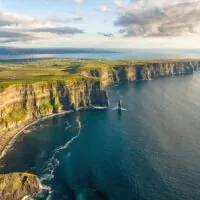
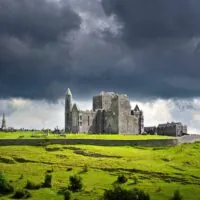
Les Falaises de Moher - © UTBP

Southern Ireland... A territory of 26 counties, rich in authentic tourist activities!

[ss_social_share]
Planning Your Trip

Republic of Ireland : les infos utiles avant de partir

Southern Ireland... A territory of 26 counties, rich in authentic tourist activities!

Republic of Ireland

The Republic of Ireland occupies most of the island of Ireland. It comprises 26 of the island’s 32 historic counties, while the other six form Northern Ireland, which belongs to the United Kingdom.

From the streets of Dublin to the landscapes of Connemara, from the cliffs of Clare to the peninsulas of Kerry, the country offers a remarkable diversity of cities, archaeological sites and natural areas. This page allows you to explore its counties and plan a journey through Ireland’s different regions.

Republic of Ireland, Ireland or Southern Ireland?

Understanding the different names

In the Irish Constitution, the official name of the State is Éire in Irish and Ireland in English. The expression Republic of Ireland is an official description of its political system, used in particular to avoid any confusion with the island as a whole.

The term “Southern Ireland” is still used in everyday language, but it is geographically and politically imprecise. The Republic of Ireland also includes territories in the north of the island, notably the counties of Donegal, Cavan and Monaghan.

The country became independent from the United Kingdom in stages. The Irish Free State was created in 1922, the current Constitution came into force in 1937, and the Republic was officially proclaimed in 1949.

Visiting the Republic of Ireland

A country of cliffs, bogs and lively cities

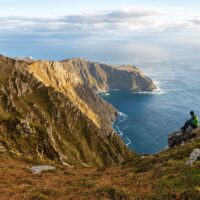
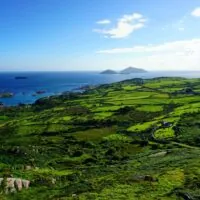
The diversity of its landscapes is one of the country’s great attractions. The west coast encompasses the Cliffs of Moher, the Burren, the peninsulas of Kerry, Connemara and the uplands of Donegal. These areas are linked by the Wild Atlantic Way, a long tourist route following the ocean for around 2,500 kilometres.

The east has a different identity. Around Dublin, the Boyne Valley and the Wicklow Mountains are megalithic sites, abbeys, historic estates and several medieval towns. Brú na Bóinne, which includes Newgrange, preserves Neolithic tombs older than the pyramids of Giza.

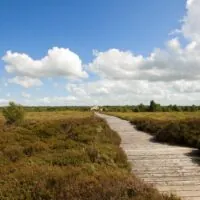
Central Ireland reveals a gentler landscape of pastureland, bogs, rivers and large lakes. The Shannon, the longest river in Ireland and the United Kingdom, crosses part of these regions before reaching the Atlantic.

Must-see cities in the Republic of Ireland

Dublin, Cork, Galway and the major urban stops

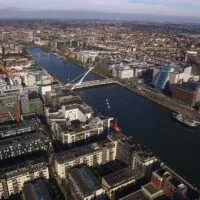
Dublin is the country’s main gateway. The capital is home to Trinity College, Dublin Castle, the Guinness Storehouse and numerous national museums. Temple Bar remains its best-known tourist district, but the areas of Stoneybatter, Smithfield, Portobello and the Docklands offer other sides of the city to discover.

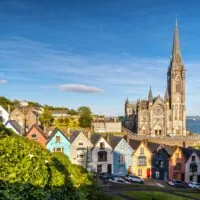
Cork, in the south, stands out for its centre built between the branches of the River Lee, its English Market and its food scene. It is an interesting base for exploring Cobh, Kinsale and the West Cork coast.

Galway is one of the major stops in western Ireland. Renowned for its festivals, pubs and music, it opens the way to Connemara and the Aran Islands.

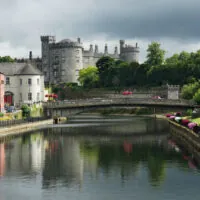
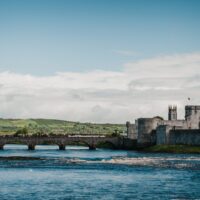
Other towns are worth a stop, including Kilkenny for its medieval heritage, Waterford for its Viking legacy, Limerick for its castle and the banks of the Shannon, and Sligo for its links with the poet W. B. Yeats.

The 26 counties of the Republic of Ireland

Areas grouped into four historic provinces

The Republic of Ireland has 26 historic counties. They remain essential geographical and cultural landmarks, even if the contemporary administrative organisation does not always correspond exactly to their former boundaries.

The counties are traditionally divided among four provinces. Leinster covers much of the east and includes Dublin, Wicklow, Kilkenny, Meath and Wexford. Munster occupies the south, with Cork, Kerry, Clare, Limerick, Tipperary and Waterford.

Connacht extends across the west around Galway, Mayo, Sligo, Leitrim and Roscommon. Finally, three counties in the historic province of Ulster belong to the Republic: Donegal, Cavan and Monaghan. The nine historic counties of Ulster should therefore not be confused with the six counties of Northern Ireland.

Each county has its own landscapes, traditions and tourist sites. The list above on this page provides direct access to the destinations and places to discover in each one.

A history visible throughout the country

From Neolithic tombs to monuments of independence

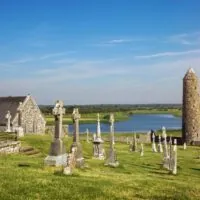
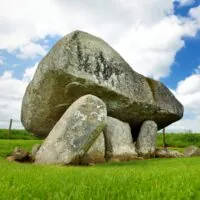
Irish history can be read directly in the landscape. Megalithic tombs, dolmens and stone circles testify to a human presence going back several millennia. The monastic sites of Glendalough, Clonmacnoise and Monasterboice then recall the importance of Christian Ireland in the early Middle Ages.

Norman castles, Gaelic tower houses and grand residences tell the story of the island’s conquests and political transformations. In Dublin, Kilmainham Gaol, the General Post Office and several museums help visitors understand the Easter Rising of 1916, the War of Independence and the creation of the Irish State.

This history is not confined to monuments. It can be found in the language, Gaelic sports, traditional music, literature and stories passed down in every region.

Discovering Irish culture

Music, the Irish language and living traditions

Irish, or Gaeilge, is the country’s first official language, while English is the language most commonly used in daily life. In regions known as the Gaeltacht, notably in parts of Donegal, Connemara, Kerry, Cork, Mayo, Meath and Waterford, Irish remains a living community language.

Traditional music holds an important place, whether played during an impromptu session in a pub or on a festival stage. Hurling and Gaelic football are also widely followed and make a strong contribution to the identity of the counties.

Irish pubs are not merely places to have a pint. In villages as well as towns, they may serve as restaurants, music venues and meeting places. However, not all of them offer concerts every evening: the most authentic sessions often depend on local musicians and the establishment’s schedule.

Planning a trip to the Republic of Ireland

Currency, driving and required documents

The Republic of Ireland is a member of the European Union and uses the euro. Bank cards are widely accepted, although it can be useful to keep some cash in rural areas and small shops.

Driving is on the left. Unlike in Northern Ireland, distances and speed limits are indicated in kilometres. Electrical sockets are Type G, with three rectangular pins: an adaptor is therefore required for French appliances.

Ireland belongs to the European Union but is not part of the Schengen Area. French citizens must present a valid passport or national identity card upon arrival. They do not need a UK ETA to stay solely in the Republic of Ireland.

An ETA may nevertheless become necessary if the journey continues into Northern Ireland. The absence of systematic controls at the land border does not remove the obligation to comply with UK entry rules.

As travel conditions may change, visitors can check the required documents on the official Irish immigration website.

Frequently asked questions about the Republic of Ireland

Essential answers for planning your stay

What is the difference between Ireland and the Republic of Ireland?
The word Ireland may refer to the entire island or to the independent State, depending on the context. The expression Republic of Ireland distinguishes this State from Northern Ireland.

How many counties are there in the Republic of Ireland?
It comprises 26 of the island’s 32 historic counties. The other six belong to Northern Ireland.

What currency is used in the Republic of Ireland?
The official currency is the euro. Pound sterling is used in Northern Ireland.

How long does it take to visit the Republic of Ireland?
One week is enough to discover a city and one or two regions. A stay of ten to fifteen days is preferable for planning a proper itinerary without too many long days on the road.

Free Ireland travel guide
Free guide

Planning a trip to Ireland?

Receive our free travel guide and discover the very best places, itineraries and practical tips to prepare your stay.

Culture, history, must-see attractions and local advice delivered directly to your inbox.